


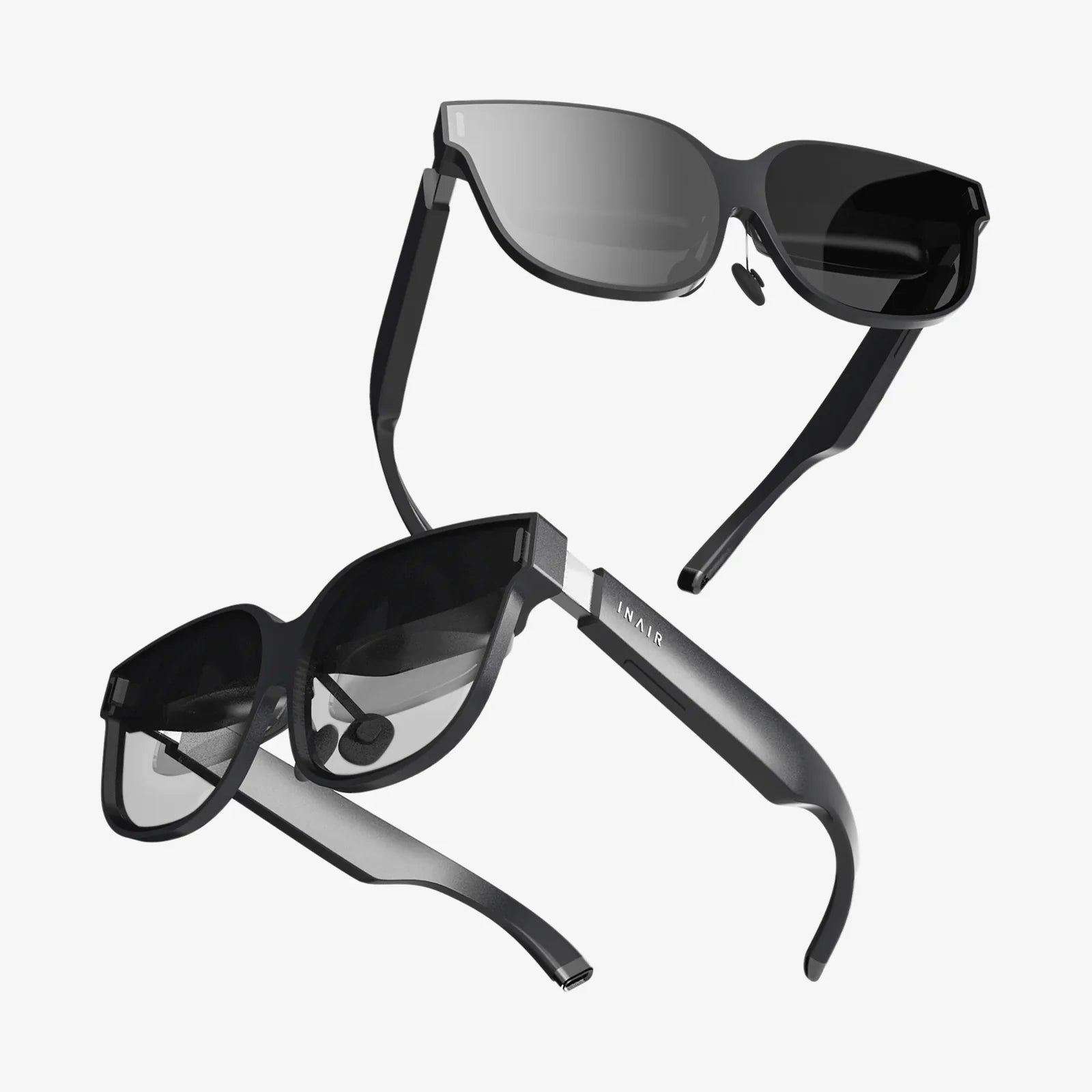
Imagine a world where information floats before your eyes, where language barriers dissolve with a glance, and your digital assistant isn't confined to a screen in your pocket but is seamlessly integrated into your field of vision. This isn't a distant sci-fi fantasy; it's the promise of AI glasses, a technology rapidly evolving from a luxury for the few to an accessible tool for the many. The quest for the best budget AI glasses is more than just a search for a gadget; it's about unlocking a new layer of reality without unlocking a crippling financial burden. The future is here, and it's looking surprisingly affordable.
Before diving into what makes a pair of AI glasses 'budget' and 'best,' it's crucial to understand what they actually are. At their core, AI glasses are a wearable computer in the form of eyewear. They utilize a combination of hardware—like micro-displays, cameras, microphones, and speakers—and sophisticated software powered by artificial intelligence and machine learning to augment the user's reality. Unlike their more expensive, fully immersive augmented reality (AR) cousins, which project holographic images onto the real world, many budget-friendly models currently focus on a subset of features, often delivering information via a small monochromatic display in your peripheral vision or acting as a smart audio and visual interface for your smartphone.
What Can Budget AI Glasses Actually Do?
The capabilities of affordable AI glasses are expanding rapidly, but current models typically excel in a few key areas that showcase the practical power of this technology.
- Real-Time Translation: One of the most lauded features. Point the built-in camera at a foreign menu, sign, or document, and the translation can appear in your display almost instantly. Some models also offer conversational translation, allowing you to speak in your language while the glasses speak another aloud for the person you're conversing with.
- Audio Augmentation & Personal Assistant: Think of this as having a smarter, more contextual version of a voice assistant in your ear. You can ask questions, set reminders, get directions, and control smart home devices hands-free, with the responses played through discreet bone conduction or open-ear speakers that don't block ambient noise.
- First-Person Photography and Videography: Capture your perspective effortlessly. A simple voice command or touch of a temple can snap a photo or record a video, perfect for documenting tasks, creating content, or preserving memories without fumbling for a phone.
- Contextual Information Overlay: While less common on ultra-budget models, some glasses can pull data based on what you're looking at. Imagine looking at a landmark and seeing its history pop up, or glancing at a restaurant and seeing its reviews.
- Accessibility Features: These devices have enormous potential to assist those with visual or auditory impairments, from reading text aloud to identifying objects or amplifying specific sounds.
The Trade-Off: Capabilities vs. Cost
The term 'budget' inherently implies a compromise. When compared to high-end, enterprise-level AR headsets, budget AI glasses make specific trade-offs to achieve their accessible price point, typically under a few hundred dollars.
- Display Technology: High-end AR employs advanced waveguides, micro-OLED, or Laser Beam Scanning to project full-color, high-resolution 3D graphics onto the real world. Budget models often use simpler LED or LCD micro-displays that project a small, monochromatic (often green or white) screen to one eye. It's functional for information but not for immersive gaming or complex 3D modeling.
- Processing Power: Truly standalone AR glasses require immense on-board computing power, which is expensive. Many budget models are not fully standalone; they act as a sophisticated peripheral, offloading the heavy computational lifting to a paired smartphone via a dedicated app. This keeps the glasses lightweight, cool, and affordable.
- Battery Life: Intensive AR processing is a huge drain on batteries. By limiting always-on visual AR and relying on smartphone processing, budget glasses can often achieve all-day battery life for core functions, a significant advantage over bulkier, power-hungry units.
- Field of View (FOV): This is a major differentiator. Expensive AR headsets strive for a wide FOV to make digital objects feel present in your space. The FOV on budget glasses is typically narrow, akin to a small floating screen, which is less immersive but sufficient for notifications, translations, and basic data.
Key Features to Look For in Affordable AI Glasses
Navigating this nascent market requires a sharp eye. Here are the critical specifications and features to scrutinize when hunting for the best value.
- Design and Comfort: You'll be wearing these. Are they stylish and lightweight? Do they look like normal glasses, or do they scream 'cyborg'? Can they fit prescription lenses? Comfort for extended wear is non-negotiable.
- Display Quality: Evaluate brightness (for outdoor use), resolution, and the perceived size of the virtual screen. A dim, pixelated display is useless.
- Audio Solution: Bone conduction transmits sound through your cheekbones, leaving your ears open. Open-ear speakers direct sound into your ear without insertion. Both are good for awareness. Consider privacy and sound leakage in quiet environments.
- Microphone Array: For reliable voice commands, especially in noisy environments, multiple microphones with noise cancellation are essential.
- Smartphone Integration: How seamless is the pairing process? Does it work well with both iOS and Android? The companion app's quality is just as important as the hardware.
- Battery Life and Charging: Look for realistic battery estimates for your intended use. Is the charging solution convenient (e.g., a compact charging case vs. a cable)?
- Privacy Policy:
This is paramount. These glasses have a camera and microphone. You must understand what data is collected, how it is processed (on-device vs. sent to the cloud), how it is stored, and who has access to it. A reputable company will have a clear, transparent privacy policy.
The Ethical and Social Dimension
Wearing technology that can record audio and video discreetly brings legitimate social and ethical concerns. The concept of 'lifelogging' or 'sousveillance' (recording from the perspective of the individual) is powerful but fraught with privacy implications. Responsible use is key. Always be aware of local laws regarding recording conversations and individuals in public and private spaces. The best devices incorporate clear physical indicators, like a recording light, to signal to others when the camera is active, fostering trust and transparency.
A Glimpse into the Near Future
The current generation of budget AI glasses is merely the foundation. We are on the cusp of a revolution in display technology, with innovations like microLED promising brighter, more efficient full-color displays at a lower cost. Advances in AI chipsets will enable more on-device processing, improving speed and privacy. As the ecosystem grows, developers will create more apps and experiences, moving beyond simple utilities into gaming, remote collaboration, and immersive training. The line between 'budget' and 'premium' will continually blur, bringing capabilities once thought impossible into the mainstream market.
The search for the best budget AI glasses is ultimately a search for a personal gateway. It's about finding that perfect balance where cost doesn't cripple innovation, and where the technology steps back to serve you, rather than demanding your constant attention. They are not yet the all-seeing, all-knowing companions of science fiction, but they are a profound and powerful step in that direction. The ability to understand a foreign language instantly, to capture a moment from your own eyes, or to query the world around you with a whisper is no longer magic—it’s a carefully engineered reality that is increasingly within reach. This isn't just about buying a gadget; it's about choosing to experience the world with an enhanced layer of understanding, and that is an opportunity that is finally, excitingly, starting to come into focus for everyone.
Share:
Good Augmented Reality Device: The Ultimate Guide to the Future on Your Face
Difference Between AR and VR: A Comprehensive Guide to the Digital Realities