


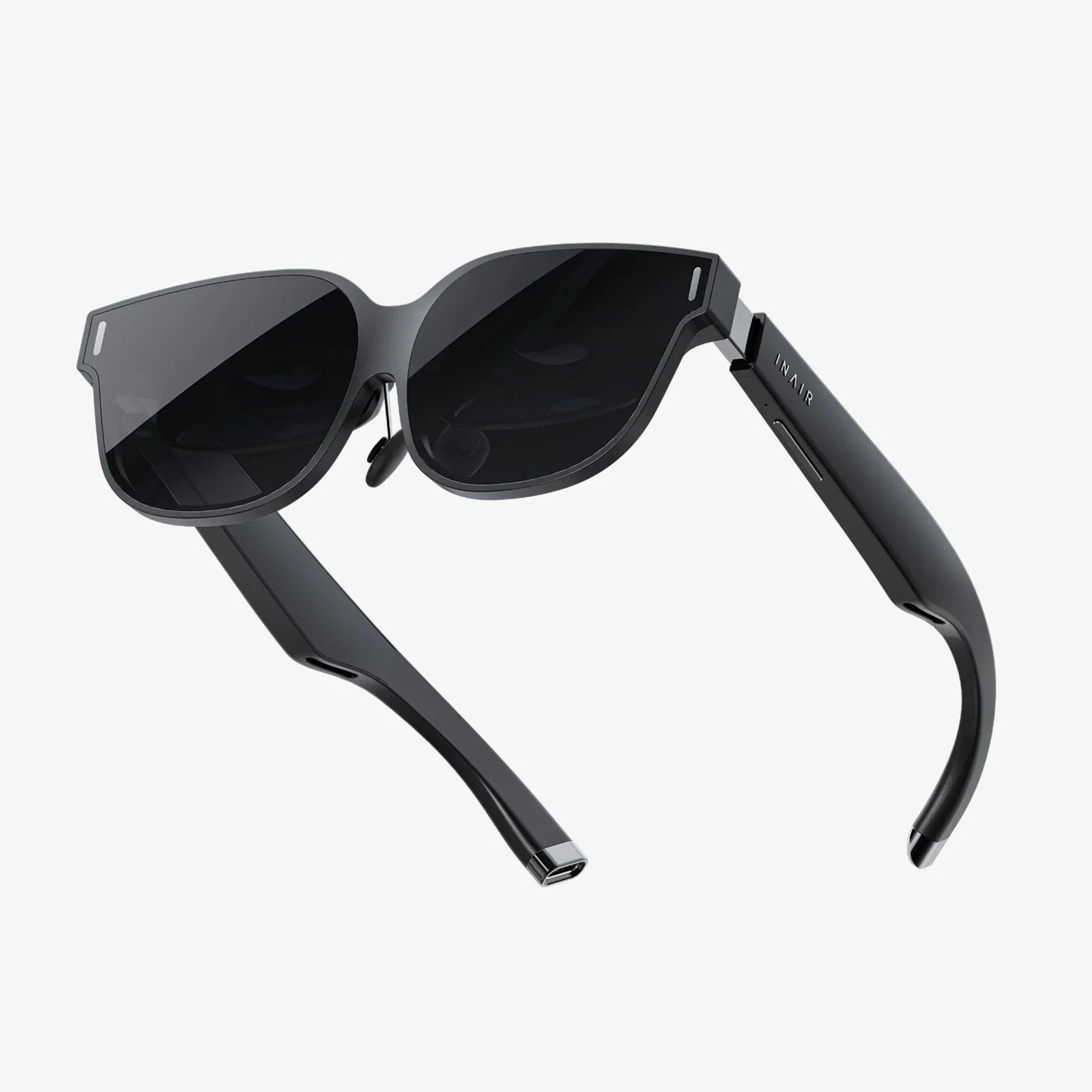
Imagine a world where digital information doesn’t just live on a screen in your hand but is seamlessly woven into the fabric of your reality. Directions float effortlessly on the street ahead, recipe instructions hover beside your mixing bowls, and a virtual colleague sits across from you on your actual couch. This is the promise of augmented reality, a future once reserved for high-end prototypes and science fiction. But what if the key to unlocking this incredible future wasn’t a hefty investment, but a surprisingly accessible one? The year 2025 has ushered in a new era, where the best budget AR glasses are no longer mere toys or tech demos, but powerful portals to a digitally-enhanced life, finally priced for the many, not the few.
The 2025 Budget AR Revolution: More Than Just a Price Tag
Gone are the days when ‘budget’ in the tech world was synonymous with ‘compromise.’ The budget AR segment in 2025 represents the most explosive area of growth, driven by manufacturing efficiencies, open-source software development, and fierce competition. These devices are no longer about simply projecting a monochrome display; they are about delivering a genuinely immersive and useful experience. The defining characteristic of the best budget AR glasses of 2025 is their focus on core functionality. Instead of trying to cram every cutting-edge feature into a single, expensive package, manufacturers are smartly identifying the most impactful use cases—media consumption, mobile productivity, light gaming, and real-time information access—and optimizing their devices to excel at these tasks without the premium price tag.
Decoding the Tech: What to Look For in 2025
Navigating the market requires understanding the key technological differentiators. Knowing these terms will empower you to see past marketing hype and identify true value.
Display Technology: The Window to Your Digital World
The quality of the display is paramount. In 2025, two technologies dominate the budget space:
- MicroLED Waveguides: This has become the gold standard for balance. MicroLEDs offer incredible brightness, color saturation, and energy efficiency. When coupled with waveguide technology, which pipes light to your eyes using microscopic gratings, the result is a sleek form factor with a bright, clear image that can be seen even in daylight conditions. For 2025, improvements in waveguide manufacturing have drastically reduced the ‘rainbow effect’ and other optical artifacts that plagued earlier budget models.
- Enhanced Birdbath Optics: A older, but highly refined, design that uses a semi-transmissive mirror to ‘reflect’ the image from a micro-OLED display into your eyes. The best budget AR glasses in 2025 using this tech offer fantastic color and contrast, perfect for media consumption, though they can sometimes be slightly bulkier than waveguide designs and perform less optimally in very bright outdoor environments.
Field of View (FOV) and Resolution
Don’t be seduced by massive FOV numbers on a spec sheet. For budget glasses, a wider FOV often means a dimmer image or a much higher price. In 2025, a FOV of around 30-40 degrees is considered the sweet spot for affordable models, providing a large enough ‘screen’ feel for movies and apps without breaking the bank. Resolution is equally critical. Look for a per-eye resolution of at least 1920x1080p. The best models now offer 2K-per-eye, ensuring text is sharp and images are free of the dreaded ‘screen door effect.’
Spatial Awareness: The Brain Behind the Beauty
For AR to feel truly immersive, the glasses need to understand the world around them. This is achieved through a suite of sensors.
- Inside-Out Tracking: This is now standard. Cameras on the frames continuously map your environment, allowing digital objects to be pinned to real-world surfaces. The accuracy and speed of this tracking are what separate good glasses from great ones.
- Depth Sensors: Once a premium feature, time-of-flight (ToF) depth sensors are now common in the best budget AR glasses of 2025. They provide a precise understanding of depth and distance, making virtual objects feel solid and enabling more advanced interactions like hand tracking.
- Eye Tracking:
Form Factor and Comfort: Designed for All-Day Wear
The clunky, geeky prototypes of yesteryear are history. The leading budget contenders in 2025 closely resemble a pair of stylish, slightly oversized sunglasses. Lightweight polymers, adjustable nose pads, and flexible temples are essential for comfort during extended use. Consider whether the design is modular—some offer interchangeable magnetic lenses to switch from clear to tinted, adapting to indoor and outdoor environments seamlessly.
Connectivity and Ecosystem: Your Digital Lifeline
Most budget AR glasses are not standalone computers; they are brilliant displays that leverage the power of a device you already own.
- Smartphone Dependence: The majority connect via a single USB-C cable that handles both power and data, streaming content directly from your phone. This keeps the glasses lightweight, cool, and affordable. Ensure compatibility with your device’s operating system.
- Wireless Options: A growing number of models offer low-latency wireless connectivity via proprietary dongles or built-in protocols, cutting the cord for greater freedom of movement.
- App Ecosystem: The hardware is useless without software. The value of any pair of glasses is tied to the platform it supports. Look for devices backed by a thriving store with apps for productivity, fitness, gaming, and web browsing. Open platforms that encourage developer experimentation are a huge plus.
The Hallmarks of Value: What Defines the ‘Best’ in 2025?
With the technology decoded, how do you spot a winner? The best budget AR glasses of 2025 aren’t defined by one killer feature, but by a harmonious balance of several key attributes.
- Display Clarity Over Raw Size: A sharp, bright, high-contrast image is more valuable than a massive, blurry one.
- Rock-Solid Tracking: Digital objects that jitter, drift, or float unrealistically break immersion instantly. Consistent and stable spatial tracking is non-negotiable.
- All-Day Comfort: If they’re not comfortable, you won’t wear them. Period.
- Intuitive Interaction: Whether it’s a simple companion touchpad, voice commands, or advanced hand tracking, the input method must feel natural and responsive.
- Battery Life (Yours and Theirs): The glasses should be efficient, but also consider how they impact your phone’s battery. Efficient models are a must.
- Future-Proofing: Software updates that add new features and improve performance long after purchase indicate a company committed to its product.
Top Use Cases: What Can You Actually Do With Them?
Your affordable portal to AR is useless if it sits in a drawer. The best budget glasses excel in these everyday scenarios:
- The Ultimate Private Theater: Watch movies, shows, and live sports on a virtual screen that feels massive, anywhere you go—on a plane, in bed, or on your lunch break—without disturbing anyone else.
- Productivity Unleashed: Transform any space into a workspace. Multitask with multiple virtual screens for your laptop, take notes that hover in your meeting, or follow a complex repair guide with diagrams overlaid on the machinery in front of you.
- Contextual Computing: Get real-time translations of street signs, navigation arrows painted onto the road, and information about landmarks simply by looking at them.
- Fitness and Coaching: Follow workout routines with a virtual trainer in your living room, display your pace and heart rate stats during a run, or perfect your golf swing with overlaid guidance.
- Social and Light Gaming: Play immersive tabletop games with friends remotely or enjoy casual AR games that transform your environment, all without an expensive dedicated headset.
A Glimpse into Your First Experience
You unbox your new glasses. They feel light, well-built, and surprisingly normal. You connect the single cable to your phone. Sliding them on, the world remains perfectly visible. Then, with a simple voice command or tap, your home screen appears. It’s not a floating rectangle; it’s a series of apps and windows that feel anchored to your wall. You open a video player and a 120-inch screen materializes in front of you. The clarity is stunning. You pin a browser window next to your physical laptop, effectively giving yourself a dual-monitor setup on the go. This seamless blend of digital and physical, this magic, is now an affordable reality.
Looking Ahead: The Future is Bright and Affordable
The trajectory is clear. The innovations pioneered in premium devices quickly trickle down to the budget segment. We can expect even wider fields of view, more powerful onboard processing, better battery solutions, and increasingly sophisticated interaction models like neural interfaces to become standard in affordable models in the coming years. The barrier to entry will continue to fall, making spatial computing a fundamental part of how we all interact with technology.
The dream of augmented reality is no longer a distant fantasy or a luxury for early adopters with deep pockets. The market has matured, technology has been refined, and the true stars of 2025 are those devices that master the art of the possible without demanding a premium price. They represent a fundamental shift: AR is becoming a utility, a tool for enhancing human capability and experience, accessible to everyone. The digital world is waiting to step out of your pocket and into your reality, and the key is more affordable than you think.
Share:
Artificial Intelligence Technology Examples: 10 Powerful Real-World Applications Reshaping Our Lives
Artificial Intelligence Technology Examples: 10 Powerful Real-World Applications Reshaping Our Lives