


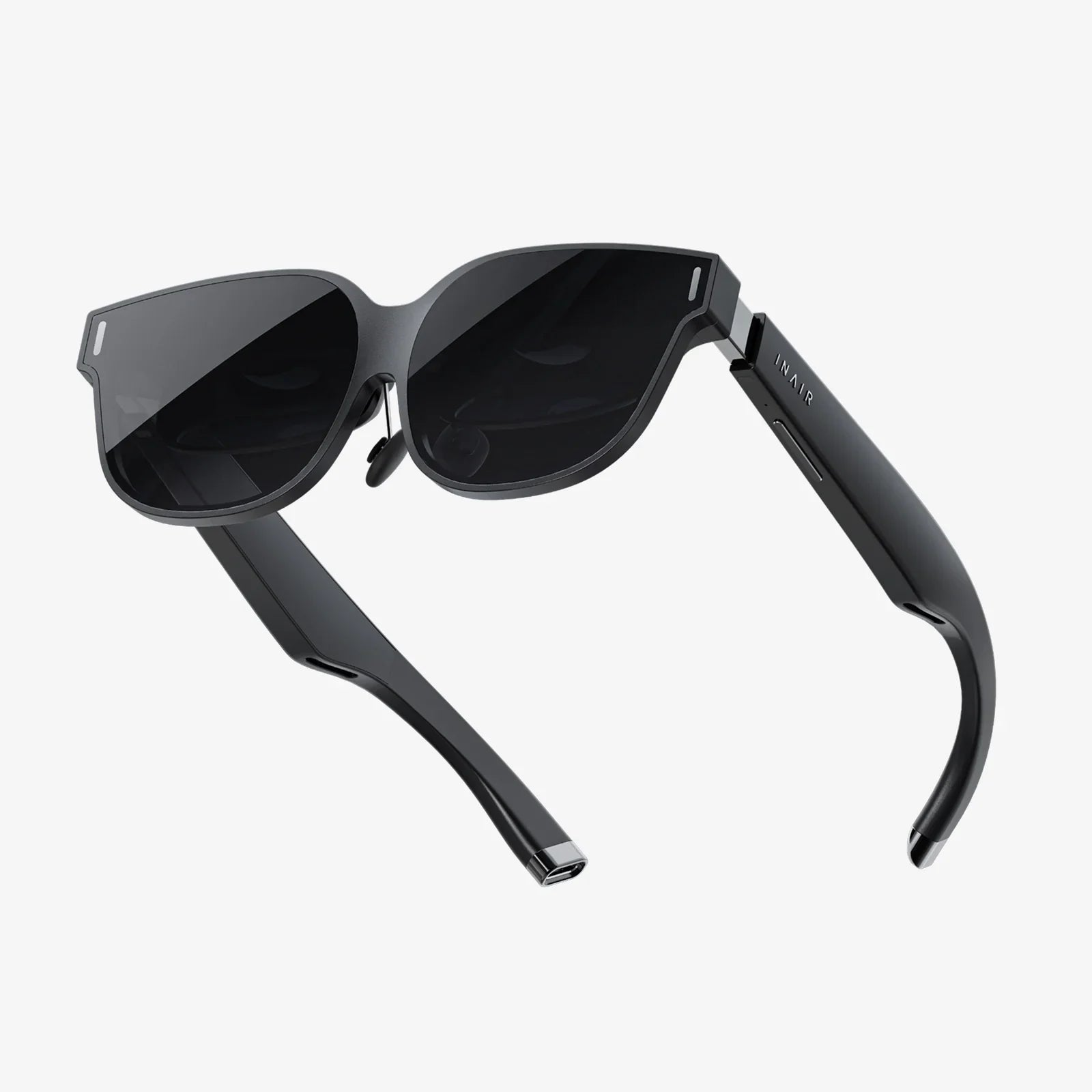
Imagine a world where your surroundings are not just what you see, but a canvas for a limitless stream of digital information, interactive art, and practical guidance. This is no longer the realm of science fiction; it is the burgeoning reality shaped by the most compelling and innovative applications of augmented reality (AR). While the concept has simmered in popular imagination for decades, it is the recent explosion of powerful, accessible technology that has finally unleashed a wave of transformative use cases. These are not mere tech demos or fleeting gimmicks; they are powerful tools solving real-world problems, enhancing human capabilities, and redefining entire industries. The best examples of augmented reality demonstrate a technology maturing from a novel toy into an indispensable utility, seamlessly blending the virtual and the physical to create experiences that are as magical as they are practical.
The Foundation: Understanding the AR Spectrum
Before delving into specific examples, it's crucial to understand what constitutes augmented reality. At its core, AR is a technology that superimposes a computer-generated image, video, or 3D model onto a user's view of the real world, thus providing a composite view. This differs from Virtual Reality (VR), which creates a completely immersive digital environment, shutting out the physical world. AR enhances reality rather than replacing it.
The magic of AR is delivered through various hardware, from the smartphones in our pockets to sophisticated smart glasses and headsets. These devices use cameras, sensors, and algorithms to recognize environments, track surfaces, and anchor digital content precisely within our physical space. The best applications leverage this technology to add value, context, and a layer of intelligent interaction to our daily lives.
Revolutionizing Retail and Consumer Experiences
Perhaps the most visible and rapidly adopted arena for AR is in the world of commerce. Here, AR solves a fundamental problem of digital shopping: the inability to physically interact with a product. The best examples in this sector bridge that gap, building consumer confidence and reducing purchase anxiety.
Virtual Try-On and Preview
Fashion and apparel retailers have pioneered the use of AR for virtual try-ons. Shoppers can use their smartphone cameras to see how a pair of glasses, a hat, or even a full outfit of clothing looks on their own body from every angle. This goes beyond a simple photo filter; advanced AR maps the user's physique, allowing garments to drape and move realistically. Similarly, cosmetics brands offer applications that allow users to try on countless shades of lipstick, eyeshadow, and blush instantly, experimenting with looks that would be time-consuming and unhygienic to test physically.
Furniture and Home Décor Placement
This is a quintessential example of AR's practical power. Home goods stores have developed applications that allow customers to project true-to-scale 3D models of sofas, tables, lamps, and other décor directly into their living space. Users can walk around the virtual object, place it in different spots, and see exactly how it fits with their existing layout, color scheme, and lighting before committing to a purchase. This eliminates the dreaded guesswork of buying large items online and dramatically reduces return rates for retailers.
Transforming Education and Interactive Learning
AR is proving to be a powerful pedagogical tool, moving education beyond static textbooks and transforming abstract concepts into interactive, immersive experiences. The best educational AR applications foster engagement, improve information retention, and cater to diverse learning styles.
Bringing Textbooks to Life
Imagine a student pointing their tablet at a diagram of the human heart in a biology textbook. Suddenly, a detailed, beating 3D heart model erupts from the page, which the student can rotate, zoom into, and even explore in cross-section to understand valves and chambers. This same principle applies to history (watching historical events play out on a tabletop), astronomy (exploring the solar system in the classroom), and chemistry (manipulating complex molecules). AR makes learning an active discovery process.
Skills Training and Simulation
From medical students practicing complex surgical procedures on virtual patients to mechanics learning to repair engines with step-by-step AR instructions overlaid on the physical equipment, AR simulation provides a safe, repeatable, and cost-effective training environment. Trainees can make mistakes without real-world consequences, and experts can remotely guide others by annotating the real world with digital arrows, notes, and diagrams.
Enhancing Industrial and Manufacturing Processes
Behind the scenes, in factories, warehouses, and on construction sites, AR is driving a revolution in efficiency, accuracy, and safety—a concept often termed the 'industrial metaverse.'
Complex Assembly and Maintenance
Technicians wearing AR smart glasses can see digital work instructions overlaid directly onto the machinery they are assembling or repairing. Instead of constantly consulting a paper manual or a computer screen, they have hands-free access to animated guidance, torque specifications, wiring diagrams, and safety warnings. This reduces errors, slashes training time for new employees, and significantly speeds up complex procedures. For example, an engineer fixing a jet engine can see the exact location of every internal component and the precise sequence for disassembly.
Warehouse Logistics and Picking
In massive distribution centers, AR can guide warehouse workers to the exact location of items for an order, displaying the most efficient route through the aisles. When they arrive at the correct bin, the system can highlight the item and confirm the quantity to be picked, minimizing errors and optimizing fulfillment speed. This digital layer of navigation and verification turns a chaotic environment into a streamlined and intelligent operation.
Advancing Healthcare and Medicine
The stakes in healthcare are incredibly high, and the best AR applications here are literally life-changing. They enhance the capabilities of medical professionals and improve patient outcomes.
Surgical Navigation and Visualization
Surgeons are using AR to visualize critical anatomical structures, such as tumors, blood vessels, and nerves, projected directly onto the patient's body during an operation. By overlaying CT or MRI scan data in real-time, surgeons gain 'X-ray vision,' allowing for more precise incisions, smaller wounds, and safer procedures. This is particularly valuable in complex spinal and cranial surgeries where millimeter accuracy is paramount.
Patient Education and Rehabilitation
Doctors can use AR models to explain a diagnosis or surgical procedure to a patient in an intuitive and easy-to-understand way, reducing anxiety. In physical therapy, AR games and exercises can motivate patients to complete their often repetitive rehabilitation routines by turning them into engaging challenges that track movement and progress.
Reshaping Navigation and Urban Exploration
AR is beginning to change how we navigate both vast cities and intimate indoor spaces, layering directional cues onto the world itself.
Next-Generation Wayfinding
Instead of looking down at a blue dot on a phone map, imagine looking through your phone's camera and seeing giant digital arrows painted on the street, guiding you to your destination. Landmarks can be labeled, and points of interest can pop up with reviews and information as you pan across a cityscape. This intuitive form of navigation is particularly useful in complex transit hubs like airports or subway stations.
Cultural and Historical overlays
Tourists visiting historical sites can use AR to restore ruined monuments to their former glory on their device screens. Pointing a phone at the crumbled remains of an ancient temple could rebuild it in real-time, complete with animations of how people lived and worshipped there. Museums are using AR to make exhibits interactive, allowing artifacts to tell their own stories through immersive digital content.
The Future of Entertainment and Social Connection
While gaming provided the first mainstream AR hit, the evolution of entertainment and social interaction through AR is ongoing and incredibly creative.
Immersive Gaming and Interactive Art
The success of location-based AR games demonstrated the mass appeal of turning the entire world into a playground. This concept is expanding into more sophisticated narrative experiences and artistic expressions. Digital sculptures can be placed in public parks for everyone to enjoy, and interactive storylines can unfold on your city blocks, blending narrative with physical exploration.
Social AR and Expressive Communication
Social media platforms have popularized AR filters for self-expression, but this is just the beginning. The future points toward shared AR experiences where people in different physical locations can interact with the same persistent digital objects—playing a virtual board game on a real table or collaborating on a 3D design model. This adds a rich, spatial layer to digital communication that feels more natural and engaging.
Challenges and The Path Forward
Despite these incredible advancements, the widespread adoption of AR faces hurdles. Hardware needs to become lighter, more powerful, and more socially acceptable than current smart glasses. Battery life remains a constraint, and developing AR content is still complex. Significant challenges around user privacy, data security, and digital litter—the potential for a landscape cluttered with unwanted virtual ads and objects—must be addressed thoughtfully by developers and policymakers.
However, the trajectory is clear. As the technology miniaturizes and converges with advancements in artificial intelligence and 5G/6G connectivity, AR will become increasingly woven into the fabric of our daily existence. The line between the digital and the physical will continue to blur, creating a world that is more informative, efficient, and astonishingly creative.
The most powerful testament to AR's potential lies not in the technology itself, but in its profound invisibility when used for its best purposes. You aren't thinking about the headset or the algorithm when you're successfully navigating a complex surgery, learning a new skill, or seeing your new sofa perfectly situated in your home before it arrives. You are simply experiencing a heightened, augmented version of your own reality, empowered to see, learn, and do what was once impossible. This seamless integration of the useful and the magical is the true promise of the best examples of augmented reality, and it’s a future that is already unfolding before our eyes—if you know where to look.
Share:
How Long Has Augmented Reality Been Around: A Journey From Sci-Fi to Your Smartphone
Amazing Augmented Reality: The Digital Layer Transforming Our World