


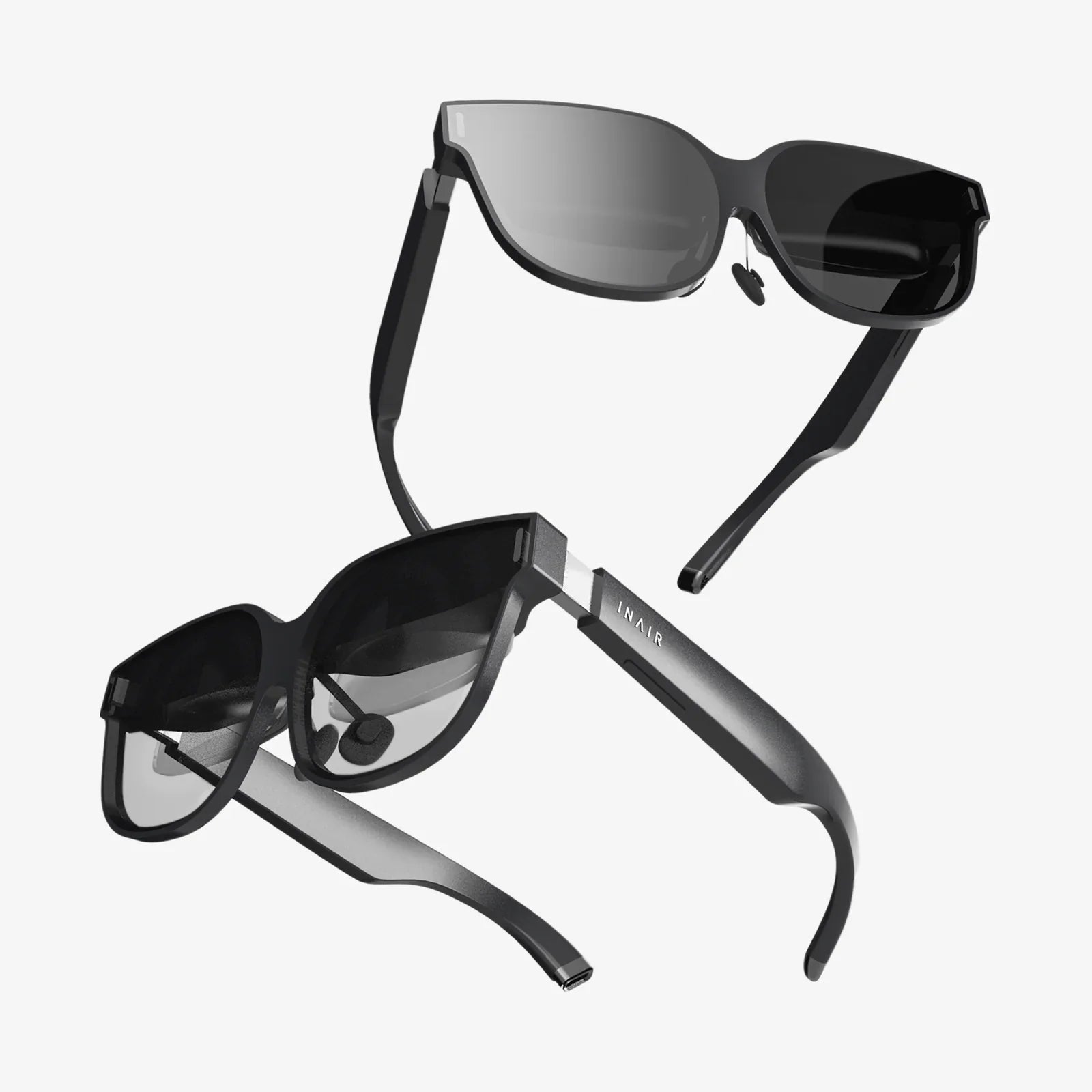
You strap it on, the world fades to black, and for a moment, there's only silence. Then, light blooms. You're no longer in your living room; you're standing on the surface of Mars, gazing at a rust-colored horizon. You're in the cockpit of a starfighter, the hum of the engine vibrating through your very bones. You're facing a dragon, its scales glistening, its breath hot and palpable. This isn't just playing a game or watching a video; this is being there. This is the promise of true immersion, and it all begins with one critical choice: finding the best immersive VR headset for you. But with a market flooded with options, how do you separate the truly transformative from the merely adequate? The answer lies not in brand names, but in a deep understanding of the core technologies that trick your brain into accepting the virtual as real.
The Pillars of Presence: What Makes VR Truly Immersive?
Immersion is the holy grail of virtual reality. Technically, it's referred to as "presence"—the undeniable, subconscious feeling that you are actually in the virtual environment. This isn't a single feature you can check off a list; it's a delicate symphony of technology working in perfect harmony. When one element falls short, the illusion shatters. You're suddenly aware you're wearing a headset, the "magic circle" is broken, and the experience reverts to being just a screen on your face. To achieve and sustain presence, a headset must excel in four key areas: visual fidelity, auditory depth, precise tracking, and intuitive interaction.
Visual Fidelity: The Window to Another World
The journey into another world begins with your eyes. The visual system of a headset is the primary gateway to immersion, and its quality is determined by several intertwined factors.
Resolution and Pixel Density: Banishing the Screen Door
Early VR was plagued by the "screen door effect" (SDE), where the visible lines between pixels made it feel like you were looking through a mesh door. The best immersive VR headsets have all but eradicated this through high-resolution displays and advanced optics. We're now in an era where many headsets boast resolutions that meet or exceed human visual acuity for the medium. Terms like "4K per eye" are becoming more common. This incredible pixel density means text is razor-sharp, distant objects are clear, and digital worlds appear solid and tangible, not like a low-resolution video game.
Field of View: Expanding Your Horizon
Resolution is useless if you're looking through a pair of binoculars. Field of View (FoV) is the measurement, in degrees, of how much of the virtual world you can see at any given moment. The human eye has a horizontal FoV of roughly 210 degrees. While no consumer headset matches that yet, the best ones push beyond 110 degrees, with some even approaching 140 degrees. A wider FoV is profoundly more immersive. It reduces the feeling of looking through a scuba mask and allows for more natural, peripheral vision cues, which are critical for your brain to accept the environment as real. A narrow FoV constantly reminds you of the headset's limitations.
Refresh Rate and Low Persistence: The End of Motion Blur
Fast-paced action in VR can be a recipe for discomfort if the headset can't keep up. The refresh rate, measured in Hertz (Hz), dictates how many times per second the image on the display is updated. A higher refresh rate—90Hz, 120Hz, or even 144Hz—creates smoother, more lifelike motion that is crucial for comfort and immersion. This is paired with a technology called "low-persistence" display, which only flashes the image for a fraction of a second per frame. This eliminates the motion blur that occurs when you turn your head quickly, a major contributor to simulator sickness. Together, high refresh rates and low persistence ensure the virtual world remains stable and clear, no matter how frantic the action gets.
Lens Technology and Eye-Tracking
High-resolution displays mean nothing if the lenses that focus the image for your eyes are poor quality. The best headsets use custom, compound Fresnel lenses or even innovative pancake lenses that provide a large "sweet spot"—the area where the image is perfectly in focus. A large sweet spot means you don't have to constantly readjust the headset to find clarity.
Furthermore, a key innovation for the future of visual immersion is integrated eye-tracking. This technology does more than just allow for intuitive menu navigation. Its most significant contribution is a technique called "foveated rendering." Our eyes only see in high detail in a very small central area called the fovea. Eye-tracking sensors detect exactly where you are looking and allow the headset to render that specific area in full resolution, while intelligently reducing the rendering load on the peripheral areas you're not directly focused on. This dramatically reduces the computational power required to run experiences, allowing for vastly better graphics and more complex worlds without needing exponentially more powerful hardware.
The Sound of Reality: Spatial Audio
Close your eyes in the real world. You can still pinpoint the location of a buzzing fly, a person talking behind you, or a car driving past. Sound is a 360-degree sense, and replicating this is non-negotiable for immersion. The best immersive VR headsets feature advanced spatial audio solutions, often with built-in headphones or sophisticated audio straps.
This isn't just stereo sound. Spatial audio uses complex Head-Related Transfer Function (HRTF) algorithms to simulate how sound waves interact with the shape of your head and ears. The result is that sounds in VR have a three-dimensional origin. A zombie groans to your left, and you instinctively turn left. Whispered dialogue comes from the character standing next to you. The roar of a T-Rex echoes from above and all around you. This auditory cue is so powerful that it often contributes more to the feeling of presence than visual cues. A headset with poor, flat audio can instantly ruin an otherwise visually stunning experience.
Precision Tracking: Being the Master of Your Movement
What good is a beautiful, sounding world if your virtual hands are jittery, floaty, or out of sync with your real ones? Precise tracking is the foundation of interaction and is achieved through two primary methods, each with its own strengths.
Inside-Out Tracking: Freedom and Simplicity
This method uses cameras mounted directly on the headset itself to observe the surrounding room and the controllers. By triangulating positions, it maps your play space and tracks your movements without the need for external sensors or base stations. The best inside-out tracking systems are incredibly robust, offering a large "guardian" or "chaperone" play area with minimal setup. This technology embodies convenience and portability, making it ideal for users who want a more flexible VR setup or who wish to avoid mounting hardware on their walls.
Outside-In Tracking: Unmatched Fidelity
The alternative method, outside-in tracking, uses external sensors or base stations placed around the room. These devices emit lasers or infrared light that is picked up by sensors on the headset and controllers. This method is often considered the gold standard for precision, especially for competitive gaming, professional applications, or full-body tracking. It typically offers sub-millimeter accuracy, incredibly low latency, and flawless tracking even when controllers are held behind your back or close to your body—scenarios that can sometimes challenge inside-out systems. The trade-off is a more complex setup process and being tethered to a specific play space.
Interaction and Haptics: Feeling the Virtual
The final piece of the immersion puzzle is touch. The best controllers are an extension of your hands. They feel natural to hold, with buttons and joysticks placed intuitively. But beyond button presses, advanced haptic feedback is what sells the illusion. This isn't the simple rumble of a gamepad; it's nuanced vibration that can simulate the texture of a virtual object, the recoil of a weapon, or the gentle patter of rain on your virtual hands. Some systems are pushing this further with finger-tracking technology that allows the headset to detect your individual finger movements without a controller, enabling natural gestures like pointing, grabbing, and throwing. This level of interaction makes the virtual world feel responsive and real, closing the loop between your intentions and the digital realm.
Choosing Your Reality: A Buyer's Guide to Key Features
Understanding these pillars allows you to make an informed decision based on your needs, not just marketing hype. When evaluating any headset, consider where it lands on these spectrums.
Wired vs. Untethered: The Freedom Trade-Off
A wired headset, often called a "PCVR" headset, connects directly to a powerful computer. This tether provides maximum graphical fidelity, as it can leverage the immense power of a high-end graphics card. For the most visually stunning, graphically intensive experiences, a wired connection is still king.
Conversely, an untethered, standalone headset has all the necessary computing power built into the device itself. It operates completely wirelessly, offering unparalleled freedom of movement. You are no longer subconsciously worrying about twisting a cable around your legs. The trade-off is that the mobile-level processor inside the headset cannot match the raw graphical output of a top-tier desktop PC. However, the gap is narrowing with each new generation of standalone hardware, and the sheer liberation of wireless play is, for many, the ultimate form of immersion.
Content Ecosystem: The World Awaits
A headset is a portal, but it's useless without worlds to explore. The available library of games, applications, and social experiences is a critical, often overlooked factor. Some platforms are walled gardens, while others are more open. Consider what you want to do most. Is it playing exclusive AAA games? Is it accessing fitness apps? Is it using professional creative or architectural tools? Is it exploring user-generated content on more open platforms? Ensure the headset you choose grants you access to the experiences that will matter most to you.
Comfort and Ergonomics: Forgetting You're Wearing It
Immersion is impossible if you're constantly aware of a heavy, unbalanced, or pressure-point-inducing device on your face. The best immersive VR headsets are designed for long-duration use. Look for features like a rigid, adjustable strap system (like a halo design) that distributes weight evenly across your head, not your face. Foam facial interfaces that are replaceable and hygienic are a plus. Proper weight balance is crucial; a front-heavy headset will strain your neck over time. The goal is to get the headset to a point where, after a few minutes, you forget it's there—allowing you to fully focus on the experience within.
The quest for the best immersive VR headset is a deeply personal one. It's a balance between the raw, technical prowess that creates a believable world and the practical considerations of your lifestyle and budget. It's about finding that perfect portal—one with a window so clear, sounds so real, and interactions so natural that the line between you and the digital universe doesn't just blur; it disappears completely. The technology is no longer science fiction; it's here, waiting to redefine your reality.
Imagine reaching out and feeling the virtual rain on your skin, hearing it whisper through the leaves of a digital forest you can walk through without a single wire to hold you back. The future of experience is being built today, not in a distant lab, but in living rooms and studios around the world. This is your chance to step through the looking glass and discover which world is truly real—the only limit is your willingness to look.
Share:
What Is The Cheapest Standalone VR Headset? A Deep Dive Into Affordable Virtual Reality
iPhone AR Compatibility: Unlocking a New Layer of Reality