


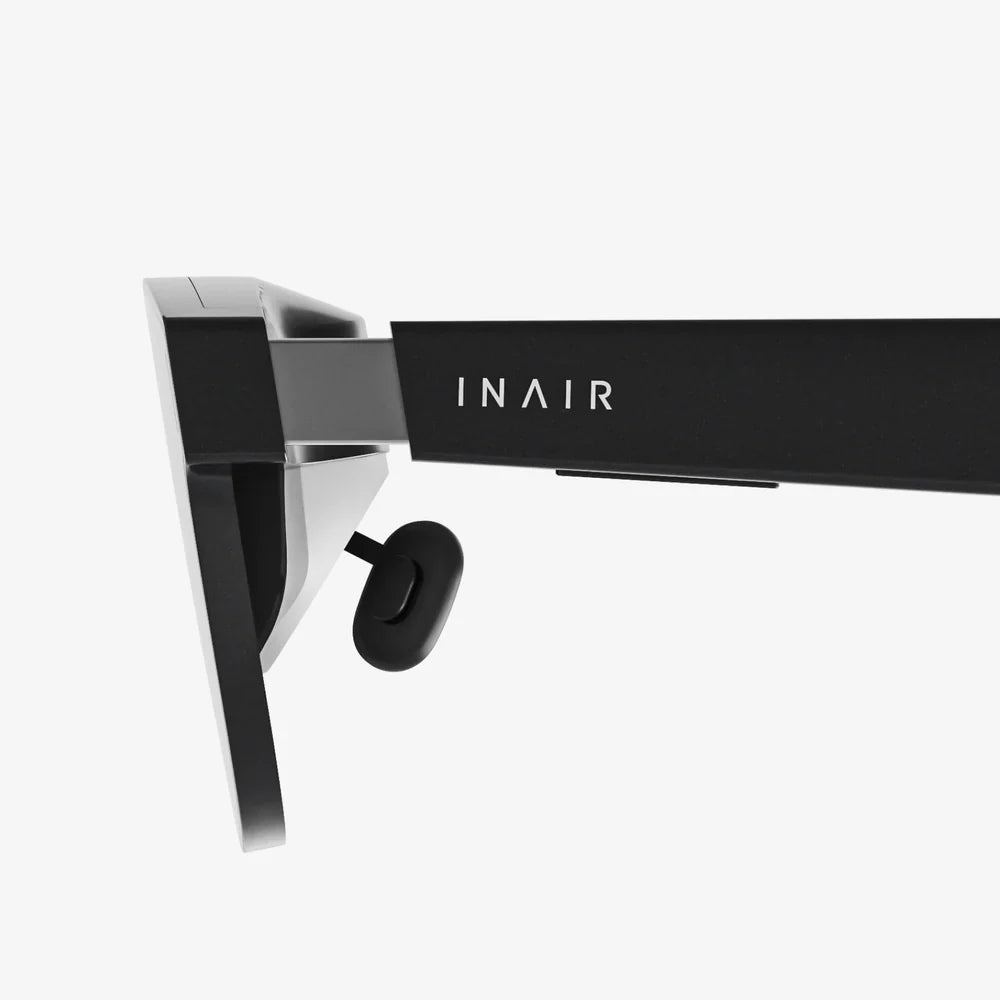
Imagine a world where digital information doesn't confine you to a desk or a screen but flows seamlessly into your physical reality, enhancing everything you see and do without weighing you down. This is the promise of augmented reality, a promise that can only be fulfilled by a device you can comfortably forget you're even wearing. The quest for the best lightweight AR headsets for all-day wear isn't just about technology; it's about unlocking human potential through effortless, continuous computing. For professionals, creators, and everyday users, finding a headset that disappears on your face is the key to truly embracing a blended future.
The Critical Importance of Lightweight Design in Augmented Reality
The difference between a compelling AR experience and one that ends up gathering dust on a shelf often boils down to a few grams. The pursuit of a lightweight form factor is not merely an engineering challenge; it is the fundamental barrier between niche gadgetry and mainstream adoption. When a device is intended for all-day wear, every element of its design must be scrutinized through the lens of human comfort and ergonomics.
Headsets that are too heavy or poorly balanced place immense strain on the neck and facial muscles, leading to fatigue, headaches, and ultimately, user abandonment. This is governed by basic physics: the further a weight is from the body's central pivot point (the neck), the greater the perceived strain. A few ounces misplaced on the front of the face can feel like pounds after several hours. Therefore, the best devices aren't just light; they are intelligently balanced, often by strategically placing the battery or processing units at the back of the headstrap to act as a counterweight, distributing mass evenly around the skull.
Beyond physical comfort, a lightweight design is intrinsically linked to social acceptance. Bulky, obtrusive headsets can feel isolating and are often perceived as antisocial in collaborative environments. A sleek, minimalistic profile that resembles premium eyewear is far less intimidating and allows for more natural, face-to-face interaction. This psychological comfort is just as crucial as physical comfort for encouraging prolonged use in offices, public spaces, and social gatherings.
Deconstructing Comfort: More Than Just Weight
While the total weight is the most headline-grabbing statistic, true all-day comfort is a symphony of interrelated factors. A device that is light but has pressure points on the nose or temples will become unbearable just as quickly as a heavier, well-padded one.
Ergonomic Weight Distribution
As mentioned, balance is paramount. The best headsets employ a wraparound design that hugs the contours of the head, ensuring the device stays securely in place without the need for a vice-like grip on your temples. This design philosophy prevents the headset from sliding down the nose or bouncing during movement, which is critical for users who are active or moving throughout their day.
Advanced Materials and Breathability
The materials touching the skin make a world of difference. Soft, medical-grade silicone nose pads that can be adjusted or swapped for different sizes prevent red marks and soreness. Headbands and facial interfaces made from lightweight polymers, composites, or even flexible titanium offer a secure yet gentle fit. Furthermore, breathable materials and open-foam padding allow for air circulation, preventing heat and sweat buildup—a common issue during extended wear sessions.
Adjustability and Customization
One size does not fit all. A comfortable headset must offer a wide range of adjustments. This includes:
- Interpupillary Distance (IPD) Adjustment: Allows users to align the optics with their eyes for a clear, strain-free image.
- Variable Headstrap Length: Accommodates different head sizes, from small to large.
- Swappable Interfaces: The ability to change the light seal or nose bridge for a perfect, personalized fit.
- Pivot and Tilt Mechanisms: Letting the display housing angle perfectly to match the user's face.
Key Features That Enable All-Day Productivity and Play
A comfortable form factor is useless if the device itself can't last a full workday or provide a compelling experience. The following features are non-negotiable for a headset destined for extended use.
Exceptional Battery Life and Innovative Power Solutions
Nothing disrupts a workflow faster than a dead battery. The best all-day headsets prioritize battery life through a combination of efficient processors, optimized software, and high-capacity cells. Many achieve this through a dual-battery approach: a small cell integrated into the glasses frame itself, supplemented by a larger, swappable battery pack that can be clipped to a belt, placed in a pocket, or attached to the back of the headstrap. This allows for truly continuous use; as one battery depletes, the other can be hot-swapped without powering down the device. Some even offer low-power "audio-only" or "notification-only" modes for preserving energy between tasks.
Thermal Management: Keeping Your Cool
Processing complex AR environments generates heat. A device that becomes uncomfortably warm on the face is a device that will be taken off. Advanced thermal engineering is critical, using passive heat dissipation techniques, heat shields, and strategic component placement to ensure the user's skin temperature remains stable. The goal is to manage heat away from the points of contact, a feat that requires meticulous internal design.
High-Resolution, Low-Eye-Strain Optics
Staring into a display for eight hours demands visual clarity and comfort. Waveguides and other advanced optical systems must provide a bright, high-resolution, high-contrast image that is easy to read in various lighting conditions. Features like automatic brightness adjustment and blue light filtration are essential for reducing eye strain over long periods. A wide field of view (FoV) is also desirable, though it often trades off against size and weight, making its implementation in a lightweight device a significant engineering achievement.
Spatial Audio and Intuitive Interaction
All-day wear means the headset must handle communication and audio immersion effortlessly. Integrated spatial audio speakers that deliver sound directly to the ears without covering them allow users to remain aware of their environment—a critical safety feature. For privacy, audio beamforming technology can direct sound precisely to the user's ears. Interaction should be seamless, moving beyond cumbersome controllers to voice commands, hand tracking, and subtle gesture control, allowing for intuitive and fatigue-free input throughout the day.
The Seamless Integration into Daily Life and Workflows
The ultimate test of a lightweight AR headset is its ability to fade into the background while enhancing the foreground of your life.
The Mobile Office Companion
Imagine having multiple virtual monitors available wherever you go—on a train, in a coffee shop, or at a client's office. Lightweight AR glasses can transform any space into a productive workstation, providing a large, private canvas for coding, designing, or analyzing data without the bulk of a laptop. Video calls become more engaging with virtual backgrounds and avatars that maintain eye contact, making remote collaboration feel more natural.
The Ultimate Guide for Hands-On Professionals
For field technicians, surgeons, engineers, and warehouse operators, having schematics, instructions, or data overlayed directly onto their field of view is transformative. A comfortable, all-day device means they can access this information hands-free, improving accuracy, efficiency, and safety without the cognitive load of looking away at a tablet or manual.
Enhancing Social and Leisure Activities
Beyond work, these devices can enrich leisure time. Watching a movie on a giant virtual screen while on a plane, getting real-time navigation cues superimposed on the street, or playing immersive games that blend with your living room—all become viable with a pair of glasses you're happy to keep on long after the workday ends.
Looking Ahead: The Future of Lightweight, Wearable AR
The trajectory of AR hardware is clear: smaller, lighter, smarter, and more powerful. We are moving towards a future where AR glasses will be indistinguishable from regular prescription eyewear. Breakthroughs in micro-OLED displays, holographic optics, and ultra-low-power chipsets are accelerating this path. We can expect future generations to leverage artificial intelligence for even more context-aware and predictive experiences, further reducing the need for manual interaction. The goal is a device that provides immense utility while its physical presence diminishes to near zero—true ambient computing.
The journey to find the perfect pair of AR glasses is a deeply personal one, a balance of specs, fit, and intended use. But the cornerstone of that journey will always be comfort. It is the unsung hero that allows the technology to step out of the way, enabling you to focus not on the device on your face, but on the expanded world it allows you to see and create. The future isn't on a screen; it's all around you, waiting to be augmented, and it will be built on a foundation of effortless, all-day wear.
Share:
VR Headset Market Size 2025: A Deep Dive into the Future of Immersive Technology
Best VR Headset to Get: Your Ultimate Guide to Immersive Reality in 2024