


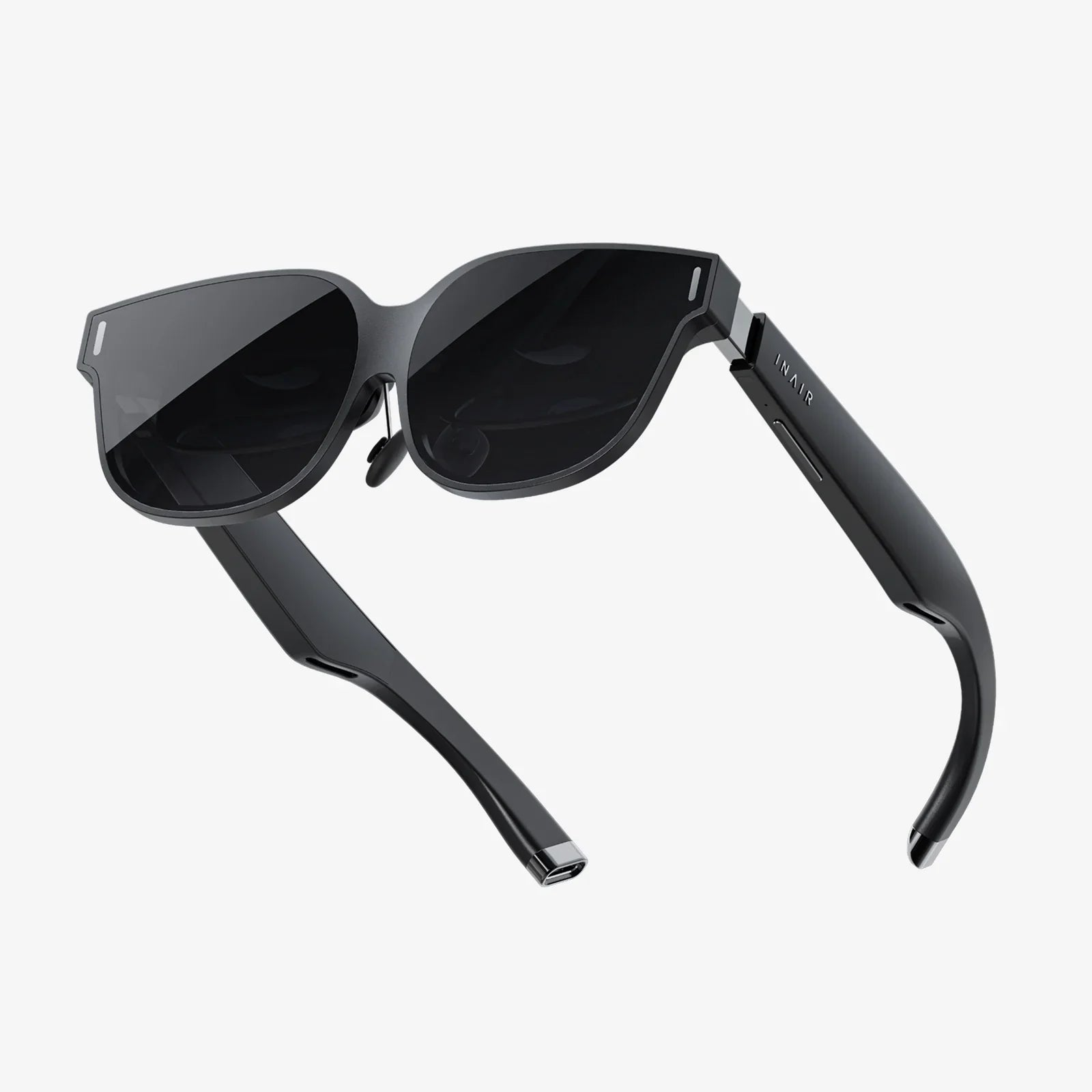
You’ve seen the future, and it’s virtual. The promise of stepping into another world, of feeling the adrenaline of a high-speed race or the awe of standing on a distant planet, hinges on one critical piece of technology: the headset on your face. But not just any headset. You’re not looking for a casual glimpse; you’re hunting for the pinnacle of digital reality—the absolute best performance VR headset that money can buy. This isn't about a brand name slapped on a box; it's about the raw, technical symphony of components working in perfect harmony to trick your senses so completely that the real world fades away. The quest for this unparalleled experience is a journey into the very heart of immersion, where every pixel, every millisecond, and every degree of freedom counts.
The Pillars of VR Performance: What Truly Matters
Defining the "best" is not a single metric but a complex interplay of several critical factors. A headset that excels in one area but fails in another creates a jarring, incomplete experience. True top-tier performance is a balanced achievement across these core pillars.
Visual Fidelity: The Window to Another World
The first and most obvious gateway to immersion is what you see. This goes far beyond simply having "a high resolution."
- Resolution and Pixels-Per-Degree (PPD): Raw panel resolution (e.g., 4K) is a misleading number without context. What truly matters is PPD, which measures how many pixels are packed into one degree of your field of view. A higher PPD drastically reduces the "screen door effect," where you can see the gaps between pixels, making the virtual world appear sharp and continuous rather than a grid of lights.
- Lens Clarity and Optical Stack: The best display is useless if poor lenses distort, blur, or chromatic aberration. Advanced pancake lenses are a game-changer, offering a much larger "sweet spot"—the area where the image remains perfectly clear—compared to older Fresnel designs. This allows for a sharper image across the entire field of view without forcing you to constantly readjust the headset.
- Field of View (FoV): A wide FoV is crucial for presence. A narrow FoV feels like looking through binoculars, constantly reminding you that you're in a headset. Premium systems push FoV beyond 110 degrees, edging closer to our natural peripheral vision and making the virtual environment feel vast and encompassing.
- Refresh Rate: Measured in Hertz (Hz), the refresh rate determines how many times the image updates per second. A higher rate (90Hz, 120Hz, and now even 144Hz) is fundamental to smooth, comfortable motion. It reduces latency, minimizes motion blur, and is absolutely critical for high-performance gaming and simulation, preventing the nausea and disorientation associated with low frame rates.
Tracking Precision: The Art of Perfect Movement
If visual fidelity is the window, tracking is the door handle. It’s how you interact with the virtual world, and any lag or inaccuracy instantly shatters the illusion.
- Inside-Out vs. External Tracking: Modern high-performance systems primarily use inside-out tracking, where cameras on the headset itself map the environment and track the controllers. This eliminates the need for external base stations, offering fantastic convenience and a simpler setup. The latest generation of inside-out tracking is so advanced that its accuracy and latency rival traditional external tracking systems for most use cases.
- Degrees of Freedom (DoF): All premium headsets offer 6DoF, tracking your head's rotation (pitch, yaw, roll) and positional movement (forward/back, up/down, left/right). This allows you to naturally lean, dodge, and peek around virtual objects. The controllers must also offer precise 6DoF tracking for natural hand presence.
- Latency: The time between your real-world movement and the virtual world reflecting it must be imperceptibly low. High-performance systems achieve sub-20-millisecond motion-to-photon latency, creating a seamless and responsive feel that is essential for both gameplay and comfort.
Processing Power: The Brain Behind the Operation
The headset is merely the display; the real computational heavy lifting happens elsewhere. There are two dominant architectures for high-end VR.
- PC-Connected (Tethered): This traditional model connects the headset via a high-speed cable to a powerful gaming computer. This connection provides access to the immense processing power of top-tier graphics cards and CPUs, enabling the most graphically intensive and complex virtual experiences with stunning detail, advanced physics, and vast worlds. For the absolute pinnacle of visual fidelity and performance, a tethered setup remains unmatched.
- Standalone: A revolution in convenience, standalone headsets have all the necessary computing power built directly into the device. They are completely wireless and self-contained. While historically a step down in graphical power, the latest chipsets in premium standalone devices are closing the gap at an astonishing rate. They can deliver stunningly smooth and visually impressive experiences without any wires or external computer, representing the ultimate fusion of performance and freedom.
Comfort and Ergonomics: The Forgotten Performance Metric
A headset can have perfect specs on paper, but if it's a pain to wear, its performance is irrelevant. Long-term comfort is a performance feature.
- Weight Distribution: The best designs use counter-balancing, often placing the battery at the back of the headstrap, to evenly distribute weight and avoid pressure on the cheeks and bridge of the nose.
- Headstrap Design: A rigid, halo-style or elite-style strap is far superior to simple elastic bands, providing a secure, stable fit that doesn't require over-tightening.
- Materials and Ventilation: Plush, breathable facial interfaces and active ventilation systems prevent heat buildup and fogging, which is crucial for active experiences.
Beyond the Spec Sheet: The Intangibles of a Premium Experience
Raw power is nothing without intelligent software and a rich ecosystem to support it.
- Software Optimization and Features: Features like advanced reprojection techniques (which generate synthetic frames to maintain smoothness), foveated rendering (which dynamically reduces resolution in your peripheral vision where you can't see the detail), and robust guardian/boundary systems are hallmarks of a mature, high-performance platform.
- Content Library: A headset is a portal, and a portal is useless without destinations. Access to a deep and diverse library of high-quality, performance-pushing games and applications is non-negotiable.
- Controller Design: The feel of the controllers in your hand is your primary touchpoint with the virtual world. Ergonomic design, haptic feedback that goes beyond a simple rumble to simulate subtle textures and actions, and reliable tracking are essential for true immersion.
The Trade-Offs and The Future
The current landscape of elite VR involves understanding key trade-offs. The tethered model offers supreme graphical power but sacrifices wireless freedom. The standalone model offers incredible convenience and untethered movement but, until very recently, accepted a lower graphical ceiling. The exciting trend is the blurring of these lines. New, cutting-edge standalone devices can now also connect to a PC, offering users the choice between wireless freedom for mobile experiences and tethered power for the most demanding simulations. This hybrid approach is quickly becoming the new gold standard for the best performance VR headset, refusing to force users to choose.
The future is even brighter. Eye-tracking technology, once a niche feature, is poised to become a cornerstone of high-performance VR. It enables foveated rendering at a biological level, where the system renders only the spot you're directly looking at in full resolution, dramatically reducing the GPU workload and allowing for previously unimaginable graphical complexity. Varifocal displays, which dynamically adjust focus to match the virtual distance of an object, could finally solve the vergence-accommodation conflict, a key source of eye strain in current systems.
Ultimately, the crown for the best performance VR headset isn't claimed by a single product but is earned by a philosophy. It's a commitment to a no-compromise approach that balances staggering visual clarity, flawless and responsive tracking, immense processing power (whether internal or external), and ergonomic design that makes long sessions a pleasure. It’s about creating a device that doesn’t just show you a game but dissolves the barrier between you and the experience. This is the threshold of true presence, and crossing it is an experience that will redefine your understanding of reality itself.
Share:
VR Headset: Is It Worth It? The Ultimate Guide to Virtual Reality in Your Home
What Type of VR Headset Should I Get? A Complete Buyer's Guide