


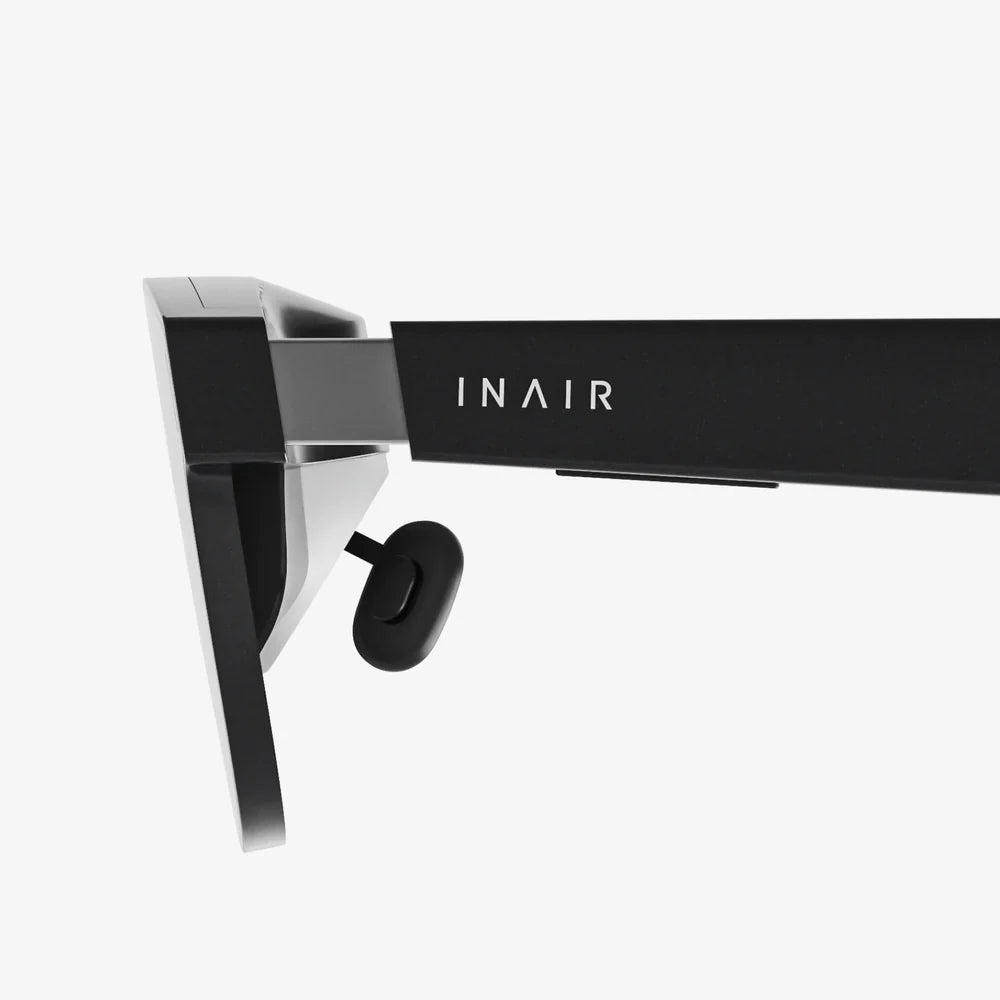
Imagine a world where your most powerful tool isn't in your pocket or on your desk, but right before your eyes, seamlessly integrated into your field of vision. The quest for the best prescription smart glasses in 2025 isn't about finding a gadget; it's about unlocking a new layer of reality, one where digital information enhances rather than interrupts, and where perfect vision is just the starting point. This year marks a pivotal moment, where technology finally matures to deliver on the long-promised dream of ubiquitous, unobtrusive computing.
The evolution of smart eyewear has been a story of fits and starts, from clunky prototypes to today's sleek, sophisticated designs. For those who rely on prescription lenses, the journey has been even more fraught, often forcing a choice between clear vision and cutting-edge tech. But 2025 is different. Advances in micro-optics, battery efficiency, and augmented reality (AR) software have converged to create a new category of device: smart glasses that are first and foremost excellent eyewear, but also powerful, discreet computers. This isn't just an incremental upgrade; it's a fundamental shift in how we interact with the digital world.
The Core Technologies Powering 2025's Smart Glasses
Understanding what makes the best prescription smart glasses of 2025 so revolutionary requires a look under the hood. Several key technologies have reached a critical point of maturity.
Advanced Waveguide Displays
The display is the heart of the experience. Earlier models used cumbersome prisms or reflective surfaces that limited field of view and brightness. The leading models in 2025 utilize next-generation waveguide technology. Imagine a clear, almost invisible lens that can project vibrant, high-resolution text, images, and videos directly into your line of sight. These waveguides use nanoscale gratings to bend light, projecting digital content onto the retina with stunning clarity and a wide field of view, all while remaining completely transparent when not in use. This eliminates the "screen door effect" of past iterations, making digital overlays feel like a natural part of the environment.
Low-Power High-Performance Processing
Driving these complex displays and AR experiences requires significant processing power, but bulkier computing units are a non-starter for wearable glasses. The solution lies in highly optimized, ultra-low-power systems-on-a-chip (SoCs) designed specifically for AR. These processors handle complex computer vision tasks, spatial mapping, and AI algorithms without draining the battery or generating excess heat. Many models also leverage a hybrid approach, offloading heavier computations to a paired mobile device, ensuring a smooth experience without compromising on the sleek, lightweight form factor essential for all-day wear.
Battery and Power Management
Battery life has historically been the Achilles' heel of wearable tech. The best 2025 prescription smart glasses have tackled this through a multi-pronged approach. Firstly, the efficiency gains in displays and processors dramatically reduce power draw. Secondly, innovative charging solutions are now standard. Expect to see sleek magnetic charging cases that provide multiple full charges on the go, solar-sensitive temple tips that trickle-charge outdoors, and even kinetic energy harvesting that converts subtle head movements into minute amounts of power. For most users, a single charge now comfortably lasts a full waking day, with the case extending that to several days without needing a wall outlet.
AI-Powered Spatial Computing
Hardware is nothing without intelligent software. The magic of 2025's smart glasses is powered by sophisticated artificial intelligence that understands the world around you. Using a suite of sensors—including high-resolution cameras, depth sensors, accelerometers, and gyroscopes—the glasses continuously map your environment. This allows for context-aware information delivery. Look at a restaurant, and its menu and reviews pop up. Glance at a complex piece of machinery, and an instruction manual is overlaid onto its components. This AI acts as a personal assistant, proactively providing the information you need, precisely when you need it.
Key Features to Look For in 2025
With the underlying technology established, what specific features should you prioritize when searching for the best prescription smart glasses for your needs?
Visual Fidelity and Prescription Accuracy
This is non-negotiable. The primary function is to correct your vision. The best manufacturers partner with established optical labs and use digital surfacing technology to create high-precision, custom prescription lenses that are then perfectly bonded with the smart waveguide layer. Look for options that support a wide range of prescriptions, including high-index lenses for strong corrections, and various lens materials like polycarbonate for impact resistance and lightweight comfort. Anti-reflective, blue-light filtering, and photochromic transitions that adjust to sunlight should be standard offerings.
Audio Innovation
Since speakers can't be bulky, audio delivery is ingenious. Bone conduction technology, which vibrates sound through your skull bones directly to your inner ear, is common. However, the gold standard in 2025 is directional audio speakers housed in the temples. They fire sound waves directly into your ear canal with pinpoint accuracy, creating a rich, private listening experience for you while minimizing sound leakage, allowing those nearby to hear virtually nothing. This enables taking calls, listening to music, and receiving audio notifications without headphones and without disturbing your surroundings.
Intuitive Control Schemes
Interacting with a interface floating in front of you requires rethinking input. Touch-sensitive temples allow for swiping and tapping to navigate menus. Voice assistants provide hands-free control for searches and commands. The most seamless method, however, is gesture control. A tiny, low-power camera tracks subtle finger movements, letting you swipe through virtual menus, select items, or control media playback with a flick of your wrist in mid-air, all without ever touching the glasses themselves.
Connectivity and Ecosystem
Smart glasses are not an island. Seamless integration with your other devices is crucial. The best models offer robust Bluetooth connectivity for pairing with smartphones and computers, acting as a secondary display or input device. Furthermore, compatibility with major operating systems ensures that your notifications, calendars, and apps work in harmony across your devices. Some are even exploring standalone LTE connectivity, allowing you to leave your phone behind entirely for certain tasks.
Design and Comfort
Technology that isn't comfortable won't be worn. The leading 2025 frames are crafted from lightweight, durable materials like titanium and advanced polymers. They come in a variety of contemporary styles—from classic full-rimmed to modern semi-rimless and sporty designs—ensuring there is a pair that fits your personal aesthetic. Adjustable nose pads and temple arms are essential for achieving a perfect, secure, and comfortable fit for all-day use, making the technology fade into the background.
Transforming Industries and Enhancing Lives
The applications for this technology extend far beyond receiving notifications or navigating with directions overlayed on the street. They are poised to revolutionize numerous fields.
Healthcare and Accessibility
For medical professionals, smart glasses can overlay patient vitals during examinations or provide step-by-step guidance during complex procedures. For individuals with low vision, object recognition and text-to-speech can describe surroundings and read signs aloud, granting unprecedented independence. Real-time language translation can break down communication barriers for deaf and hard-of-hearing individuals by transcribing conversations directly into their field of view.
Manufacturing and Field Service
Technicians can have schematics, instruction manuals, and live video feeds from remote experts hands-free overlaid on the equipment they are repairing. This reduces errors, speeds up training, and improves safety by keeping their focus on the task, not a manual or tablet.
Education and Training
Imagine learning complex anatomy by studying a interactive, life-sized 3D model of the human heart floating in the middle of the classroom. Trainee mechanics can see torque specifications and assembly sequences overlaid on an engine block. The potential for immersive, interactive learning is limitless.
Navigating Privacy and Social Acceptance
With cameras and sensors always on your face, privacy concerns are paramount and rightly so. The best manufacturers address this with clear, physical hardware solutions. A prominent LED indicator light that automatically illuminates when the camera is active is now a universal standard. Additionally, designs often incorporate a physical camera shutter switch, giving the user tangible, absolute control over their privacy. Social acceptance, once a major hurdle, is growing as the designs become indistinguishable from regular high-fashion eyewear, making the technology feel less intrusive and more like a natural accessory.
The Future is Clear
The market for the best prescription smart glasses in 2025 is vibrant and diverse, offering options for every need and style. When evaluating, prioritize the fusion of flawless vision correction with intuitive, powerful, and discreet technology. Consider your primary use cases—whether for productivity, accessibility, or simply staying connected—and choose a model whose features align with those goals. The technology has finally arrived not as a prototype, but as a polished, practical, and profoundly useful tool for modern life.
We stand at the threshold of a new era of personal computing, where the line between the digital and physical worlds gracefully dissolves. The best prescription smart glasses of 2025 are your ticket into this augmented world, offering a glimpse of a future where your reality is not limited by a screen but is infinitely enhanced by what you can see, hear, and discover through the most intuitive interface of all: your own eyes.
Share:
Smart Glasses Market Size 2025: A Vision of the Future
Are Smart Glasses Safe? An In-Depth Look at the Health and Privacy Implications