


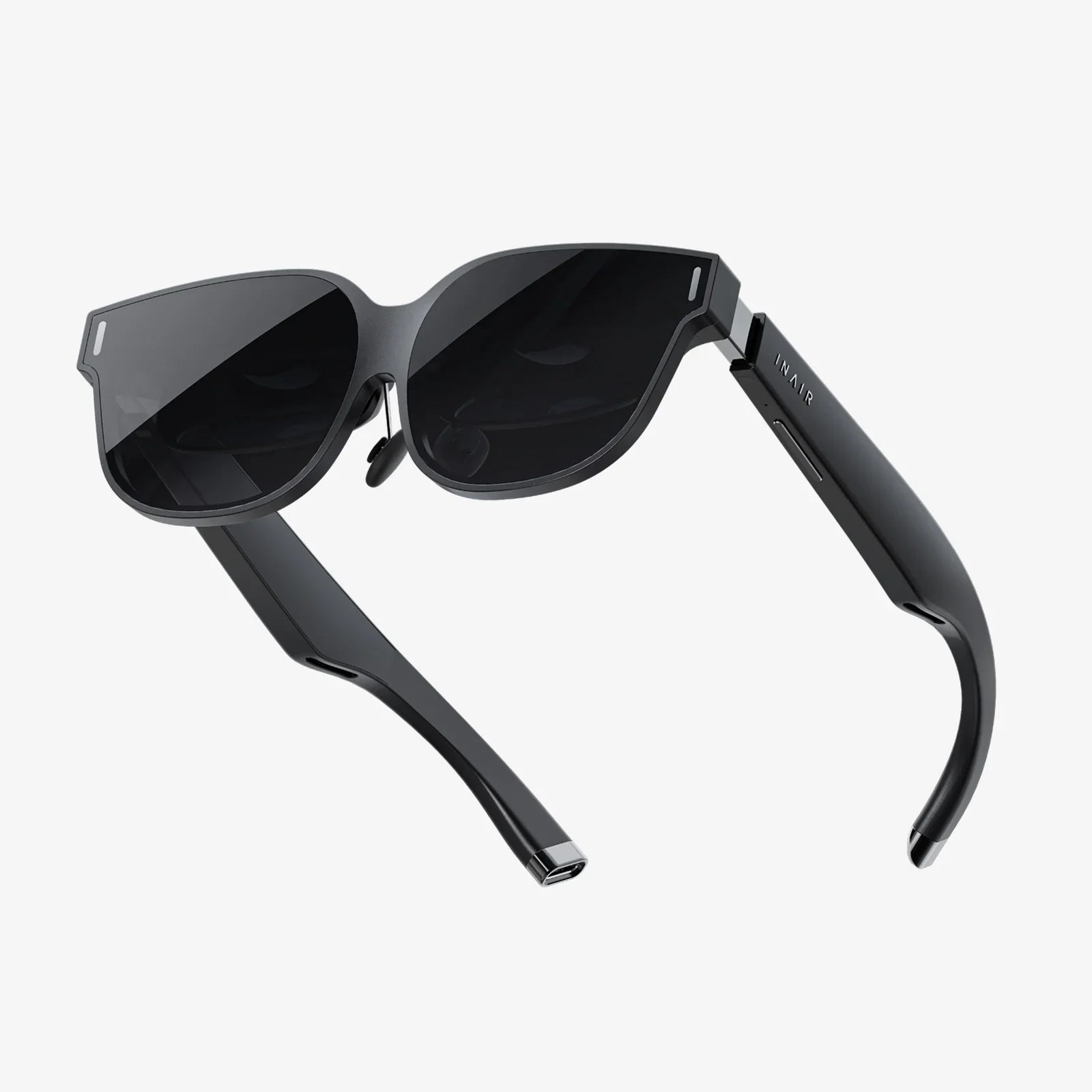
You're ready to dive into the breathtaking worlds of virtual reality, to explore alien planets, conquer fantastical realms, master new skills, and connect with others in shared digital spaces. But a daunting question holds you back: with so many options and a wide range of prices, how do you find a headset that delivers an incredible experience without demanding an incredible sum of money? The quest is not for the cheapest device, nor for the most technologically advanced one, but for that sweet spot—the best price quality VR headset that represents true value. This is your definitive guide to cutting through the noise and making a smart, informed investment in your digital future.
Decoding the "Quality" in Virtual Reality
Before we can understand value, we must first define what constitutes "quality" in a VR headset. It's a multifaceted concept, far more complex than a simple list of specifications. True quality is felt; it's the seamlessness of the experience, the absence of frustration, and the presence of pure, unadulterated immersion.
Resolution and Display: The Window to Another World
The most immediate measure of quality is what you see. Two key metrics define the visual fidelity: resolution and refresh rate.
Resolution, often stated as a single number like "1832 x 1920 per eye," determines the sharpness and clarity of the image. A higher resolution means less "screen door effect"—that visible grid of lines between pixels that can shatter immersion—and crisper text and details. For a quality experience, aiming for a combined resolution of at least 3K or higher is advisable.
The refresh rate, measured in Hertz (Hz), is equally critical. This is how many times the image on the screen refreshes per second. A rate of 72Hz is considered the bare minimum, but 90Hz or 120Hz is the hallmark of a quality headset. A higher refresh rate creates smoother motion, drastically reduces the likelihood of motion sickness, and makes fast-paced games and action feel more responsive and real.
Tracking and Controllers: Your Hands in the Virtual
Quality isn't just visual; it's kinetic. How the headset and controllers track your movement is fundamental to the sense of presence.
- Inside-Out Tracking: Cameras on the headset itself observe the environment and the controllers. This method is elegant, requires no external hardware, and offers great freedom of movement. The quality of inside-out tracking has improved dramatically, making it a standard for consumer-friendly, high-value headsets.
- Outside-In Tracking: External sensors or base stations placed around the room track sensors on the headset and controllers. This method is often considered the gold standard for precision and latency, especially for competitive gaming, but it adds cost, complexity, and setup time.
The controllers themselves are an extension of your hands. Quality controllers are ergonomic, feel solid, offer precise haptic feedback (subtle vibrations), and have responsive buttons and triggers. They should feel like a natural part of the experience, not a clumsy accessory.
Comfort and Design: The Forgotten Frontier
A headset can have the best specs on paper, but if it's a pain to wear, it's a low-quality product. Comfort is a silent spec sheet killer.
Consider the weight distribution. A front-heavy device will strain your neck and face during longer sessions. Quality headsets use counter-balancing straps or better padding to distribute weight evenly across your head.
The strap system is crucial. Basic elastic straps often come bundled with more affordable options, but rigid, customizable straps (often called "halo" or "elite" straps) are a mark of a quality-focused design, offering superior stability and comfort.
Finally, the field of view (FOV) matters. A wider FOV means more of your vision is filled with the virtual world, increasing immersion. While a human FOV is around 210 degrees, most consumer headsets range from 90 to 110 degrees. A higher FOV is generally a sign of a more premium, quality experience.
The "Price" Side of the Equation: Understanding the Tiers
The VR market has matured into distinct tiers, each with its own price point and target audience. Understanding where true value lies within these tiers is key to finding the best price quality VR headset.
The Standalone Tier: Freedom and Accessibility
These all-in-one devices have the computer built directly into the headset. They are wireless, require no powerful PC, and are incredibly easy to set up and use.
Value Proposition: For their price, standalone headsets offer an unbeatable combination of convenience and capability. They are the gateway to VR for millions. The value here is in their accessibility and the vast library of mobile-optimized games and experiences. You are paying for a complete, streamlined ecosystem.
The PC-Connected Tier: The Power Play
These headsets act as a high-resolution display and tracking device for a powerful gaming computer. They lack an internal processor, relying entirely on the connected PC for their rendering power.
Value Proposition: The value in this tier is raw, unbridled performance. You get the highest possible resolutions, the fastest refresh rates, and the most graphically intense experiences available. The cost is significantly higher when you factor in the price of the required gaming PC, but the quality-to-price ratio for the headset itself can be exceptional if you already own the hardware.
The Console-Tethered Tier: The Plug-and-Play Powerhouse
This niche is built around a specific video game console, offering a curated, high-performance experience.
Value Proposition: The value is arguably the strongest in the entire market for a specific user. If you already own the console, you gain access to a library of incredibly polished, high-fidelity VR exclusives for the cost of the headset and its accessories alone. It represents a closed but highly optimized and quality-assured ecosystem.
The Art of the Balance: Finding Your Best Price Quality VR Headset
Now, the crucial part: aligning your needs, your budget, and the available technology to find your personal value champion.
Know Thyself: Defining Your Use Case
Your primary activity in VR is the single biggest determinant of what "quality" means to you.
- The Fitness Fanatic: For apps focused on rhythm and exercise, your priorities are comfort during intense movement, excellent sweat resistance, and a wide, clear field of view. A high refresh rate is less critical than a secure, well-ventilated fit. A quality standalone headset often represents the best value here.
- The Hardcore Gamer: You crave graphical fidelity, complex worlds, and competitive play. Your priorities are maximum resolution, the highest possible refresh rate (120Hz+), precise tracking (often outside-in), and a wide FOV. The best value might be a previous-generation PC-connected headset from a reputable brand, which often sees significant price cuts when new models launch.
- The Social Explorer and Media Consumer: Your home is in social VR platforms and immersive cinemas. Your priorities are a sharp resolution for reading text and seeing faces clearly, comfortable design for long sessions, and good built-in audio. A modern standalone headset with a strong resolution and comfortable strap is likely your best value.
- The Creative Professional: Using VR for 3D design, architecture, or art demands extreme precision and clarity. Your needs align most closely with the hardcore gamer but may place even more emphasis on resolution and color accuracy. A high-end PC-connected headset is your only option, and its value is measured in professional output.
The Hidden Costs: The Total Cost of Ownership
The sticker price of the headset is rarely the final cost. To accurately assess value, you must consider the total investment:
- Required Hardware: Does it need a $1,500 gaming PC? A specific game console? Factor this in.
- Essential Accessories: That basic strap might be unbearable. A upgraded comfort strap, a additional battery pack for wireless play, and a dedicated carrying case are often necessary purchases for a complete experience.
- Software Library: VR games and apps are not free. Research the cost of the experiences you want to have.
- Replacement Parts: Controller joysticks can wear out, facial interfaces degrade. Check the availability and cost of these consumable parts.
A headset with a slightly higher initial price but a more complete package (e.g., including a good strap and a generous storage option) often provides better long-term value than a seemingly cheaper, bare-bones alternative.
Practical Strategies for Securing the Best Deal
Value isn't just about the product; it's about the purchase. Smart shopping strategies are the final piece of the puzzle.
- Embrace Previous Generations: The VR industry is advancing rapidly. Last year's flagship model is often 90% as good as the new one at 50-60% of the price. These devices represent an incredible value and are frequently cleared out by retailers when new models are announced.
- Shop Seasonally: Major sales events like Black Friday, Cyber Monday, and Prime Day are golden opportunities. Retailers often bundle headsets with popular games or store credit, effectively lowering the total cost.
- Consider Certified Refurbished: Many manufacturers and large retailers offer refurbished units that have been tested, certified, and come with a warranty. This can be a fantastic way to get a like-new device at a significant discount, maximizing your price-quality ratio.
- Read Between the Lines of Reviews: Don't just look at the score. Read professional and user reviews specifically for comments on comfort over time, controller battery life, software stability, and lens clarity. These real-world insights are more valuable than any spec sheet.
- Future-Proofing (As Much As Possible): While technology evolves, some features have longer legs. Support for a new, more advanced wireless standard or backward compatibility with a large existing library of content adds to a headset's longevity and value.
The journey to find the best price quality VR headset is not a passive one. It requires introspection, research, and a keen eye for the difference between marketing hype and genuine, user-centric design. It's about understanding that the most expensive option isn't always the best, and the cheapest option is rarely a bargain. True value is found in the headset that disappears on your head, whose controllers feel like an extension of your will, and whose world feels real enough to make you forget the price you paid altogether. That moment of pure, unimpeded immersion—that is the ultimate return on your investment, and it's waiting for you to find it.
Share:
Where Can I Buy a Cheap VR Headset? The Ultimate Smart Shopper's Guide
Where Can I Buy a Cheap VR Headset? The Ultimate Smart Shopper's Guide