


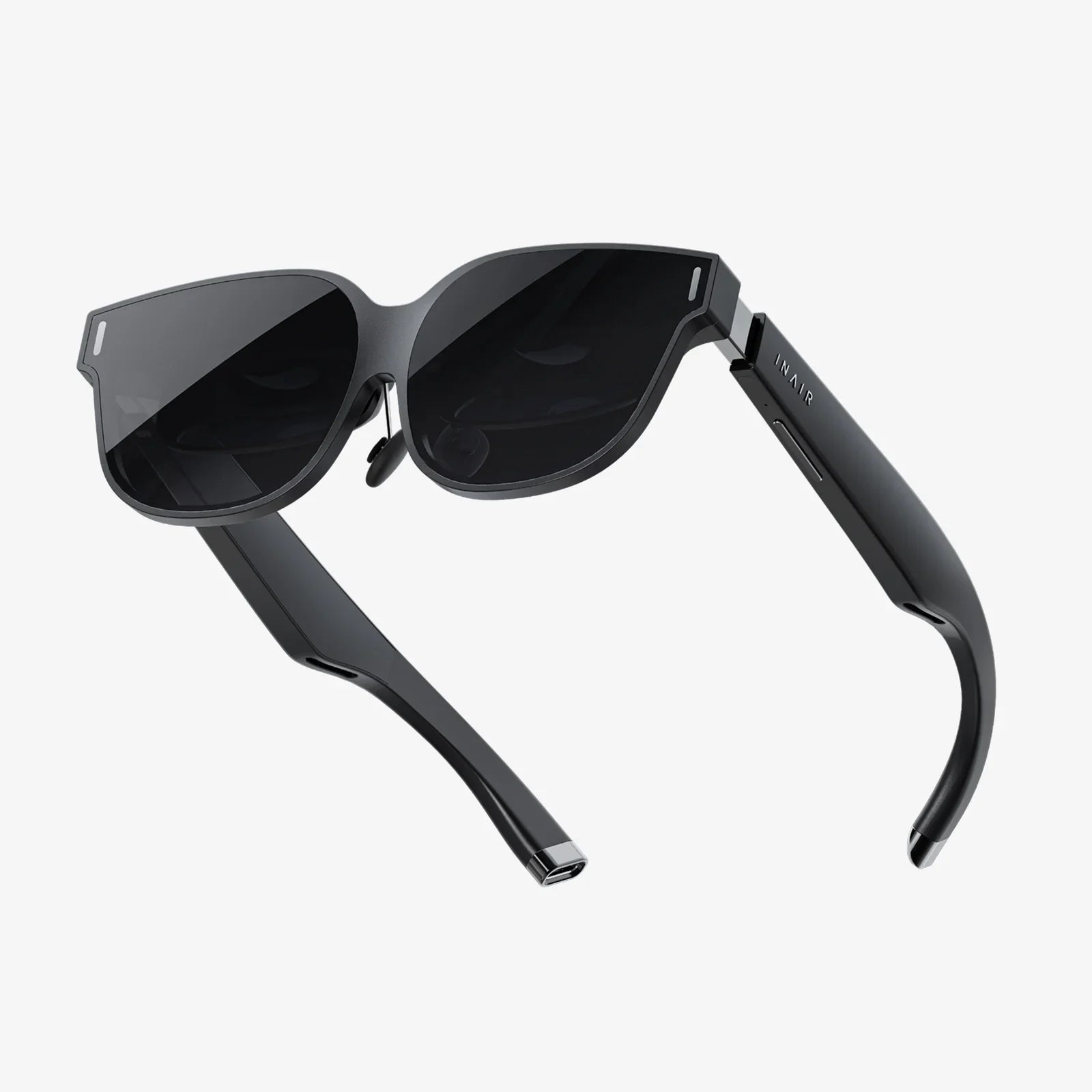
You’ve seen the hype, watched the videos, and maybe even tried a basic model. But you’re not after a fleeting gimmick; you’re searching for a portal, a true window into another reality. You’re hunting for the best quality VR headset, the kind that doesn’t just show you a world but makes you forget your own. The journey to find that perfect device is fraught with technical jargon and competing promises. This definitive guide cuts through the noise, unpacking the very essence of what separates a premium, immersive experience from a forgettable one. Prepare to redefine your expectations of virtual reality.
The Pillars of Premium VR: What Truly Defines Quality?
Defining the 'best' is subjective, but in the realm of high-fidelity virtual reality, it rests on several non-negotiable pillars. It's not about a single killer feature but a harmonious blend of technology and design that works in concert to create seamless immersion. A device that excels in one area but fails in another creates a jarring experience that shatters the illusion it seeks to build. Therefore, the best quality VR headset must master the following core components.
Visual Fidelity: The Window to Another World
The first and most immediate gateway to immersion is what you see. Subpar visuals are the fastest way to break the spell.
Resolution and Pixel Density (PPI)
This is the cornerstone of clarity. Early headsets were plagued by the 'screen door effect' (SDE), where users could see the faint lines between pixels, like looking through a fine mesh screen. The best quality VR headset today utilizes high-resolution displays—often exceeding 4K combined—with incredibly high pixel density. This drastically reduces or eliminates SDE, rendering text sharp, distant objects clear, and the virtual world convincingly real.
Lens Technology and Field of View (FoV)
High-resolution panels are useless if viewed through poor-quality lenses. Premium headsets use advanced, multi-element Fresnel or custom pancake lenses that provide a large, 'sweet spot'—the area where the image remains in focus—reducing eye strain and god rays (lens flare effects). A wide Field of View, ideally over 110 degrees, is also critical. A narrow FoV feels like looking through binoculars, while a wider one more closely matches human peripheral vision, deepening the sense of presence.
Refresh Rate and Low Persistence
A high refresh rate (90Hz and above, with 120Hz becoming the new standard for high-end devices) is essential for smooth, comfortable visuals. It reduces motion blur and judder, especially critical during fast-paced games or experiences. Coupled with low-persistence display technology, which briefly flashes images to eliminate smearing, it creates a stable, lifelike world that your brain can accept as real.
Precision Tracking: Mastering Movement in 3D Space
If visuals are the eyes of VR, tracking is the inner ear and proprioception. Flawless tracking is what allows you to forget the technology and simply interact.
Inside-Out vs. External Sensor Tracking
The debate between these two methods is central to the VR experience. External sensor tracking (e.g., base stations) uses fixed units placed around the room to precisely triangulate the headset and controllers' positions. It is renowned for its millimetric accuracy and is the gold standard for professional applications and competitive gaming. Inside-out tracking uses cameras mounted on the headset itself to map the environment and track controller movement. Its convenience is unparalleled—no setup required—and its accuracy has improved dramatically, making it the choice for most modern consumer-focused premium headsets. The best systems combine a wide tracking volume with sub-millimeter accuracy.
Controller Ergonomics and Haptics
Your hands are your primary tool in VR. The best quality VR headset comes with controllers that feel like a natural extension of yourself. This means excellent ergonomics, balanced weight, and intuitive button placement. Beyond that, advanced haptic feedback is a game-changer. Instead of a simple buzz, high-fidelity haptics can simulate the subtle recoil of a weapon, the texture of a virtual object, or the gentle patter of rain, adding a crucial tactile layer to immersion.
Acoustic Engineering: Building the Soundscape
Audio is half of the experience, yet it is often an afterthought. Spatial audio is non-negotiable for a premium headset. This technology uses advanced algorithms to simulate how sound waves interact with the human head and ears, allowing you to pinpoint the location, distance, and even height of a sound source. Whether it's the whisper of an enemy creeping behind you or the immersive roar of a crowd in a virtual arena, 3D audio completes the illusion of being somewhere else. The best implementations use built-in, high-quality speakers that don't isolate you from your real environment or offer exceptional integrated headphones.
Ergonomics and Comfort: The Long-Haul Experience
The most technologically advanced headset is worthless if you can't wear it for more than twenty minutes. Comfort is a feature.
Weight Distribution and Head Straps
A common flaw in early designs was front-heaviness, which strains the neck and face. The best quality VR headset employs sophisticated strap systems—often a rigid halo design or a flexible yet supportive strap—that distribute weight evenly across the head. Many use counterweights or battery packs at the back to achieve a perfect balance. Materials are also key, with plush, breathable facial interfaces that can be swapped for hygiene and comfort.
IPD and Eye Comfort
Interpupillary Distance (IPD)—the distance between your pupils—varies from person to person. A headset with a software-only IPD adjustment will compromise visual clarity and comfort for many users. A premium headset features a physical IPD adjustment slider or motorized adjustment, allowing you to perfectly align the lenses with your eyes for the sharpest image and reduced strain.
Beyond the Hardware: The Ecosystem is King
A headset is not an island. Its value is inextricably linked to the ecosystem that supports it.
The Content Library: A World of Experiences
Hardware is a vessel for software. The best quality VR headset must have access to a rich and diverse library of content. This includes not only blockbuster games with high-production values but also creative tools, social platforms, fitness applications, and professional software for design and architecture. A robust storefront with regular, quality releases is a sign of a healthy platform. Furthermore, access to PC-based libraries can vastly expand the available experiences, connecting the headset to immensely powerful computing hardware.
Software and User Experience (UX)
The moment you put the headset on, you should be greeted by an intuitive, responsive, and beautiful software environment. This 'home' space is your operating system in VR. The best systems are easy to navigate, allow for seamless customization, and offer features like intuitive boundary setup (Guardian/Chaperone systems), voice commands, and effortless casting to external displays. A clunky, slow, or confusing software layer can ruin the premium feel of even the most powerful hardware.
Performance and Power: Tethered vs. Standalone
The performance conversation revolves around a fundamental choice: tethered (PC-connected) or standalone (all-in-one).
- Standalone Headsets: Offer incredible convenience and freedom from wires. The latest chipsets powering these devices deliver impressive performance for mobile VR, capable of running sophisticated games and experiences. They represent the most accessible form of high-quality VR.
- Tethered Headsets: Connect to a powerful gaming computer. This unlocks the absolute pinnacle of visual fidelity, with vastly superior graphics, higher resolutions, faster frame rates, and more complex simulations. For the purist seeking the absolute best visual experience, a tethered connection is still paramount.
The most forward-thinking premium headsets are now beginning to blur this line, offering a standalone mode for convenience and a tethered mode to access the full power of a PC.
The Future is Already Here: Emerging Premium Features
The definition of 'best' is constantly evolving. Today's cutting-edge innovations are tomorrow's standard features.
Eye-Tracking and Foveated Rendering
This is arguably the most significant technological leap on the horizon. Eye-tracking sensors monitor exactly where you are looking within the headset. This enables foveated rendering, a technique that renders the area of your central vision in full detail while subtly reducing the detail in your peripheral vision—where the human eye cannot perceive it anyway. This dramatically reduces the computational load, allowing for either vastly improved graphics on existing hardware or the same high-fidelity graphics with less demanding hardware. It also enables incredibly natural social interactions in VR, as avatars can make true eye contact.
Face and Body Tracking
For complete social presence, avatars need to express more than just eye movement. Advanced systems are incorporating sensors to track facial expressions (like mouth and eyebrow movement) and even full body tracking. This allows your every smile, frown, or grimace to be reflected in your digital persona, making social interaction profoundly more human and authentic.
Mixed Reality (MR) Passthrough
While VR is about creating new worlds, Mixed Reality is about blending the virtual with the real. High-resolution, low-latency color video passthrough is transforming standalone headsets into AR/MR devices. This allows digital objects to be placed convincingly in your physical space, opening up new possibilities for gaming, productivity, design, and remote collaboration. The quality of the passthrough cameras and the software's ability to understand and mesh the environment are critical differentiators.
Choosing the best quality VR headset is no longer about picking the one with the highest number on a spec sheet. It's a holistic evaluation of how display clarity, tracking precision, immersive audio, and sublime comfort converge to create a seamless experience. It’s about understanding the trade-offs between the sheer power of a tethered system and the liberating convenience of a standalone one. It requires looking at the vibrant ecosystem of content that gives the hardware its purpose. The ultimate headset is the one that disappears on your head, making the digital world feel not just visible, but tangible, believable, and utterly real. Your journey into the metaverse deserves nothing less than this perfect synthesis of art and engineering.
Share:
What Is The Most Expensive VR Headset - A Deep Dive Into Ultra-Premium Immersion
What's The Newest VR Headset - A Deep Dive Into The Next Generation of Immersive Technology