


- by wangfred
Best Smart Glasses Available Now: A Comprehensive Guide to the Future on Your Face
- by wangfred
The world is changing, and the way we interact with it is evolving right before our eyes—literally. Imagine a device so seamless it feels like a natural extension of your senses, projecting a digital layer of information, entertainment, and connection onto the physical world without ever requiring you to look down at a screen. This is the promise of smart glasses, a category of wearable technology that has finally moved beyond science fiction and into tangible, powerful reality. The current generation of eyewear represents a significant leap forward, offering a compelling glimpse into a future where our digital and physical lives are harmoniously intertwined. The journey to find the perfect pair starts here, as we dive deep into the best smart glasses available now.
The path to today's sophisticated smart glasses has been a long and often rocky one. Early attempts were often bulky, expensive, and limited in functionality, failing to capture the public's imagination beyond niche tech circles. They were perceived more as novelties than as practical tools. However, relentless innovation in micro-display technology, battery efficiency, artificial intelligence, and miniaturized computing power has fundamentally changed the game. Modern iterations are sleeker, more powerful, and designed with actual daily wear in mind. The focus has shifted from being a conspicuous piece of tech to being a discreet and stylish accessory that just happens to be incredibly intelligent. This evolution marks a pivotal moment, transforming smart glasses from a prototype dream into a viable consumer product category with something to offer everyone.
Navigating the market for smart glasses requires an understanding of what truly matters. Unlike traditional eyewear, the value proposition is built on a combination of hardware and software features.
The heart of any smart glasses system is its display. How information is projected into your field of vision is critical to the experience. Some models utilize MicroLED or LCoS (Liquid Crystal on Silicon) projectors that beam images onto a specially coated lens, which then reflects the light into your retina. This method can create bright, vibrant images that appear to float in space. Others employ Waveguide technology, which uses microscopic gratings on the lens to bend light from a projector on the temple into your eye, allowing for a remarkably slim and natural form factor. The choice often comes down to a trade-off between image size, brightness, and the overall bulk of the frames.
Since looking at a screen is often not desirable, audio is a primary method of interaction. The best smart glasses available now use innovative bone conduction or open-ear audio systems. Instead of traditional earbuds, tiny speakers are housed in the temples, directing sound waves towards your ears. Advanced models use acoustic chambers and clever engineering to minimize sound leakage, creating a personal audio bubble that only you can hear clearly. This allows you to listen to music, take calls, and hear audio prompts while remaining fully aware of your surroundings—a crucial feature for safety and social etiquette.
All this technology demands power. Battery life varies significantly across models, often depending on usage. Intensive tasks like continuous video recording or AR navigation will drain the battery much faster than simply listening to audio. Most modern glasses offer between 3 to 8 hours of active use, with a compact charging case often providing multiple additional charges. It's essential to align your expectations with your intended use; for all-day audio, many models are more than sufficient, but for prolonged AR tasks, planning for a midday top-up might be necessary.
The true "smart" in smart glasses comes from the integrated artificial intelligence. A built-in voice assistant is almost standard, allowing for hands-free control. You can dictate messages, set reminders, ask questions, and control smart home devices simply by speaking. More advanced AI can perform real-time translation of spoken language, identify objects in your field of view, and provide contextual information about your surroundings. This ambient computing, where the technology anticipates your needs without explicit commands, is where the category's most exciting potential lies.
One of the most significant barriers to adoption has been aesthetics. The best smart glasses available now understand that they must first be good glasses.
This category prioritizes discreet, high-quality audio and seamless connectivity above all else. They look almost identical to standard sunglasses or prescription frames but hide powerful speakers and microphones within the temples. Their primary function is to replace wireless earbuds, offering a comfortable, all-day audio solution that doesn't isolate you from the world. They are perfect for commuters, office workers, and anyone who wants to take calls and listen to music without anything in their ears.
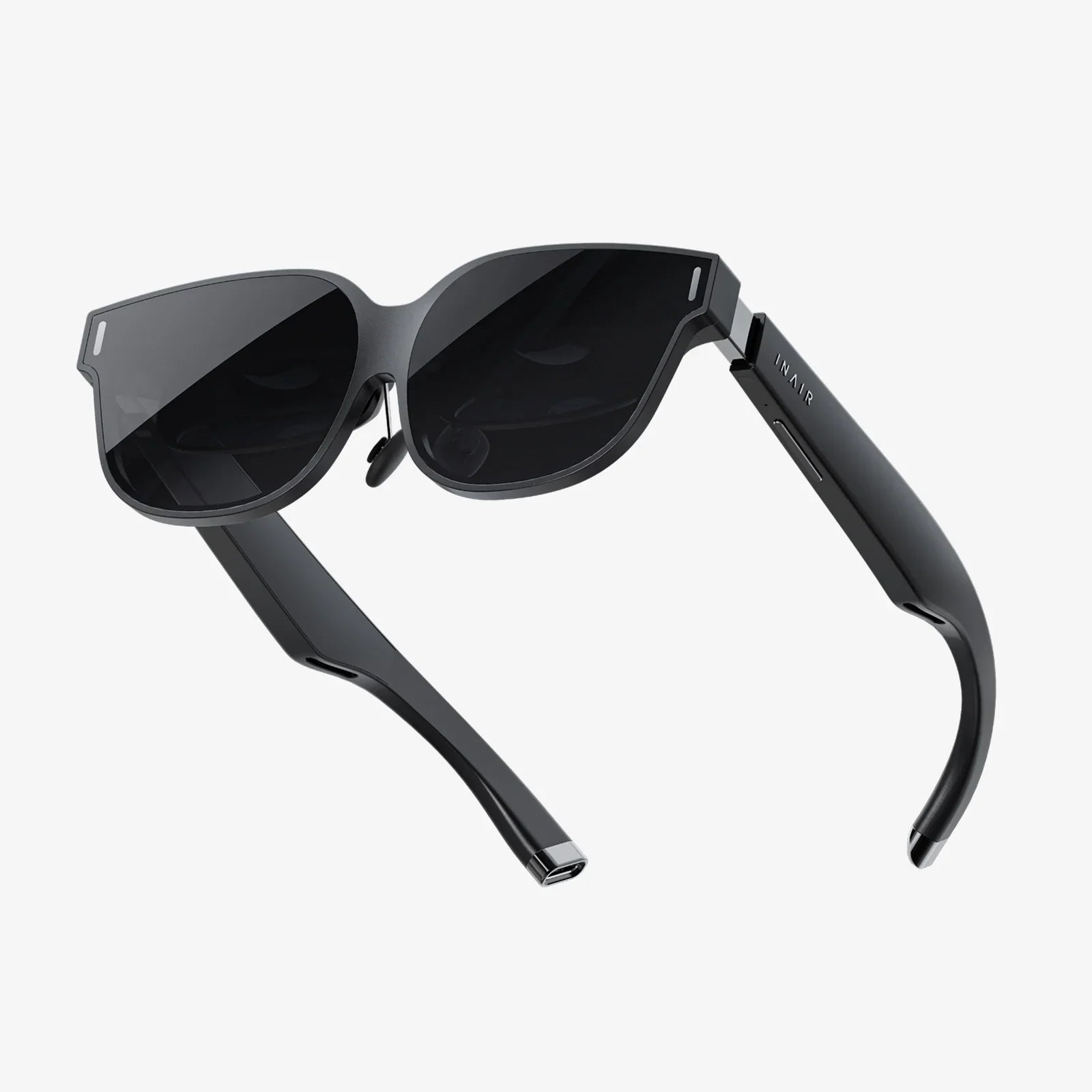
These are the true futuristic spectacles, overlaying digital graphics and information onto the real world. They feature transparent displays that can show navigation arrows on the street, recipe instructions floating over your mixing bowl, or a virtual screen for watching movies. While this segment is still in a more advanced, and often more expensive, stage of development, consumer-grade models are now available. They tend to be slightly more noticeable than their audio-focused counterparts but represent the bleeding edge of what the technology can do.
Some models integrate a high-quality camera into the frame, enabling first-person point-of-view photography and videography. This is a game-changer for content creators, DIY enthusiasts, and anyone who wants to capture moments hands-free. It allows for a truly immersive perspective that is impossible to achieve with a smartphone. Privacy is, of course, a paramount concern here, so the best models include clear physical indicators, like an LED light, to show when the camera is active.
The applications for smart glasses extend far beyond consumer convenience. They are poised to revolutionize numerous professional fields.
Technicians can have schematics, instruction manuals, and live video feeds from remote experts superimposed on the machinery they are repairing, allowing them to work hands-free and with greater efficiency and accuracy. This reduces errors, improves training, and drastically cuts down on downtime.
Surgeons can access vital patient statistics and imaging data without turning away from the operating table. Medical students can observe procedures from the surgeon's point of view, and professionals can receive real-time guidance during complex examinations.
For individuals with visual or hearing impairments, smart glasses can be transformative. They can read out text from signs and documents, describe scenes, amplify specific sounds, and provide enhanced audio cues for navigation, granting a new level of independence and interaction with the world.
The potential for smart glasses to be misused is a serious and valid concern. The idea of people recording video or taking pictures without others' knowledge is unsettling. The industry is aware of this and has taken steps to address it. Many manufacturers have built-in ethical guidelines, such as ensuring cameras cannot be activated secretly and including obvious signals when recording is happening. Social acceptance will grow as the technology becomes more common and its benefits more widely understood, much like the journey of the smartphone camera. Ultimately, responsible use by individuals and clear, respectful guidelines from companies will be the key to widespread adoption.
What we see today is merely the foundation. The next few years will bring even more astonishing developments. We can expect displays with higher resolution and wider fields of view, making virtual objects indistinguishable from real ones. Advanced eye-tracking will allow for intuitive control just by looking at different interface elements. Haptic feedback could simulate the feeling of touching virtual buttons. The line between the digital and physical realms will continue to blur, creating new forms of entertainment, social connection, and productivity that we are only beginning to imagine.
The perfect pair of smart glasses feels less like a piece of hardware and more like a superpower—an invisible conduit to a world of information and assistance. They represent the next logical step in personal technology, moving computing from our pockets and into our periphery, making it more contextual, intuitive, and integrated into the flow of our daily lives. The best smart glasses available now are not just a product; they are a portal, and stepping through it reveals a future already unfolding, waiting for you to see it clearly.