


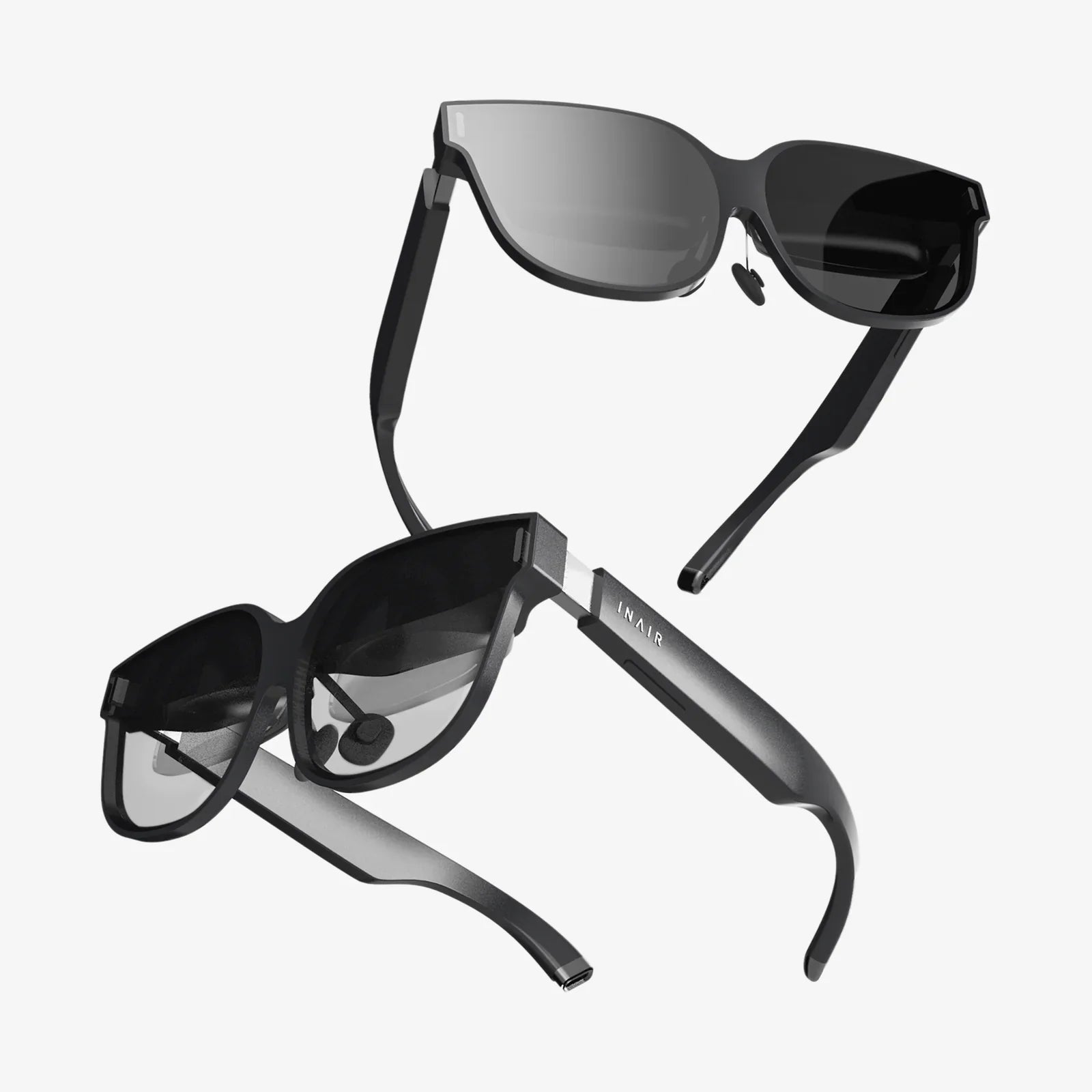
Imagine a world where information flows seamlessly into your field of vision, where digital assistants respond to your gaze, and the line between the physical and digital realms gently blurs. This is no longer the realm of science fiction; it is the promise held within the sleek, sophisticated frames of the best smart glasses available today. This technology is poised to revolutionize how we work, play, and connect, offering a glimpse into a future where our reality is augmented, enhanced, and infinitely more interactive. The journey to find the perfect pair is not just about specs and features; it's about discovering a new way to see and interact with the world around you.
The Evolution of Wearable Vision: From Concept to Consumer
The dream of augmented vision has captivated inventors and storytellers for decades. Early prototypes were bulky, expensive, and confined to research laboratories and industrial applications. They were tools, not accessories, often requiring cumbersome backpack-mounted computers and offering a limited, low-resolution view of a digital overlay. The fundamental challenge was, and to some extent remains, the miniaturization of incredibly powerful technology—processing units, displays, sensors, and batteries—into a form factor that people would actually want to wear all day.
The landscape began to shift dramatically with the advent of more powerful mobile processors and the ubiquity of high-speed connectivity. The first major wave of consumer-focused devices, while groundbreaking, often suffered from a social stigma; they were too conspicuous, too "techie," and raised significant concerns about privacy. Manufacturers learned a crucial lesson: for smart glasses to succeed, they must first be great glasses. This meant prioritizing style, comfort, and social acceptability alongside technological prowess. The latest generation reflects this maturation, with designs that are often indistinguishable from high-end traditional eyewear, finally moving the technology from the fringe into the fashion-conscious mainstream.
Core Technologies Powering Modern Smart Glasses
Understanding what makes the best smart glasses tick requires a dive into the core technologies embedded within their frames. These components work in concert to create the magical experience of augmented reality.
Optical Display Systems: The Window to Augmentation
This is the heart of the device—the method by which digital images are projected into the user's eye. There are several competing approaches, each with its own advantages. Waveguide technology uses microscopic gratings to bend light from a projector on the temple into the eye, allowing for a sleek design. MicroLED displays are incredibly small and efficient, offering bright and vibrant images. Other systems use miniature projectors to reflect light off the lens itself. The best systems offer a large, clear, and bright image that can be easily seen in various lighting conditions while maintaining a wide field of view and allowing the user to simultaneously focus on both the real world and the digital overlay.
Audio Innovation: Private Soundscapes
While visual display gets most of the attention, audio is equally critical for a fully immersive experience. The best smart glasses have moved away from traditional speakers, which can disturb those nearby, toward advanced audio solutions. Bone conduction technology transmits sound through vibrations in the skull bones, leaving the ears completely open to ambient noise. Alternatively, directional speakers fire precise beams of sound directly into the ear canal, creating a personal audio bubble that is virtually inaudible to anyone else. This allows for taking calls, listening to music, and receiving audio notifications without compromising situational awareness or privacy.
Sensors and Processing: The Digital Brain
An array of sophisticated sensors acts as the eyes and ears of the device. High-resolution cameras capture the world, while accelerometers, gyroscopes, and magnetometers precisely track head movement and orientation. Depth sensors and time-of-flight cameras map the environment in 3D, understanding the geometry of the space to allow digital objects to interact realistically with physical surfaces. All this data is processed by an onboard chipset, often aided by a connected smartphone, to understand the context of the user's environment in real-time.
Connectivity and Power: Untethered Freedom
Seamless integration with the digital world is achieved through robust connectivity options like Bluetooth for pairing with phones and Wi-Fi for high-bandwidth tasks. The ultimate goal is untethered functionality, which places immense demands on battery technology. Engineers face the constant challenge of balancing battery life with performance and weight. The best devices offer all-day battery life for core functions, with efficient power management systems and often innovative charging cases to extend usage throughout a full waking day.
Transforming Industries: Professional and Enterprise Applications
Beyond consumer novelty, smart glasses are proving to be powerful tools that are already transforming workflows and boosting productivity across numerous sectors.
Revolutionizing Field Service and Maintenance
Technicians and engineers can now access hands-free information directly in their line of sight. A maintenance worker repairing a complex machine can see schematic diagrams overlaid onto the equipment, receive real-time guidance from a remote expert who can see their view, and pull up instruction manuals without fumbling with a tablet or manual. This reduces errors, speeds up repair times, and enhances training for new employees.
Enhancing Healthcare and Surgery
Surgeons can visualize critical patient data, such as heart rate or MRI scans, without turning away from the operating table. Medical students can observe procedures from the surgeon's point of view, and paramedics can receive instructions while keeping their hands free to treat a patient. This instant access to information can improve outcomes and streamline complex medical processes.
Streamlining Logistics and Warehousing
In massive distribution centers, workers equipped with smart glasses can have order-picking information, inventory locations, and optimal routing directions displayed before their eyes. This eliminates the need to constantly check a handheld scanner, significantly increasing picking speed and accuracy while reducing physical strain.
Everyday Enhancements: Consumer Use Cases
For the average user, the value of smart glasses is found in subtle, daily conveniences that enhance life without disrupting it.
Navigation and Contextual Information
Imagine walking through a foreign city with turn-by-turn directions floating effortlessly on the sidewalk in front of you. Look at a restaurant, and see its reviews and menu pop up. Glance at a landmark, and learn about its history. This contextual layer of information, available on demand, turns the entire world into an interactive guidebook.
Seamless Communication and Content Creation
Smart glasses offer a truly hands-free way to capture life's moments. A simple voice command or button press can record a first-person perspective video of a child's first steps or a breathtaking mountain view, all without the barrier of a phone screen. They also enable more natural video calls, allowing you to share your point of view with others, making remote collaboration and personal connection feel more immediate and authentic.
Personalized Audio and Assistance
With integrated audio systems, smart glasses become a discrete hub for your digital life. Listen to podcasts, music, or audiobooks while still being aware of your surroundings. Receive and make calls without a headset. Get timely notifications read aloud to you, all controlled by intuitive voice commands or subtle touch controls on the frames.
Navigating the Considerations: Privacy, Social Acceptance, and Health
As with any transformative technology, the adoption of smart glasses comes with important considerations that society must address.
The always-on cameras and microphones understandably raise significant privacy concerns. The potential for unauthorized recording is a serious issue that manufacturers combat with clear physical indicators—like LED lights that show when recording is active—and robust privacy controls that give users ownership over their data. The industry is still developing the social etiquette for their use, much like the early days of mobile phones.
Social acceptance, or the "glasshole" stigma, is another hurdle. Early devices were often rejected because they made others feel uncomfortable or surveilled. The new generation's focus on looking like normal glasses is a direct response to this, aiming to make the technology fade into the background. Furthermore, questions about eye strain, long-term effects of screen exposure, and distraction, especially while driving or walking, are active areas of research and development for safer user experiences.
The Road Ahead: The Future of Augmented Vision
The current generation of smart glasses is merely the foundation for an even more astonishing future. We are moving towards true augmented reality contact lenses, eliminating frames altogether. Advances in artificial intelligence will enable more intuitive and predictive interactions, where the glasses anticipate your needs based on context. The development of the spatial web—where digital information is anchored to specific locations in the real world—will require devices like smart glasses to become our primary interface. They will evolve from being a companion device to a central hub, potentially replacing smartphones, watches, and other screens to become the most personal and powerful computer we have ever owned.
The quest for the best smart glasses is about more than just comparing technical specifications on a sheet; it is about embracing a new paradigm of human-computer interaction. It is a journey toward a future where technology doesn't demand our attention but instead enhances our perception, making us more capable, connected, and informed. The frames you choose will be your lens to this new, augmented layer of reality—a world of infinite information and possibility, waiting right before your eyes.
Share:
Virtual Reality Software Download: Your Ultimate Portal to Immersive Digital Worlds
The Void Virtual Reality Experience: Stepping Beyond Reality into a New Dimension