


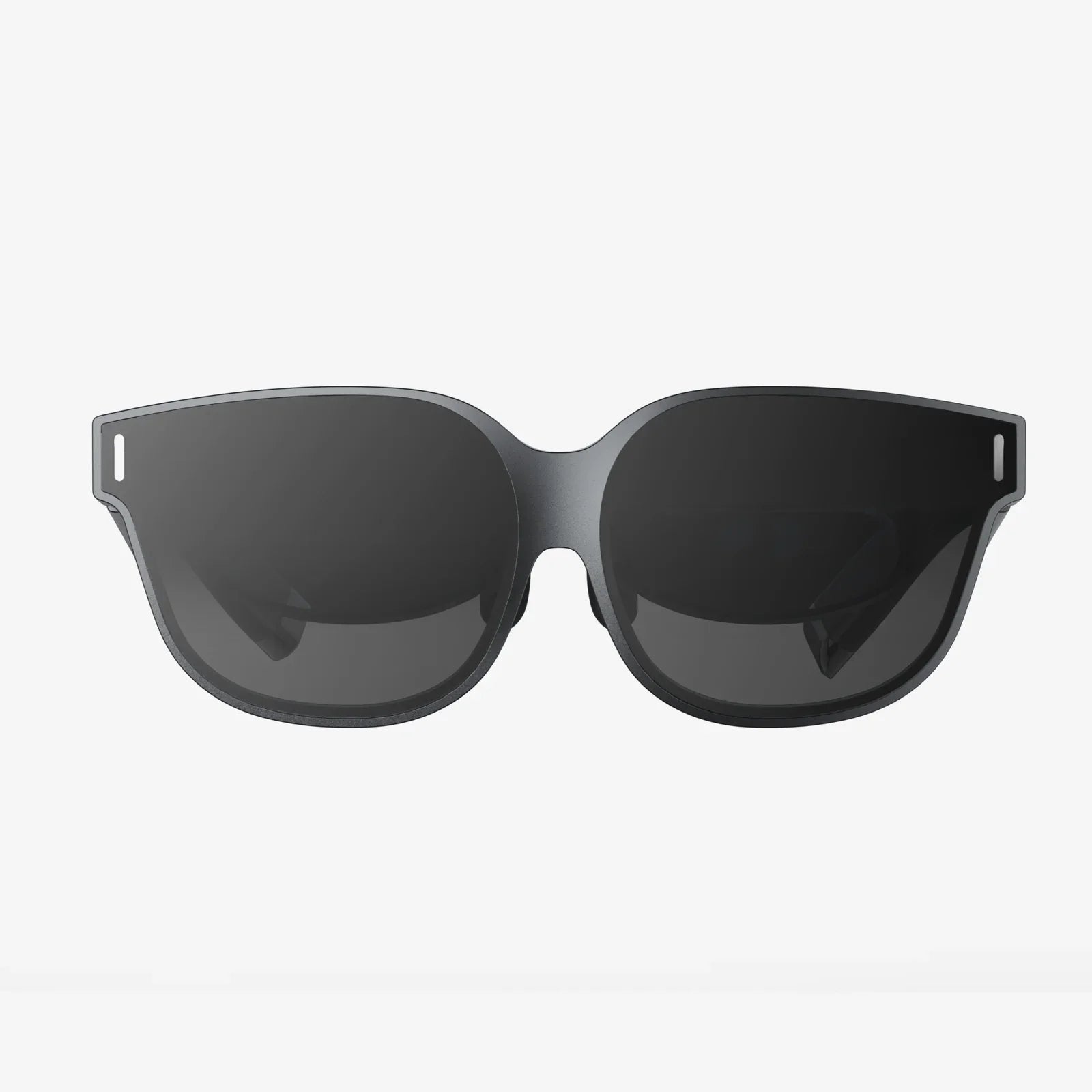
Imagine a world where information flows seamlessly into your field of vision, where language barriers dissolve with a glance, and where your digital life is enhanced not by looking down at a screen, but by looking out at the world. This is no longer the stuff of science fiction; it's the promise held by the latest generation of smart glasses, a promise powered not just by lenses and frames, but by sophisticated artificial intelligence. The quest for the best smart glasses with AI features is a journey into the next paradigm of personal computing, and it's a journey that is more accessible and more astonishing than ever before.
The AI Engine: What Makes These Glasses "Smart"?
At their core, smart glasses are wearable computers. But it is the integration of artificial intelligence that elevates them from a novel gadget to a transformative tool. AI is the brain that interprets the world around you, processes your requests, and delivers contextually relevant information without overwhelming you. This intelligence is typically embedded in a combination of onboard processors and powerful cloud-based systems, working in tandem to provide real-time responses.
Core AI Functionalities
The capabilities of AI in smart glasses can be broadly categorized into several key areas, each designed to augment human ability in a specific way.
Voice-First Virtual Assistance
This is often the most immediate and recognizable AI feature. By integrating a powerful voice assistant, these glasses allow for hands-free, eyes-up control. You can dictate messages, set reminders, check your calendar, control smart home devices, or search for information simply by speaking. The AI's natural language processing (NLP) capabilities allow it to understand context and intent, making interactions feel more like a conversation with a knowledgeable companion than a series of rigid voice commands.
Real-Time Language Translation
Perhaps one of the most magical applications of AI in this form factor is real-time translation. Advanced models can transcribe spoken language into text, which is then instantly translated and displayed within your lenses. Imagine traveling in a foreign country and seeing subtitles for a conversation happening right in front of you, or reading a menu in your native language simply by looking at it. This feature alone has the power to reshape global communication and travel, breaking down barriers that have existed for millennia.
Advanced Computer Vision and Object Recognition
Equipped with cameras and sensors, AI-powered glasses can act as a second set of eyes, identifying and providing information about what you're looking at. This computer vision capability can be used for a multitude of tasks:
- Navigation: Overlaying directional arrows and points of interest directly onto the street in front of you.
- Product Identification: Recognizing items on a shelf and pulling up reviews, price comparisons, or nutritional information.
- Text Recognition and Summarization: Reading signs, documents, or books and summarizing the content or translating it on the fly.
- Accessibility: Describing scenes for the visually impaired, identifying people (if permitted and trained to do so), and reading text aloud.
Contextual Awareness and Proactive Suggestions
The most advanced AI systems are proactive, not just reactive. By learning your routines, preferences, and location, the glasses can anticipate your needs. Walking past your favorite coffee shop might trigger a notification about a new seasonal drink. If your calendar shows a meeting across town, the glasses might proactively suggest the best time to leave based on real-time traffic data, displaying the ETA subtly in your periphery. This shift from asking for information to having it offered at the perfect moment is a key differentiator for AI-native devices.
Beyond the Hype: Practical Applications in Daily Life
While the technology is impressive, its true value is realized in practical, everyday applications. The best smart glasses with AI features seamlessly integrate into your life, enhancing moments both big and small.
For the Professional and Productivity Seeker
For professionals, these devices are a productivity powerhouse. In fields like logistics, manufacturing, and field service, technicians can have hands-free access to manuals, schematics, and remote expert guidance, overlaying digital instructions onto physical equipment. For office workers, the ability to join video calls, take notes, and manage tasks without being tethered to a phone or laptop allows for a new level of mobility and focus.
For the Traveler and Explorer
Travel is transformed. Navigation becomes intuitive, with turn-by-turn directions integrated into your real-world view. Language is no longer a barrier, fostering deeper connections with local cultures. You can instantly identify landmarks, learn their history, and even get recommendations for nearby restaurants based on your culinary preferences, all without breaking your stride.
For the Creative and Social Connector
Capturing life's moments becomes more authentic. With a simple voice command, you can record a first-person perspective video or take a photo, preserving memories without the intrusive act of holding up a phone. Sharing these moments with friends and family can be done instantly, making social connection more immediate and genuine.
For Health and Wellness
Emerging applications focus on well-being. Some systems can analyze your workout form, provide real-time coaching, or track fitness metrics. Others are exploring features that monitor posture, remind you to take breaks, or even track sun exposure. The always-on, always-available nature of glasses makes them an ideal platform for continuous, ambient health monitoring.
A Buyer's Guide: Choosing Your AI Companion
Selecting the right pair of smart glasses is a personal decision, heavily influenced by your lifestyle, priorities, and aesthetic preferences. Here are the critical factors to weigh in your decision.
Design and Form Factor: Discreet vs. Feature-Packed
There is a fundamental trade-off between style and capability. Some models prioritize a minimalist, fashion-forward design that is nearly indistinguishable from traditional eyewear. These are ideal for all-day wear and social acceptance. Other models have a more pronounced technological profile, housing larger batteries and more advanced sensor arrays (like LiDAR) for enhanced AR and computer vision experiences. Consider where and how you'll wear them most.
Display Technology: How You See the Digital World
The method by which digital information is projected into your vision is crucial. Micro-LED displays project information onto the lenses, which then reflect it into your eye. Waveguide technology uses microscopic gratings to bend light into the eye, allowing for a slimmer design. The quality of these displays is measured in brightness, resolution, and field of view (FOV). A larger FOV allows for more immersive AR experiences, but can also be more power-intensive. The best displays are bright enough to be seen in direct sunlight but subtle enough to not be distracting in dark environments.
Battery Life and Performance: Powering the Experience
AI processing is computationally intensive and can drain battery life quickly. Battery solutions typically come in two forms: a self-contained battery within the frames or an external battery pack that connects via a cable, often housed in a more substantial temple (arm) of the glasses. Assess your needs. If you need all-day battery, you may need to prioritize models with a larger form factor or plan for a midday recharge. Performance is also key; laggy voice responses or slow translation can break the immersive experience.
Audio: The Unsung Hero
How you hear responses, notifications, and media is just as important as how you see information. Most smart glasses use bone conduction or miniature directional speakers. Bone conduction transmits sound through vibrations in your skull bones, leaving your ears open to hear ambient sounds—a major safety benefit. Directional speakers beam sound directly into your ear canal, offering more privacy and richer audio quality for music, but can sometimes leak sound or muffle environmental noise. Your choice may depend on whether you prioritize situational awareness or audio fidelity.
Privacy and the Ethical Dimension
Wearing a camera on your face inherently raises privacy concerns for both you and those around you. The best devices address this head-on with clear physical indicators like LED lights that show when the camera is active, robust privacy controls that let you easily disable sensors, and transparent data policies. As a user and a citizen, it is vital to be mindful of these issues, to use the technology respectfully, and to understand the data being collected and how it is used.
The Road Ahead: The Future of AI and Augmented Vision
The current generation of smart glasses is merely the foundation. The future points toward even more seamless integration. We are moving toward true photorealistic augmented reality, where digital objects are indistinguishable from physical ones. AI will become more predictive and personalized, understanding not just what you ask, but what you might need before you even realize it. Advancements in neural interfaces could eventually allow for control via subtle gestures or even thought. The distinction between the digital and physical self will continue to blur, guided by an intelligent, ambient companion that sees what you see and knows what you know.
The frontier of wearable technology is not on your wrist; it's on your face, blending sight with insight and vision with intelligence. The right pair of AI-powered smart glasses won't just be a device you use; they will become an extension of your consciousness, quietly amplifying your capabilities and deepening your interaction with the world. The future is not just bright; it's augmented, and it's waiting for you to try it on.
Share:
Personalised VR Glasses The Ultimate Immersion Through Custom-Fitted Technology
AR VR Industry News Today: The Metaverse Builds, Enterprise Soars, and Headsets Get a Reality Check