


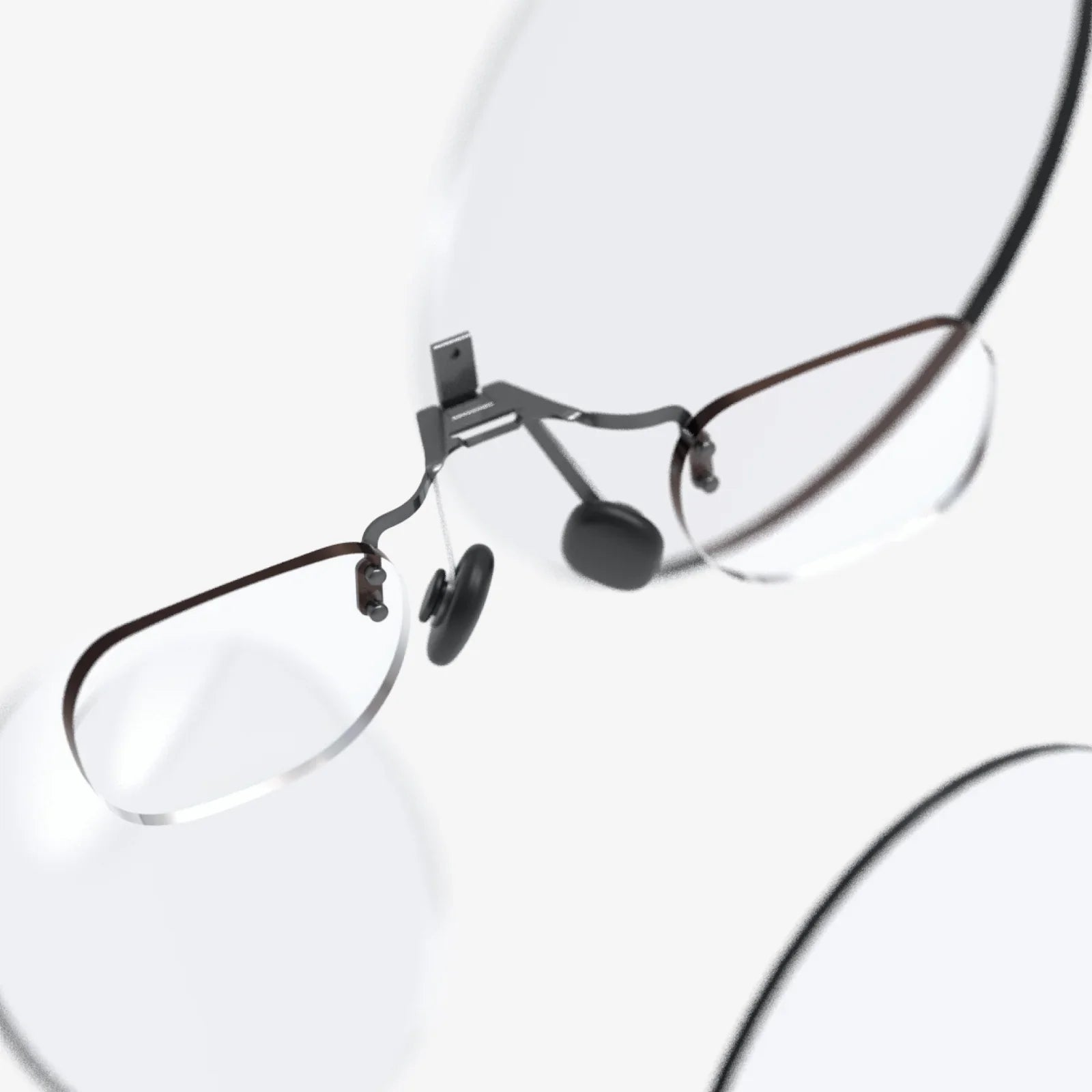
Imagine slipping on a headset and the virtual world doesn't just appear before you—it feels like a natural extension of your own vision. There's no blurry text, no pressure on your nose, no frantic searching for a elusive 'sweet spot,' and no nagging discomfort pulling you back to reality. This isn't a distant dream of VR's future; it's the tangible, transformative reality being unlocked today by the advent of personalised VR glasses. This shift from one-size-fits-all hardware to individually tailored experiences is more than a mere convenience; it is the critical key that will finally unlock the full, staggering potential of immersive technology for everyone.
The Fundamental Flaw of Mass-Produced Immersion
For years, the virtual reality industry has operated on a paradigm of compromise. Manufacturers produce headsets designed to fit the 'average' user, a statistical abstraction that fits almost no one perfectly. This approach inevitably creates a cascade of sub-optimal experiences that act as a constant barrier between the user and true immersion. The issues are familiar to any seasoned VR user: visual strain from improperly aligned lenses, headaches induced by an incorrect interpupillary distance (IPD), and general discomfort from a headset that is either too heavy, too tight, or poorly balanced for an individual's unique head shape and size. These are not minor inconveniences; they are fundamental breaks in presence, the very state that VR strives to achieve. Personalised VR glasses directly attack these problems at their root, engineering a solution that is as unique as the person wearing it.
The Core Pillars of Personalisation
The move towards custom-fitted VR is built upon several key technological and manufacturing advancements. It’s a holistic approach that considers the user from every angle.
Precision Optical Alignment: Beyond the IPD Slider
While many high-end headsets feature a physical or software-based IPD adjustment, this is often a crude tool. It changes the distance between the centres of the two lenses but fails to account for the vast majority of facial and optical variations. Personalised VR systems delve much deeper.
- Custom Prescription Lenses: The most direct form of visual personalisation. For the billions of people globally who require vision correction, inserting contact lenses or wearing glasses inside a headset has always been a clumsy solution. Custom prescription inserts that magnetically clip onto the headset's native lenses are a popular aftermarket solution, but the next step is integrating this correction directly into the headset's optical stack during manufacturing. This eliminates the extra layers of material, reduces glare, and provides a wider, clearer field of view for those who need vision correction.
- Beyond IPD: The Importance of Eye Relief and Lens Distance: The distance from the screen to the lens (eye relief) and the distance from the lens to the cornea are critical for achieving a clear image and maximising the field of view. Personalised headsets can adjust this distance mechanically or through custom facial interfaces, ensuring the user's eyes are perfectly positioned within the headset's 'eyebox' for the sharpest possible image without any peripheral distortion.
Ergonomic Tailoring: The Art of Forgetting You're Wearing a Headset
Comfort is paramount. A headset that causes pain will never be used for long, no matter how incredible its visuals.
- 3D Scanned Facial Interfaces: Using smartphone apps or dedicated scanning hardware, companies can create a precise 3D map of a user's face. This data is used to manufacture a bespoke facial gasket or interface that distributes weight evenly across the cheeks and forehead, applying pressure only to the optimal areas of the face. This eliminates pressure points on the brow and nose bridge, a common source of discomfort.
- Custom Head Straps and Weight Distribution: The shape and size of human skulls vary enormously. A strap system that works for one person may be unstable or painful for another. Personalised solutions may involve custom-moulded straps or a system of adjustable counter-weights that perfectly balance the headset's centre of gravity for the individual, making even heavier headsets feel remarkably light.
Biometric Integration: The Next Frontier of Customisation
True personalisation extends beyond physical fit into the realm of performance and health.
- Eye-Tracking Calibration: Eye-tracking is becoming a standard feature in advanced headsets, enabling foveated rendering (which drastically improves performance by rendering only the area you're looking at in high detail) and powerful new forms of interaction. For this technology to work with absolute precision, it must be meticulously calibrated to the user's unique eye shape, pupilary response, and blink pattern. A personalised headset can store this calibration data permanently, ensuring perfect eye-tracking from the moment it's put on.
- Adaptive Displays: Imagine a headset that can automatically adjust its display's colour temperature, brightness, or even focal plane based on your time of day, detected fatigue from eye-tracking, or specific visual preferences. This level of dynamic, software-driven personalisation, built upon a foundation of perfect physical fit, creates an experience that feels intuitively designed for you alone.
The Technology Making It Possible
This shift would be impossible without parallel advancements in other fields.
- Additive Manufacturing (3D Printing): The ability to cost-effectively produce low-volume, highly complex, and unique components is the backbone of physical customisation. 3D printing allows for the creation of one-off facial interfaces, straps, and even structural components without the exorbitant cost of traditional moulding and tooling.
- Smartphone 3D Scanning: Modern smartphones with advanced depth-sensing cameras (like LiDAR) or those that use photogrammetry software can create surprisingly accurate 3D models of a user's head and face. This democratises the scanning process, allowing data capture from the comfort of one's home without specialised equipment.
- Modular Design Philosophies: Headsets are increasingly being designed with modularity in mind. Swappable facial interfaces, different strap options, and accessible internal components make it easier to integrate custom parts rather than requiring a completely bespoke headset from the ground up.
The Ripple Effects: Beyond Comfort
The impact of widespread adoption of personalised VR glasses will reverberate far beyond individual user satisfaction.
- Accessibility Revolution: This is perhaps the most profound benefit. Personalised VR opens the door for individuals with atypical facial structures, those who require complex prismatic corrections in their lenses, or users with other physical challenges that made previous headsets unusable. VR becomes a medium for all, not just for those who fit a narrow physical profile.
- Enterprise and Healthcare Applications: In professional settings where VR is used for training, design, or therapy, sessions can last for hours. Comfort and visual clarity are not just preferable; they are essential for productivity and efficacy. A designer reviewing a prototype or a patient undergoing exposure therapy cannot afford the distractions of an ill-fitting device. Personalisation ensures the technology fades into the background, allowing the user to focus entirely on the task at hand.
- The Long-Term Health Implications: A well-fitted headset that provides a natural, strain-free viewing experience is better for long-term ocular health. By ensuring proper alignment and reducing the need for the eyes to constantly struggle to focus or converge, personalised VR can mitigate the eye fatigue and headaches associated with prolonged use of standard headsets.
Challenges and the Road Ahead
The path to perfect personalisation is not without its obstacles. The cost of custom manufacturing is currently high, though it is falling rapidly. There are logistical challenges in managing the pipeline from user scanning to manufacturing and delivery. Furthermore, the industry must develop universal standards for scanning and measurement to ensure compatibility and user data privacy. However, the trajectory is clear. As the technology matures, personalised fit will transition from a luxury feature on premium headsets to an expected standard across the market. We will move from buying a headset off a shelf to ordering one that is built for our face, our eyes, and our brain.
The era of one-size-fits-all virtual reality is coming to a close. The future of immersion is not about higher resolutions or faster processors alone; it is about a deeply intimate and individual connection between the human sensory system and the digital world. Personalised VR glasses represent the crucial bridge to that future—a future where the boundary between the physical and the virtual doesn't just blur, it disappears entirely, crafted uniquely for you. Step into a world designed for your eyes alone, where every detail is sharp, every experience is comfortable, and the only thing you need to adjust is your sense of wonder.
Share:
Augmented Reality How to Create: A Comprehensive Guide to Building Your Own AR Experiences
Best Smart Glasses with AI Features: The Ultimate Guide to Your Augmented Future