


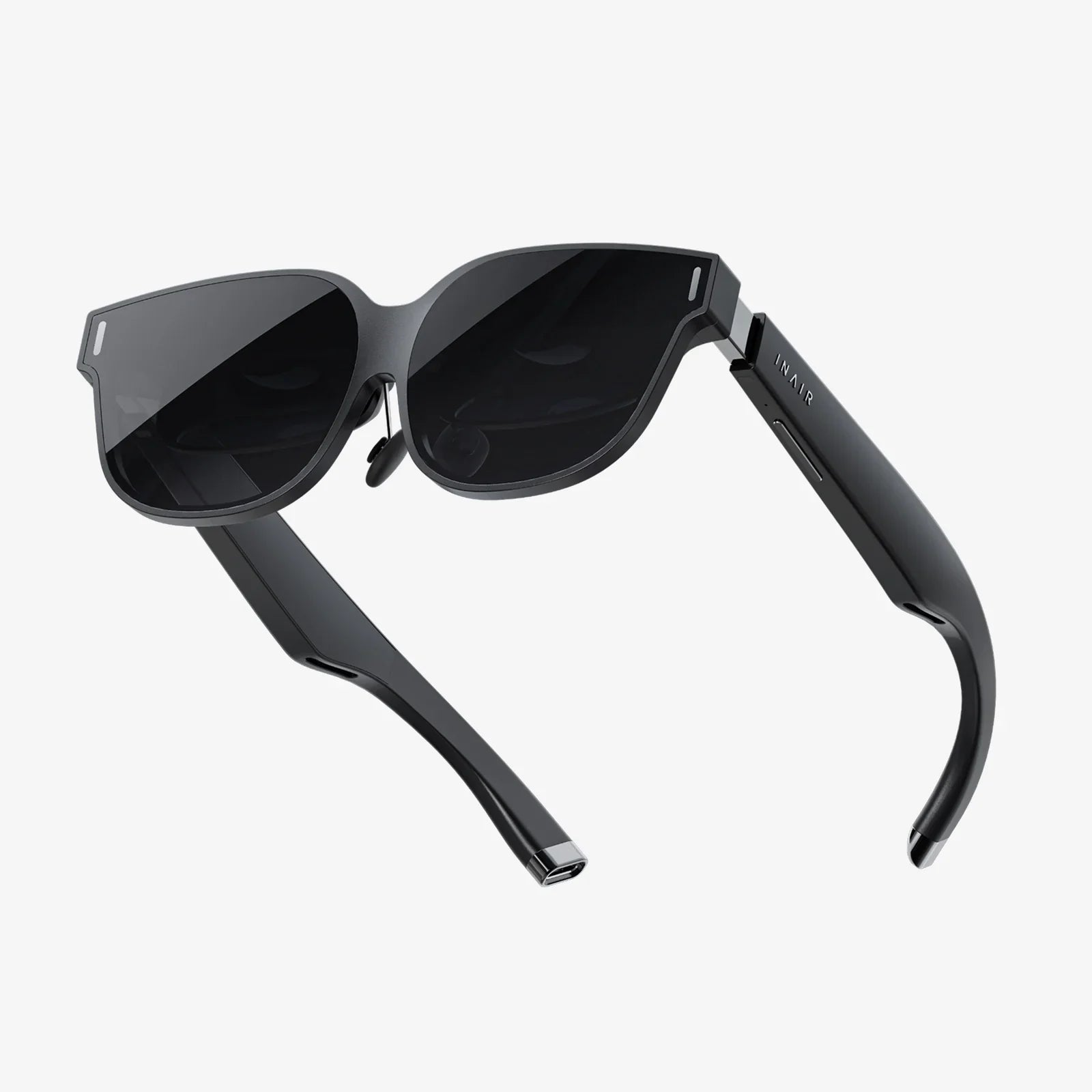
Imagine stepping into a digital layer over our world, where information and imagination float seamlessly before your eyes, all without a single wire holding you back to a bulky computer. This is the promise of standalone augmented reality, a frontier of technology that is finally breaking free from its tethers to offer unparalleled freedom and immersion. The quest for the best standalone AR headsets with no PC tethering is more than a search for convenience; it's a journey towards a truly integrated and mobile future. This guide will cut through the hype to explore the devices that are making this sci-fi dream a tangible, wearable reality today.
The Revolution of Untethered Augmented Reality
For years, experiencing high-fidelity augmented reality meant being physically connected to a powerful desktop computer. This PC tether, often a thick, cumbersome cable, was the umbilical cord supplying the necessary processing power and graphics rendering. While it enabled incredible experiences, it severely limited mobility, user comfort, and the practical applications of the technology. It was an experience confined to a small, cable-length radius.
The emergence of standalone AR headsets represents a paradigm shift. By integrating the entire computing system—processor, memory, sensors, battery, and operating system—directly into the headset itself, these devices achieve complete autonomy. This leap is akin to the evolution from desktop computers to modern smartphones. It's a move from a stationary, constrained experience to a mobile, ubiquitous, and personal one. This autonomy unlocks the true potential of AR: the ability to overlay digital content onto your physical environment anytime, anywhere, whether you're on a factory floor, in a classroom, navigating a new city, or designing in your living room.
Defining the Standalone AR Experience
When evaluating the best standalone AR headsets with no PC tethering, it's crucial to understand the core components that define their capabilities. Not all untethered devices are created equal, and their performance hinges on a delicate balance of several advanced technologies working in harmony.
The Engine Room: Processing Power and Thermal Management
At the heart of every standalone headset lies a System-on-a-Chip (SoC), similar to those found in high-end smartphones but often optimized for the intense demands of spatial computing. This chip must handle a multitude of tasks simultaneously: running the operating system, processing data from multiple cameras and sensors, rendering complex 3D graphics, and executing AI algorithms for object recognition and spatial mapping. The raw processing power, measured in teraflops or through benchmark scores, directly influences the complexity and realism of the AR experiences you can run.
However, raw power generates heat. Effective thermal management is a critical, often overlooked, aspect of standalone headset design. Unlike a phone that can be set down, a headset is worn on the face, making excessive heat uncomfortable and potentially dangerous. The best devices employ sophisticated passive and active cooling systems to dissipate heat efficiently, ensuring sustained performance during extended use without discomfort.
The Digital Eyes: Tracking, Mapping, and Display
A standalone AR headset's ability to understand and interact with the real world is its most magical feature. This is achieved through a suite of sensors:
- Cameras: Multiple RGB cameras for pass-through video (allowing you to see your surroundings) and dedicated monochrome or depth-sensing cameras for tracking.
- Inertial Measurement Units (IMUs): Accelerometers and gyroscopes that track the precise movement and rotation of your head.
- Depth Sensors: Technologies like time-of-flight (ToF) sensors or structured light projectors create a real-time 3D map of your environment, allowing digital objects to occlude behind real-world furniture and interact with physical surfaces.
This sensor fusion data is processed by computer vision algorithms to perform simultaneous localization and mapping (SLAM). SLAM allows the headset to pinpoint its exact location in a space and remember the placement of digital content, so a virtual screen remains on your wall even if you leave the room and return.
The result of all this computation is displayed on micro-OLED or LCD screens positioned in front of your eyes. Key display metrics include resolution (sharpness), field of view (how much digital content you can see at once), and brightness (essential for AR, which must compete with ambient light). The best standalone AR headsets offer high-resolution, full-color pass-through video, blending the real and digital worlds with stunning clarity.
The Power Plant: Battery Life and Endurance
Freedom from a PC tether means freedom from a wall outlet, but only for as long as the battery lasts. Battery life is a significant constraint for standalone devices. The most powerful components are energy-intensive, and the battery must be small and light enough to be worn comfortably on the head. This leads to a constant trade-off between performance and endurance.
Innovative solutions include hot-swappable batteries, allowing users to replace a depleted battery with a fresh one without powering down the headset. Others focus on highly efficient power management software that dynamically allocates resources to extend usable life. When considering a device, realistic battery life for your intended use case—be it 90-minute intensive design sessions or two hours of video playback—is a critical factor.
Key Considerations Before You Buy
Choosing the best standalone AR headset for your needs requires looking beyond raw specs. Several practical considerations will define your daily experience with the technology.
- Content Ecosystem and App Store: A headset is only as useful as the software it runs. Investigate the available app stores. Are there professional applications for your industry? Are there compelling games and entertainment options? A robust and growing ecosystem is a strong indicator of a platform's health and future potential.
- Form Factor and Comfort: Will you be wearing this for minutes or hours? Weight distribution, padding, and adjustability are paramount. Some designs prioritize a sleek, glasses-like form for mobility, while others embrace a more robust design to accommodate advanced features, sacrificing some portability for power.
- Controller vs. Hand Tracking: How do you interact with the digital world? Many headsets come with dedicated motion controllers, offering precision and tactile feedback. However, the most immersive trend is towards advanced hand tracking, using built-in cameras to see your fingers and gestures, allowing you to manipulate digital objects with your bare hands. The best devices often support both, offering flexibility for different tasks.
The Current Contenders and Their Philosophies
The market for high-end standalone AR is still evolving, but several prominent players have established distinct approaches. It's important to note that this landscape changes rapidly, with new entrants and iterations appearing frequently.
One segment focuses on the all-in-one productivity powerhouse. These devices are designed as portable workstations, replacing your monitors and computer with virtual screens and powerful native apps. They typically feature high-resolution color pass-through, powerful processors for multitasking, and an emphasis on enterprise software for remote assistance, 3D design, and data visualization. They are bulkier but offer the most comprehensive feature set for professional use.
Another segment aims for a more mobile and socially acceptable form factor. These devices often resemble bulky sunglasses and are designed for on-the-go use—navigation, messaging, and light entertainment. They prioritize portability and longer battery life over raw processing power, aiming to be a device you might wear while walking down the street.
A third, emerging category is pushing the boundary with cutting-edge display technology, such as holographic waveguides or laser beam scanning, to project images directly onto the retina. These promise incredibly sharp images and a more natural blend of digital and physical realities, but often come with trade-offs in field of view or color fidelity.
Gazing into the Crystal Ball: The Future of Standalone AR
The technology behind standalone AR is advancing at a breakneck pace. The devices available today are merely the first steps on a long road. In the near future, we can expect several transformative developments. Processors will become more powerful and energy-efficient, enabling ever more realistic graphics and complex interactions without compromising on size or battery life. Advances in micro-LED and holographic optics will lead to thinner, lighter, and more visually stunning displays that are indistinguishable from regular glasses.
Perhaps the most significant evolution will be in artificial intelligence. On-device AI will become more sophisticated, allowing headsets to understand context and intent at a deeper level. Instead of just placing a virtual object on a table, your headset will understand that the table is a desk, recognize the computer on it, and automatically launch your virtual workspace environment when you sit down. The line between initiating a command and the device anticipating your needs will blur, creating a truly intuitive and responsive digital assistant that exists in your periphery vision.
This progression will move AR from a novel tool to an indispensable platform, reshaping communication, work, education, and entertainment. The standalone headset will cease to be a separate device and will instead become a seamless extension of our perception.
The search for the perfect untethered AR experience is driving some of the most exciting innovation in tech today. While today's options each have their strengths and compromises, they collectively point to a future where digital information enhances our reality not from a screen in our pocket, but from a lightweight, intelligent window we choose to wear. The freedom to explore, create, and connect without boundaries is no longer a distant promise—it's a capability being built into headsets available right now, waiting for you to take the first step into a larger world.
Share:
How to Setup VR Headset: The Ultimate Step-by-Step Guide for Beginners
Expensive VR Headset: Is the Ultimate Immersion Worth the Astronomical Cost?