


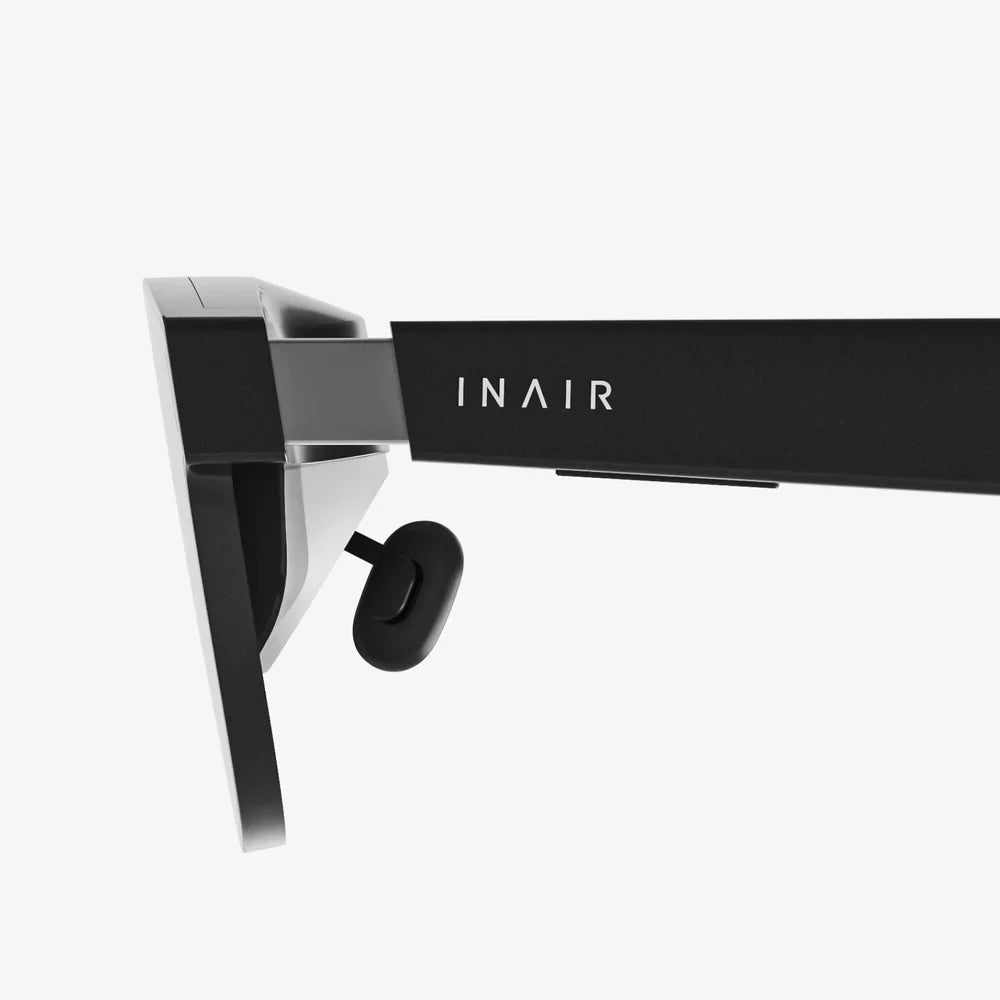
Imagine a single device that unlocks every virtual world, a gateway that doesn't care if you're gaming on a high-end rig, streaming from a console, or exploring mobile content. The quest for the best universal VR headset isn't just about specs; it's about finding the key to boundless digital exploration without being locked into a single ecosystem. This ultimate freedom is the holy grail for VR enthusiasts, and it's closer than you think. The right headset can transform how you interact with technology, friends, and the very fabric of digital entertainment. Let's dive into what makes a VR headset truly universal and how you can find the perfect one to shatter the walls between platforms.
The Defining Pillars of a Truly Universal VR Experience
What does 'universal' actually mean in the fast-evolving world of virtual reality? It's more than a marketing buzzword. A genuinely universal headset is built on three core pillars: hardware compatibility, software accessibility, and user adaptability. It's a device designed from the ground up to be agnostic, to serve as a neutral bridge between competing technologies rather than a walled garden.
First, hardware compatibility is paramount. The best universal VR headset must speak multiple technological languages. This means supporting a wide array of connection standards, from HDMI and DisplayPort for traditional gaming computers to USB-C for modern laptops and even wireless streaming protocols for consoles and mobile devices. It requires a design philosophy that prioritizes open standards over proprietary ones, ensuring that the headset can understand the video and audio signals from nearly any source. This extends to tracking systems as well; whether using inside-out cameras, external base stations, or even mobile-based sensors, a universal headset should offer multiple pathways to accurate positional tracking without mandating a single approach.
Second, software accessibility separates a versatile tool from a limited gadget. Universal doesn't just mean it can physically connect; it means that once connected, the entire software library of the host platform is at your fingertips. This involves driver-level support that makes the headset appear as a standard display device to a computer, bypassing the need for exclusive runtime environments that can block access to certain content. It means supporting open platforms alongside curated stores, giving the user the choice of where to get their experiences. The ideal universal headset acts as a transparent window, not a filtered lens, to VR software.
Finally, user adaptability ensures the headset fits not just your devices, but your life. This encompasses physical comfort for extended use across different activities, from high-motion games to stationary media viewing. It includes adjustable lenses (IPD and focus) to accommodate a wide range of users without eyestrain. It means intuitive controls that can be mapped to different input schemes, whether you're using a standard gamepad, motion controllers from another system, or even your hands alone. A universal headset adapts to you, not the other way around.
Untangling the Web: Understanding VR Connectivity and Standards
The backbone of any universal headset is its ability to connect. The landscape of VR connectivity is a tangled web of cables, ports, and wireless signals, but understanding it is key to making an informed choice. The journey from a video signal generated by a GPU to an image in your eyes involves several critical steps, and a universal headset must be proficient in all of them.
Wired connections remain the gold standard for high-fidelity, low-latency VR, especially for PC gaming. Here, the key standards are HDMI 2.0/2.1 and DisplayPort 1.2/1.4. A headset that supports both offers maximum flexibility. DisplayPort is common on desktop graphics cards and offers high bandwidth for high refresh rates and resolutions. HDMI is ubiquitous on consoles, laptops, and media devices. A headset with a virtual link port (a specific USB-C implementation that carries power, video, and data in one cable) is also a huge advantage for modern laptops and GPUs that support it. The best universal headsets often include multiple cable options or a single clever cable with interchangeable adapters.
Wireless connectivity is where universality meets convenience. Two main protocols dominate: Wi-Fi-based streaming and proprietary low-latency solutions. For a headset to be universally wireless, robust Wi-Fi 6 (802.11ax) support is essential. This allows it to connect to a dedicated router or a wireless adapter dongle connected to a PC, and increasingly, to cloud streaming services and compatible consoles. The ability to seamlessly switch between a wired tether for critical gameplay and a wireless connection for media or social apps is a hallmark of a mature universal device.
Beyond video, data connections are crucial for tracking and control. This is often handled via Bluetooth or a dedicated wireless protocol for controllers. A universal headset should not be locked into a single controller ecosystem. It should be able to pair with standard Bluetooth gamepads, and if it uses its own motion controllers, they should be self-contained, using inside-out tracking that doesn't rely on external sensors tied to one platform. This ensures that your investment in input devices travels with you across hardware generations.
Beyond the Spec Sheet: The Human Factors of Comfort and Clarity
Technical specifications are meaningless if the headset is unbearable to wear or painful to look through. Universality extends deeply into the human factors of ergonomics, optics, and accessibility. These are the features you feel, not just read about, and they ultimately determine whether a headset becomes a daily driver or collects dust in a closet.
Comfort is a complex equation of weight distribution, padding, and adjustability. A heavy headset that presses on your cheeks will fail during a long RPG session. A headset with a tight strap will give you a headache during a movie. The best universal designs use counterweights, top straps, and interchangeable facial interfaces to distribute weight evenly across the head and face, not just the front of your skull. They prioritize breathable materials to manage heat and moisture during active use. They offer quick-adjust systems for sharing the headset with friends and family, a key aspect of social VR universality.
Visual clarity is about more than just resolution. It's about the combination of panel technology, lens quality, and optical adjustment. Pancake lenses are a recent innovation that allows for a much slimmer and lighter headset design compared to traditional Fresnel lenses, but they can have trade-offs in brightness. A wide field of view (110 degrees or more) is critical for immersion, preventing the feeling of looking through binoculars. Most importantly, a universal headset must have a robust physical IPD (inter-pupillary distance) adjustment mechanism. A simple software slider is insufficient for many users, as it doesn't physically move the lenses to align with your eyes, which can cause eye strain, blurriness, and a lack of depth perception. A headset that accommodates a wide IPD range (from 58mm to 72mm or more) is truly built for everyone.
Accessibility features are the final frontier of universality. This includes support for corrective lens inserts so glasses-wearers don't have to cram their frames into the headset, audio solutions that work for both standard headphones and hearing aids, and software features like high-contrast modes, text scaling, and alternative control schemes for users with different abilities. A headset that considers these needs is designed for the entire human spectrum.
The Software Soul: Navigating Stores, Platforms, and Content
A headset is a hollow shell without content. The software environment it operates within is its soul, and for a universal headset, this soul must be open and welcoming. The goal is to avoid being gatekept from experiences based on the hardware you own. This involves a multi-faceted approach to software access.
The most straightforward path is native support for the major open VR platforms. These are software layers that act as intermediaries, translating the headset's inputs and outputs into a language that games and applications understand. A headset that can run as a primary display for these platforms gains instant access to their vast libraries of content without needing custom ports for every game. This is the software equivalent of speaking a common language that everyone understands.
Beyond dedicated VR platforms, a universal headset should excel at traditional desktop and media consumption. This means featuring a high-resolution, high-contrast display that makes reading text from a virtual desktop not only possible but pleasant. It requires a comfortable form factor for watching 2D and 3D movies in a virtual theater. Software features like a passthrough camera that allows you to see your real-world keyboard and mouse are invaluable for productivity. This transforms the headset from a pure gaming device into a universal monitor replacement.
Finally, the rise of cloud streaming and remote play adds another layer to universality. A headset with a capable standalone web browser or dedicated streaming apps can tap into cloud gaming services, effectively letting you stream high-end VR experiences from powerful remote servers without any local hardware beyond the headset itself. This is perhaps the ultimate expression of hardware universality—bypassing local hardware constraints altogether and accessing power on demand from the cloud. The ability to effortlessly switch between these modes—native PC VR, standalone mobile VR, cloud streaming, and desktop viewing—is the true mark of a universal software experience.
Future-Proofing Your Investment in the Metaverse
VR technology is advancing at a breakneck pace. What seems cutting-edge today may be obsolete in two years. Therefore, a critical aspect of choosing a universal headset is assessing its ability to remain relevant. This isn't about chasing every new feature, but about selecting a device with a foundation that can adapt to the coming waves of innovation.
Modularity is a key indicator of a future-proof design. This can mean hardware modules, like replaceable battery packs for controllers, upgradeable face gaskets, or even the potential for external sensor add-ons for enhanced tracking fidelity. Some headsets feature modular front plates, allowing for the attachment of new technology, like higher-resolution camera modules for improved mixed reality. A headset designed with expansion in mind acknowledges that it can't be the best at everything on day one, but it can evolve.
Software support longevity is just as important. This is driven by a active development community and a manufacturer committed to providing updates that expand compatibility and unlock new features. An open driver model allows the community to step in where the manufacturer might step back, creating custom drivers to connect the headset to new platforms or games. A headset backed by a strong and open developer community has a much longer lifespan than a closed, proprietary one that is entirely dependent on its parent company's roadmap.
The most forward-looking universal headsets are already building for the next paradigm: the blending of physical and digital worlds, often called mixed reality (MR) or augmented reality (AR). High-resolution, color passthrough cameras are no longer a novelty but a necessity for the next generation of applications that will overlay digital information onto your real environment. This could be for productivity, with virtual monitors placed on your physical desk, or for gaming, where your entire room becomes a playspace. Choosing a headset with capable cameras and the processing power to handle MR tasks ensures you won't be left behind as the line between VR and AR continues to blur. Your universal portal shouldn't just take you to other worlds; it should bring those worlds into yours.
The perfect universal VR headset doesn't exist—yet. Every model on the market represents a series of thoughtful compromises between performance, compatibility, comfort, and cost. But the ones that come closest share a common philosophy: they prioritize your freedom. They empower you to choose your platform, your content, and your experience without artificial barriers. They are designed not as an endpoint, but as a beginning—a versatile window into the vast and interconnected metaverse that is still being built. The best headset is the one that disappears, becoming an intuitive extension of your curiosity, allowing you to forget the technology and simply explore. Your journey into every virtual world starts with a single, well-chosen key.
Share:
Best VR Headset for iPhone 5s: A Nostalgic Dive into Mobile Virtual Reality
How to Use VR on Android: The Ultimate Immersive Guide