


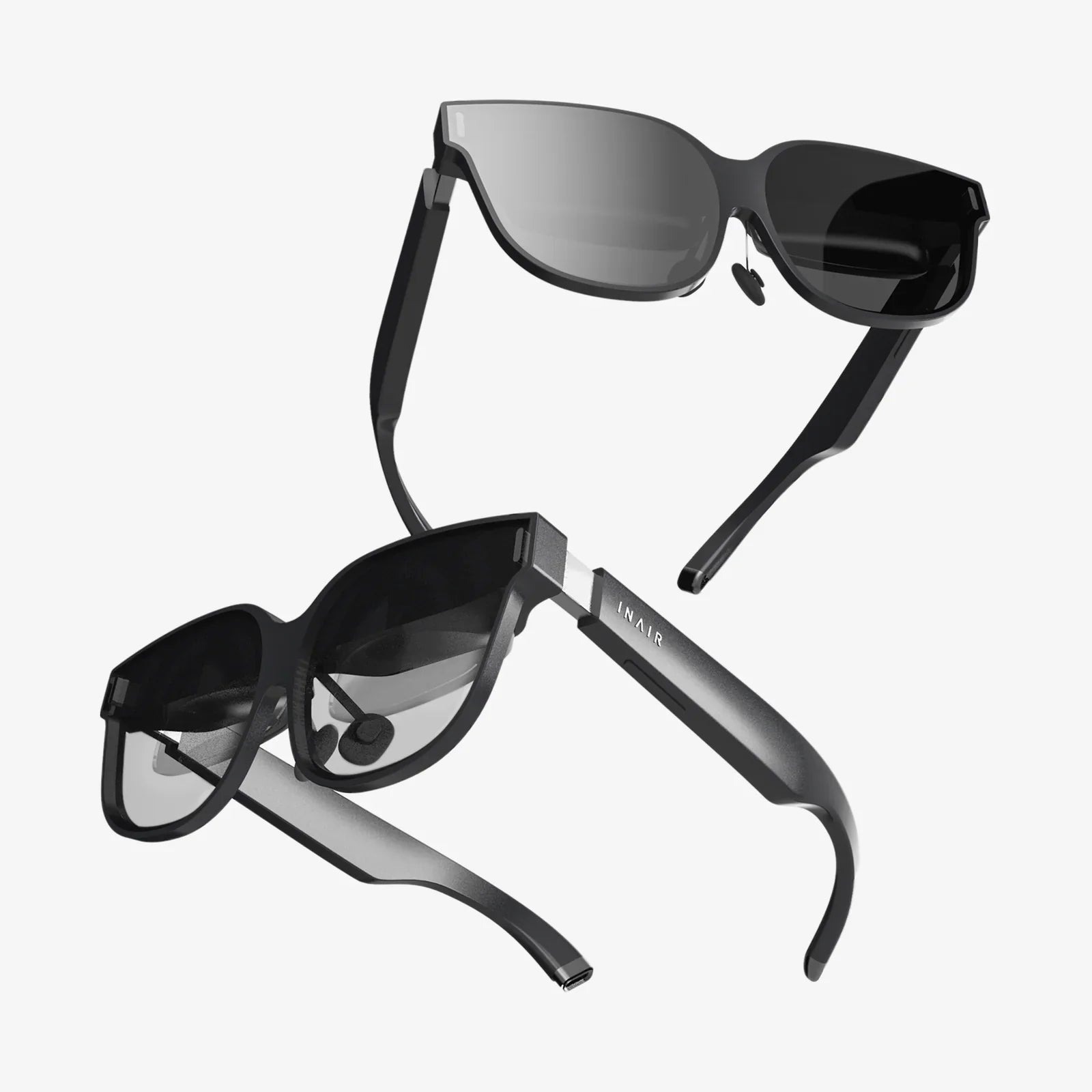
Imagine a world where digital information doesn't just live on a screen but is seamlessly woven into the fabric of your physical reality, enhancing everything from how you learn and work to how you shop and connect. This is the promise of augmented reality, a technology that has moved beyond flashy marketing gimmicks and mobile gaming to become one of the most powerful and versatile tools of the modern era. The journey to discover the best use of augmented reality is not about finding a single killer app, but about understanding a fundamental shift in how we interact with data, our environment, and each other. It’s a paradigm that is quietly revolutionizing entire industries and redefining the human experience.
The Core Principle: Enhancement Over Replacement
At its heart, the best use of augmented reality is characterized by a core philosophy: augmentation, not replacement. Unlike virtual reality, which seeks to create a fully immersive digital world, AR aims to enhance the real world by overlaying contextual, digital information onto it. This key distinction is what makes AR so powerful for practical, everyday applications. The value lies in its ability to provide just-in-time information exactly where it is needed, reducing cognitive load, minimizing errors, and accelerating processes. It acts as a cognitive prosthesis, extending our natural capabilities and allowing us to perceive and understand things that would otherwise be invisible.
The technology achieves this through a combination of cameras, sensors, and sophisticated software. By understanding the geometry of the physical environment through techniques like simultaneous localization and mapping (SLAM), AR devices can anchor digital objects—be they 3D models, text instructions, or animated sequences—to specific locations in real space. This creates a persistent and interactive layer of intelligence on top of our reality, turning any environment into a potential interface.
Revolutionizing Enterprise and Industrial Operations
While consumer applications often grab headlines, some of the most profound and valuable uses of AR are happening in enterprise and industrial settings. Here, the technology is solving real-world problems with significant operational and financial impact.
Transforming Manufacturing and Complex Assembly
In manufacturing, precision and efficiency are paramount. AR is revolutionizing this space by providing workers with hands-free, visual guidance directly in their field of view. For instance, technicians assembling complex machinery can wear AR glasses that project digital wireframes, animations, and step-by-step instructions onto the physical components in front of them. This eliminates the constant need to look away at paper manuals or computer screens, drastically reducing assembly time and error rates. The technology can highlight the exact bolt to tighten, show the correct torque setting, and even verify that the step was completed correctly using computer vision. This application is not just about convenience; it’s about enhancing quality control, accelerating training for new employees, and preserving the expertise of veteran workers by digitizing their knowledge.
Empowering Field Service and Maintenance
Field service technicians often work on complex, infrequently serviced equipment. AR empowers these experts by giving them X-ray vision. Pointing a tablet or wearing smart glasses at a malfunctioning machine can overlay schematics, highlight problematic components, and display real-time sensor data. More advanced systems allow a remote expert to see what the on-site technician sees and annotate their live view with arrows, circles, and notes to guide them through a repair procedure. This remote collaboration capability slashes travel costs, reduces equipment downtime, and ensures that problems are resolved correctly the first time, regardless of the technician's physical location or initial familiarity with the specific equipment.
Redefining Design and Prototyping
The design process, particularly in architecture, automotive, and industrial design, has been transformed by AR. Designers can now project life-size, interactive 3D models of their creations into a physical space. An architect can walk clients through a digital representation of a building before a single foundation is poured. An interior designer can place virtual furniture in a room to test scale, style, and layout. This ability to visualize and iterate in context saves immense amounts of time and resources that would have been spent on physical prototypes, fostering better collaboration and ensuring the final product meets expectations.
Advancing Healthcare and Saving Lives
The healthcare sector presents some of the most compelling and human-centric uses of augmented reality, where its impact can be literally life-saving.
Enhancing Surgical Precision and Planning
Surgeons are using AR to gain a superhuman view of the human body. By overlaying CT or MRI scans—such as the precise location of a tumor or the path of a critical blood vessel—directly onto the patient’s body during surgery, AR provides an invaluable guide. This helps surgeons navigate complex anatomy with greater precision, minimize incision sizes, and reduce operative risk. Furthermore, medical students can use AR to practice procedures on detailed, virtual anatomies, accelerating their learning curve in a risk-free environment.
Improving Patient Education and Rehabilitation
AR is also a powerful tool for patient communication and therapy. A doctor can use an AR model to show a patient exactly what is happening inside their body, making complex medical conditions easier to understand and demystifying treatment plans. In physical rehabilitation, AR can turn repetitive exercises into engaging games. Patients recovering from a stroke, for example, can perform motions that control a virtual character on screen, making therapy more motivating and providing therapists with precise, data-driven insights into their progress.
Enriching Retail and Consumer Experiences
In the consumer realm, AR is bridging the gap between online shopping and the tactile confidence of an in-store experience, creating value for both businesses and customers.
The Try-Before-You-Buy Revolution
One of the most popular applications is virtual try-on. Customers can use their smartphone cameras to see how a pair of glasses, a watch, or even lipstick would look on their own face. Similarly, they can project virtual furniture into their living room to check for size and fit, or see how a new paint color would look on their walls. This drastically reduces purchase hesitation and the likelihood of returns, building consumer confidence and driving sales conversion.
Creating Immersive Brand Storytelling
Forward-thinking marketers are using AR to create deep, interactive brand experiences. A product’s packaging can come to life with animations when viewed through a phone, telling the story of its origin or demonstrating its use. Tourism boards can create AR experiences that overlay historical information onto city landmarks, enriching cultural exploration. This transforms passive observation into active engagement, creating memorable connections between consumers and brands.
Shaping the Future of Education and Training
Education is fundamentally about the transmission of knowledge, and AR is perhaps the most powerful medium for experiential learning ever created.
Bringing Abstract Concepts to Life
Imagine a history student pointing their device at a textbook image of an ancient Roman amphitheater and seeing a full, animated reconstruction of a gladiator battle erupt from the page. A chemistry student can manipulate and combine virtual molecules in 3D space to understand their structure and reactions. AR makes abstract, complex, or distant subjects tangible, interactive, and unforgettable, catering to diverse learning styles and fostering a deeper understanding.
Enabling Safe and Scalable Skill Development
From training welders to teaching astronauts, AR provides a safe sandbox for mastering dangerous or expensive skills. Trainees can practice procedures on virtual equipment, receiving real-time feedback without risk of injury or costly damage. This scalable form of training ensures that when individuals finally engage with the real thing, they are already proficient and confident.
Navigating the Challenges and the Road Ahead
For all its promise, the widespread adoption of the best AR practices faces hurdles. Hardware needs to become lighter, more powerful, and more socially acceptable—moving from bulky headsets to sleek glasses. Network infrastructure, particularly 5G and edge computing, is critical for delivering low-latency, high-fidelity experiences. Significant challenges around user privacy, data security, and digital litter (the AR equivalent of spam) must be addressed thoughtfully. Furthermore, creating compelling AR content requires new design principles and skillsets focused on spatial computing.
The future trajectory of AR points towards a more integrated and contextual experience. The concept of the spatial web—where the digital and physical are inextricably linked—will become a reality. AR will evolve from providing simple information overlays to understanding user intent and delivering predictive assistance. It will become less of a separate app and more of an ambient layer of computing, woven into the operating systems of our devices and our daily lives.
The quest for the best use of augmented reality reveals a technology that is fundamentally human-centric. Its ultimate value is not in the wow factor of digital dinosaurs in your living room, but in its profound ability to enhance human potential. It makes us better workers, better learners, and better caregivers by putting the right information in the right place at the right time. It has the power to democratize expertise, bridge geographical divides, and make the invisible visible. As the technology continues to mature and converge with artificial intelligence and the Internet of Things, its capacity to transform our world will only expand. We are standing at the threshold of a new reality, one where our digital and physical selves finally converge, and the possibilities are limited only by our imagination.
Share:
The Importance of Augmented Reality: Bridging Our Digital and Physical Worlds
The Importance of Augmented Reality: Bridging Our Digital and Physical Worlds