


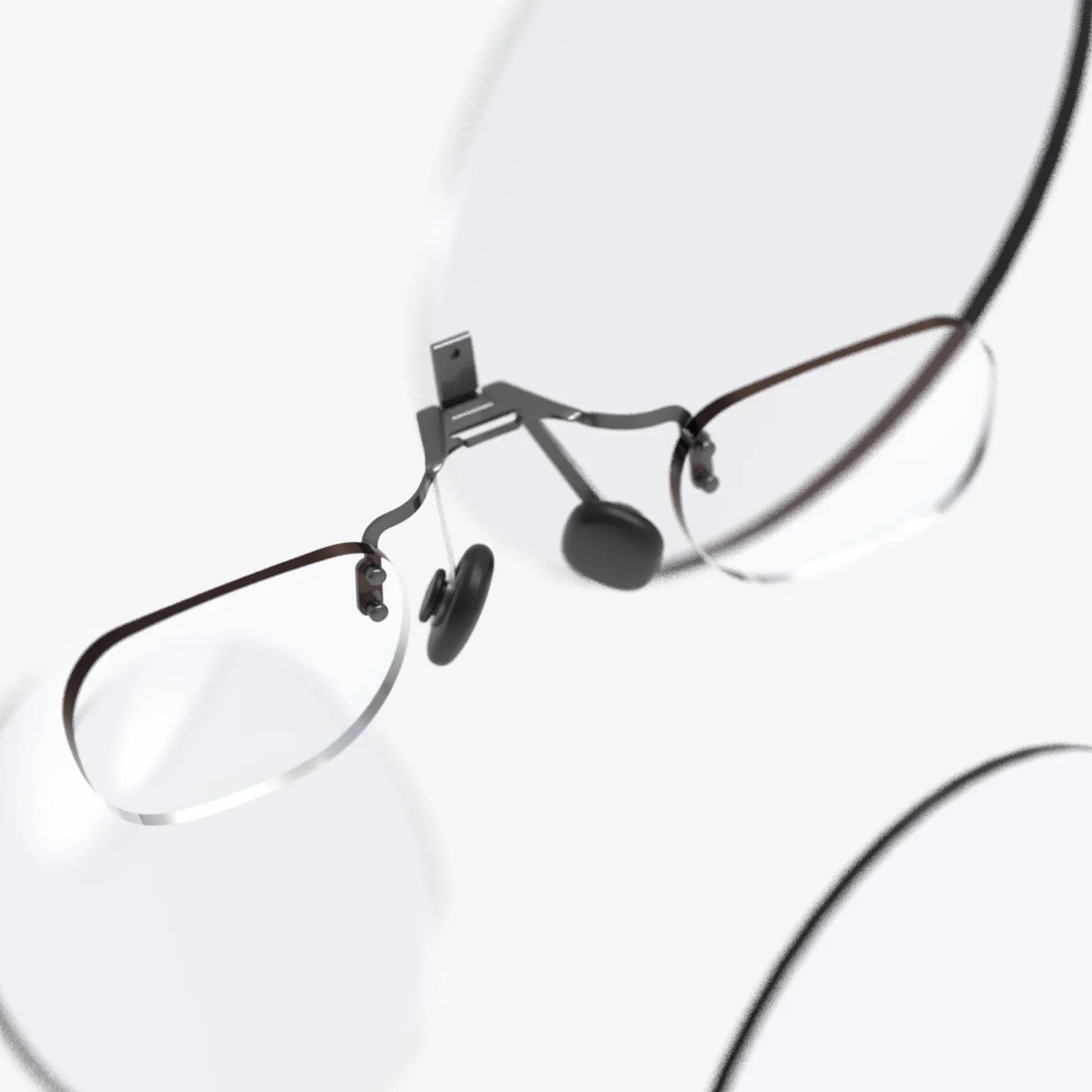
Imagine slipping on a pair of sleek, unassuming glasses and instantly overlaying a universe of digital information, breathtaking virtual landscapes, and interactive experiences onto your physical reality. This is no longer the stuff of science fiction; it is the tangible promise held by the best virtual glasses available today. This technology is rapidly evolving from a niche novelty into a powerful tool poised to redefine how we work, learn, play, and connect. The journey to find the perfect pair is an exploration of the very future of human-computer interaction, a future that is clearer and more accessible than ever before.
The Spectrum of Immersive Technology
Before diving into the criteria for the best devices, it's crucial to understand the different types of technology that fall under the umbrella of "virtual glasses." While often used interchangeably, these terms describe distinct experiences.
Virtual Reality (VR) Headsets
These devices are fully immersive, blocking out the physical world entirely and replacing it with a completely computer-generated environment. Users are transported to a digital realm, whether it's a game world, a simulated training ground, or a virtual meeting space. While often bulkier than glasses, the line is blurring with newer, more compact designs.
Augmented Reality (AR) Glasses
This technology superimposes digital information—images, text, and 3D models—onto the user's view of the real world. Think of navigation arrows displayed on the street in front of you, a recipe hovering next to your mixing bowl, or a colleague's avatar sitting across from you in your living room. The best AR glasses aim for a seamless blend of the digital and the physical.
Mixed Reality (MR) Headsets
MR is a more advanced form of AR where virtual objects are not just overlaid but can interact with the real world in real-time. A virtual character might jump onto your real coffee table, or a digital design prototype could be placed on your actual desk, allowing you to walk around it and examine it from all angles. This requires sophisticated sensors and processing power to understand the environment.
Core Technologies Powering the Experience
The magic of virtual glasses is made possible by a symphony of advanced hardware and software components working in perfect harmony.
Optical Systems: Waveguides and Micro-LEDs
At the heart of any pair of AR glasses is the optical system, responsible for projecting digital images onto the lenses and into the user's eyes. The most common method for the best devices uses waveguide technology. These are transparent lenses etched with microscopic patterns that channel light from a tiny projector at the temple into the eye, creating a bright, sharp image that appears to float in the user's field of view. Paired with these are micro-LED displays, which are incredibly small, bright, and power-efficient, making them ideal for wearable form factors.
Spatial Mapping and Sensors
To understand and interact with the world, these glasses are equipped with a suite of sensors. This typically includes:
- Cameras: For tracking the environment and user's hands.
- Depth Sensors (LiDAR/ToF): To accurately map the geometry of a room, measuring distances and creating a 3D mesh.
- Inertial Measurement Units (IMUs): Accelerometers and gyroscopes that track the precise movement and orientation of the head.
- Eye-Tracking Cameras: These monitor where the user is looking, enabling more intuitive interaction (e.g., menu selection with a glance) and advanced rendering techniques that focus processing power only on the area where the user is looking, saving battery life.
Processing Power and Connectivity
There are two primary architectures for handling the immense computational load. Standalone devices have all the necessary processing power, battery, and components built into the glasses themselves. Tethered or companion devices are lighter and rely on a wired or wireless connection to a powerful external computer or smartphone to handle the heavy processing, streaming the visual output to the glasses.
Applications Transforming Industries
The value of virtual glasses is not in the technology itself, but in its transformative applications across countless fields.
Enterprise and Workforce Training
This is currently the most impactful sector. Technicians can have repair manuals and schematic diagrams overlaid onto complex machinery they are fixing. Surgeons can visualize a patient's anatomy during a procedure. Warehouse workers can see optimal picking routes and item information hands-free, drastically improving efficiency and reducing errors.
Design and Architecture
Architects and interior designers can place full-scale 3D models of their designs onto a physical building site or an empty room. Clients can literally walk through a virtual representation of their future home before a single brick is laid, making changes in real-time.
Remote Collaboration and Telepresence
Virtual glasses can dissolve geographical barriers. Instead of a flat video call, remote experts can be projected into a space as realistic holograms, able to see what a local worker sees, annotate the real world with digital pointers, and guide them through complex tasks as if they were standing side-by-side.
Navigation and Contextual Information
Imagine walking through a foreign city with turn-by-turn directions painted onto the sidewalk itself. You could look at a restaurant and instantly see its reviews and menu, or gaze at a historic monument and watch a historical reenactment unfold before your eyes.
Defining "Best": Key Considerations for Your Choice
The "best" virtual glasses are entirely dependent on the user's needs. A developer, a factory worker, and a casual gamer will have vastly different priorities.
Field of View (FOV)
This is the angular extent of the virtual world you can see, measured diagonally like a TV screen. A narrow FOV can feel like looking through a small window, while a wide FOV is essential for full immersion. Wider FOVs are currently more expensive and technically challenging to achieve.
Display Resolution and Brightness
High resolution is critical for text legibility and visual fidelity. Brightness, measured in nits, is equally important for use in well-lit environments like offices or outdoors. The best displays are sharp, vibrant, and bright enough to compete with the sun.
Form Factor and Comfort
This is a major differentiator. The ideal is a pair of glasses that is lightweight, comfortable for all-day wear, and looks socially acceptable. Many current-generation devices are making significant strides toward this goal, moving away from bulky helmets toward more normalized eyewear.
Battery Life
For untethered use, battery life is paramount. The best devices offer several hours of active use, often with a companion battery pack that can be swapped out or recharged to extend usage throughout a workday.
Input Methods and User Interface
How do you interact with the digital content? The most advanced systems use a combination of hand-tracking (using your bare hands as controllers), voice commands, and eye-tracking for a natural and intuitive experience. Some may also support physical controllers for specific applications.
The Road Ahead: Challenges and The Future
Despite rapid progress, the industry still faces hurdles before widespread consumer adoption. Battery technology needs to improve to support all-day use in a small form factor. The "social acceptance" of wearing computerized glasses in public is still evolving. There are also important conversations to be had about data privacy, as devices with always-on cameras raise legitimate concerns.
However, the trajectory is clear. We are moving toward a future where the best virtual glasses will be as ubiquitous as smartphones, offering a seamless spatial computing experience. They will become our constant companions, enhancing our perception of reality, augmenting our abilities, and connecting us to information and to each other in ways we are only beginning to imagine.
The search for the perfect pair of virtual glasses is more than a shopping exercise; it's an invitation to step into the next era of computing. As the hardware shrinks, the visuals sharpen, and the applications multiply, this technology is set to move from the periphery of our vision to the very center of our daily lives, forever changing the way we see and interact with our world.
Share:
Smart Augmented Reality: The Invisible Layer Reshaping Our World
Augmented Reality in Workplace: Revolutionizing Collaboration, Training, and Efficiency