


- by wangfred
Best VR for Movies: The Ultimate Guide to Cinematic Immersion in 2024
- by wangfred
Imagine the lights dimming, the surround sound swelling, and the screen expanding to a scale that dwarfs any commercial theater. You’re not in a crowded cinema; you’re in the perfect seat, in a theater of your own design, with a blockbuster epic or an intimate indie film displayed in breathtaking detail. This is the promise of virtual reality for cinephiles—a personal, immersive, and utterly revolutionary way to experience movies. But with a rapidly evolving market, finding the best VR for movies can feel like navigating a labyrinth. This definitive guide cuts through the noise, focusing not on specific brands, but on the essential features and considerations that will transport your home viewing from the ordinary to the extraordinary.
Before diving into the technical specifications, it's crucial to understand the fundamental appeal. Why would anyone strap a device to their head when they have a perfectly good television on the wall?
The answer lies in three words: immersion, isolation, and customization.
First, immersion. A VR headset effectively places a massive, high-quality screen mere inches from your eyes, filling your entire field of view. Unlike a TV, which exists within your environment, a VR cinema environment becomes your reality. You lose awareness of your living room walls; your focus is entirely on the film, free from the distractions of phones, pets, or household clutter. This total absorption allows you to connect with the narrative and visual artistry on a deeper level.
Second, isolation. In a world of constant interruptions, VR offers a rare sanctuary. It’s a private bubble where you can truly disconnect and engage with a story. For those living in shared spaces or without a dedicated home theater room, VR provides an instant and perfect blackout environment, replicating the focused atmosphere of a commercial cinema.
Finally, customization. Do you want to watch a sci-fi classic in a minimalist lunar outpost? A romantic comedy in a cozy, wood-paneled screening room? A nature documentary while seemingly floating in the cosmos? VR movie-playing applications offer a plethora of virtual environments. You are no longer constrained by the physical limitations of your TV's size or your room's acoustics. You choose the ambiance for every viewing session.
Not all headsets are created equal, especially when the primary goal is crystal-clear, comfortable movie watching. While gamers might prioritize refresh rates and tracking precision, the cinephile's checklist is different.
This is, without a doubt, the most critical factor. The goal is to eliminate the "screen door effect" (SDE)—the faint grid-like pattern that can make it seem like you’re watching a movie through a fine mesh screen. SDE is a result of being able to see the tiny gaps between individual pixels on the display.
To combat this, you need a high pixels-per-degree (PPD) rating and a high overall resolution (often expressed per eye). A higher PPD means a sharper, more dense image where individual pixels blend seamlessly. For a truly theater-quality experience that rivals a 1080p or 4K TV at a normal viewing distance, seeking out headsets with the highest possible PPD and resolution is paramount. Look for terms like "4K+" or similar marketing language, but always dig deeper into reviews to see how the image actually holds up for film content.
Lens quality is equally important. Good lenses ensure the sweet spot—the area of perfect clarity—is large and forgiving. Poor lenses can cause blurriness, chromatic aberration (color fringing), and god rays (glare effects around high-contrast elements), all of which can shatter immersion during a darkly lit film scene.
A typical film lasts between 90 minutes and three hours. No matter how stunning the visual fidelity, if the headset is uncomfortable, you won't make it through the opening credits. Comfort is a multi-faceted issue.
Weight distribution is key. A front-heavy device will strain your neck and cheeks. The best designs use counter-balancing, often with a reinforced rear strap, to distribute weight evenly around the head. Facial interface materials also matter. Plush, breathable padding that conforms to your face without excessive pressure is essential, especially for users who wear glasses (though prescription lens inserts are a highly recommended upgrade for a perfect fit).
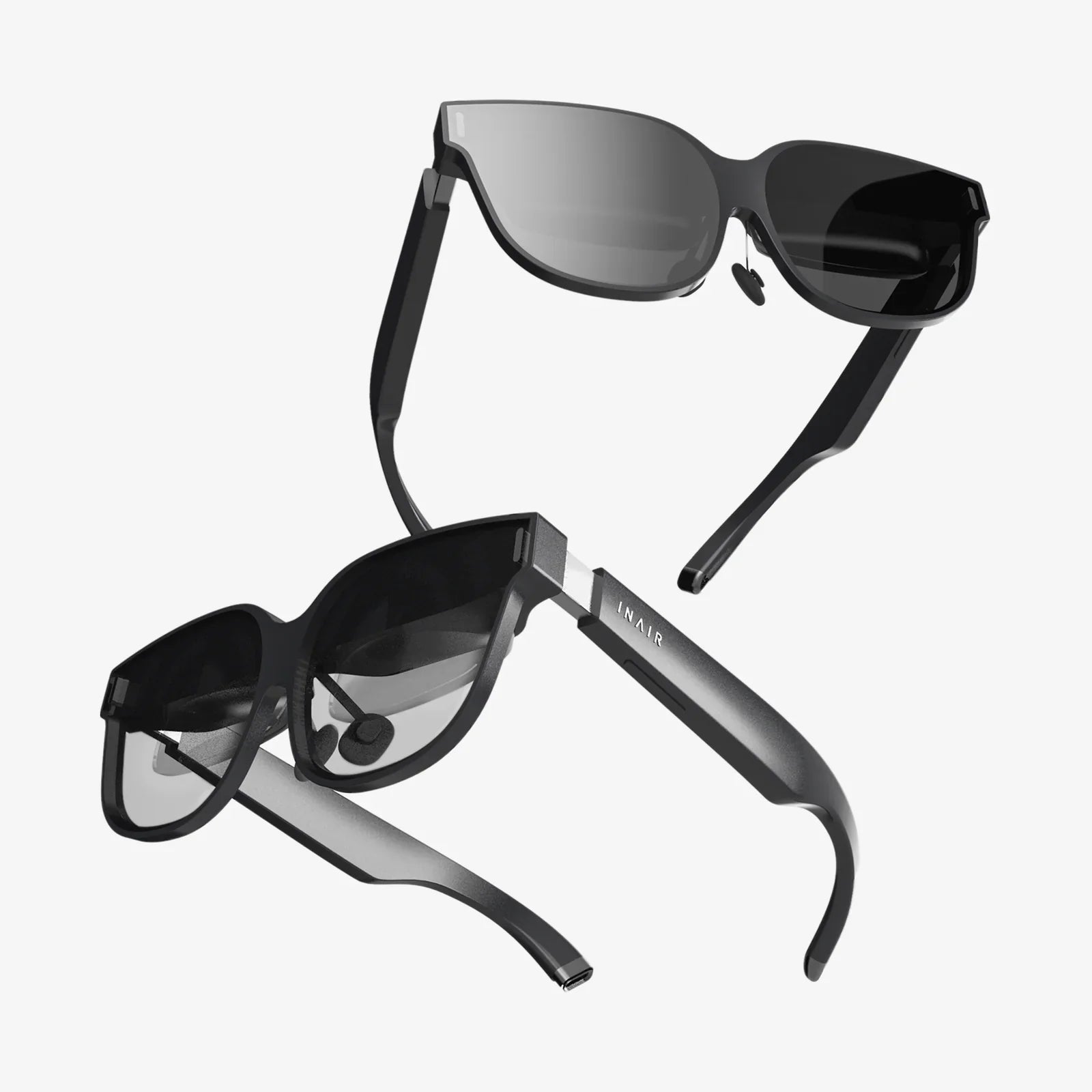
The form factor itself is a major differentiator. Traditional headsets with a rigid strap and built-in processors can be heavier. Newer, more streamlined devices that act as displays for external sources can be significantly lighter and less cumbersome, making them ideal for long, relaxed viewing sessions.
Sound is half of the cinematic experience. While you can always use your own high-end headphones, integrated audio solutions offer convenience and spatial realism that is hard to beat.
Many modern headsets feature spatial audio or 3D audio technology. This uses head-tracking to anchor sounds in the virtual space. A character speaking on the left side of the virtual screen will sound like they are coming from that fixed location, even if you turn your head. This creates a remarkably convincing and immersive surround sound experience without the need for external speakers or wiring.
Some designs use built-in directional speakers that don't cover the ears, allowing you to remain aware of your surroundings—a bonus for parents. Others provide high-quality audio jack outputs for those who prefer the isolation and bass response of premium over-ear headphones.
A headset is just a window; you need a world to look into. Compatibility with your existing media ecosystem is crucial.
Can the device easily access major streaming services? Several platforms now offer dedicated VR apps that provide 2D, 3D, and sometimes even 360-degree video content within a virtual environment. The quality and reliability of these apps vary greatly.
For the true enthusiast, the ability to play personal media is vital. You'll want a headset that supports robust media player applications. These apps should be able to handle a wide range of video codecs and file formats, including high-bitrate 4K HDR files, 3D Blu-ray rips (SBS/TAB), and VR180 content. Features like the ability to adjust virtual screen size, curvature, and height, as well as environmental lighting, are what make the VR movie experience so customizable and powerful.
The type of display panel inside the headset has a profound impact on image quality, particularly for movies.
OLED (Organic Light-Emitting Diode) panels are celebrated for their perfect blacks. Each pixel produces its own light and can turn off completely, resulting in true black and an infinite contrast ratio. This is a game-changer for watching space operas, noir films, or any content with dark scenes. The colors are also typically more vibrant. The potential downside has historically been a lower subpixel density, which can contribute to a slightly more noticeable screen door effect compared to advanced LCDs.
LCD (Liquid Crystal Display) panels use a backlight, meaning blacks are often more of a dark gray, which can wash out dark scenes (a phenomenon called "backlight bleed"). However, many modern high-end LCDs use advanced techniques like local dimming to improve contrast. Their main advantage is often a higher overall pixel density, which can make the image appear sharper and further reduce the screen door effect.
The choice often comes down to personal preference: perfect contrast and rich colors (OLED) versus potentially sharper clarity and pixel density (LCD).
This is one of the biggest decisions a prospective buyer will face, and each path has significant implications for the movie-watching experience.
Standalone Headsets are all-in-one devices with their own internal processor, battery, and operating system. Their primary advantage is simplicity and convenience. There are no wires to trip over, and you can use them anywhere—on your couch, in bed, or even while traveling. They are typically lighter and easier to put on for a quick viewing session. The trade-off is processing power. While sufficient for streaming and playing local files, they often cannot match the maximum resolution and graphical fidelity of a tethered device due to mobile processor and battery life constraints.
Tethered Headsets act as displays for a much more powerful external computer or console. This connection, usually via a high-speed cable, provides a direct pipeline for incredibly high-resolution video and complex environments. The potential visual quality is the absolute best available, often with superior compression and fewer artifacts when streaming high-bitrate files. The obvious downside is the physical cable, which can limit movement and remind you of the real world. These setups also tend to be more expensive overall when factoring in the cost of the required computer.
A emerging category, wireless streaming, attempts to bridge this gap by using a high-quality Wi-Fi connection to stream content from a computer to a standalone headset, offering a compelling middle ground of high fidelity and cord-free convenience.
Choosing the headset is only part of the equation. To create the ultimate virtual cinema, consider these enhancements.
Prescription Lens Inserts: If you wear glasses, this is a non-negotiable upgrade for comfort and clarity. Custom magnetic lenses that slot inside the headset provide a perfect field of view and prevent your glasses from scratching the headset's lenses.
High-Quality Headphones: While integrated audio is good, a pair of dedicated over-ear headphones can provide deeper bass and superior sound isolation, fully enveloping you in the film's soundtrack.
A Comfortable Chair: A swivel chair is perfect. It allows you to naturally turn your head to look around the virtual environment without straining, and it's designed for long periods of sitting.
Content Library: Start building a library of high-bitrate 4K HDR movies and 3D films. The difference in quality between a compressed stream and a high-bitrate file is often more noticeable and impactful in VR than on a traditional screen.
VR for movies is incredible, but it's not without its current limitations. The technology is still maturing. Even the best headsets can't yet match the sheer resolvable detail of a large 4K OLED television from a normal viewing distance, though the sense of scale is unmatched. Some people may experience eye strain during very long sessions, and the isolation, while a benefit for immersion, means you're completely cut off from your physical environment.
Yet, these are minor trade-offs for a technology that offers something truly unique: not just a better picture, but a better experience. It rekindles the magic of going to the movies, making film watching an intentional event rather than background noise.
The journey to find the best VR for movies is a personal one, a balance of prioritizing razor-sharp resolution, deep blacks, marathon-ready comfort, and seamless access to your favorite content. It’s about understanding that the ultimate goal isn’t just specs on a page—it’s that involuntary gasp the first time a starfighter flies overhead in your personal virtual IMAX, or the quiet awe of feeling truly, completely lost in a director's vision. The future of home cinema isn't on your wall; it's waiting for you to put it on.
Share:
AR Studio: The Ultimate Guide to Creating Immersive Augmented Reality Experiences
AR Studio: The Ultimate Guide to Creating Immersive Augmented Reality Experiences