


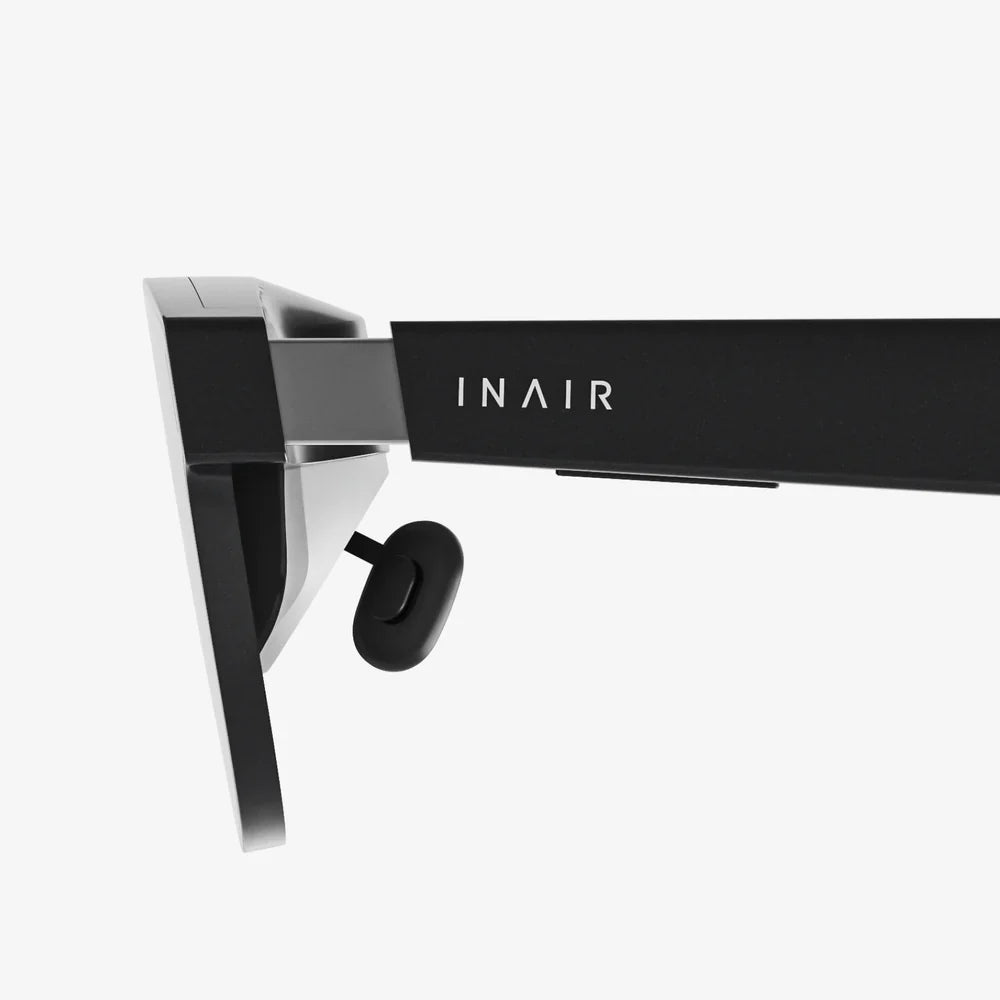
Imagine slipping on a pair of sleek, unassuming glasses and instantly stepping into a hyper-realistic digital universe, where the boundaries between the physical and the virtual have not just blurred, but vanished entirely. This is no longer the stuff of science fiction; it is the breathtaking promise of the best VR glasses of 2025. The race to dominate our visual and interactive reality is hotter than ever, pushing technological boundaries we once thought were decades away. If you think you know virtual reality, prepare to have your mind—and your perception of reality itself—completely rewritten.
The New Gold Standard: Defining "Best" in 2025
Gone are the days when judging the best VR experience was a simple comparison of resolution and field of view. In 2025, "best" is a holistic term, a delicate and powerful symphony of hardware, software, and seamless integration into our daily lives. The pinnacle of VR is no longer just about escaping reality; it's about augmenting it, enhancing it, and connecting with it in ways previously unimaginable.
The elite tier of headsets now must deliver on a stringent set of criteria that consumers have come to expect:
- Photorealistic Visual Fidelity: Resolution has soared beyond 8K per eye, with advanced micro-OLED displays offering pixel densities so high the human eye cannot discern individual pixels, eliminating the dreaded "screen door effect" forever.
- True Neural Haptics & Immersion: Beyond controllers, haptic feedback suits and advanced glove interfaces provide tangible touch, while neural input bands allow for intuitive control through thought and slight muscular movements.
- Effortless Comfort & Form Factor: The clunky helmets of the past have been replaced with designs that prioritize all-day comfort, often through innovative weight distribution and breathable, premium materials. The shift towards a glasses-like form factor is nearly complete.
- The Sovereign Ecosystem: A device is only as good as its world. The best platforms offer vast, interconnected metaverses, stunning exclusive experiences, and robust social and productivity tools that make the hardware indispensable.
- Seamless Passthrough & Mixed Reality: High-fidelity, full-color video passthrough is table stakes, allowing users to blend digital objects into their physical space with perfect lighting and occlusion, making MR as compelling as full VR.
Through the Looking Glass: Breakthrough Display Technology
The window into virtual worlds has never been clearer. The display technology in 2025's leading devices represents a quantum leap from earlier generations.
Micro-OLED and Laser Beam Scanning have emerged as the dominant technologies, enabling incredible brightness, contrast, and color gamut that rivals top-tier professional monitors. These displays support High Dynamic Range (HDR) in VR, meaning the brights are blindingly realistic and the darks are truly infinite, creating a depth and vibrancy that is utterly convincing.
Furthermore, varifocal and auto-focus systems have finally solved the longstanding vergence-accommodation conflict. In simpler terms, your eyes can now naturally focus on objects both near and far within the headset, eliminating eye strain and deepening the illusion of reality. This is often achieved through tiny, imperceptible motors that adjust the lens positioning in real-time based on eye-tracking data.
Speaking of eye-tracking, it is no longer a premium add-on but a fundamental core technology. It enables foveated rendering at an incredibly sophisticated level. The headset renders only the tiny central area where your fovea (the sharpest part of your vision) is looking in full resolution, while intelligently reducing the detail in your peripheral vision. This massive reduction in processing power demand is the key to achieving photorealistic graphics without requiring a supercomputer strapped to your back.
The Sound of Silence: Next-Generation Audio
Immersion is an audiovisual experience, and the auditory revolution in 2025's headsets is just as profound as the visual one. Bone conduction technology has been refined to deliver rich, deep, and spatial audio directly through your skull bones, leaving your ears completely free. This allows users to remain fully aware of crucial sounds in their real environment—a doorbell, a phone ring, a child's voice—while being immersed in a virtual soundscape. It’s the perfect marriage of immersion and situational awareness.
For pure escapism, high-resolution planar magnetic drivers built into the headset straps offer an unparalleled auditory experience with incredible clarity and a soundstage that accurately places every virtual sound in 3D space around you. The rustle of leaves will sound like it's right behind you, and a whisper in a game will feel like it's inside your own mind.
Beyond the Thumbstick: The Input Revolution
How we interact with virtual worlds has moved far beyond simple motion controllers. While highly ergonomic and precise wireless controllers are still included and are better than ever, the true magic lies in new forms of input.
Neural Interface Bands, worn on the wrist or arm, have become the preferred method for sophisticated interaction. These bands read the intricate electrical signals sent from your brain to your hands and fingers with astonishing accuracy. This allows for incredibly natural interaction: pointing, grabbing, pinching, and even typing on virtual keyboards with subtle finger movements, all without needing to hold anything. It’s a level of intuitive control that makes VR feel like a natural extension of your body.
Complementing this are haptic feedback gloves, which have evolved from bulky prototypes into sleek, comfortable garments. They provide nuanced tactile feedback, simulating the texture, weight, and resistance of virtual objects. You can feel the rough bark of a tree, the recoil of a virtual tool, or the gentle push of a digital button.
The Invisible Computer: Processing Power and Connectivity
The immense graphical fidelity demanded by 2025's displays cannot be handled by mobile chips alone. The solution has bifurcated into two powerful, viable paths.
The first is the rise of dedicated wireless compute pucks. These small, powerful devices house desktop-level GPUs and can be carried in a pocket or clipped to a belt. They connect to the headset via a robust, ultra-high-bandwidth wireless protocol (often a derivative of Wi-Fi 7), providing untethered freedom with zero compression artifacts and latency so low it's imperceptible to humans.
The second path is cloud streaming, which has finally matured. With global 6G networks beginning their rollout, latency and bandwidth issues are a thing of the past. Users can now stream incredibly complex VR experiences directly from the cloud, effectively making the processing power limitless and ensuring everyone has access to the highest-quality graphics without expensive local hardware.
Building Worlds, Not Just Games: The Software Ecosystem
The most powerful hardware is useless without compelling software. The best VR glasses of 2025 are gateways to vast, persistent platforms.
The concept of the "metaverse" has evolved from a buzzword into a tangible, interconnected series of digital spaces. These are not just for gaming; they are for socializing, collaborating, learning, and creating. Imagine attending a business meeting in a virtual boardroom that feels as real as a physical one, then minutes later joining friends to explore a user-created game world, all without ever taking off your headset.
Productivity has become a killer app. With crystal-clear mixed reality, users can pin multiple large, virtual monitors around their physical workspace, design 3D models that sit on their real desk, or receive step-by-step AR instructions overlaid onto a piece of equipment they are repairing.
Of course, gaming remains a colossal driver. AI-powered NPCs offer conversations and interactions that are indistinguishable from those with human players, and vast, persistent worlds evolve and change based on community actions, offering truly unique experiences for every user.
A Question of Ethics and Accessibility
With such profound immersion comes great responsibility. The industry in 5 is grappling with crucial questions of data privacy (especially concerning neural and biometric data), digital addiction, and the psychological effects of blending realities. The leading platforms have adopted transparent, user-centric data policies and built-in digital wellness tools that encourage healthy usage patterns.
Furthermore, a concerted effort has been made to improve accessibility. Features like robust voice control, alternative input schemes for those with limited mobility, and visual aids for the visually impaired are now standard on flagship devices, ensuring the future of VR is an inclusive one.
The journey to find the best VR glasses of 2025 is about more than specs on a sheet; it's a journey to the very frontier of human-computer interaction. It's about devices that understand us, respond to us, and ultimately, expand us. The future isn't just bright; it's rendering in 8K, 120 frames per second, and waiting for you to log in. The only question that remains is not which world you will choose, but how many you will choose to be a part of, all from the comfort of your living room.
Share:
Best VR Glasses 2025: The Ultimate Guide to the Future of Immersion
Best VR Glasses 2025: The Ultimate Guide to the Future of Immersion