


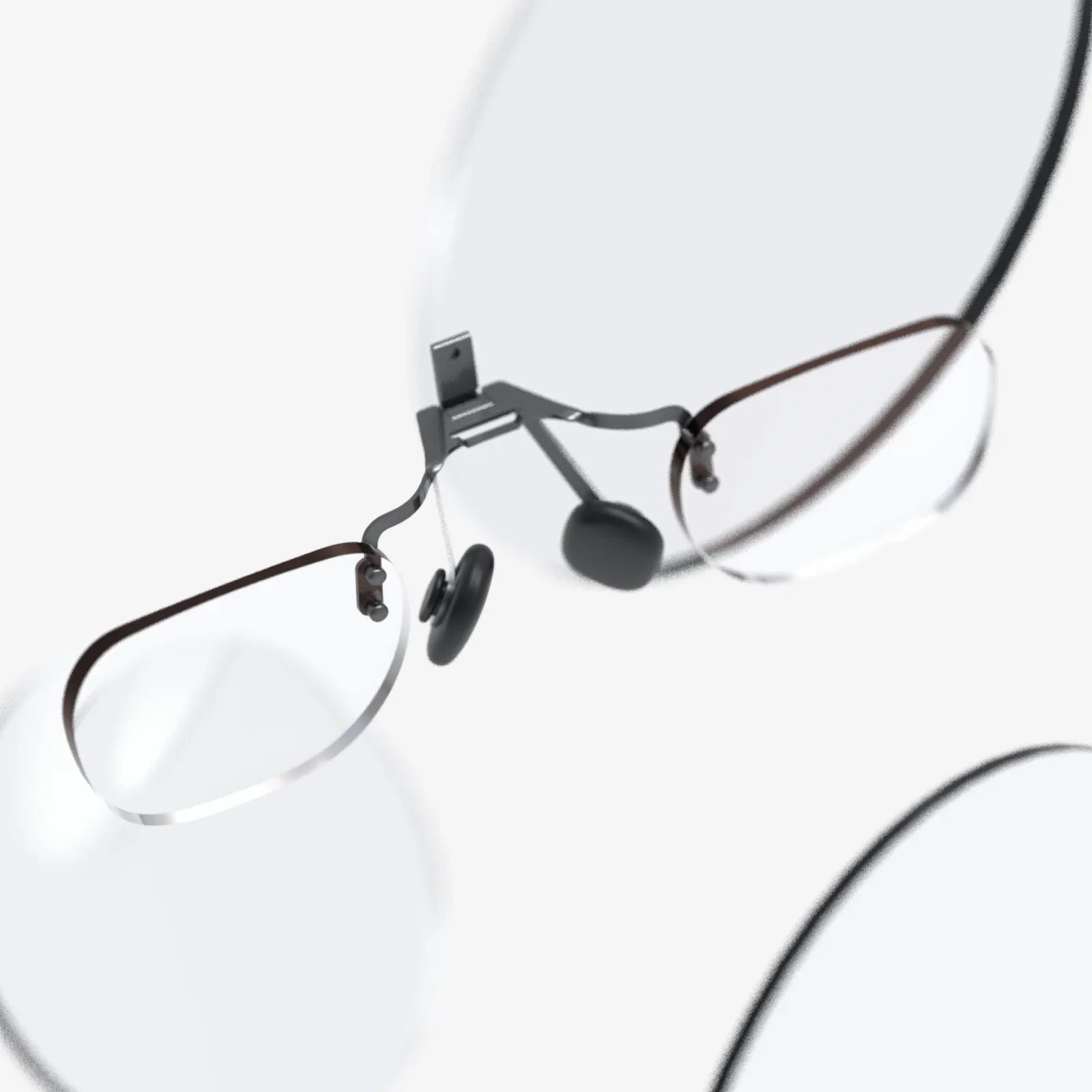
Imagine stepping through a portal, leaving your living room behind and finding yourself on the deck of a starship, on the precipice of a mythical mountain, or in the heart of a frantic digital battlefield. This is the promise of virtual reality gaming, a frontier of interactive entertainment that is no longer a distant future but a thrilling present. The quest for the best VR glasses for gaming is about more than just purchasing a gadget; it's about acquiring a key to infinite worlds, and the right choice can redefine your entire perception of play.
The Core Pillars of a Superior VR Gaming Experience
Before diving into specifications, it's crucial to understand what truly defines a top-tier VR gaming headset. It's not just about a checklist of features; it's about how those features coalesce to create a seamless, believable, and utterly captivating experience.
Visual Fidelity: The Window to Another World
The screen is your viewport into the virtual realm, and its quality is paramount. Two key metrics dominate here: resolution and refresh rate.
Resolution and Pixels-Per-Degree (PPD): Simply put, higher resolution means a sharper, clearer picture. This is critical for reading text, spotting distant enemies, and feeling truly present. However, raw resolution numbers can be misleading. A more accurate measure is Pixels-Per-Degree (PPD), which accounts for the lens design and how densely the pixels are packed into your field of view. A higher PPD drastically reduces the "screen door effect"—that faint grid-like pattern that can sometimes be seen between pixels—making the virtual world appear solid and real.
Refresh Rate: The Key to Smoothness: Measured in Hertz (Hz), the refresh rate determines how many times the image on the screen updates per second. For gaming, a high refresh rate (90Hz and above) is non-negotiable. It ensures buttery-smooth motion, which is essential for fast-paced games and for maintaining comfort. A low refresh rate can lead to stuttering, latency, and for some users, motion sickness. Many premium headsets now offer 120Hz modes, providing an extra layer of fluidity that makes virtual interactions feel instantaneous and natural.
Tracking and Controllers: Your Body in the Game
How the headset translates your real-world movements into the game is what separates VR from any other medium. There are two primary tracking methodologies.
Inside-Out Tracking: This system uses cameras mounted on the headset itself to observe the environment and track the position of the controllers. The major advantage is simplicity and portability; no external sensors need to be set up around your room. Modern inside-out tracking is highly accurate and is the standard for most new headsets, making it incredibly user-friendly.
Outside-In Tracking: This method uses external base stations or sensors placed in the room to precisely track the position of the headset and controllers via lasers or infrared light. Historically, this has offered the most pinpoint accuracy, especially for competitive gaming or experiences where your hands are behind your back or outside your field of view. However, it requires a more complex setup and is less portable.
Controllers: The Extension of Your Hands: The best controllers disappear in your hands, becoming a virtual gun, sword, or paintbrush. Haptic feedback—small, precise vibrations—is essential for tactile immersion, providing a sense of touch when you interact with objects. Ergonomic design, finger tracking (which allows for individual finger movements to be replicated in-game), and robust battery life are all hallmarks of a great controller system.
Comfort and Design: For Marathons, Not Sprints
A VR headset can have the best specs on paper, but if it's uncomfortable to wear, you won't use it for long. Design choices have a massive impact on long-term enjoyment.
Weight Distribution: A heavy front-loaded device will strain your neck and face. The best designs use counter-balancing, often with a battery pack in the rear strap, to distribute weight evenly across your head.
Head Strap and Facial Interface: A rigid, halo-style strap or a well-padded flexible strap provides stability. The material that touches your face (the facial interface) should be soft, breathable, and easily replaceable or cleanable.
Lens Technology and Adjustment: High-quality lenses with a large "sweet spot" (the area where the image is perfectly clear) are vital. Mechanical IPD (Interpupillary Distance) adjustment, which allows you to physically shift the lenses to match the distance between your eyes, is a critical feature for achieving a sharp image and avoiding eye strain.
Audio: The Unseen Atmosphere
3D spatial audio is half of the immersion. Hearing an enemy creep up behind you or the whisper of wind overhead is just as important as seeing it. Integrated, off-ear speakers that direct sound into your ears without isolating you from your real environment are a popular and effective solution, offering convenience and a great sense of space. Alternatively, headsets with a standard audio jack allow you to use your own high-quality headphones for a more personal and potentially higher-fidelity experience.
Navigating the Technical Landscape: Wired vs. Untethered
This is one of the most significant choices facing a VR gamer today, pitting raw performance against ultimate freedom.
The Power of a Wired Connection
Headsets that connect via a high-speed cable to a powerful gaming computer represent the peak of visual and processing performance. They can leverage top-tier graphics cards and processors to render incredibly complex, detailed, and expansive virtual worlds with advanced lighting, physics, and effects. This is the domain of the enthusiast who wants absolutely no compromises on graphical fidelity for sim racing, flight sims, and graphically rich AAA VR titles.
The Freedom of Standalone VR
Standalone headsets have all the necessary computing power built directly into the headset. They are completely wireless, untethered from any PC or console. This freedom is transformative—you can turn, spin, and crouch without ever worrying about tangling a cable. The library of games is often more curated and accessible, though the graphical power is necessarily mobile-based, meaning visuals, while still impressive and constantly improving, are not on the same level as a high-end PC-driven experience. Some standalone headsets also offer the ability to connect to a PC via a cable or wireless streaming, effectively offering the best of both worlds.
The Hybrid Approach: PC Streaming
Many modern standalone headsets support a feature often called "PC VR streaming." This allows the headset to wirelessly connect to a gaming PC on the same network, streaming the video and audio from the PC to the headset and sending the control inputs back. It requires a very strong and stable Wi-Fi 6/6E network for optimal performance, but when set up correctly, it offers a fantastic middle ground: the graphical power of a PC with near-complete wireless freedom.
Defining Your Virtual Playground: Content and Ecosystem
The hardware is nothing without the software. The ecosystem—the online store and the library of games it provides—is a critical, often overlooked factor.
A robust ecosystem offers a wide variety of high-quality, exclusive titles, from intense first-person shooters and deep RPGs to innovative puzzle games and breathtaking social experiences. It also ensures a steady stream of new content and support for years to come. Backward compatibility and a strong developer community are signs of a healthy platform. Your choice of headset will often lock you into a specific content ecosystem, so it's wise to browse the available library first to ensure the experiences you crave are available and well-supported.
Finding Your Perfect Match: A Buyer's Considerations
With these pillars in mind, your personal choice should be guided by answering a few key questions:
- What is your primary gaming platform? Are you a PC enthusiast with a powerful rig, or are you looking for a simple, all-in-one solution?
- What is your budget? Costs can range significantly. Remember to factor in the potential cost of additional accessories, software, and, for PC VR, the computer itself.
- What are your space constraints? Do you have a dedicated, clear playspace, or will you be using it in a more confined area?
- What types of games do you want to play? Are you after graphically intensive simulations or more active, room-scale experiences?
There is no single "best" headset for everyone. The best VR glasses for gaming are the ones that best align with your specific needs, preferences, and existing hardware, offering a perfect balance of performance, comfort, and access to the games you love.
The journey into virtual reality is a deeply personal one, a leap from spectator to protagonist in worlds limited only by imagination. The right headset is your ticket, your conduit, and your weapon. It’s the final piece of the puzzle that transforms pixels on a flat panel into a reality you can step inside and touch. The ultimate VR experience is waiting—not on a store shelf, but just on the other side of a pair of lenses calibrated perfectly for you.
Share:
AR VR Market Forecast 2025: A Deep Dive into the Next Digital Frontier
Cost of Augmented Reality Development: A Comprehensive Guide to Budgeting Your Project