


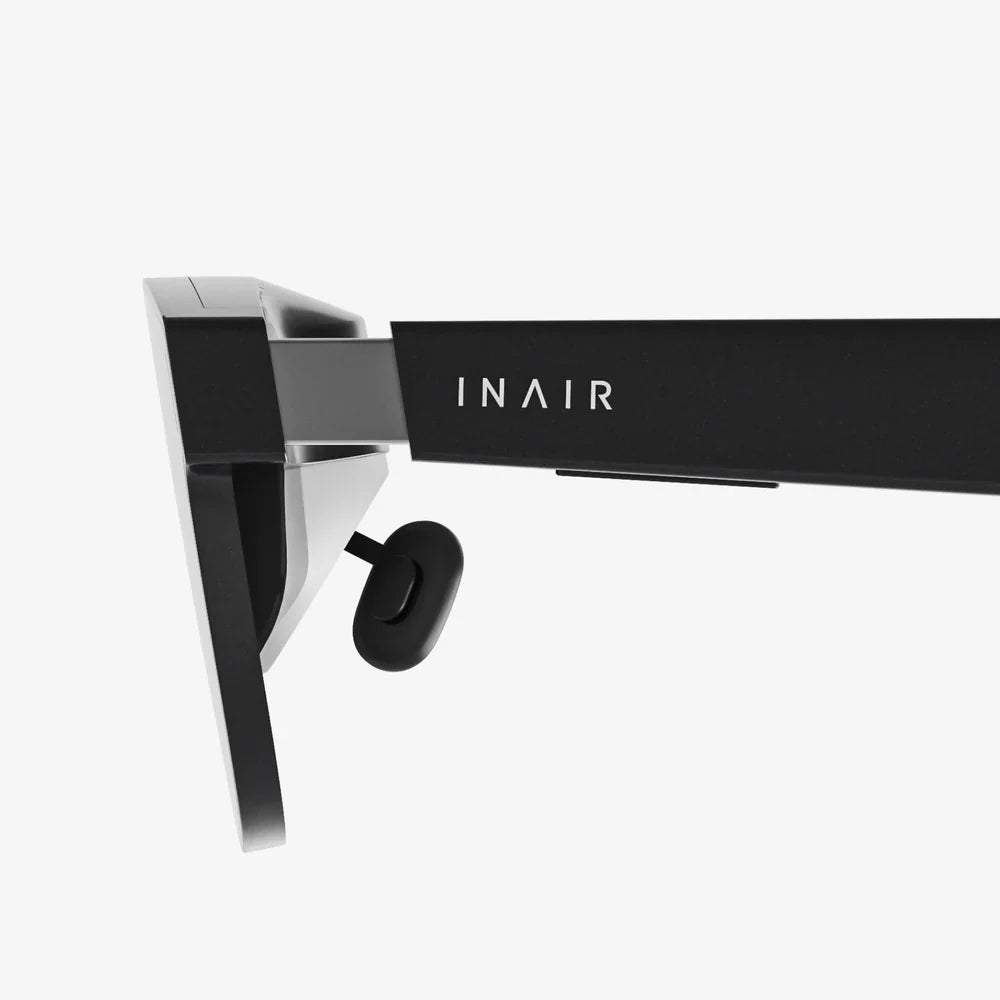
You slip the headset over your eyes, and for a moment, the real world dissolves. The boundaries of your living room vanish, replaced by an infinite digital landscape. Your hands, now rendered in perfect detail, respond to your every thought. This isn't just about playing a game or watching a video; this is about crossing a threshold into another reality. This is the promise of the best VR headset experience, a technological symphony designed not to be seen, but to be forgotten. The pursuit of this perfect immersion is a journey through cutting-edge engineering, human physiology, and artistic design, all converging to create something truly magical.
The Pillars of True Immersion: More Than Just Pixels
What separates a forgettable tech demo from a truly transformative virtual reality encounter? It's not a single feature but a delicate balance of several core pillars working in harmony. When these elements align, the headset itself disappears, and the experience takes center stage.
Visual Fidelity: The Window to Another World
The journey begins with your eyes. Visual clarity is the first and most obvious gatekeeper to immersion. Two key metrics dominate here: resolution and field of view (FOV).
Resolution and Pixel Density: Early adopters often struggled with the "screen door effect," where the visible lines between pixels broke the illusion, like looking through a mesh screen. The best modern experiences have all but eliminated this through high-resolution displays and advanced optics. The goal is a perceived pixel density so high that the human eye cannot distinguish individual pixels, creating a seamless and lifelike image. This is crucial for reading text, discerning distant objects, and feeling truly present.
Field of View (FOV): Resolution means little if you're looking through a narrow keyhole. A wide field of view is essential for peripheral vision, which is a fundamental component of human sight and spatial awareness. A limited FOV creates a distracting binocular or scuba-mask effect, constantly reminding you that you're wearing a device. A broader FOV envelops your vision, allowing you to feel surrounded by the virtual world, not just looking at it.
Precision Tracking: Owning Your Virtual Body
If visuals are the world, then tracking is your body within it. Flawless tracking is the unsung hero of presence. It encompasses both head and controller movement.
Inside-Out vs. External Tracking: Modern systems primarily use inside-out tracking, where cameras on the headset itself map the environment and track the position of the controllers. This eliminates the need for external base stations placed around the room, offering incredible ease of setup and portability. The best implementations of this technology are so robust and low-latency that you never once question the position of your hands. Your virtual hands are your hands.
Latency: The Enemy of Presence
Latency, or lag, is the absolute killer of immersion. It's the delay between your real-world movement and the virtual world's response. Even a delay of just 20 milliseconds can cause discomfort and break the fragile sense of presence. The entire pipeline—from the sensors detecting your movement, to the processor rendering the new frame, to the display refreshing—must be optimized for speed. High refresh rate displays (90Hz, 120Hz, and now even higher) are critical here, ensuring motion is smooth and fluid, not jerky or blurry. This relentless pursuit of low latency is what prevents simulation sickness and allows for intense, action-packed experiences without discomfort. Often overlooked, audio is responsible for more than half of the feeling of immersion. You can be convinced you're in a spooky corridor not by what you see, but by what you hear. The drip of water, the creak of a floorboard behind you—these cues are processed by our brains to build a detailed mental map of our surroundings. 3D Spatial Audio: The best VR experiences employ advanced 3D spatial audio technology. This isn't just stereo sound; it's sound that behaves like real-world sound. It has direction, distance, and even acoustics that change based on the virtual environment you're in. A voice speaking to your left will sound like it's coming from your left, even if you turn your head. This allows for incredible subtlety—you can hear an enemy creeping up behind you or locate a friend calling your name from another room. It’s the unseen hand that guides your emotions and sells the reality of the space. The most powerful technology is useless if it's a pain to use. Engineering must serve humanity, not the other way around. The hardware must recede into the background, and this is achieved through thoughtful, human-centric design. Ergonomics and Weight Distribution: A heavy, front-heavy headset becomes a neck strainer within minutes. The best designs use counter-balancing, quality materials, and adjustable straps (often a rigid halo-style or flexible cloth design) to distribute weight evenly across the head and face. The goal is a secure, yet gentle fit that you can forget about during long sessions. Lens Adjustments: IPD and Eye Relief: Everyone's eyes are different. The distance between pupils (Interpupillary Distance or IPD) varies from person to person. Mechanical IPD adjustment allows users to physically shift the lenses to match their eyes, which is absolutely critical for achieving a clear, single image and avoiding eye strain. Similarly, the ability to bring the lenses closer or further from the face (eye relief) accommodates those who wear glasses and ensures a wide sweet spot for the image. Hardware is the vessel, but content is the journey. A perfect headset with nothing to do is a beautiful, empty box. The ecosystem of available software is what gives the hardware purpose and longevity. Gaming: The Vanguard of VR: The gaming industry continues to drive VR innovation, producing deeply immersive titles that range from heart-pounding action adventures and precise sports simulations to peaceful puzzle games and social hangouts. These experiences are designed from the ground up to leverage the unique strengths of virtual reality—presence, motion, and interaction. Beyond Gaming: A New Reality for Work and Connection
The potential of VR extends far beyond entertainment. Social VR platforms allow people to meet, collaborate, and share experiences as lifelike avatars, making physical distance meaningless. Architects and designers walk clients through virtual models of unbuilt homes. Medical students practice complex procedures in a risk-free environment. Theaters and concert venues offer front-row seats to events across the globe. This expansion of use cases makes the hardware not just a toy, but a revolutionary tool for productivity, connection, and learning. The current state of the art is incredible, but the horizon holds even more promise. Several emerging technologies are poised to deepen immersion to levels previously confined to science fiction. Eye-Tracking and Foveated Rendering: This technology uses internal sensors to track where your eyes are looking. This serves two revolutionary purposes. First, it enables more intuitive social interaction, as avatars can make meaningful eye contact. Second, and more importantly, it enables foveated rendering. The human eye only sees high detail in a very small central area (the fovea). Foveated rendering uses eye-tracking to render the area you're directly looking at in full resolution, while intelligently reducing the rendering load on the peripheral vision. This massive efficiency gain allows for photorealistic graphics without requiring impossibly powerful hardware. Haptics: The Sense of Touch:
The next frontier is touch. Advanced controller haptics are moving beyond simple rumble to provide nuanced feedback—the feeling of squeezing a trigger, the texture of a virtual surface, or the recoil of a tool. Research into full haptic gloves and even full-body suits continues to advance, promising a future where you can truly feel the virtual world. Varifocal Displays and Resolution: Another challenge is the vergence-accommodation conflict (VAC), where your eyes struggle to focus on virtual objects at different distances. Experimental varifocal displays physically move the screens to adjust the focal plane, working in tandem with eye-tracking to create a more natural and comfortable viewing experience that matches how our eyes work in the real world. Ultimately, the best VR headset experience is a deeply personal and subjective achievement. It’s the culmination of invisible technology working in perfect sync to create a feeling—the feeling of wonder when you first look down from a virtual cliff, the feeling of connection when you share a laugh with a friend's avatar, the feeling of flow as you master a new skill in a digital space. It’s the moment the hardware vanishes, the real world fades, and you are simply... there. This is the revolution, not in a box on a shelf, but in the experiences it unlocks and the human connection it fosters. The door to these new worlds is now open, waiting for you to take that first step through.Audio: The Unseen Hand of Atmosphere
The Human Factor: Comfort and Accessibility
The Content Universe: The Soul of the Machine
The Future is Already Here: Glimpses of What's Next
Share:
Best VR Headset for 6.3 Inch Phone: Your Ultimate Guide to Mobile Immersion
Best VR Headset Ranked: The Ultimate 2024 Buyer's Guide