


- by wangfred
Best VR Headsets for Glasses Wearers 2025: A Clear Vision of the Future
- by wangfred
Imagine strapping on a virtual reality headset and being instantly transported to a breathtaking new world—without the immediate, frustrating scramble to adjust your glasses, the nagging pressure on your temples, or the constant fear of scratching a lens. For millions of glasses wearers, this has been the jarring reality of VR, a technological marvel often marred by physical discomfort. But the year 2025 marks a pivotal turning point. The latest generation of VR hardware has finally turned its focused gaze toward optical inclusivity, engineering solutions that welcome spectacle wearers into the fold with open arms and, most importantly, a perfect fit. The future of immersive computing is here, and it’s crystal clear for everyone.
For years, entering virtual worlds required spectacle wearers to make a series of compromises, each with significant drawbacks. The primary challenges have been consistent across hardware:
These barriers weren't just minor inconveniences; they were fundamental obstacles that prevented a significant portion of the population from fully enjoying and adopting VR technology.
The VR industry in 2025 has moved beyond mere accommodation; it now champions integration. Instead of treating glasses as an external problem to be worked around, designers are building systems that either seamlessly incorporate prescription needs or eliminate the need for glasses altogether. Several key innovations define this new era.
While dials to adjust the distance of the lenses from the face (eye relief) have existed, 2025's systems are far more sophisticated. We're now seeing motorized, automatic eye relief. A simple button press causes the lens housing to smoothly glide forward or backward, dynamically scanning to find the perfect sweet spot for your eyesight, with or without glasses. This eliminates guessing and manual fiddling, ensuring a perfect fit every time you put the headset on.
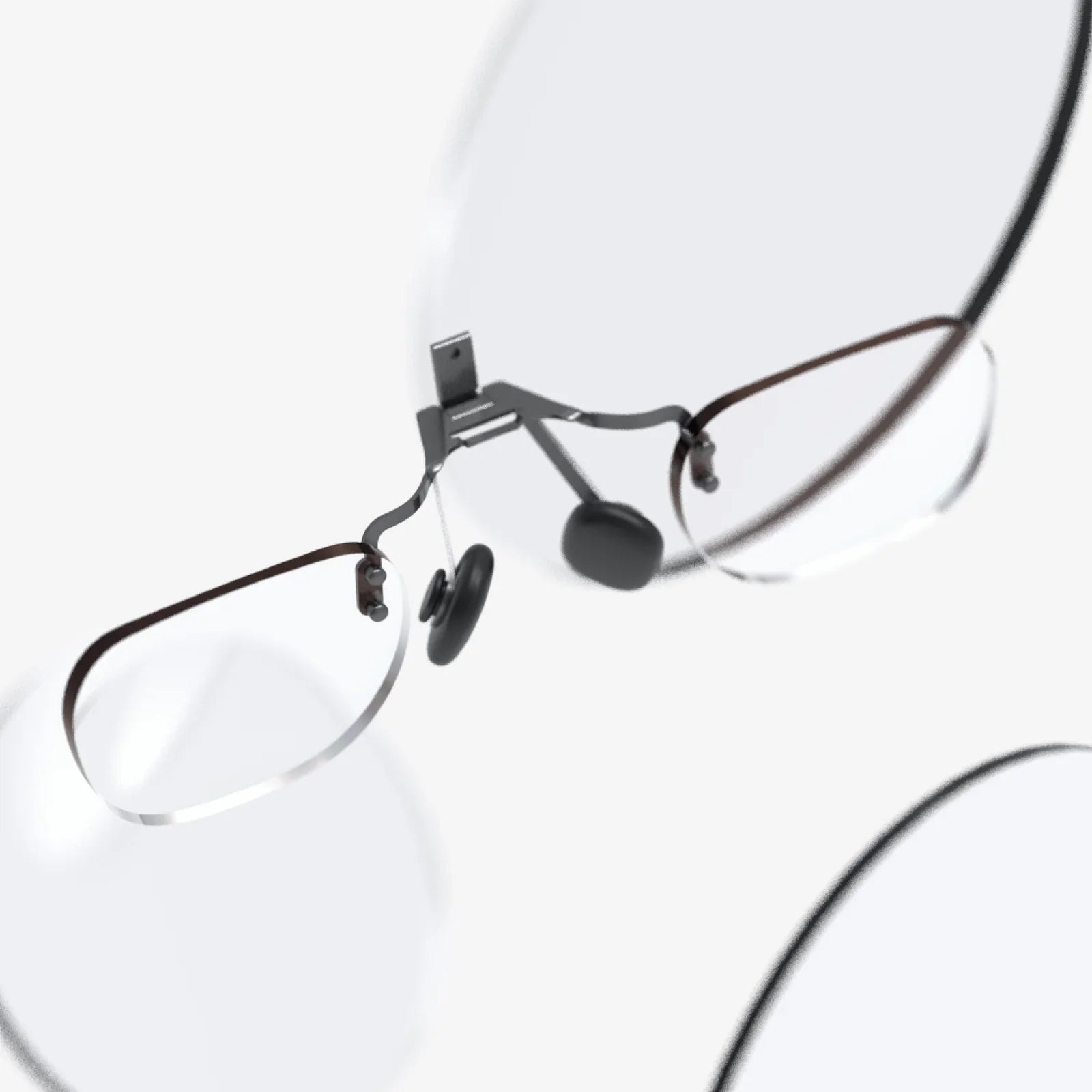
The concept of prescription lens inserts is not new, but their execution in 2025 is revolutionary. Partnering with leading optical labs, headset manufacturers offer a streamlined process:
This solution is a game-changer. It provides the sharpest possible visual acuity, maximizes the field of view, and completely eliminates concerns about comfort or lens scratches. It represents the endgame for visual clarity in VR for those with prescriptions.
A standout innovation for 2025 is the refinement of built-in diopter adjustment. Previously found on a few niche devices, this feature is now becoming mainstream in higher-end consumer headsets. Much like high-end binoculars or a microscope, a physical dial on the headset allows each eye to independently adjust its focus from moderately nearsighted to moderately farsighted. This means a huge number of users can experience perfectly focused VR without any additional accessories or their own glasses. It’s the ultimate convenience feature, offering plug-and-play visual perfection.
A radical shift in design philosophy is emerging: some new headsets are moving away from the traditional tight, rubberized gasket. Instead, they utilize a more open, gasket-less design with a structurally rigid yet comfortable interface. This creates a cavernous eye box that provides ample room for even large spectacle frames without any pressure. These interfaces are often made from advanced, breathable memory foam materials that mold to the user's face, creating a custom light seal around glasses frames instead of fighting against them.
The widespread adoption of pancake optics is perhaps the most significant hardware advancement enabling this change. These compact lens assemblies have drastically reduced the thickness and weight of headsets. A slimmer headset means the lenses are naturally closer to the eyes, but the design of pancake lenses often includes a longer eye box—the space within which the eye can move while still seeing a clear image. This larger sweet spot provides more flexibility for glasses to sit comfortably between the eye and the lens without forcing the user to compromise on FOV or clarity.
When evaluating the best VR headsets for glasses wearers in 2025, keep this checklist of essential features in mind:
The revolution isn't just physical. Software plays a crucial role in visual comfort. Look for headsets that offer robust software suites including:
The narrative for glasses wearers in VR has fundamentally shifted from one of compromise to one of priority. The best VR headsets of 2025 don't ask you to choose between seeing clearly and being comfortable; they deliver both in a seamless, integrated package. Whether through elegant mechanical adjustments, bespoke optical inserts, or revolutionary open designs, the message is clear: the virtual world is for everyone. The era of squinting, discomfort, and worry is over, replaced by pure, unadulterated immersion. Your passport to countless digital frontiers awaits, and for the first time, it’s designed to fit you perfectly right out of the box.