


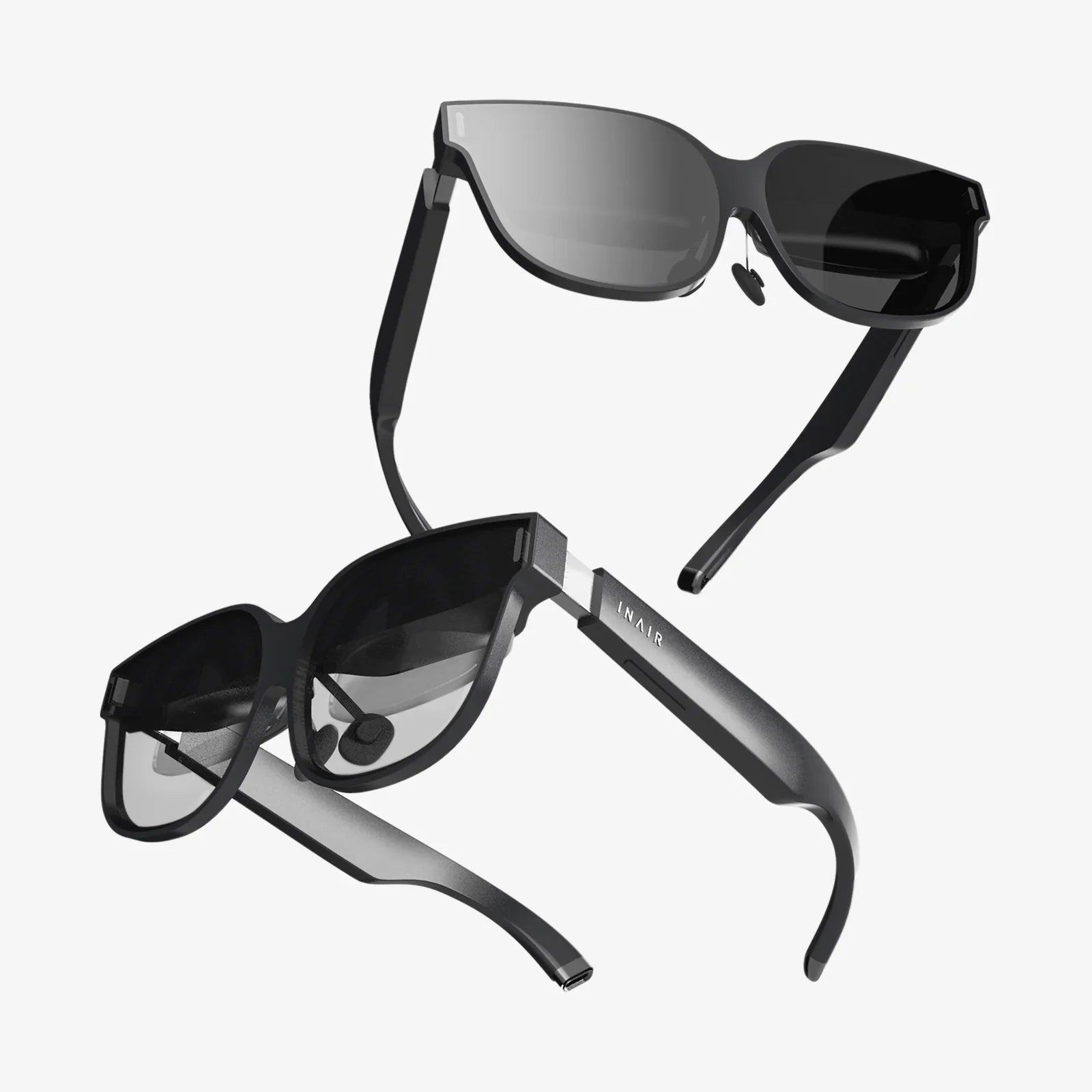
Imagine stepping into a vast, digital world with absolutely nothing holding you back. No tripping over cables, no constant awareness of your physical tether to a machine—just pure, unadulterated freedom of movement. This is the promise that wireless PC VR has been chasing for years, and in 2025, that promise has not just been fulfilled; it has been spectacularly exceeded. The quest for the best wireless PC VR headset is no longer a compromise between visual fidelity and freedom; it's a search for the pinnacle of immersive technology, a device that can deliver a flawless, high-resolution experience without a single wire. The shortlist for this crown is more competitive and impressive than ever, representing a paradigm shift in how we interact with virtual spaces. If you're ready to cut the cord for good and experience computing's final frontier as it was meant to be, the options available now will truly blow your mind.
The New Gold Standard: Defining Wireless PC VR in 2025
Gone are the days when 'wireless' was a euphemism for 'heavily compressed' and 'prone to lag.' The best wireless PC VR headsets of 2025 have established a new gold standard, built upon a foundation of several non-negotiable pillars. First and foremost is visual clarity. We're now seeing mainstream adoption of micro-OLED displays, offering per-eye resolutions that exceed 4K, with pixel densities so high that the dreaded 'screen door effect' is a distant memory. These panels offer perfect blacks, incredible contrast ratios, and vibrant colors, making virtual worlds feel tangible and real.
Secondly, untethered performance is paramount. The connection is no longer a weak link. Utilizing advanced versions of Wi-Fi protocols, often branded with names like 'Wi-Fi 7 BE' for the latest standard, these headsets maintain a rock-solid, high-bandwidth link to a dedicated transmitter connected to your powerful gaming PC. This allows for the transmission of massive amounts of data with imperceptible latency, ensuring that your movements are mirrored in the virtual world instantly, which is critical for both immersion and comfort.
Finally, the overall user experience (UX) has matured dramatically. Inside-out tracking, powered by a sophisticated array of high-resolution cameras and sensors, is now flawless, requiring zero external base stations. This makes setup a matter of minutes, not hours. Combined with robust, intuitive software and best-in-class ergonomics, the barrier to entry for high-end VR has never been lower, while the peak experience has never been higher.
Beyond the Cable: The Technologies Powering the Revolution
The seamless experience of modern wireless VR didn't happen by accident. It's the result of several key technologies converging and reaching maturity simultaneously.
Next-Generation Wireless Protocols
At the heart of the wireless experience is the data link between your PC and your headset. While previous generations relied on Wi-Fi 6E, 2025 has seen the wider adoption of Wi-Fi 7. This new standard offers significantly higher throughput, lower latency, and more efficient use of the wireless spectrum, including the 6 GHz band. For VR, this translates to the ability to stream incredibly dense video data without compression artifacts, stuttering, or lag. Some manufacturers also employ their own proprietary codecs and compression algorithms, optimized specifically for VR content to maximize image quality and minimize the processing overhead.
Advanced Display Technology: Micro-OLED and Pancake Lenses
Two display-related technologies have been game-changers. Micro-OLED panels are small, incredibly dense, and power-efficient. Unlike traditional LCDs, each pixel is self-emissive, allowing for true blacks and a theoretically infinite contrast ratio. This makes dark scenes in space sims or horror games profoundly more immersive.
Paired with these displays are pancake lenses. This compact optical design uses polarization folding to drastically reduce the distance between the display and your eyes. This allows for headsets that are significantly smaller, lighter, and more comfortable than the bulky Fresnel lenses of the past. They also provide a much larger 'sweet spot' and edge-to-edge clarity, eliminating the need to constantly adjust the headset to find the perfect focus.
Intelligent Performance and Eye-Tracking
Eye-tracking is no longer a niche luxury; it's a core feature of the best headsets. Its primary use is for foveated rendering, a revolutionary performance technique. The technology tracks your pupils to determine exactly where you are looking on the virtual screen. The headset and PC then work in tandem to render the area of your direct gaze at full resolution, while intelligently reducing the rendering quality in your peripheral vision—areas where your eyes cannot perceive the detail anyway. This massive reduction in GPU workload allows for significantly higher framerates and more complex visuals without needing a prohibitively expensive computer, all while being completely invisible to the user.
The Contenders: What to Look For in a 2025 Flagship
While specific brands and models are ever-evolving, the features that define the top tier are clear. When evaluating the best wireless PC VR headset for your needs, here is your essential checklist.
Visual Prowess: Resolution, Refresh Rate, and Field of View
Look for specifications that mention micro-OLED or the highest-tier LCDs with local dimming. Resolution should be at least 2,500 x 2,500 per eye or higher. A refresh rate of 90Hz is standard, but 120Hz or even 144Hz is becoming more common for ultra-smooth motion in fast-paced games. The field of view (FoV) is also critical; anything above 110 degrees is good, with the best headsets pushing toward 120 degrees for a more natural and encompassing view.
Comfort and Design: The Marathon Session Test
A headset can have all the technology in the world, but if it's uncomfortable, you won't use it. The best designs use a balanced weight distribution, often with a rigid top strap or a counterweight at the back. Facial interfaces use breathable, hypoallergenic materials like pleather or silicone, and magnetic interfaces allow for easy swapping and cleaning. Lightweight designs, enabled by pancake lenses, are essential for long play or work sessions.
Audio and Input: Completing the Immersion
High-quality, integrated audio is a must. Many premium headsets feature off-ear or near-ear directional speakers that provide spatial audio without isolating you from your real-world environment. This is great for awareness and comfort. For input, the included motion controllers should feel natural, ergonomic, and offer haptic feedback that goes beyond simple rumble, providing nuanced sensations that enhance interaction.
The Software Ecosystem: The Brain of the Operation
The underlying software platform is what ties the hardware together. A clean, intuitive interface for navigating game libraries, social spaces, and PC menus is vital. Look for features like robust boundary guardians (play space tracking), easy pairing processes, and continuous software support that adds new features and optimizations over time.
Setting Up Your Wireless VR Sanctuary
To achieve the flawless experience promised by these headsets, your environment plays a key role. Your PC should be equipped with a modern GPU that can handle the immense resolution and high framerates. A dedicated Wi-Fi 6E or Wi-Fi 7 router, used exclusively for your headset and placed in the same room with a clear line of sight, is highly recommended. This avoids interference from other household devices and ensures the strongest possible signal. A play space free of reflective surfaces and with good, consistent lighting will guarantee the inside-out tracking system performs perfectly.
The Future is Now, and It's Untethered
The discussion around PC VR has permanently shifted. The question is no longer "Can wireless be good enough?" but rather "Which wireless headset is the best?"> The technological hurdles of compression, latency, and cost have been cleared. What remains is a selection of incredible devices that offer the ultimate expression of virtual reality: complete immersion without compromise. This freedom unlocks the full potential of VR, from spinning freely in a rhythm game to exploring every inch of a virtual museum exhibit without a second thought. The cord has been cut, and we are finally free to move. The only limit now is the boundary of your room—and your imagination.
Share:
VR Headset Latest Models 2025: A New Dawn for Immersive Reality
VR Headset Age Rating: A Comprehensive Guide for Parents and Guardians