


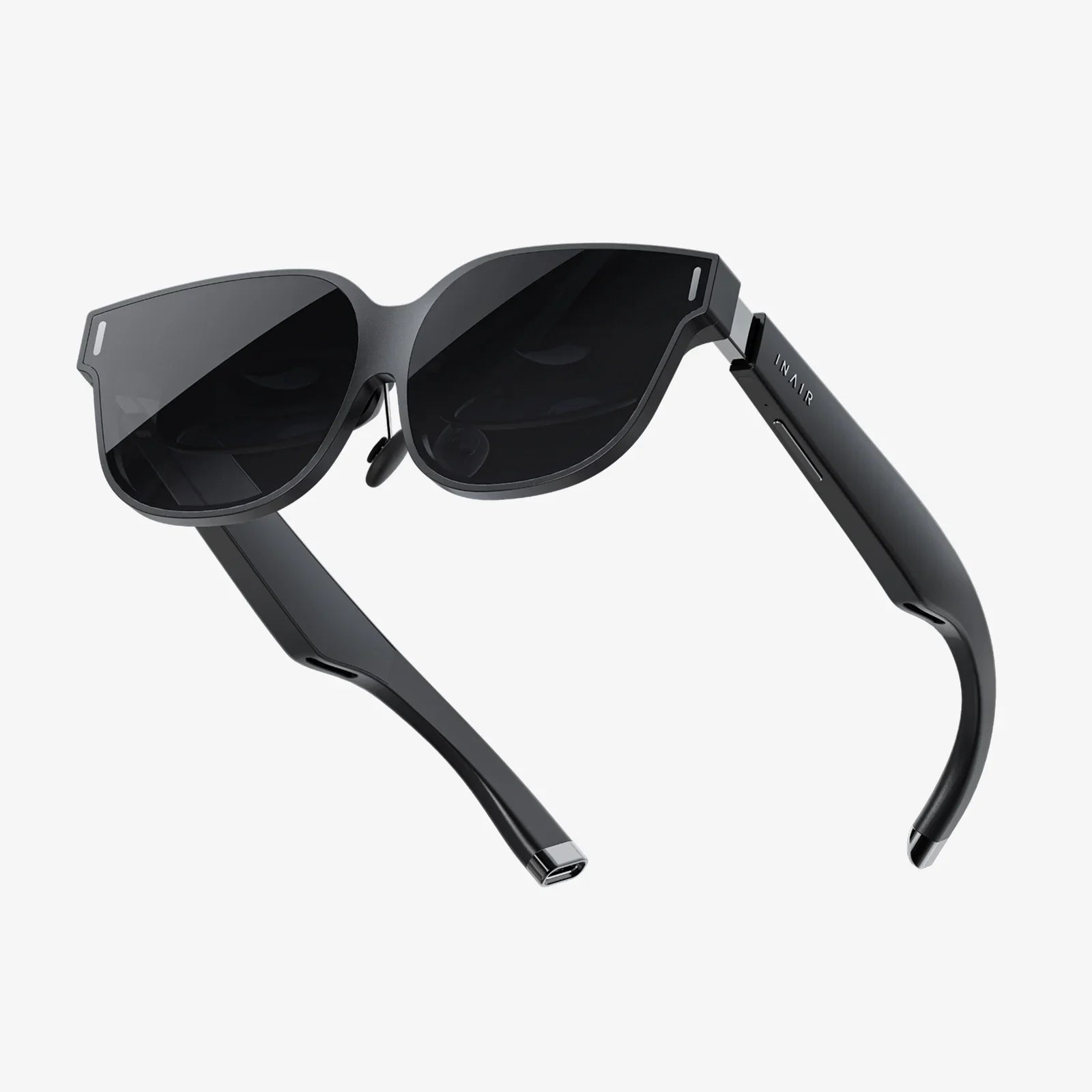
Imagine a workspace that defies the constraints of physical walls, where your digital monitors are as vast as your ambition, and your global team collaborates as if they are sitting right beside you. This isn't a glimpse into a distant sci-fi future; it's the reality being forged today by the rapid evolution of Extended Reality (XR) glasses. For professionals, remote workers, and digital nomads, the quest for the ultimate portable office is converging on a single, sleek piece of technology: the best XR glasses for work. This comprehensive guide dives deep into how these remarkable devices are not just changing the way we work, but fundamentally redefining the very concept of a workplace.
The Evolution of the Workspace: From Cubicles to Virtual Realms
The traditional office has undergone a seismic shift. The rise of remote and hybrid work models has untethered knowledge workers from their desks, but it has also introduced new challenges: isolation, collaboration friction, and the limitations of a two-dimensional screen. We evolved from bulky desktop computers to sleek laptops and powerful smartphones, each step offering more mobility. Yet, the interface remained largely the same—a flat panel we stare into.
XR technology, encompassing Virtual Reality (VR), Augmented Reality (AR), and Mixed Reality (MR), represents the next logical leap. It promises to merge our physical and digital worlds, creating a spatially aware environment where information and interaction are contextually integrated into our surroundings. The best XR glasses for work are the gateways to this new paradigm, offering a blend of immersive virtual spaces and informative augmented overlays that boost productivity to unprecedented levels.
What Truly Defines the "Best" XR Glasses for Professional Use?
Not all XR glasses are created equal. A device designed for immersive gaming will have different priorities than one engineered for a full day of productive work. When evaluating the best XR glasses for work, several critical factors come into play.
Visual Fidelity and Resolution
The ability to read text clearly for hours on end is non-negotiable. Screendoor effect, low resolution, and blurry text are productivity killers. The best devices feature high-resolution micro-OLED or advanced LCD displays with a high pixel-per-degree (PPD) density, ensuring that virtual screens are as sharp and legible as their physical counterparts.
Comfort and Ergonomics for Long Sessions
Professionals often wear their glasses for eight hours or more. A heavy, front-heavy device that causes pressure points or overheating will be abandoned quickly. Optimal weight distribution, premium materials, and adjustable headbands are essential. The goal is for the technology to fade into the background, allowing the user to focus entirely on their task.
Mixed Reality Capabilities and Passthrough Clarity
While full VR immersion has its uses, much of professional work requires interaction with the real world—your keyboard, a notebook, a cup of coffee. High-fidelity color passthrough cameras are crucial. They allow the device to blend digital content with your physical environment seamlessly, creating a true Mixed Reality experience where virtual monitors can be placed on your real desk and your hands are always visible.
Software Ecosystem and Productivity Applications
The hardware is only as good as the software it runs. A robust ecosystem is vital. This includes native applications for virtual meetings, spatial whiteboarding, 3D modeling, and, perhaps most importantly, the ability to function as a virtual desktop, extending or replacing your traditional monitors with vast, multi-screen setups.
Battery Life and Performance
Being tethered to a power outlet defeats the purpose of a mobile workstation. The best devices either offer all-day battery life through efficient design or provide a comfortable wired solution that doesn't impede movement. The processing power, whether onboard or via a connected computer, must be sufficient to run multiple applications and high-resolution environments smoothly.
Unlocking Potential: Key Use Cases Transforming Industries
The applications for XR in the workplace are vast and growing. Here’s how they are making an impact today.
The Ultimate Remote Workspace
This is the most direct application. With the right XR glasses, any quiet room can become a panoramic command center. Users can create multiple virtual monitors of immense size, arranging them spatially in a way that would be physically impossible and prohibitively expensive in the real world. This is a game-changer for developers, financial analysts, writers, and anyone who benefits from immense screen real estate.
Revolutionizing Collaboration and Meetings
Forget the grid of faces on a video call. XR meetings take place in virtual boardrooms or creative spaces. Participants, represented by avatars or real-life video feeds, can interact with 3D models, brainstorm on an infinite whiteboard that everyone can draw on, and share a sense of presence that fosters much deeper connection and understanding than traditional teleconferencing.
Training and Onboarding
From practicing complex surgical procedures to learning how to operate heavy machinery, XR provides a safe, repeatable, and cost-effective training environment. New employees can be onboarded through interactive, spatial tutorials that guide them through processes, overlaying instructions directly onto the equipment they are learning to use.
Design and Architecture
Architects and engineers can step inside their 3D models long before the first brick is laid. They can assess scale, look for design flaws, and experience a space in a way that a 2D blueprint could never convey. Clients can be given virtual tours, providing a tangible sense of a project long before completion.
Field Service and Remote Assistance
A field technician wearing XR glasses can have schematics, instructions, and a live video feed from a remote expert overlaid onto their field of view. The expert can draw arrows and circles directly into the technician's environment, guiding them through complex repairs with pinpoint accuracy, reducing errors and saving time.
Navigating the Challenges and Considerations
Despite the exciting potential, the path to widespread adoption isn't without its hurdles.
Privacy and Security: Devices with always-on cameras and microphones in the workplace raise significant privacy questions. Organizations will need to develop clear policies and potentially invest in secure, enterprise-grade software solutions to protect sensitive information.
The Social Acceptance Hurdle: Wearing a headset in a coffee shop or on a video call is still unusual. The technology needs to become smaller, lighter, and more socially acceptable—more like regular eyeglasses and less like a cybernetic visor.
Digital Eye Strain and Health: Prolonged use can lead to eye strain and, for some, cybersickness. Manufacturers are implementing features like variable focal planes to mimic natural eye focus, but this remains an area of active development.
The Cost of Entry: High-end professional XR gear represents a significant investment, placing it currently in the domain of enterprises and prosumers rather than the average consumer.
The Future of Work is Spatial
We are standing at the precipice of a fundamental shift. The development of XR technology is accelerating at a breathtaking pace. We are moving towards devices that are lighter, more powerful, and more intuitive. The line between the physical and digital will continue to blur, giving rise to a truly spatial web where information is anchored to places and objects, not confined to pages.
The future of work will not be about being chained to a desk or a laptop screen. It will be about having a dynamic, customizable, and infinitely scalable workspace available anywhere you go. It will be about collaborating with colleagues across the globe with a sense of shared presence that makes distance meaningless. The best XR glasses for work are the key that unlocks this door, offering a tantalizing preview of a more connected, efficient, and human-centric way to achieve our professional goals. The revolution will not be televised; it will be experienced, interactively and in three dimensions, through the lenses of the devices we choose to wear.
The question is no longer if your office will exist in XR, but when you will make the leap and which pair of glasses will become your indispensable portal to a world of limitless productivity. The tools to build your dream workspace, unbounded by physics and geography, are arriving now—are you ready to see what you can create?
Share:
AR VR App Development Company: Your Strategic Partner in Building Immersive Digital Realities
Augmented Reality Updates Today: The Invisible Revolution Reshaping Our World