


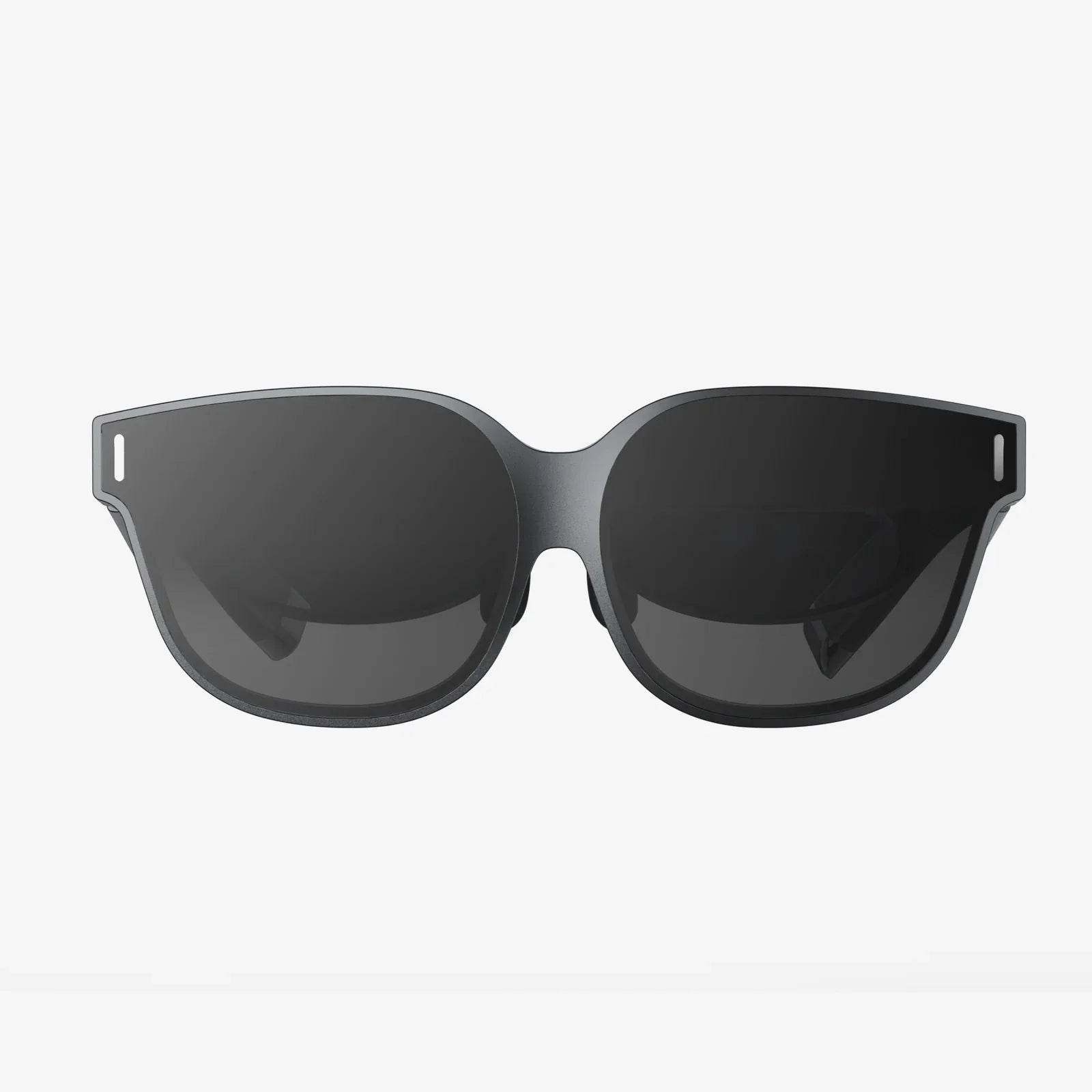
Imagine settling into your favorite chair, the world around you fading to black, and a pristine, hundred-inch screen materializes before your eyes. No bulky projectors, no carefully measured throw distance, and no fighting for the best seat in the house. This is no longer the stuff of science fiction; it’s the reality offered by big screen glasses, a technological leap that promises to redefine our very concept of a personal display. This wearable technology is poised to untether us from traditional screens, offering a blend of privacy, portability, and immersive spectacle that is capturing the imagination of tech enthusiasts and casual users alike.
The Core Technology: How Do Big Screen Glasses Actually Work?
At first glance, a pair of big screen glasses might look like a slightly bulkier version of standard sunglasses. However, hidden within those frames is a sophisticated optical system that performs a minor miracle of modern engineering. The magic lies in a combination of micro-displays and advanced optics.
The process begins with tiny, high-resolution Organic Light-Emitting Diode (OLED) or Liquid Crystal on Silicon (LCoS) micro-displays, each one positioned near your temple. These minuscule screens generate the initial image. This image is then directed through a series of specially designed lenses and waveguides—essentially clear pieces of glass or plastic etched with microscopic patterns. These components manipulate the light, bouncing it and expanding it until it is focused onto your retinas.
The result is not a small, close-up screen that strains your eyes, but a phenomenon known as a "virtual retinal display." Your brain perceives a large, stable image seemingly floating in space several feet to yards in front of you. The field of view (FOV) is a critical specification, determining how much of your vision the virtual screen occupies. A wider FOV creates a more immersive, cinema-like experience, making the screen feel truly massive.
Beyond Entertainment: The Multifaceted Applications of This Technology
While the immediate appeal is home cinema on a grand scale, the potential applications for big screen glasses extend far beyond binge-watching the latest streaming series. This technology is a gateway to a more screen-integrated yet less obtrusive daily life.
- The Ultimate Remote Worker's Setup: Imagine having multiple large monitors for coding, writing, or analyzing data from anywhere—a coffee shop, an airport lounge, or your living room. Big screen glasses can create virtual desktops that are limited only by the power of your connected device, not by physical space.
- Immersive Gaming: For gamers, this technology offers unparalleled immersion. Whether connected to a console, a powerful computer, or even a mobile device, the glasses can place the player directly inside the game world, free from the distractions of their physical environment.
- Professional and Educational Use: Architects could walk through 3D models of their designs, medical students could observe detailed anatomical overlays during dissection, and engineers could view schematics hands-free while working on complex machinery. The ability to overlay digital information onto the real world, a feature of some models, opens up a realm of augmented reality possibilities for training and complex tasks.
- Accessibility: For individuals with mobility issues or those who find traditional screens difficult to view, big screen glasses can bring the world to them, offering a large, clear display from a comfortable, stationary position.
Weighing the Experience: The Advantages and Current Limitations
Like any emerging technology, big screen glasses present a compelling set of benefits alongside some challenges that manufacturers are actively working to overcome.
The Compelling Advantages
The primary advantage is, of course, size and portability. The ability to carry a theater-sized screen in a protective case that fits in a backpack is a revolutionary concept. This is coupled with complete privacy; your financial spreadsheets, movie choices, or game are for your eyes only, a boon for commuters, travelers, and those in shared living spaces.
Furthermore, when designed correctly, the optical technology can be easier on the eyes than traditional screens. Because the image is projected onto your retina with a far-off focal point, your eye muscles are relaxed in a way they aren't when staring at a phone or computer monitor just inches away, potentially reducing eye strain.
The Existing Challenges
For all their promise, current iterations are not without drawbacks. A common concern is social acceptance and isolation. Wearing a pair of tech-heavy glasses can feel awkward in public and completely cuts the user off from their immediate surroundings, which can be a safety concern and a social barrier.
There's also the issue of the "honeymoon period." Some users report initial awe that gradually gives way to a critical eye for the technology's flaws, such as a perceived lower overall resolution compared to a high-end 4K television, or a "screen door effect" where the faint lines between pixels are visible. Battery life is another key constraint, as powering two bright micro-displays and onboard processors is demanding, often limiting extended use without a external battery pack.
Finally, fit and comfort are paramount. A poorly balanced or heavy pair of glasses can cause fatigue during long viewing sessions. Finding a design that accommodates a wide range of face shapes and, crucially, can be worn over prescription glasses, remains a significant hurdle for universal adoption.
A Glimpse into the Future: Where is This Technology Headed?
The current state of big screen glasses is impressive, but it is merely the foundation for a far more integrated future. The trajectory points toward several key developments that will push this technology into the mainstream.
We are moving rapidly toward lighter, more socially acceptable designs that resemble standard eyewear. Advances in micro-optics and battery technology are crucial to this miniaturization. Resolution and brightness will continue to climb, eliminating any lingering visual artifacts and providing a flawless image even in brightly lit environments.
The most exciting evolution is the seamless fusion of virtual screen viewing with full-color, high-resolution augmented reality. Future glasses will likely allow users to snap virtual screens into place around their real-world environment, enabling them to work with multiple documents while still seeing their desk, or watch a movie on a virtual screen mounted on their wall while remaining aware of their family in the room. This blend of the digital and physical, achieved without the isolating effect of fully opaque displays, represents the true endgame for this technology.
Furthermore, integration with spatial computing environments will allow these glasses to understand and interact with the geometry of your room, anchoring virtual objects and screens in place to create a persistent and intuitive computing interface that is woven into your life, not confined to a box on your desk.
Choosing Your Window to a Bigger World: A Buyer's Considerations
If you're considering stepping into this new visual paradigm, several factors should guide your decision. First, identify your primary use case. Is it for media consumption, productivity, or gaming? This will dictate the importance of factors like color accuracy, latency, and supported resolutions.
Pay close attention to technical specifications, particularly resolution (per-eye), field of view (FOV)—a wider FOV is more immersive—and brightness (measured in nits). Comfort is non-negotiable; if possible, try before you buy. Check for compatibility with your existing devices (smartphones, consoles, computers) and whether the model requires any additional dongles or accessories. Finally, consider the audio experience; some models have built-in speakers, while others rely on Bluetooth or a 3.5mm jack for headphones.
The world of big screen glasses is not about replacing the shared joy of a family movie night on a large television. Instead, it offers a powerful alternative for personal consumption and professional use, granting unparalleled freedom and flexibility. It represents a fundamental shift from screens as objects we look at, to displays we look through, integrating the vast digital world directly into our perception of reality.
As the lines between our physical and digital lives continue to blur, big screen glasses are emerging as a critical bridge, offering a glimpse into a future where your most powerful screen isn't on your desk or in your pocket—it's literally in your eyes, ready to transform any space into your personal command center, theater, or playground with a simple command.
Share:
Virtual Glasses Prescription: The Future of Eyecare is Now
AR vs VR Difference: A Complete Guide to Understanding Immersive Technologies