


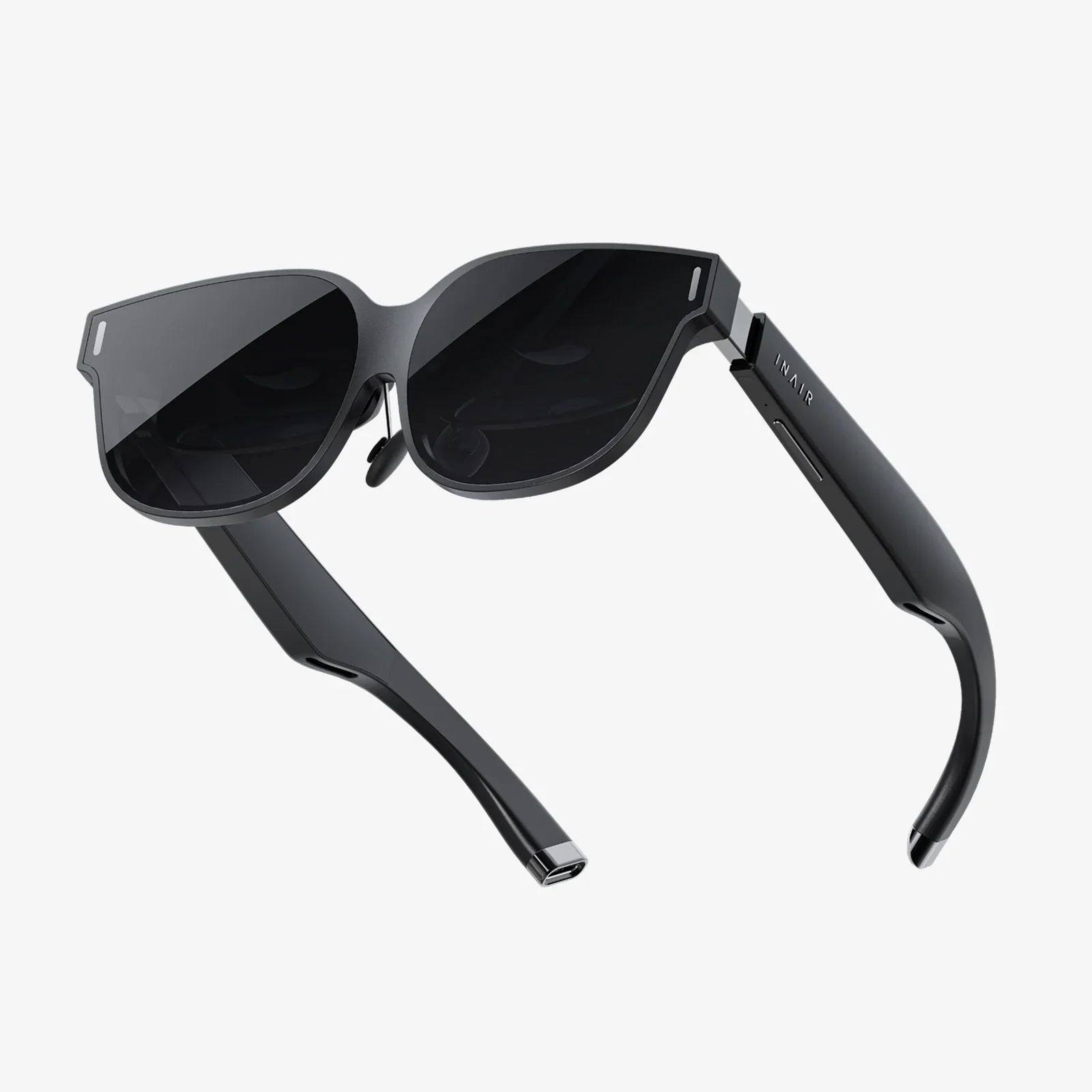
- by wangfred
Big Screen VR Desktop: The Ultimate Immersive Computing Experience
- by wangfred
Imagine your desk, your monitors, your entire digital world not confined to the physical rectangles on your desk but floating around you in a limitless, personal IMAX theater. This isn't a scene from a sci-fi movie; it's the reality offered by the concept of a Big Screen VR Desktop, a technological leap that is poised to fundamentally change our relationship with computers. For decades, we've been hunched over, our field of view limited by bezels and the physical space available in our homes and offices. What if you could break free from those constraints? What if your only limit was your imagination? The promise of a truly immersive computing environment is no longer a distant dream—it's here, and it’s ready to transform how we work, play, and connect.
For all their advancements, traditional computing setups are inherently limiting. We are constrained by the size, weight, and cost of physical monitors. A three-monitor setup is often considered the pinnacle of productivity, but it requires significant desk real estate, a powerful graphics card to drive all those pixels, and still, the bezels between each screen create visual breaks in your workflow. The Big Screen VR Desktop shatters these physical constraints. By donning a headset, you are instantly transported to a virtual space where the concept of a "monitor" is reimagined. You are no longer looking at a screen; you are inside your workspace.
This virtual environment can be a serene, minimalist void, a replication of a plush home theater, a spaceship bridge, or any setting you find conducive to focus. Within this space, you can summon multiple virtual displays, arranging them in a curved arc, stacking them vertically, or placing reference material to your sides—all without a single physical cable or bezel to break the immersion. The size of these virtual displays is limited only by the resolution of the headset and the power of your computer. You can have a display that feels 30 feet wide, perfect for reviewing detailed timelines in video editing or analyzing complex financial charts, all while maintaining a comfortable, ergonomic posture.
The magic of a Big Screen VR Desktop is built upon a foundation of several converging technologies, each critical to selling the illusion and ensuring a usable, comfortable experience.
The single most important factor for a productive virtual desktop is display clarity. Early virtual reality suffered from the "screen door effect," where users could see the gaps between pixels, making text blurry and difficult to read. Modern high-end headsets feature incredibly high-resolution displays, often exceeding 4K per eye. Combined with advanced pancake lenses that provide edge-to-edge clarity, these displays are now sharp enough to render text and fine details with crispness that rivals many physical monitors. This eliminates eye strain and makes reading documents, coding, and browsing the web not just possible but genuinely pleasant.
For the virtual screens to feel like real, solid objects in your space, they must remain perfectly locked in place. This is achieved through precise inside-out tracking. Cameras on the headset constantly map your environment and track its own position down to the millimeter. Any lag or jitter in this tracking would immediately break immersion and cause discomfort. Furthermore, the link between your computer and the headset must be incredibly fast, with minimal latency. Whether using a high-speed wired connection or a robust wireless protocol, the goal is to ensure that your mouse movements and keyboard inputs are reflected on the virtual screen instantaneously, matching the responsiveness you expect from a physical monitor.
Immersion is an audiovisual experience. Spatial audio is a key component, allowing sounds from applications to feel like they are emanating from the direction of a specific virtual window. A notification from a messaging app on your left-screen can ping from the left, while a video playing on your central screen has audio that feels like it's coming from directly in front of you. This subtle cue enhances situational awareness and deepens the feeling of being in a real, physical workspace. The environmental design—the virtual room you choose to work in—also plays a psychological role. A calm, minimalist environment can aid deep focus, while a more social, theater-like space enhances the entertainment experience.
The most immediate and compelling application for a Big Screen VR Desktop is in the realm of productivity. It offers a paradigm shift for professionals across numerous fields.
While productivity is a killer app, the Big Screen VR Desktop experience extends far beyond work. It represents the ultimate evolution of personal entertainment.
Watching movies, sports events, or playing traditional flat-screen games is transformed into a profoundly immersive activity. Your virtual screen can be scaled to the size of a massive cinema screen, but one you have all to yourself, with perfect viewing angles and no one talking on their phone or kicking your chair. The sense of scale and presence is unmatched by even the largest physical televisions, which are still limited by the walls of your living room.
This technology also has profound implications for social connectivity. The virtual environment can become a shared space. You can watch a movie with friends or family who are physically miles away, and it will feel like you are sitting together in the same theater, able to see each other's avatars and reactions. Remote collaboration takes on a new meaning; colleagues can join your virtual office to review a complex 3D model together or brainstorm on a virtual whiteboard, all while having their own personal set of screens. It’s a more natural and engaging form of communication than a grid of video calls, fostering a stronger sense of shared presence and collaboration.
As revolutionary as this technology is, it is not without its current challenges. Acknowledging them is key to understanding its present state and future trajectory.
Ergonomics and Comfort: Wearing a headset for extended periods requires the device to be lightweight and well-balanced. While technology is rapidly improving, prolonged use can still cause fatigue for some users, a factor that must be considered for an 8-hour workday.
The Input Paradigm: Interacting with a traditional Windows or macOS desktop in VR is primarily done with a standard mouse and keyboard, which works well but means you are often looking down at your physical hands. The development of more intuitive spatial input methods, like hand tracking or virtual pointers, is an area of active development to make the experience even more seamless.
The Hardware Barrier: To drive a high-resolution headset and multiple virtual displays at a smooth, high frame rate, a powerful computer is required. This represents a significant initial investment, placing this technology currently in the realm of enthusiasts and professionals who can justify the cost with significant productivity gains.
The Big Screen VR Desktop is not the end goal; it is the foundational stepping stone to a even more immersive future. We are moving towards a paradigm of spatial computing, where the lines between the physical and digital worlds will blur even further.
Future iterations will likely feature photorealistic passthrough, using high-resolution cameras to blend the real world with the virtual seamlessly. Your physical keyboard and desk could be integrated perfectly into the virtual environment, and virtual screens could be pinned to your actual walls. Advancements in eye-tracking and foveated rendering will allow for even higher visual fidelity by focusing rendering power only where you are looking. We may see the development of virtual applications designed from the ground up for 3D space, moving beyond mere replicas of 2D windows into entirely new forms of software interaction.
The path forward is one of refinement and integration. The headsets will become lighter, the displays sharper, the computers more powerful and efficient, and the software more intuitive. What begins as a spectacular novelty for tech enthusiasts is steadily evolving into a legitimate, mainstream computing platform.
The door to your physical monitor has been the primary portal to the digital world for over half a century. That door is now swinging wide open, revealing an infinite canvas limited only by the boundaries of your imagination. The Big Screen VR Desktop isn't just about having more screen space; it's about redefining the very nature of how we interact with information, stories, and each other. It invites you to step through, leave the constraints of your desk behind, and create your own world. The question is no longer if this will become the standard way we compute, but how soon you will be ready to make the jump into this vast new digital frontier.