


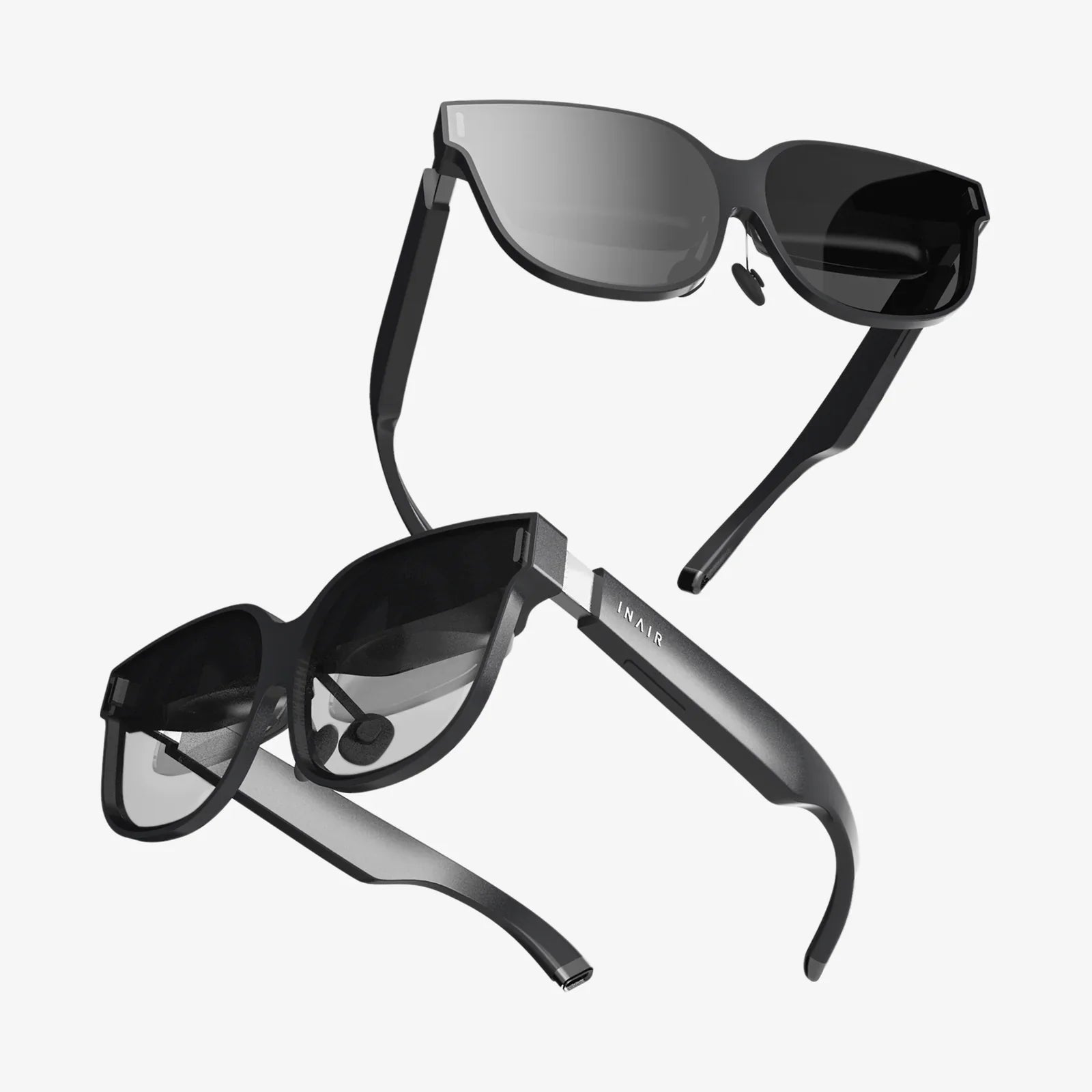
Imagine stepping through a portal, not onto a screen, but into a world. This is the promise, the siren's call, of Big Screen VR Full Screen technology—a leap beyond gaming headsets into a realm of boundless digital reality that feels less like watching a movie and more like stepping into one. It’s the difference between looking through a window and standing on the other side. For anyone curious about the next frontier of digital immersion, the journey begins here, at the precipice of a visual revolution that aims to erase the edges of perception itself.
The Pursuit of Presence: Why Size and Scale Matter
The fundamental goal of any virtual reality system is to achieve a state known as 'presence'—the uncanny and powerful sensation of actually being in the virtual environment. For years, even the most advanced systems struggled with a critical barrier to this goal: the screen door effect and a limited field of view (FOV). Users were often acutely aware they were looking at a screen, a high-tech window into another world, but a window nonetheless. The edges of the display were constant, subtle reminders of the technology mediating the experience.
Big Screen VR Full Screen technology directly attacks this limitation. By dramatically expanding the field of view to envelop the user's entire peripheral vision, it moves from presenting a scene to constructing an environment. The human eye has a horizontal field of view of approximately 210 degrees. Traditional headsets might cover 90 to 110 degrees, creating a distinct binocular, tunnel-vision effect. Full-screen VR aims to push that coverage to 180 degrees or beyond, effectively filling your entire visual capacity. This expansion is not merely a quantitative change; it is a qualitative transformation. When your brain can no longer detect a visible border between the virtual world and reality, the illusion becomes complete. The sense of scale becomes palpable; standing on the edge of a virtual canyon feels dizzying because the abyss extends to the very limits of what you can see.
Deconstructing the Technology: More Than Just a Bigger Panel
Creating this seamless, edge-to-edge visual experience is a monumental engineering challenge. It is not as simple as placing a larger display inside a headset. The pursuit of a full-screen VR experience involves a complex interplay of optics, display technology, and processing power.
The Optical Frontier: Lenses and Light
The lenses are the unsung heroes of this revolution. Their job is to take the image from the high-resolution displays and warp it correctly onto your retina, creating a comfortable and focused image across the entire expanded field of view. Standard Fresnel lenses, while effective for their time, often introduced visual artifacts like god rays and glare, especially at their edges. The shift towards advanced hybrid or pancake lenses has been crucial. These designs allow for a much shorter distance between the display and the eye, enabling a more compact headset form factor while also providing a sharper, more uniform image from the center to the very periphery of the view. This optical clarity is essential for maintaining the illusion across the entire 'big screen'.
The Pixel Pipeline: Resolution and Rendering
An expanded field of view immediately creates a massive computational demand. If you increase the FOV by 50%, you are asking the graphics processing unit (GPU) to render roughly 50% more pixels per frame, all while maintaining a high frame rate (90Hz or 120Hz) to prevent motion sickness. This requires a staggering amount of raw power. Foveated rendering has emerged as a critical enabling technology. This technique uses internal eye-tracking to determine exactly where the user is looking and renders only the center of their gaze in ultra-high resolution. The peripheral areas, where the human eye naturally discerns far less detail, are rendered at a lower resolution. This clever hack dramatically reduces the computational load without the user perceiving any drop in visual fidelity, making full-field-of-view experiences feasible with available hardware.
Design and Comfort: The Human Factor
Engineering a device that houses larger displays and complex optics without becoming a cumbersome weight strapped to your face is a key hurdle. Designers are experimenting with new materials, better weight distribution, and alternative form factors like modular systems that offload computing power to a separate unit. Comfort is inextricably linked to immersion; a headset that causes neck strain or facial pressure will shatter the sense of presence no matter how wide the screen is. The ideal Big Screen VR Full Screen device must feel like an extension of the self, not a piece of hardware.
A World of Applications: Beyond the Hype
The implications of this technology extend far beyond more immersive video games. A truly full-screen virtual environment unlocks new possibilities across numerous domains.
The Ultimate Home Theater Reimagined
The concept of a 'big screen' finds its most literal application here. Imagine a private IMAX theater that exists anywhere you are. With a full-field-of-view headset, a virtual screen can be rendered to occupy a vast portion of your vision without any loss of resolution or color fidelity. You are no longer watching a film; you are sitting in the best seat in the house, with the action unfolding around you. Social viewing experiences become profoundly more engaging, as avatars of friends sitting next to you in a virtual cinema feel truly present, sharing the same immersive visual and audio space.
Revolutionizing Remote Work and Collaboration
Video conferencing is functional, but it lacks the nuance and presence of a physical meeting. Big Screen VR Full Screen technology can create virtual boardrooms where life-sized colleagues sit across from you. Whiteboards and 3D models can be summoned and manipulated at life-like scale, appearing as tangible objects in a shared space. For architects, engineers, and designers, this means being able to walk clients through a full-scale, immersive prototype of a building or product before a single physical resource is spent. The sense of 'being there' with your team, able to make eye contact and read body language within a shared environment, could redefine the concept of a remote office.
Education and Virtual Tourism
History lessons transform from reading about ancient Rome to walking through a faithfully reconstructed Forum, with the architecture soaring to the edges of your sight. Biology students can step inside a human cell, with organelles operating all around them. The concept of a 'field trip' takes on a new meaning, allowing students to explore the coral reefs, the surface of Mars, or the Vatican Museum with a level of immersion that was previously the stuff of science fiction. This is not just visual learning; it is experiential learning, creating powerful mnemonic and emotional connections to the subject matter.
The Challenges on the Horizon
Despite the exciting progress, the path to perfect, ubiquitous Big Screen VR Full Screen experiences is not without obstacles. The high computational cost currently places it out of reach for many consumers, though cloud streaming solutions may eventually alleviate this. There are also ongoing questions about user safety, privacy, and the long-term psychological effects of such potent immersion. Furthermore, creating content that truly leverages this expansive canvas requires new directorial and design languages—how do you guide a viewer's attention when they can look absolutely anywhere?
The Future is Unfolding
The evolution will not stop at today's full-field-of-view headsets. Research into technologies like varifocal displays, which dynamically adjust focus to match the depth of the virtual object you're looking at, and light field displays, which perfectly replicate how light behaves in the real world, promises to shatter the remaining barriers to total realism. The line between the digital and the physical will continue to blur, eventually becoming indistinguishable.
We are witnessing the early chapters of a fundamental shift in how we interact with digital information and with each other. Big Screen VR Full Screen technology is more than a spec sheet upgrade; it is the key to unlocking virtual environments that feel authentic, expansive, and limitless. This isn't just about building a better display—it's about building a better reality. The doorway is here, and it’s wider and more inviting than ever before; the only thing left to do is take that step through and see what worlds await on the other side.
Share:
Looking Through VR Goggles: A Journey into the Digital Frontier and Its Impact on Our Reality
Digital Technology Products Are Reshaping Our World and Redefining Human Potential