


- by wangfred
Big Screen VR PC: The Ultimate Immersive Computing Experience
- by wangfred
Imagine your desk, your cockpit, your command center, but unshackled from the physical confines of monitors, cables, and walls. This is the promise, and now the reality, of the Big Screen VR PC experience—a technological leap that is redefining our very concept of personal computing and digital immersion. It’s not just about playing games in a virtual world; it’s about bringing the entire digital universe into a space of your own creation, a canvas limited only by your imagination. This is the next frontier of productivity, entertainment, and social interaction, all converging within the boundless realm of a high-fidelity virtual environment powered by a robust computer.
The journey to today's sophisticated Big Screen VR PC setups began with a simple desire: to feel truly present in a digital space. Early virtual reality was largely synonymous with gaming, offering novel but often isolating experiences. The hardware was bulky, the resolution was low, and the idea of spending hours inside a headset for anything other than play was unthinkable. However, as the underlying technology matured—driven by relentless innovation in processing power, display fidelity, and ergonomic design—a new possibility emerged. Visionaries and developers began to ask: what if we could use this powerful immersion not to escape reality, but to enhance it? What if the headset became not just a portal to game worlds, but a replacement for the most fundamental tool of the digital age—the computer monitor?
This paradigm shift required a confluence of advancements. Personal computers had to become powerful enough to render not just a complex game environment, but also multiple high-resolution virtual screens within that environment, all while maintaining a smooth, comfortable frame rate. Meanwhile, head-mounted displays needed to achieve a level of visual clarity where reading text for hours on end would not cause eye strain or fatigue. The arrival of modern PC hardware capable of real-time ray tracing and AI-assisted super-sampling, combined with VR headsets featuring crisp, high-pixel-density displays and advanced pancake lenses, finally made the dream viable. The stage was set for the monitor to become optional.
The Big Screen VR PC experience rests on three critical pillars of hardware, each playing a distinct and vital role. The failure or inadequacy of any one component can break the illusion of seamless immersion.
This is the undisputed engine of the entire experience. A powerful graphics card is non-negotiable. Its primary task is immense: it must render the entire virtual environment you are in—be it a serene mountaintop, a sleek sci-fi office, or a replica of your own room—and then populate that space with virtual displays. Each of these displays is, in effect, a separate high-resolution monitor that the GPU must drive simultaneously. The computational load is staggering. It's not merely about displaying your desktop; it's about rendering a 3D world and then projecting 2D desktop content onto surfaces within that world with perfect clarity and zero latency. Features like dedicated video encoding hardware are crucial for streaming the video signal to the headset with minimal compression artifacts, ensuring text remains sharp and video playback is flawless.
While the GPU does the heavy visual lifting, a capable multi-core processor is essential for managing the sheer number of tasks happening concurrently. The CPU is responsible for running your operating system, all your background applications, the VR environment software itself, and the data transfer between the PC and the headset. A modern, high-core-count CPU ensures that this symphony of processes runs without hiccups, preventing stutters or lag that can instantly shatter immersion and cause discomfort. Paired with this, ample and fast system memory (RAM) is critical. With dozens of browser tabs, multiple applications, and the VR runtime all active at once, 16GB is a practical minimum, with 32GB or more being the recommended sweet spot for a truly fluid and future-proof experience.
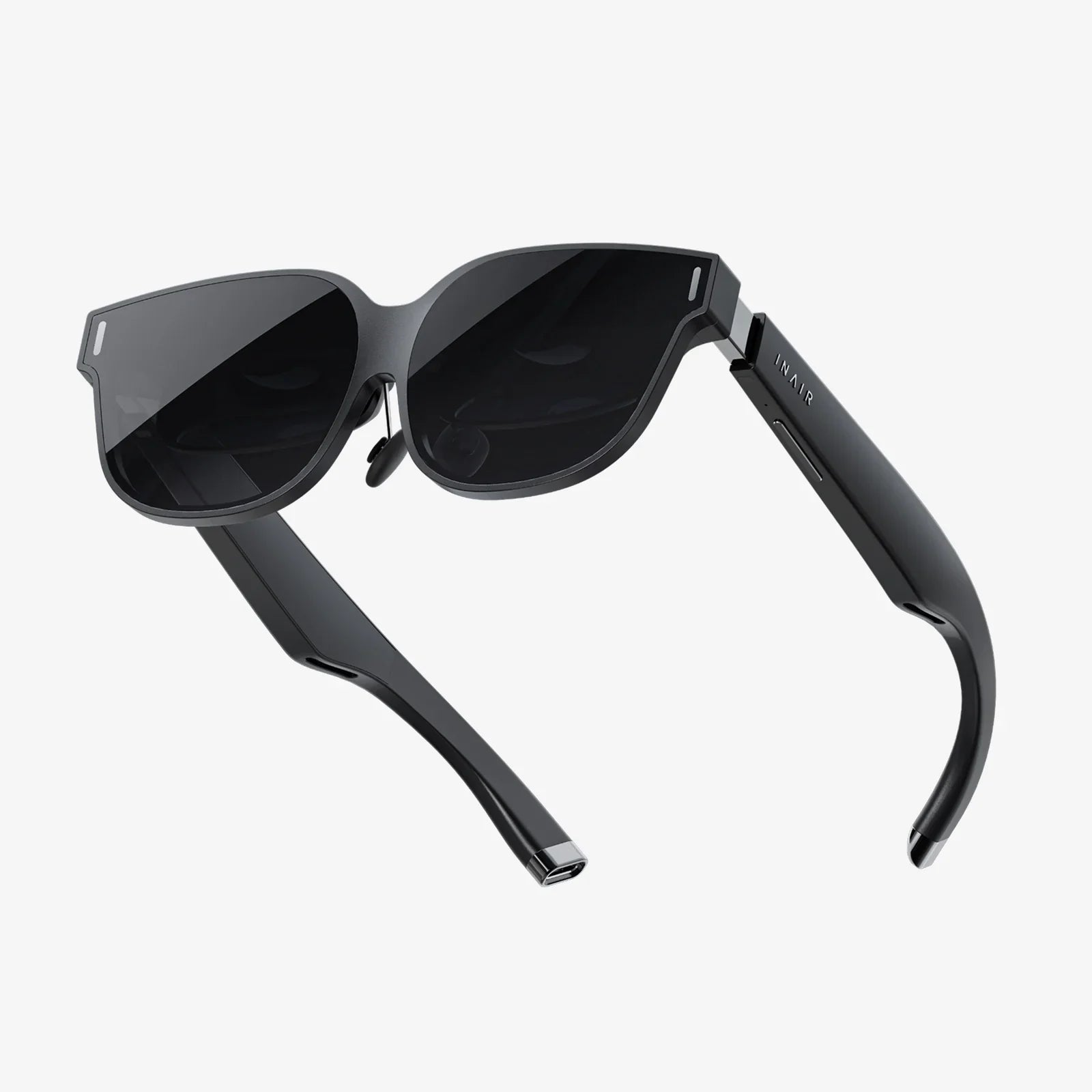
This is your lens to the virtual world. The specifications of the headset are what translate raw computational power into a believable experience. Several factors are paramount:
The true power of a Big Screen VR PC setup is revealed in its vast and varied applications. It is far more than a novelty; it is a profoundly practical tool.
For knowledge workers, developers, and creatives, this technology is revolutionary. Imagine having a dedicated IDE, a full-width browser for documentation, a communication app like Slack or Discord, and a video tutorial—all laid out around you in a perfect, distraction-free bubble. You can turn your head to reference information instead of alt-tabbing endlessly. You can create a virtual monitor array that would be physically impossible and prohibitively expensive to replicate in the real world. For those working in coffee shops, on airplanes, or in small apartments, it condenses an infinite workspace into a portable package. The ability to customize your environment to minimize distractions can lead to unprecedented levels of focus and flow state.
Entertainment is transformed. Instead of watching a movie on a TV across the room, you can simulate a personal IMAX theater, a drive-in, or a private cinema. The screen can be as large as you want, with perfect black levels and immersive spatial audio making every film an event. For gamers, the applications are twofold. First, it allows for incredibly immersive traditional gaming by playing flat-screen games on a massive virtual display. Second, and more powerfully, it enables true virtual reality gaming within the same environment. You can seamlessly switch from working on a code project to stepping into a fully realized VR game world without ever removing your headset. It becomes the all-in-one conduit for digital escapism.
Perhaps the most futuristic aspect is the social dimension. Many Big Screen VR platforms allow multiple users to inhabit the same virtual space. You can invite a colleague to review a 3D model together, watch a movie with a friend who lives on another continent as if you're on the same couch, or attend a virtual meeting where you share a whiteboard and ideas in a collaborative 3D environment. This moves beyond video calls into a shared presence, making remote interaction feel tangible and human. It’s a powerful step toward mitigating the isolation of remote work and connecting people in a more meaningful way.
While the technology is incredibly impressive, it is not yet perfect. Prospective users should be aware of the current hurdles. The financial barrier to entry remains significant, requiring a substantial investment in both a high-end computer and a premium headset. Visual fidelity, though vastly improved, is still not quite on par with a high-end 4K physical monitor for critical color work or perceiving the absolute finest detail. Wearing a headset for an entire eight-hour workday, while increasingly feasible with modern comfortable designs, is still not for everyone. Battery life for wireless headsets can be a constraint for long sessions, often necessitating a link cable for permanent use. Finally, the user experience and software ecosystem, while growing rapidly, are still maturing and can sometimes feel like navigating the early days of a new computing platform.
For those ready to dive in, preparation is key. Ensure your PC meets, and ideally exceeds, the recommended specifications for your chosen headset, with a particular focus on the GPU. Research the available software platforms that enable this experience; some are standalone applications while others are integrated into larger VR metaverse platforms. Their features, supported environments, and subscription models (if any) vary widely. Start with shorter sessions to acclimatize your eyes and brain to the new reality, gradually increasing the duration as you become more comfortable. Most importantly, approach it with a sense of exploration. Tinker with different virtual environments, screen layouts, and settings to discover what works best for your unique workflow and preferences.
The era of being physically tethered to a desk defined by black rectangles is ending. Big Screen VR PC technology is not merely an incremental upgrade; it is a fundamental re-imagining of our interface with the digital world. It promises a future where our workspace is infinite, our entertainment is enveloping, and our connections are spatial. It transforms the computer from a thing we look at into a space we inhabit. The technology is here, the software is evolving at a breakneck pace, and the only limit now is our willingness to step through the virtual looking glass and redefine what is possible.