


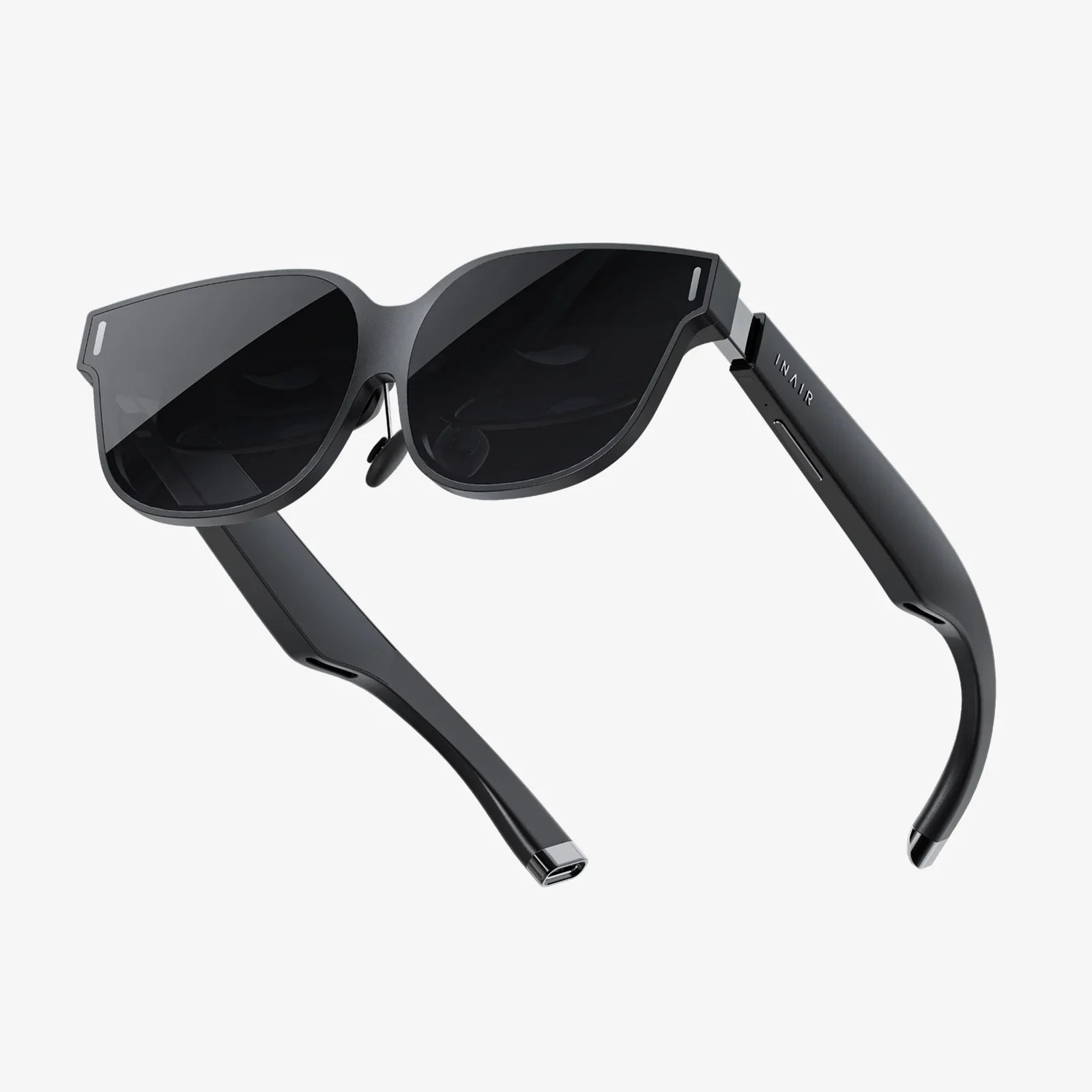
Imagine the most epic blockbuster not confined to the rectangle of your television or the darkness of a local cinema, but exploding to life all around you. Envision not just watching a crucial game, but feeling as if you are sitting in the virtual nosebleed seats, high-fiving a friend who is physically thousands of miles away. This is the promise, the allure, and the rapidly evolving reality of Big Screen VR streaming—a technological synergy that is poised to fundamentally alter our very conception of entertainment, social connection, and digital presence. It’s more than just watching; it’s about being there, together, in a world without physical limits.
The Confluence of Giants: Where VR Meets Content Streaming
The concept of Big Screen VR streaming is not born from a single invention but from the powerful convergence of two technological revolutions. On one side, we have the maturation of virtual reality, which has evolved from clunky, expensive prototypes to increasingly accessible and sophisticated headsets capable of creating convincing, immersive worlds. On the other, the dominance of content streaming services has untethered media from schedules and physical media, placing a universe of film, television, and live events at our fingertips.
Big Screen VR streaming is the elegant, albeit complex, marriage of these two domains. It takes the boundless digital library of streaming and projects it into the infinite canvas of virtual reality. This isn't merely about simulating a large television; it's about recontextualizing the entire viewing experience. The screen can be as vast as an IMAX dome, the environment can be a cozy log cabin with a virtual fireplace, a retro 1980s living room, or even a spaceship observatory floating above the Earth. The 'where' of watching becomes as important as the 'what'.
Beyond the Solitary Experience: The Social Heartbeat
The most profound impact of this technology lies in its innate social capabilities. Traditional streaming, for all its benefits, is often a solitary act. You might text a friend about a show, but you are not in the same room. Big Screen VR streaming shatters this isolation.
Platforms enabling this experience allow users to inhabit shared virtual spaces. You and your friends, each represented by customizable avatars, can gather to watch a movie, a pay-per-view event, or a YouTube video. The magic is in the details: you can see your friends' reactions, hear their laughter, and have natural conversations as if you were side-by-side. It replicates the social rituals of going to the movies or gathering for a watch party, but eliminates the barriers of geography. For a generation increasingly connected online yet physically dispersed, this offers an unparalleled sense of togetherness and shared experience that a group chat or video call simply cannot match.
A Technological Deep Dive: How the Magic is Woven
Creating a seamless and comfortable Big Screen VR streaming experience is a monumental technical challenge that involves a delicate dance between hardware and software.
The Hardware Hurdles: Resolution, Comfort, and Processing Power
The first and most obvious challenge is resolution. To simulate a massive cinema screen that appears sharp and clear, VR headsets require incredibly high-density displays. Early VR suffered from the "screen door effect," where users could see the gaps between pixels, shattering immersion. Modern headsets have largely overcome this with high-resolution, fast-switching LCD and OLED panels. However, the demand for even greater pixel density is relentless, as users seek a virtual screen that is both immense and impeccably sharp.
Then there is comfort. A headset must be light enough, well-balanced, and ventilated to be worn for the duration of a two-hour film. Manufacturers are constantly innovating with new materials, ergonomic designs, and better weight distribution to make devices feel less like a piece of tech and more like a pair of sunglasses.
Finally, processing power is paramount. Rendering a complex virtual environment and a high-resolution video stream simultaneously demands significant GPU and CPU resources. This processing happens both on the local device and, increasingly, in the cloud, to ensure a smooth, high-frame-rate experience free from lag or stutter, which are immersion-breaking and can induce nausea.
The Software Symphony: Synchronization, Avatars, and Environments
On the software side, the challenges are equally complex. Synchronization is critical for social viewing. The video playback for every user in a virtual room must be perfectly synced to the millisecond. There can be no audible echo or visual lag when one person laughs at a joke a half-second before others see it. This requires sophisticated netcode and low-latency streaming protocols.
Avatar technology is the key to social presence. While today's avatars often range from cartoonish to semi-realistic, the direction is toward greater expressiveness and fidelity. The goal is to accurately convey body language, eye contact, and facial expressions to make interactions feel more natural and emotionally resonant.
The design of virtual environments is also crucial. They must be visually appealing and designed to enhance, not distract from, the main content. Lighting must be dynamic, affecting avatars and the world realistically. Spatial audio, where sound comes from its correct source in the 3D space (like a friend whispering on your left), completes the auditory illusion of being together in a real place.
The Content Conundrum: What Can You Actually Watch?
The potential of any platform is ultimately dictated by its content. The Big Screen VR ecosystem currently features a multi-tiered content model:
- Personal Computer and Device Streaming: Many platforms allow users to virtually project their own desktop or specific streaming service apps into the VR environment. This provides access to a user's entire existing media library, from services to personal video files.
- Licensed Virtual Theaters: Some services have partnered with studios to offer first-run films and exclusive content in dedicated virtual theater spaces. This model most closely replicates the traditional movie-going experience, complete with virtual tickets.
- Live Events: This is a massively growing area. The ability to host live concerts, sporting events, comedy shows, and product launches in VR is incredibly compelling. Attending a live concert in VR, where you can have a great "view" from anywhere and experience the crowd energy with friends, is a uniquely powerful application.
- User-Generated and Niche Content: The open nature of some platforms allows for communities to form around specific interests, from watching classic anime to obscure cult films, all in dedicated rooms hosted by fans.
Challenges on the Horizon: Barriers to Mainstream Adoption
Despite its immense potential, Big Screen VR streaming faces significant hurdles before it can reach a mainstream audience.
Cost remains a primary barrier. A high-quality VR headset, plus a powerful enough computer to run it, represents a substantial investment for the average consumer, especially for an experience that is still seen as supplemental to existing entertainment options.
The issue of content licensing is a legal and corporate labyrinth. Major film studios and streaming services are often cautious about how their content is presented and distributed in new mediums. Navigating these rights to offer a broad and appealing content library is an ongoing challenge for platform developers.
Finally, there is the lingering perception of VR as a niche for gamers
The trajectory of Big Screen VR streaming points toward a future even more integrated into our daily lives. We can anticipate several key developments: The line between the real and virtual will blur with advancements in Augmented Reality (AR) and Mixed Reality (MR). Imagine putting on lightweight glasses that can overlay a massive, crisp screen onto your living room wall, or allow a friend's avatar to appear sitting on your real-world couch for a watch party. This hybrid approach could drastically lower the barrier to entry by blending digital content with the user's physical environment. Avatar technology will leap toward photorealism driven by advanced face and eye tracking. Your expressions in real life will be mirrored instantly and accurately by your digital counterpart, capturing every smirk, raised eyebrow, and look of surprise, making remote social interactions profoundly more authentic. Finally, we will see the rise of persistent virtual spaces—digital venues that exist continuously, not just when you log in. These could be virtual concert halls that host weekly events, or a friend's virtual apartment that serves as a constant hangout space, fostering a stronger and more continuous sense of community and shared place. The journey of Big Screen VR streaming is just beginning. It is a bold reimagining of one of our oldest collective pastimes: gathering to share a story. It promises a world where your living room can transform into any environment, where distance is no longer a barrier to connection, and where the screen isn't just something you look at, but a portal you step through. The next time you plan a movie night, the question won't be what you're watching, or who you're watching with, but where in the infinite universe of entertainment you'll all meet.The Future is a Shared Reality: What Lies Ahead?
Share:
What Do You Do With VR Goggles? The Ultimate Guide to Unlocking a New Reality
Display Virtual Keyboard Interface: The Invisible Bridge to Our Digital World