


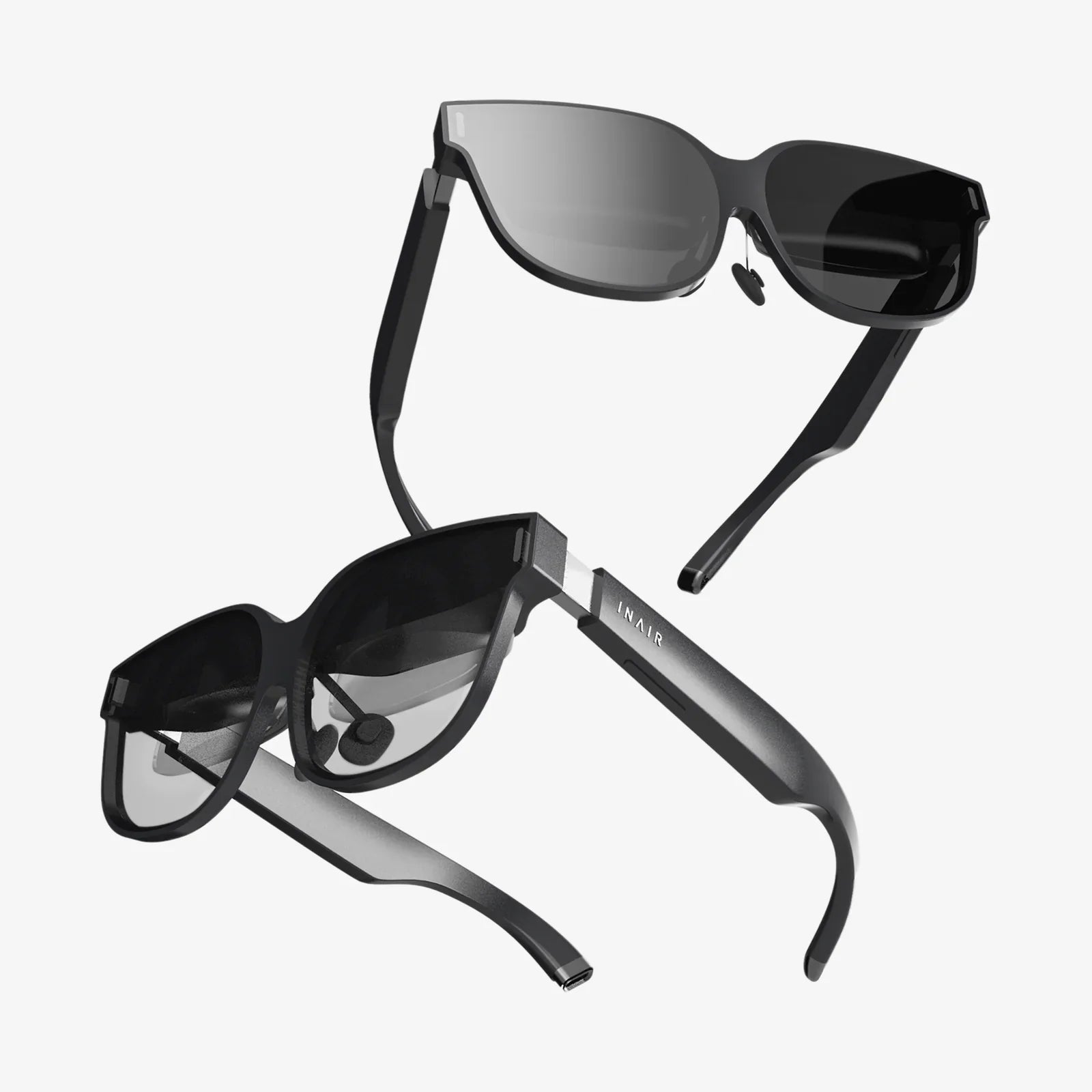
- by wangfred
Black Mirror AR Headset: Navigating the Future of Augmented Reality and Our Humanity
- by wangfred
Imagine a world where your reality is no longer your own—a seamless blend of the physical and the digital, curated, manipulated, and monetized, all through a sleek, unassuming device perched on your nose. This is not a distant season of a speculative fiction show; it is the imminent future promised by next-generation augmented reality headsets, a technology that feels ripped directly from the darkest, most prescient chapters of Black Mirror. The very phrase "Black Mirror AR headset" evokes a potent mix of awe and dread, compelling us to look beyond the specs and the hype to ask the most critical question: in our quest to augment our world, are we building a utopia or scripting our own psychological and social obsolescence?
For years, the anthology series Black Mirror has served as a modern-day oracle, holding up a dark, reflective screen to our relationship with technology. Its genius lies not in predicting specific gadgets, but in exploring the profound human consequences of technological adoption. Episodes have delved into the horrors of social credit systems, the fragmentation of identity in digital afterlives, and the agony of having our memories become a manipulable record. A pervasive theme is the tool that becomes a trap—the technology that offers convenience and connection, only to reveal itself as a mechanism for control, isolation, and profound existential angst.
The development of advanced AR headsets is the literal embodiment of this narrative leap from screen to society. We are actively constructing the very technology that has long been a central prop in these dystopian tales. This parallel transforms the idea of a "Black Mirror AR headset" from a clever metaphor into a crucial framework for analysis. It is a blueprint of potential pitfalls, a checklist of ethical dilemmas we must navigate with extreme caution. We are no longer mere viewers of this story; we are its authors, coders, investors, and ultimately, its protagonists. The choices we make today in designing and integrating this technology will write the episode we all have to live in.
To dismiss this technology as purely sinister would be to ignore its breathtaking potential. The proponents of immersive AR envision a world revolutionized for the better.
This is the radiant, sun-drenched side of the AR future—a tool of immense empowerment, creativity, and human advancement. It is a future worth building.
Yet, as the show reminds us, every technological leap carries a shadow. The same features that empower can also enslave. The always-on, always-recording, always-aware nature of a sophisticated AR headset opens doorways to dystopian realities we must consciously choose to close.
An AR headset, by its very nature, is a surveillance device. To understand and augment the world, its sensors—cameras, microphones, LiDAR—constantly scan and record the environment. This creates an unprecedented privacy nightmare. Will every conversation in a public park be subject to recording? Will every person you pass on the street be instantly identifiable, their personal data, social media profile, and personal history floating above their head like a digital halo for anyone with the right (or wrong) permissions to see? This is the logical endpoint of facial recognition and big data, creating a world where anonymity is impossible, and every action is potentially observed, recorded, and judged. It is the architecture of a perfect social credit system, a real-life episode of constant, pervasive scrutiny.
If you think targeted ads on your phone are intrusive, imagine walking down a street where every blank surface vies for your attention. A billboard doesn't just show a generic ad; it displays one crafted specifically for you, using your purchase history, current vitals (gleaned from biometric sensors on the headset), and even your recorded gaze to manipulate your desires. But the manipulation could go far deeper. Political propaganda could be tailored and injected directly into your perceptual field. Malicious actors could "hijack" reality, overlaying false information, fake alerts, or frightening imagery onto the world. The very concept of a shared, objective reality—a bedrock of functional society—could shatter into billions of personalized, manipulated fragments.
These devices will be battlegrounds for the most valuable resource of the 21st century: human attention. The competition to command your visual and auditory field will be ferocious, a constant, screaming barrage of notifications, offers, and entertainment vying to pull your focus from the physical world and the people in it. This leads to a state of perpetual cognitive overload, where our brains, evolved for a simpler environment, are pushed to their limits. The result could be a new form of digital addiction, more potent than any we've seen, making us present in body but absent in mind, forever chasing the next digital dopamine hit overlayed on our world.
Perhaps the most insidious threat is the one posed to our very sense of self and authenticity. With filters that can make us appear more attractive, wittier, or even as a different person entirely, AR invites a perpetual performance. When you can edit your reality and your presentation within it, where does the performance end and the "real you" begin? This constant curation could exacerbate social anxiety and lead to a crippling inability to engage in unfiltered, genuine human interaction. Furthermore, if we can layer any digital fantasy onto our mundane surroundings—turning a cramped apartment into a palace, a dull commute into a space adventure—what incentive remains to improve our actual reality? Or to simply be present within it? We risk becoming tourists in our own lives, preferring a polished simulation to the messy, beautiful, and authentic human experience.
This future is not inevitable. The reflection in the Black Mirror is a warning, not a prophecy. The path forward requires a concerted effort to build robust ethical and legal guardrails before this technology becomes ubiquitous. This is a multidisciplinary challenge that must involve technologists, ethicists, policymakers, and the public.
The goal cannot be to stop progress. The goal must be to guide it, to ensure that these powerful new lenses on the world are used to enhance our humanity, not replace it. We must demand technology that serves us, not the other way around.
The sleek, futuristic device is no longer a figment of a screenwriter's imagination; it's in labs, on drawing boards, and soon, on store shelves. The haunting vision of a Black Mirror AR headset is our canary in the coal mine, a stark reminder that the most important code we write next won't be for features or functions, but for humanity itself. The ultimate interface this technology must master is not between the digital and the physical, but between the device and the human soul—and that is a connection we must vigilantly protect, lest we wake up one day and no longer recognize the world, or ourselves, reflected in the glass.