


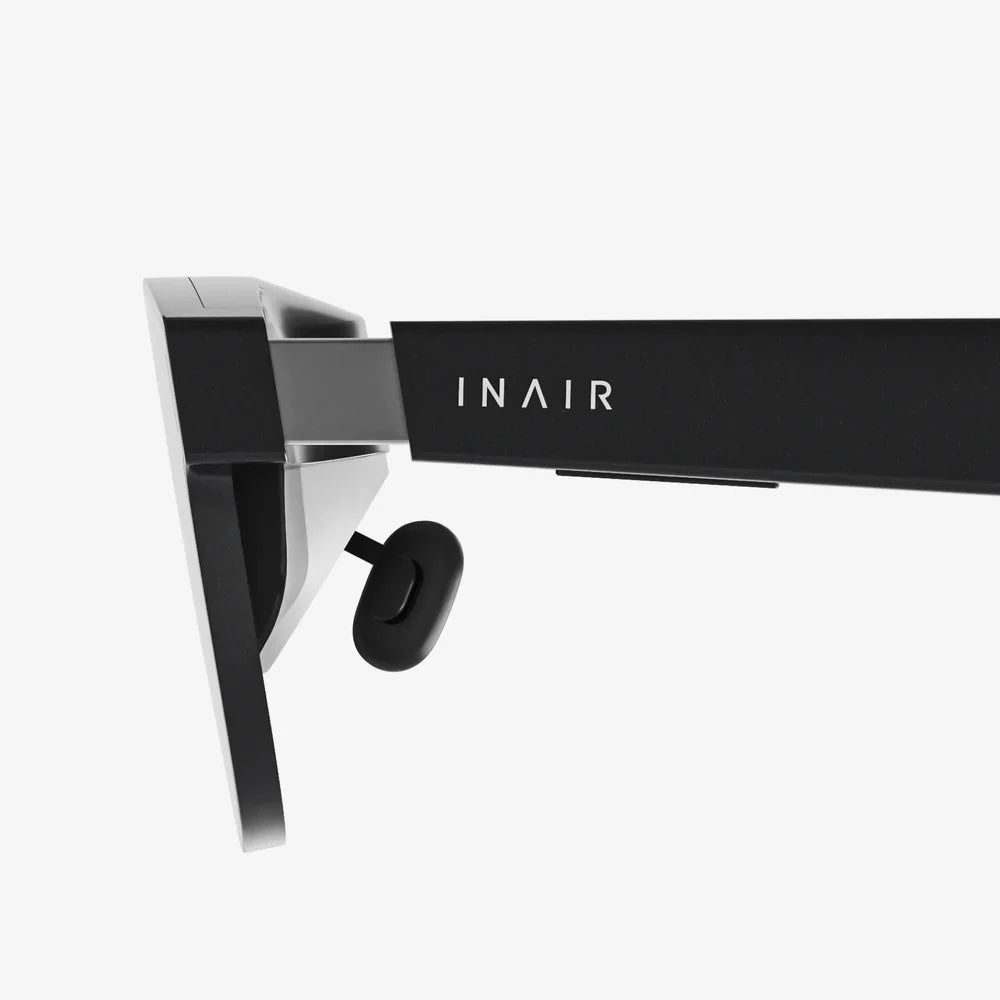
Imagine walking through a city street, and with a simple glance, the world around you transforms. Restaurant reviews float beside their doors, navigation arrows are painted onto the sidewalk just for you, and the history of a century-old building unfolds in a cinematic overlay against its brick facade. This is the promise of Augmented Reality (AR), a technology poised to redefine our interaction with information. But for this digital dream to feel seamless, for it to move beyond the screen of a handheld device and into a pair of lightweight glasses, it requires a critical, yet often invisible, enabler: a robust and persistent connection to the data-rich ecosystem around it. This is where the humble, ubiquitous technology of Bluetooth becomes the indispensable thread, weaving together the digital and the physical into a single, coherent experience.
The Foundation: Understanding the Technologies
Before we can appreciate the synergy, we must first understand the individual components. Augmented Reality is not Virtual Reality (VR). Where VR seeks to replace your reality with a fully digital one, AR aims to supplement and enhance your existing reality with digital information. This can range from simple heads-up displays (HUDs) showing speed and direction to complex, interactive 3D models placed on your kitchen table, visible through a tablet or a pair of specialized eyewear.
Bluetooth, specifically the low-energy protocols of Bluetooth Low Energy (BLE), is a wireless technology standard for exchanging data over short distances. Its primary strengths lie in its low power consumption, widespread adoption across billions of devices, and its ability to create personal area networks (PANs). Unlike Wi-Fi, which is designed for high-bandwidth internet access, Bluetooth excels at continuous, low-latency communication between devices in close proximity.
The Symbiotic Relationship: Why Bluetooth is AR's Perfect Partner
The marriage of Bluetooth and AR is not a matter of convenience; it is one of necessity and perfect compatibility. Several key factors make this partnership so powerful.
1. Liberating the User: The Path to Hands-Free, Eyewear AR
The ultimate goal of AR is to become an ambient, always-available layer of information. This vision is incompatible with holding a smartphone up as a viewfinder. True, immersive AR demands a form factor akin to everyday glasses—lightweight, comfortable, and socially acceptable. However, glasses have severe physical constraints: limited battery size and minimal processing power. They cannot house the powerful processors and large batteries needed for complex AR rendering and continuous sensor data processing without becoming bulky and unwearable.
This is where Bluetooth's role becomes critical. It enables a computational architecture known as split processing. The AR glasses can handle the minimum viable tasks: running the displays, tracking head movement, and capturing the environment with cameras. Meanwhile, the heavy lifting—the intense number crunching, the graphics rendering, the AI interpretation of the scene—is offloaded via a seamless Bluetooth connection to a nearby companion device, typically a smartphone in your pocket or a small compute pack on your belt. The glasses become a sophisticated display and sensor hub, while the connected device acts as the brain, sending only the final visual stream back to the glasses. This model is fundamental to creating viable, all-day AR eyewear.
2. The Bridge to a World of Smart Things
AR is not just about overlaying generic internet data; it's about presenting contextual information. And context is often provided by the physical objects immediately around you. The Internet of Things (IoT) has populated our world with countless smart devices—thermostats, light bulbs, industrial sensors, beacons, and wearables. The vast majority of these devices communicate their status and data via Bluetooth.
An AR device, through its Bluetooth radio, can scan for and connect to these devices, unlocking a hyper-contextual interface. Imagine walking into a conference room: your AR glasses detect the smart lights, thermostat, and presentation screen via Bluetooth. A virtual control panel appears floating next to the door, allowing you to adjust the lighting, temperature, or start the presentation with a gesture, all without needing to find a remote or a phone app. In a museum, a BLE beacon next to an exhibit can trigger your glasses to display a specific audio guide and 3D animation related to that exact artifact. Bluetooth acts as the digital signpost, telling the AR system what is relevant in your immediate vicinity.
3. Precision in an Imperfect World
While computer vision alone can identify objects, it can be slow, processor-intensive, and sometimes inaccurate (is that a 2023 model or a 2024 model?). Bluetooth provides a precise digital identifier. A specific piece of machinery on a factory floor, a unique tool in a workshop, or a product on a retail shelf can be equipped with a cheap BLE tag. When your AR glasses connect to that tag, they receive a unique ID that instantly tells the system exactly what object you are looking at. This allows for instantaneous and faultless recognition, triggering the correct AR instructions, schematic, or data sheet without any guesswork. This fusion of visual tracking ("I see a machine") and Bluetooth confirmation ("and it is machine ID#471B") creates a robust and reliable AR experience.
4. The Input Revolution: Beyond Gestures and Voice
Interacting with AR interfaces often involves hand gestures or voice commands, which can be imprecise or socially awkward in public settings. Bluetooth opens the door to a new world of tactile input devices. A connected ring on your finger could act as a subtle cursor controller. A smartwatch on your wrist could become a contextual menu selector. A handheld controller could provide haptic feedback while manipulating virtual objects. Bluetooth allows for a diverse ecosystem of specialized input devices that offer more precision and privacy than broad gestures, making AR interactions more nuanced and powerful.
Real-World Applications: Transforming Industries Today
The theoretical combination of Bluetooth and AR is already yielding tangible benefits across numerous sectors.
Revolutionizing Industrial and Field Work
In manufacturing, maintenance, and repair, the Bluetooth-AR duo is a game-changer. A technician wearing AR glasses can approach a complex piece of equipment. Bluetooth connects to sensors on the machine, pulling real-time performance data and diagnostic reports into their field of view. A BLE tag on a specific component instantly brings up the relevant repair manual and highlights the exact bolts that need to be turned with animated arrows. A remote expert can see what the technician sees and draw annotations directly into their environment, guided by the precise spatial anchor provided by the Bluetooth-connected device. This reduces errors, cuts training time, and drastically improves first-time fix rates.
Creating Immersive Retail and Navigation Experiences
In a retail store, Bluetooth beacons can trigger AR experiences on a customer's smartphone or future glasses. Point your device at a product shelf, and see reviews, comparison information, or even virtual try-ons for clothing or makeup appear. Indoor navigation, a notoriously difficult problem for GPS, is solved by a network of BLE beacons. AR arrows on the floor can guide you to your exact product in a vast supermarket or to your gate in a busy airport, all facilitated by the constant triangulation provided by the Bluetooth connection.
Advancing Healthcare and Medical Training
Medical professionals are using AR overlays to visualize anatomy during procedures. Bluetooth-connected surgical instruments can relay their position and status into the AR view, ensuring precision. For training, a Bluetooth-connected mannequin can feed vital signs and physiological data into a student's AR headset, creating a dynamic and responsive training scenario that reacts to their actions in real-time.
Challenges and The Road Ahead
Despite its promise, the Bluetooth-AR ecosystem is not without its challenges. Latency—the delay between an action and the AR system's response—is paramount. A laggy overlay can cause nausea and break immersion. Bluetooth protocols are continually being improved to minimize this latency, but it remains a key focus for engineers. Security is another critical concern. As AR glasses become portals to vast amounts of personal and environmental data, securing the Bluetooth connection against eavesdropping and unauthorized access is paramount.
Looking forward, the evolution of Bluetooth standards like Bluetooth LE Audio will enable higher-quality, lower-power audio streaming, which is crucial for spatial audio experiences in AR. Furthermore, developments in Bluetooth direction finding and high-accuracy distance measurement will allow for even more precise object anchoring and interaction, making the digital overlays feel even more locked into the real world.
The journey is towards a future where the connection is so seamless and the technology so frictionless that it disappears entirely from the user's consciousness. We won't think about "using Bluetooth with AR" any more than we think about the cellular radio when we send a text message. The technology will simply be there, working perfectly in the background, an invisible nervous system for our augmented world.
The true magic of this technological symbiosis lies in its potential to become utterly forgettable. We stand on the brink of an era where the digital and physical will no longer feel like separate realms, but rather a single, enhanced continuum of experience. The bridge between these two worlds is not built of fiber optic cable or satellite signals alone, but of millions of invisible, low-power threads, each one a Bluetooth connection, diligently pulling data from the environment and weaving it directly into the fabric of our perception. This is the silent, ubiquitous revolution that will make our world truly intelligible, interactive, and infinitely more interesting.
Share:
Smart Wearable Devices 2025: The Invisible Revolution Reshaping Our Daily Lives
Advanced Wearable Computing: The Invisible Revolution Reshaping Human Potential