


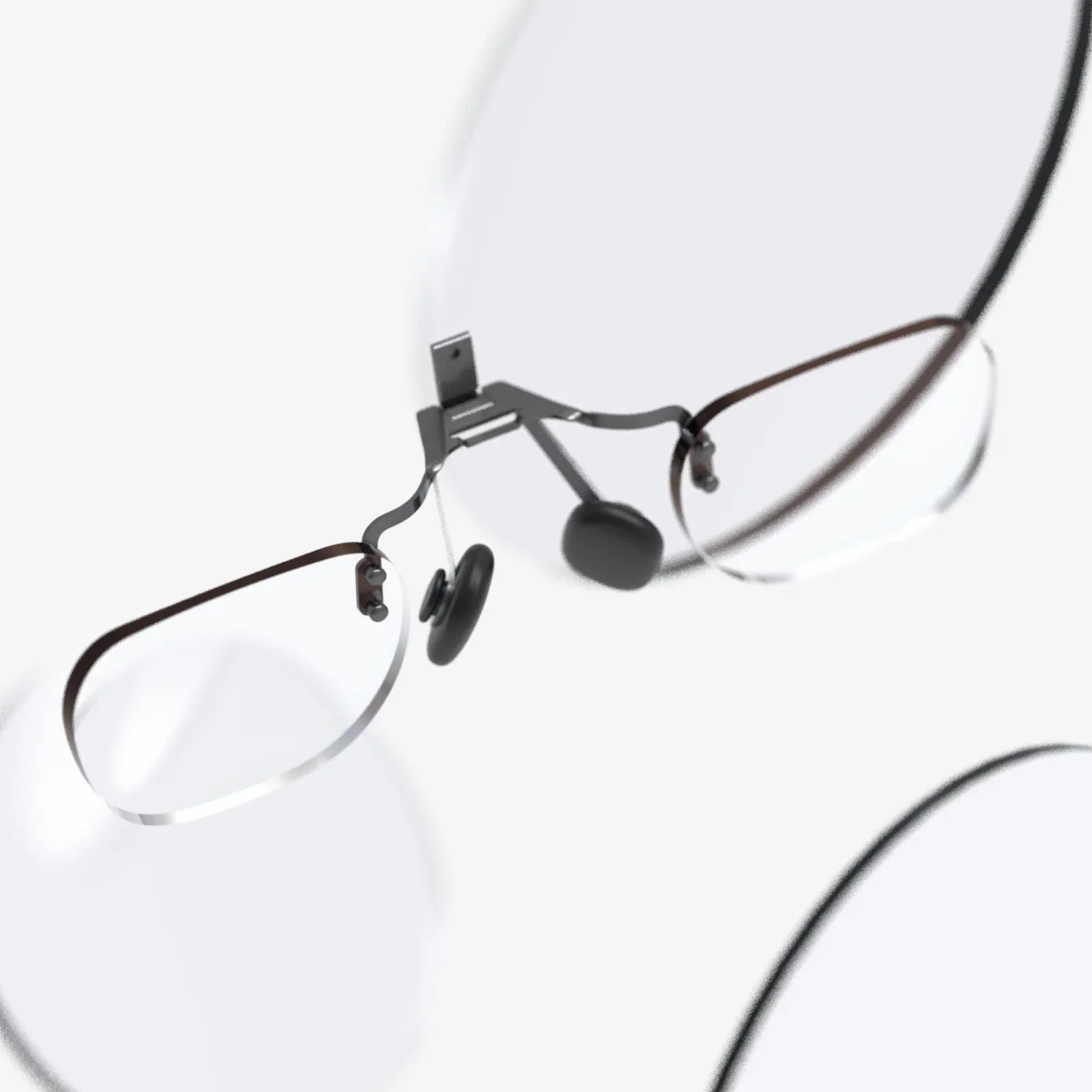
- by wangfred
Bluetooth Eyewear: The Ultimate Guide to Hearing and Seeing the Future
- by wangfred
Imagine a world where your most personal accessories—the glasses you wear every day—transform into a powerful, discreet command center for your digital life. This isn't a scene from a sci-fi movie; it's the reality offered by Bluetooth eyewear, a technological leap that is quietly reshaping how we interact with information, entertainment, and each other. By seamlessly integrating audio, microphones, and connectivity into the familiar form of eyeglasses and sunglasses, this innovation promises to free us from the tyranny of cords and the social isolation of earbuds, all while keeping us firmly planted in the real world. The future is not just in your pocket; it's on your face, and it's more intuitive and stylish than ever before.
The journey to Bluetooth eyewear is a story of convergence. For decades, eyeglasses were purely functional vision correction tools. Separately, personal audio evolved from bulky headphones to the wireless earbuds we know today. The true innovation began when engineers and designers asked a simple yet profound question: what if we merged them? The goal was ambitious: to pack sophisticated electronics—a battery, Bluetooth radio, speakers, microphones, and sometimes touch controls—into the slim, lightweight frames of standard eyewear without compromising on comfort, style, or battery life. This required miniaturization on a massive scale, leading to components so small they can be hidden within the arms of the frames, making the technology almost invisible to the outside observer.
At its core, Bluetooth eyewear functions like a typical Bluetooth device. It pairs with your smartphone, tablet, or computer to stream audio. However, the method of delivering that audio is where the true magic lies.
Some models utilize bone conduction technology, where transducers vibrate against the skull bone near the ear, transmitting sound directly to the inner ear while leaving the ear canal completely open. However, the more common and advanced approach in modern Bluetooth eyewear is the use of miniature, directional open-ear speakers. These speakers are strategically placed at the end of the arms, pointing towards the ear canal but not blocking it. They project sound waves directly into the ear, allowing the user to hear their music, podcasts, and calls clearly while still being fully aware of ambient noises like traffic, conversations, and announcements. This open-ear design is the cornerstone of their safety and social appeal.
The appeal of Bluetooth eyewear extends far beyond a simple novelty. It offers a suite of practical advantages that enhance daily routines.
This is the single greatest benefit. Whether you're cycling through city streets, jogging on a busy trail, or simply walking to work, the ability to hear your surroundings is crucial for safety. Unlike noise-canceling earbuds that create an audio bubble, Bluetooth eyewear keeps you connected to your environment, preventing accidents and allowing you to stay alert.
For professionals, it's a game-changer. Taking hands-free calls while typing on a laptop, walking between meetings, or referencing physical documents becomes effortless. The discreet nature of the audio means you can listen to a conference call or an audiobook in an open office without disturbing colleagues or without them even knowing. It facilitates a continuous flow of work and information without the constant need to put in or take out an earpiece.
Socially, it eliminates the rude barrier of earbuds. You can enjoy your music while still being fully present in a conversation, able to hear and respond to someone without pausing your audio or removing a device. It allows for a more natural and engaged interaction with the world around you.
For individuals with certain types of hearing impairment, Bluetooth eyewear can act as a discrete hearing assistive device. They can pair directly with smartphones or other devices to stream phone calls, media, and even amplify real-world conversations through the microphones, making social situations more manageable and enjoyable.
The versatility of this technology means it has a wide range of ideal users.
While revolutionary, Bluetooth eyewear is not without its compromises. Understanding them is key to setting the right expectations.
The open-ear design means audio quality is different from in-ear headphones. Bass response is less pronounced, and in very noisy environments, you may need to increase the volume. There is also the potential for sound leakage at high volumes, meaning people very close to you might hear a faint sound. For private listening in public, volume moderation is necessary.
Battery life is a constant balancing act with miniaturization. While sufficient for a day of intermittent use, heavy users might find the need to recharge during the day, especially if using them for long calls or continuous audio playback.
A proper fit is non-negotiable. The speakers must align perfectly with your ear canals for optimal sound. Many brands offer a variety of nose pad and arm tip sizes to customize fit. Furthermore, most reputable companies partner with optical labs to allow users to add prescription lenses, making them a true all-in-one solution for those who need vision correction.
The current iteration is just the beginning. The future trajectory of this technology points towards even deeper integration and intelligence. We can anticipate the incorporation of augmented reality (AR) displays, projecting information like navigation, translations, or notifications directly onto the lenses. Advanced biometric sensors could monitor health metrics like heart rate and calories burned. AI-powered assistants will become more contextual and proactive, offering information before it's even asked for. The line between a wearable device and a personal cognitive assistant will blur, with Bluetooth eyewear serving as the primary interface for this ambient computing future.
The true genius of Bluetooth eyewear lies in its subtlety. It doesn't shout for attention or seek to replace reality with a digital one. Instead, it enhances our perception of the world, layering useful digital information and audio over our natural experience without isolation. It represents a more human-centric approach to technology—one that serves us on our terms, prioritizing safety, awareness, and connection. As the technology continues to evolve, becoming more powerful, more intuitive, and even more invisible, the question will slowly shift from 'Why would I wear those?' to 'How did I ever live without them?'. The next revolution in personal tech won't be held in your hand; it will be sitting right before your eyes.