


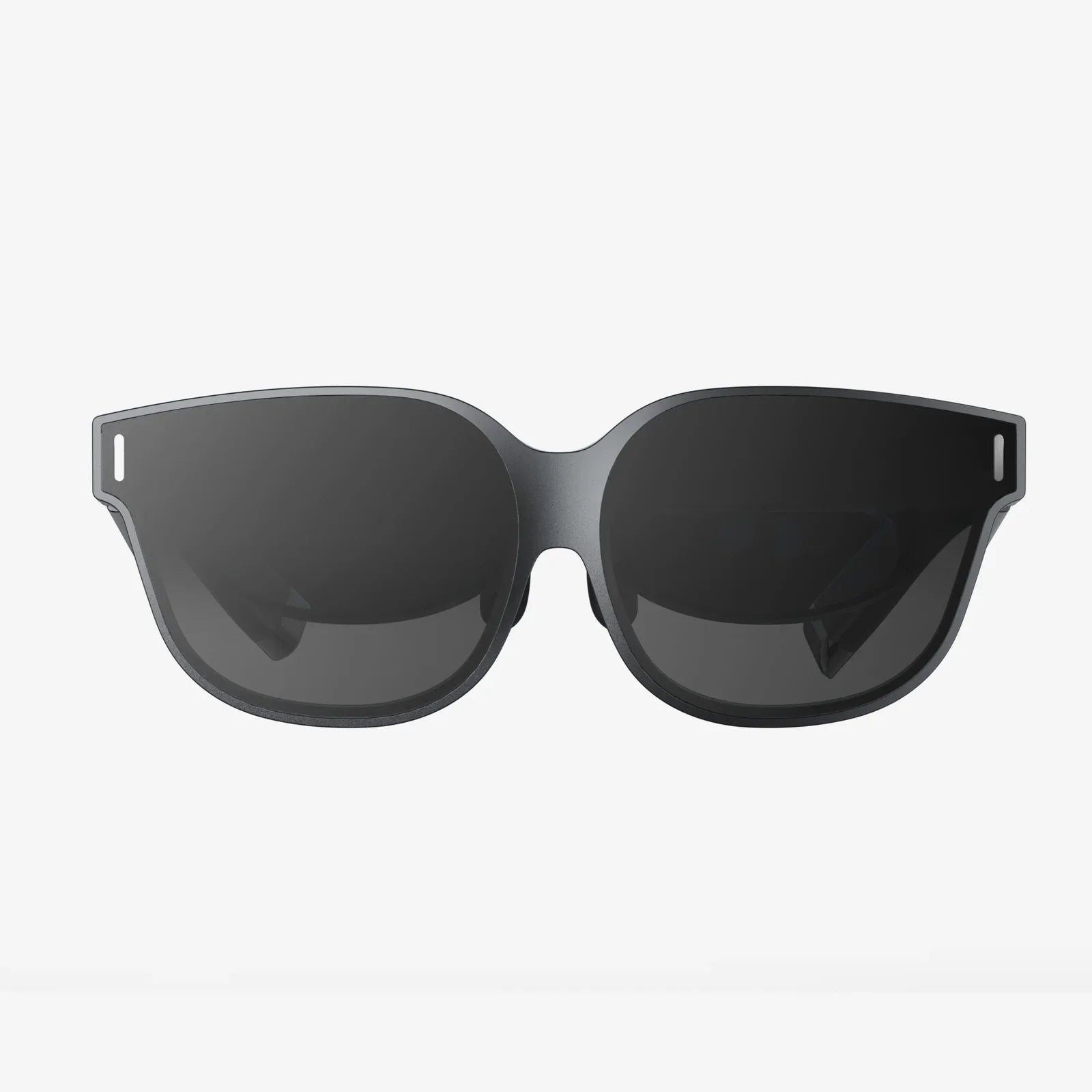
Imagine a world where information flows seamlessly into your field of vision, where language barriers dissolve in real-time, and where the digital and physical realms are no longer separate but intrinsically linked. This isn't a scene from a science fiction movie; it's the imminent future being built today by the pioneering brands that make AI glasses. This new category of wearable technology promises to be the most personal and transformative computing interface yet, moving beyond our pockets and into our very line of sight, offering a glimpse into a future where our reality is augmented, enhanced, and intelligently assisted.
The Evolution from Novelty to Necessity
The concept of smart glasses is not entirely new. For over a decade, various technology companies have attempted to bring heads-up displays to the consumer market with mixed results. Early iterations were often clunky, socially awkward, and limited in functionality, perceived more as a fascinating prototype than a must-have device. They struggled with fundamental issues: short battery life, limited processing power, poor display technology, and a lack of a compelling "killer app" that justified their existence beyond a novelty.
However, the technological landscape has shifted dramatically. The miniaturization of processors, advancements in waveguide and micro-LED display technology, the proliferation of high-speed connectivity like 5G, and most importantly, the explosive maturation of artificial intelligence and machine learning have converged to create the perfect conditions for AI glasses to thrive. Today's prototypes and products are sleeker, more powerful, and infinitely smarter. They are no longer just about displaying notifications; they are about understanding the world around you and proactively offering assistance.
Core Technologies Powering the AI Glasses Revolution
The magic of modern AI glasses lies in the sophisticated fusion of hardware and software. Several key technologies work in concert to create a seamless and intelligent user experience.
Advanced Sensor Arrays
These glasses are equipped with a suite of sensors that act as their eyes and ears. High-resolution cameras capture visual data, microphones listen to audio cues and commands, and often depth sensors or LiDAR scanners map the environment in three dimensions. This constant stream of data is the raw material that the onboard AI processes to understand context.
On-Device AI and Machine Learning
This is the true brain of the operation. Powerful, yet efficient, neural processing units (NPUs) embedded within the glasses run complex AI models directly on the device. This allows for real-time processing of information without the latency of sending data to the cloud. Key AI capabilities include:
- Computer Vision: Enabling the glasses to identify objects, read text, recognize faces (with privacy constraints), and navigate spaces.
- Natural Language Processing (NLP): Facilitating real-time translation, transcribing conversations, and understanding voice commands with remarkable accuracy.
- Contextual Awareness: The AI synthesizes data from all sensors to understand the user's situation. Is the user in a meeting? Traveling in a foreign city? Looking at a complex piece of machinery? The glasses adapt their functionality accordingly.
Augmented Reality Displays
The output of all this computation is delivered through cutting-edge display technology. Using methods like waveguide projection or holographic optics, these systems project digital images and information onto the lenses, making them appear as part of the real world. The goal is a bright, clear, and minimally intrusive overlay that feels natural to the user.
Battery and Connectivity
Balancing power-hungry components with all-day battery life is a significant challenge. Innovative companies are tackling this through low-power chipsets, efficient AI models, and sometimes through designs that offload heavier processing to a paired smartphone. Constant, reliable connectivity via Bluetooth, Wi-Fi, and cellular networks ensures the glasses remain a gateway to the vast resources of the internet.
Unlocking a New Dimension of Use Cases
The potential applications for AI glasses span nearly every aspect of professional and personal life. They are poised to become the ultimate tool for augmentation, accessibility, and assistance.
Revolutionizing Productivity and Work
In industrial and field service settings, AI glasses can provide technicians with hands-free access to schematics, instruction manuals, and remote expert guidance. An architect could walk through a construction site and see the digital building plans overlaid on the physical structure. For logistics and warehouse workers, they can display picking lists and navigation routes, dramatically improving efficiency and accuracy.
Breaking Down Communication Barriers
One of the most immediate and powerful applications is real-time translation. Imagine conversing with someone in a different language and seeing their words translated as subtitles in your vision, and hearing your own words spoken back in their language. This technology has the profound potential to connect people and cultures like never before.
Enhancing Accessibility
AI glasses can serve as a powerful assistive device. For the visually impaired, they can audibly describe scenes, read signs and documents, identify currency, and warn of obstacles. For those with hearing difficulties, they can transcribe conversations in real-time, allowing the user to "read" what is being said around them.
Reimagining Navigation and Exploration
Turn-by-turn navigation can be projected directly onto the path ahead, eliminating the need to look down at a phone. Tourists could look at a landmark and receive historical information and context. Students on a field trip could look at a plant or animal and get a detailed pop-up encyclopedia entry.
Creative and Social Applications
Content creators could live-stream their point-of-view seamlessly. Photographers and videographers could frame shots without traditional viewfinders. The social implications are vast, though complex, enabling new forms of shared experiences and digital interaction in physical spaces.
Navigating the Ethical and Social Minefield
The development of AI glasses is not without its significant challenges and controversies. The very features that make them powerful also raise serious questions that society must address.
The Privacy Paradox
A device that sees and hears everything you do is a privacy advocate's nightmare. The potential for constant, passive recording raises critical concerns about consent and surveillance. How do we prevent these devices from being used for unauthorized data collection? Companies building this technology are investing heavily in privacy-by-design features, such as physical camera shutters, clear recording indicators, and on-device processing that deletes data after it's used. However, establishing strong legal and social norms will be crucial for widespread adoption.
The Social Acceptance Hurdle
Unlike earbuds, glasses are highly visible and are worn on the face—the center of human interaction. The "glasshole" stigma from earlier attempts lingers. Will people feel comfortable conversing with someone who might be recording them or whose attention is divided by a digital overlay? Design will play a key role here; the most successful products will be those that look like fashionable eyewear first and technology second.
Digital Addiction and Reality Dilution
As with smartphones, there is a risk of these devices further blurring the line between engagement with the digital world and presence in the physical one. The potential for information overload and a constant distraction stream is real. The goal for developers should be to create technology that enhances reality rather than replaces it, offering assistance that feels empowering, not overwhelming.
The Competitive Landscape of Visionary Brands
The race to dominate this new computing platform is heating up, with a diverse array of companies entering the fray. The landscape includes established tech giants, ambitious startups, and traditional eyewear companies forging new partnerships.
Major technology corporations are leveraging their vast resources in AI research, cloud infrastructure, and hardware design to create comprehensive ecosystems. Their strategy often involves tightly integrating the glasses with their existing suite of products and services, aiming to create a seamless experience for users already within their orbit.
Meanwhile, agile startups are making waves by focusing on specific, high-value niches. Some are targeting enterprise and industrial applications with rugged, purpose-built devices, while others are focusing on perfecting a single feature, like real-time translation, to demonstrate clear, undeniable value. Their approach is to prove utility in a focused area before expanding.
Recognizing that aesthetics are just as important as technology, several legacy eyewear brands have entered into strategic partnerships with tech firms. These collaborations aim to merge cutting-edge engineering with decades of design expertise and fashion sensibility, understanding that for glasses to be worn every day, people must actually want to wear them.
The Future is Clear: What's Next for AI Glasses?
We are still in the early chapters of the AI glasses story. The technology is rapidly evolving, and future iterations will bring capabilities that today seem like pure fantasy. We can expect displays with wider fields of view and full color, AI models that understand context with near-human intuition, and battery life that truly lasts all day. The ultimate goal is a pair of glasses that are indistinguishable from regular eyewear but that offer a ubiquitous and invisible layer of intelligent assistance.
This evolution will likely see the technology become more integrated into our lives, moving from a device we "use" to an ambient intelligence we "experience." It could fundamentally change how we learn, work, connect, and perceive the world around us. The brands that succeed will be those that not only push the boundaries of technology but also navigate the complex ethical landscape with transparency and build trust with users.
The journey into this augmented future is already underway, and it's being led by the innovators and engineers who believe that the most powerful computer shouldn't be in your pocket or on your desk, but right before your eyes, enhancing your world without isolating you from it. The next time you put on a pair of glasses, you might just be putting on a window to a smarter, more connected, and infinitely more fascinating world.
Share:
AI Hardware Security: The Unseen Battle for the Future of Computing
Top Automation Tools: The Ultimate Guide to Streamlining Your Workflow in 2024