


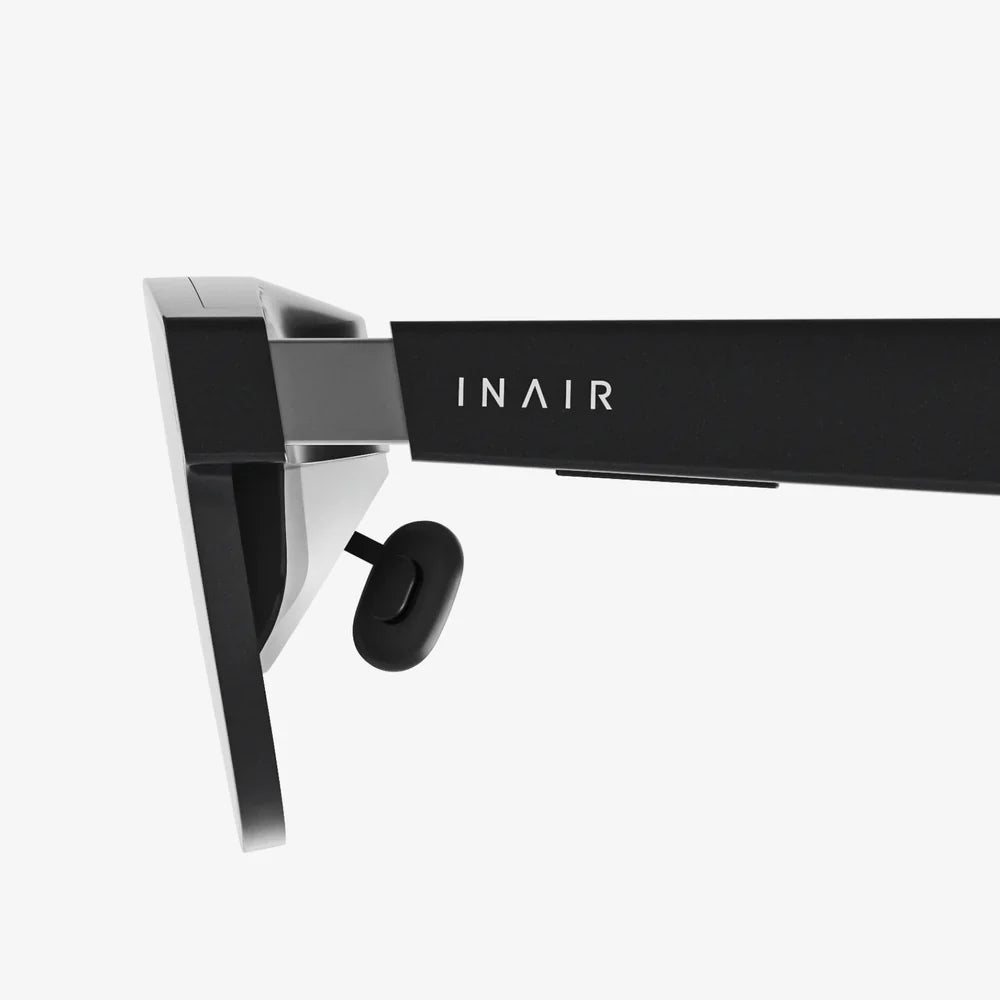
Imagine a world where information doesn’t live on a screen in your hand but is seamlessly woven into the fabric of your reality. Where directions appear as a gentle glow on the pavement before you, the name of a colleague you just met whispers discreetly in your ear, and a recipe hovers effortlessly beside your mixing bowl without a single greasy fingerprint. This is not a distant dream from a sci-fi novel; it is the imminent future being unlocked by the rapid evolution of brilliant AI glasses. This technology promises to be the most personal and transformative computing interface we have ever known, fundamentally altering how we connect with information, with each other, and with the world itself.
The Architectural Marvel: More Than Meets the Eye
At first glance, a pair of brilliant AI glasses might look like a sophisticated pair of modern spectacles. But beneath the sleek frame lies a dense ecosystem of cutting-edge technology, a symphony of miniaturized components working in perfect harmony.
The Visual Engine: Waveguides and Microdisplays
The core magic lies in the lenses. Unlike a virtual reality headset that blocks out the world, these glasses use transparent lenses known as waveguides. These are essentially microscopic etchings or layers within the glass that can bend light. Here’s how it works: a tiny projector, or microdisplay, often no larger than a pencil tip, generates an image. This image is then piped into the edge of the waveguide lens. Through a complex process of reflection and diffraction, the light from the microdisplay is bounced through the waveguide until it is finally redirected into the user’s eye. The result is a crisp, digital image that appears to float in the world ahead, superimposed over the user’s natural field of view. This augmented reality (AR) overlay can be anything from simple notifications and icons to complex 3D models and immersive animations.
The Sensory Suite: Seeing and Hearing the World
To understand the world, the glasses must first perceive it. This is handled by a sophisticated array of sensors. High-resolution outward-facing cameras act as the device’s eyes, continuously scanning the environment. They are not taking photos for social media; instead, they are feeding a constant video stream to the onboard intelligence. This visual data is used for:
- SLAM (Simultaneous Localization and Mapping): This technology allows the glasses to understand their position in a physical space in real-time, creating a 3D map of the room, street, or environment. This is crucial for anchoring digital objects persistently in the real world.
- Object Recognition: Is that a dog, a car, or a specific monument? The cameras help identify objects and text in the user’s vicinity.
- Gesture Tracking: Small, inward-facing cameras can track the user’s eye movements and subtle facial gestures, providing a discreet and intuitive control mechanism—a blink to capture a photo, a raised eyebrow to scroll.
Complementing the cameras are microphones, often using beamforming technology to isolate the user’s voice from ambient noise. This enables clear voice commands and, crucially, real-time translation. Speakers are ingeniously integrated into the arms of the frames, often using bone conduction or directional audio technology to deliver sound directly to the user’s ears without blocking out environmental noise, maintaining situational awareness.
The Neural Center: On-Device Intelligence
The true "brilliance" of these glasses is not in the hardware alone but in the artificial intelligence that powers it. Early iterations relied heavily on a paired smartphone for processing, but the future lies in powerful, miniaturized chips within the glasses themselves. This shift to on-device AI is critical for several reasons:
- Latency: For AR to feel natural, digital interactions must happen instantly. Sending data to the cloud and back introduces a lag that breaks immersion. On-device processing ensures immediate response.
- Privacy: Potentially sensitive visual and audio data is processed locally, never needing to leave the device. This is a fundamental requirement for a technology worn on one’s face.
- Contextual Awareness: The AI synthesizes the data from all sensors to understand context. It’s not just seeing a coffee shop; it’s understanding you are standing outside it, you have 15 minutes before your meeting, and you might want to order your usual drink. It’s a proactive, ambient intelligence.
A World Transformed: The Practical Applications
The potential applications for this technology stretch across every facet of human endeavor, moving from consumer convenience to professional revolution.
Revolutionizing Professional Fields
For many industries, brilliant AI glasses are not a gadget but a powerful tool.
- Healthcare: A surgeon could see vital signs, ultrasound data, or pre-operative plans overlaid directly on their field of view during a procedure, without ever turning away from the patient. A medic in the field could receive remote expert guidance, with annotations appearing directly on what they are seeing.
- Manufacturing and Field Service: A technician repairing a complex machine could see digital arrows pointing to specific components, torque specifications hovering next to a bolt, and an interactive schematic attached to the equipment. This hands-free access to information drastically reduces errors, improves training, and increases efficiency.
- Design and Architecture: An architect could walk through a physical construction site and see their 3D BIM model perfectly aligned with the emerging structure, identifying potential clashes before they become costly mistakes. Interior designers could place virtual furniture in a client’s empty room to scale.
Enhancing Daily Life
For the consumer, the implications are equally profound.
- Navigation: Forget holding up a phone. Turn-by-turn directions can be painted onto the street itself, with arrows guiding you down the correct hallway or trail.
- Real-Time Translation: Look at a foreign menu, and the text instantly translates to your native language, superimposed neatly under the original text. Have a conversation with someone speaking another language, and see subtitles of their translated speech in real-time, a true Babel Fish from fiction made real.
- Accessibility: This technology can be a powerful assistive tool. For those with hearing impairments, speech could be converted to real-time captions. For the visually impaired, the glasses could audibly describe scenes, read text, and identify obstacles.
- Memory and Learning: The glasses could act as a perfect memory aid, subtly reminding you of a person’s name when you see them or displaying your shopping list as you walk through the grocery store. For a student, learning about history could involve seeing historical figures and events reenacted on the very ground they stand.
The Invisible Hurdles: Challenges on the Path to Adoption
Despite the exciting potential, the path to ubiquitous adoption is fraught with significant technical and social challenges.
The Battle of Form and Function
The ultimate goal is a pair of glasses that are indistinguishable from regular eyewear—lightweight, comfortable, and stylish. Current technology often forces a trade-off between battery life, processing power, and form factor. Fitting a powerful computer, a projector, multiple sensors, and a battery into a frame that doesn’t feel bulky or cause discomfort is the paramount engineering challenge. Battery technology, in particular, needs a leap forward to allow for all-day use without constant recharging.
The Privacy Paradox
This is arguably the single biggest hurdle. A device that has always-on cameras and microphones worn in public raises legitimate and serious privacy concerns. The concept of a "surveillance society" becomes deeply personal. How do we prevent unauthorized recording? How is the vast amount of data collected being used and stored? Establishing clear, transparent, and robust privacy frameworks—both in software and in law—is non-negotiable. Social etiquette will also need to evolve, potentially with visual indicators to show when recording is active, to ensure people feel safe and respected.
The Digital Divide and Social Acceptance
Will this technology create a new class of "enhanced" individuals, widening the gap between those who can afford it and those who cannot? Furthermore, social acceptance is key. Walking down the street talking to what appears to be yourself or constantly glancing at invisible data may seem alienating or rude. The technology must enhance human connection, not replace it. Overcoming the "glasshole" stigma associated with early versions of this technology is a marketing and design challenge as much as a technical one.
The Future Vision: A Seamless Blend of Realities
Looking ahead, the trajectory is clear. Brilliant AI glasses will evolve from being a distinct device we "use" to an invisible layer integrated into our perception, a constant companion that enhances our cognitive and sensory abilities.
We are moving towards a world of spatial computing, where the digital and physical are no longer separate realms. The internet won’t be a place we go but a layer over everything we see. These glasses will be the primary window into this new reality, replacing our smartphones, laptops, and televisions as the central hub of our digital lives. They will understand our intentions before we even voice them, providing information and assistance with anticipatory grace.
The development of more advanced AI, neural interfaces for even more seamless control, and holographic display technologies will continue to push the boundaries. The line between assistance and augmentation will blur, raising profound philosophical questions about memory, experience, and what it means to be human in an augmented age.
The revolution will not be televised; it will be illuminated right before your eyes, accessible through a pair of elegant frames that contain universes of potential. The age of brilliant AI glasses is dawning, promising to unlock human potential in ways we are only beginning to imagine, forever changing the lens through which we see our world.
Share:
Latest Augmented Reality News 2025: The Year the Digital and Physical Worlds Fully Merged
Augmented Reality App Ideas That Will Revolutionize Industries and Daily Life