


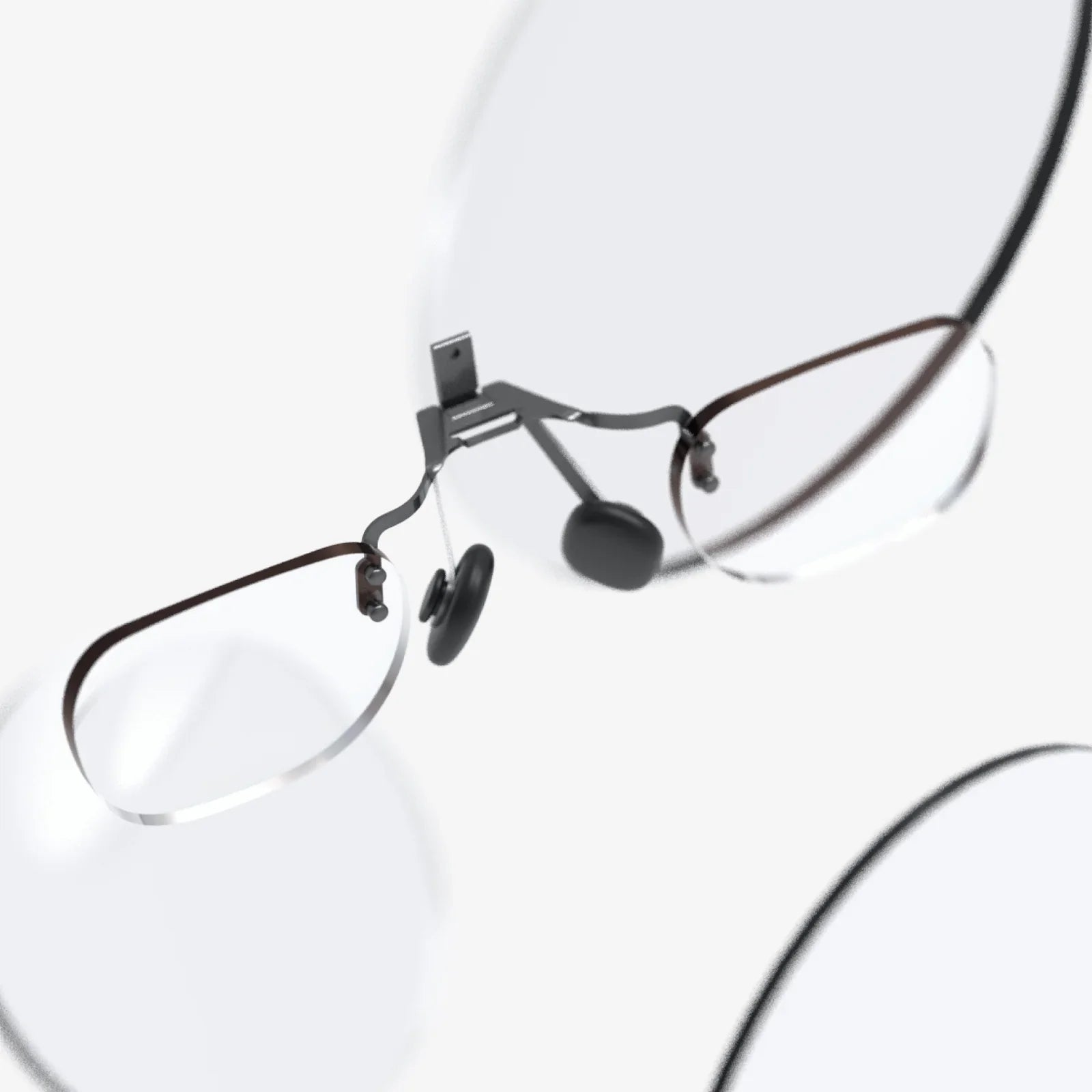
Imagine a world where information doesn’t live on a screen in your pocket but is seamlessly woven into the fabric of your reality. Directions float on the pavement ahead, the name of a forgotten acquaintance hovers politely near their shoulder during a networking event, and a recipe’s instructions align perfectly with your mixing bowl as you cook. This is the tantalizing promise of augmented reality glasses, a vision that has captivated technologists and science fiction fans for decades. But turning this promise into a comfortable, functional, and socially acceptable consumer device is one of the most formidable engineering challenges of our time. It’s not merely about building a gadget; it’s about constructing a new layer of human-computer interaction.
The Optical Heart: Projecting a Digital World onto Reality
At the core of any AR glasses system is the optical engine—the mechanism that generates digital images and makes them appear as stable, integrated elements within the user’s real-world view. This is arguably the single greatest hurdle. Unlike virtual reality, which blocks out the world to replace it, AR must blend the two flawlessly. The challenges are immense: achieving a wide field of view, ensuring high resolution and brightness, managing a comfortable eye box (the space within which the user's eye can see the full image), and doing all this in a package small enough to fit into an eyeglass form factor.
Several technological paths are being explored, each with its own trade-offs between performance, size, and cost. Waveguide displays, which use microscopic gratings to bend light from a projector into the eye, are a popular choice for their sleekness but can suffer from limited field of view and complex, expensive manufacturing. Another approach uses birdbath optics, where light is reflected within a prism, often allowing for a brighter and wider image but resulting in a bulkier physical design. Freeform optics and holographic techniques represent the bleeding edge, promising revolutionary performance but posing significant production challenges. The quest is for the holy grail: optics that are virtually indistinguishable from looking through a clear pane of glass, yet capable of displaying rich, vibrant digital content.
The Brain of the Operation: Processing Power and the Cloud
Rendering complex 3D graphics, understanding the environment through continuous sensor data, and running sophisticated machine learning models for object recognition and spatial mapping—these tasks demand immense computational power. The central dilemma for engineers is where to put this processing brain.
Early systems relied on a tethered connection to a powerful external computer, a solution that offers maximum performance but severely limits mobility and practicality. The ideal is to have all processing happen on the device itself (on-device), enabling complete untethered freedom. However, this requires squeezing supercomputer-level performance into a tiny, thermally constrained package on the user’s face. The heat generated by powerful processors is a major obstacle, making advanced passive and active cooling solutions a critical area of research.
A hybrid approach is emerging as a likely medium-term solution. Here, the glasses handle basic tracking and display, while more demanding tasks are offloaded to a companion device, like a smartphone, or to the cloud via a high-speed wireless connection. This split-compute model offers a balance between performance and form factor but introduces new challenges in latency. For digital objects to feel locked in place in the real world, the system must process and display information with near-instantaneous speed; any lag or jitter breaks the illusion of immersion and can cause user discomfort. Building a responsive, low-latency system is non-negotiable.
Perceiving the World: The Sensor Suite and Spatial Understanding
For digital content to interact believably with the physical world, the glasses must have a deep and real-time understanding of their surroundings. This is achieved through a sophisticated array of sensors that act as the device’s eyes and ears.
Cameras are used for computer vision, enabling features like object recognition, text reading, and gesture tracking. Inertial Measurement Units (IMUs) track the precise movement and rotation of the head. The true magic, however, lies in depth sensing. Technologies like LiDAR (Light Detection and Ranging) and structured light project invisible patterns or laser dots into the environment, measuring their return to create a detailed 3D map of the space. This point cloud data allows the glasses to understand the geometry of a room—the location of walls, floors, tables, and chairs—so a virtual character can convincingly walk behind a sofa or a digital screen can appear anchored to a wall.
Fusing all this sensor data into a single, coherent, and persistent understanding of the world is a software challenge of monumental proportions. This process, known as simultaneous localization and mapping (SLAM), allows the device to both map an unknown environment and track its own position within it. Furthermore, for the experience to be truly magical, this map needs to be persistent. If you place a virtual clock on your real wall, it should be there the next time you put the glasses on, even if you’ve moved furniture around. This requires a sophisticated memory system that can store and recall spatial data, often leveraging cloud services to create a shared AR world that multiple users can experience together.
The Human Factor: Design, Comfort, and Social Acceptance
All the technological brilliance is meaningless if humans don’t want to wear the device. This makes industrial design, ergonomics, and social dynamics critical engineering considerations. The goal is to create a product that people feel comfortable wearing for extended periods, both physically and socially.
Form Factor and Battery Life: The prevailing assumption is that for AR glasses to achieve mass adoption, they must resemble traditional eyewear as closely as possible. This means overcoming the inherent conflict between miniaturization and performance. Every component, from the optics to the processors to the batteries, must be shrunk to an unprecedented degree. Battery technology is a particular pain point. Powering displays, sensors, and wireless radios for a full day of use is a colossal challenge. Engineers are exploring everything from more efficient components and low-power modes to novel solutions like swappable batteries or offloading power to a belt pack.
The Social Hurdle: Perhaps the most unpredictable variable is social acceptance. Walking around with a camera on your face raises legitimate privacy concerns for both the wearer and those around them. Clear visual indicators that recording is active and robust data privacy controls will be essential. Furthermore, the design must avoid the overtly technological or "cyborg" aesthetic that can create social barriers. The product must be fashionable, offering a variety of styles and frames to suit different tastes, signaling that it is an accessory, not a piece of lab equipment.
The Invisible Interface: Interaction Beyond the Touchscreen
How do you interact with an interface that is projected onto the world around you? The clumsy paradigm of tapping on a tiny touchpad on the glasses’ temple is a dead end. Building AR glasses necessitates inventing new, intuitive forms of input that feel like a natural extension of our behavior.
Voice commands offer a hands-free method but are impractical in noisy environments or quiet offices. Gesture recognition, using onboard cameras to track hand movements, allows for more precise control—pinching to select, swiping in the air to scroll—but can be fatiguing over time and may look strange in public. The most promising avenue may be a combination of contextual and implicit input. The glasses, understanding your context through sensors and AI, could proactively present the right information at the right time, minimizing the need for explicit commands. A glance at a restaurant could bring up its menu, or looking at your watch could prompt your calendar for the next meeting. The ultimate goal is an interface that requires less input, not more.
The Software Foundation: Operating Systems and Developer Tools
Hardware is nothing without software. A successful AR platform will require a robust operating system designed from the ground up for spatial computing. This OS must efficiently manage resources, handle the complex sensor fusion pipeline, and provide developers with powerful tools to create compelling experiences.
Software Development Kits (SDKs) are the bridge between the hardware's potential and the developer's creativity. These toolkits need to abstract away the immense complexity of the underlying technology, providing simple APIs for tasks like placing an object in 3D space, recognizing surfaces, and managing persistent content. The ecosystem that grows around these tools will be the true determinant of success. It will be the developers, artists, and designers who discover the killer apps that move AR glasses from a novel toy to an indispensable tool for work, education, and connection.
The journey of building AR glasses is a symphony of disciplines, requiring breakthroughs in physics, material science, computer vision, artificial intelligence, and design. It is a iterative process of solving one complex problem only to reveal the next. Yet, with each passing year, the components get smaller, the algorithms get smarter, and the prototypes get closer to that ideal pair of ordinary-looking glasses that unlock an extraordinary world. We are not just building a product; we are building a new lens through which to see our universe, and the first clear glimpses of that future are finally coming into focus.
This isn't just about checking notifications on your face; it's about unlocking a fundamental shift in how we learn, work, and connect with the world around us. The device that successfully merges the digital and physical realms will not just be another gadget in our collection—it will become the primary portal through which we experience computing, effectively making the smartphone obsolete. The race isn't just to build AR glasses; it's to define the next epoch of human technology, and the starting line is closer than it appears.
Share:
Local AI Hardware News: The Next Computing Revolution Is Happening in Your Community
2D to 3D: The Revolutionary Leap Reshaping Our Digital World