


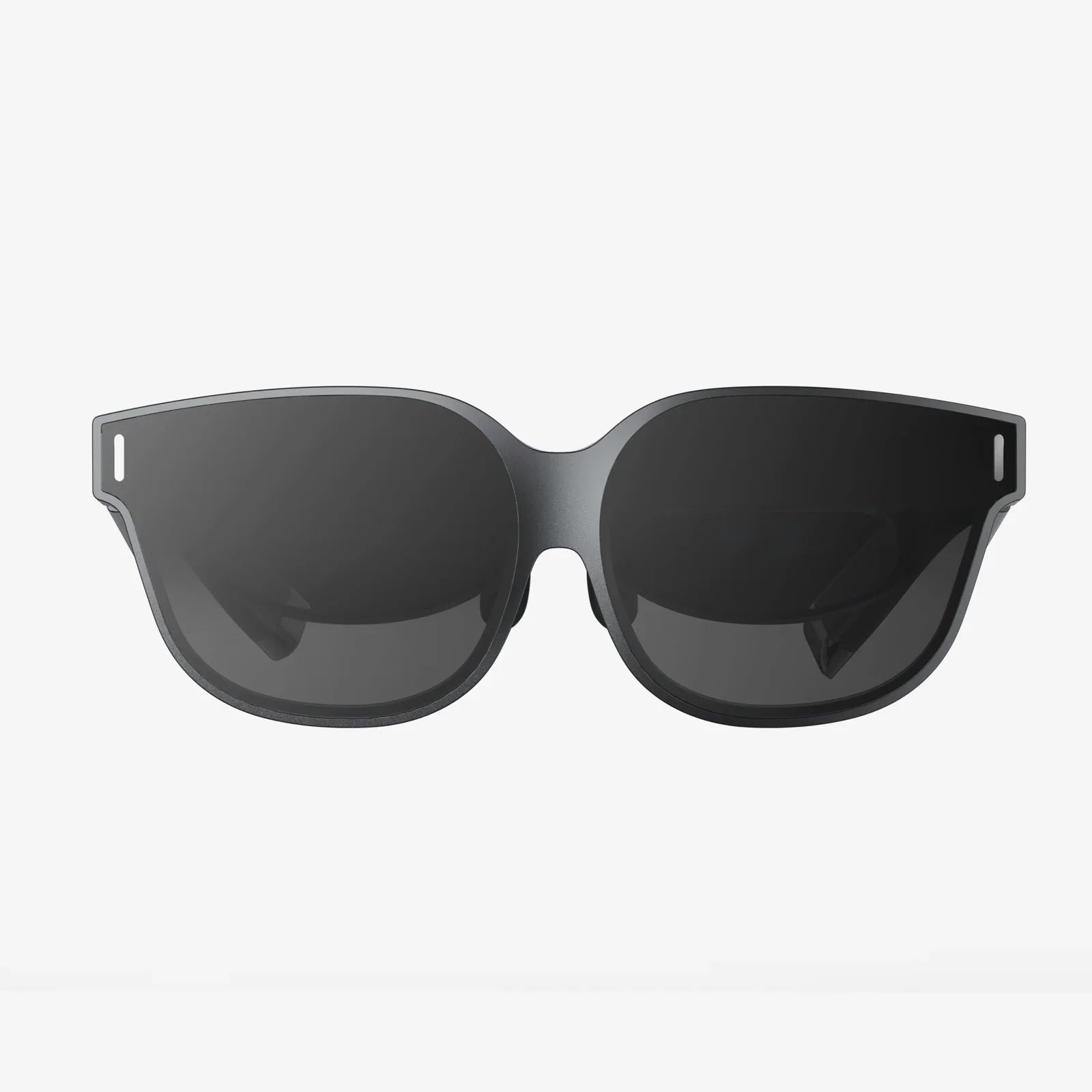
- by wangfred
Camera Glasses with Audio: The Future of Wearable Tech is Here
- by wangfred
Imagine a world where capturing life's most spontaneous moments doesn't require fumbling for a device, where the line between experiencing an event and recording it vanishes into the frames of your everyday eyewear. This is no longer the realm of science fiction; it's the compelling reality offered by camera glasses with audio, a technological marvel that is quietly revolutionizing how we interact with the world around us.
At its core, the concept of camera glasses with audio represents a significant leap in wearable technology. It's the seamless integration of a first-person perspective (POV) camera and a discrete audio recording system into a form factor that is both familiar and functional: a pair of glasses. This convergence aims to liberate the user from the constraints of handheld devices, enabling a truly hands-free and immersive documentation experience. The goal is not to replace traditional cameras or smartphones but to serve a unique niche where convenience, discretion, and a natural point-of-view are paramount.
Understanding the appeal of these devices requires a look under the hood. The engineering challenges are immense, requiring a delicate balance between performance, size, power, and aesthetics.
Embedded typically in the bridge or the corner of the frame is a miniature high-resolution camera. Despite its small size, it often boasts features once reserved for larger devices:
What truly separates camera glasses from simple body cams is the integrated audio. This is achieved through one or more built-in microphones designed to do more than just record sound; they aim to capture it intelligently.
All this technology demands power. A rechargeable lithium-ion battery is discreetly housed within the temples, offering anywhere from 60 minutes to over two hours of continuous recording. Storage is handled by internal memory or, more commonly, a microSD card slot, allowing users to expand capacity and easily transfer files to another device. Connectivity, via Bluetooth and Wi-Fi, enables live preview, file management, and sharing through a dedicated smartphone application.
The utility of camera glasses with audio extends far beyond recording casual vlogs. They are finding profound purpose in a diverse range of professional and personal scenarios.
The power of this technology is inseparable from a significant responsibility. The ability to record video and audio discreetly raises serious ethical and legal questions that users must navigate carefully.
Laws regarding recording conversations vary dramatically by country, state, and locality. Most jurisdictions operate under a "one-party" or "two-party" (all-party) consent law for audio recording.
Video recording in public spaces where there is no reasonable expectation of privacy is generally legal, but recording in private spaces (homes, offices, bathrooms) is not. The onus is entirely on the user to understand and comply with the laws in their area. Ethically, even if legal, secretly recording private conversations is widely considered a breach of trust.
Wearing camera glasses in a social setting can make others feel uncomfortable, surveilled, and distrustful, even if you are not actively recording. It challenges social norms and can be perceived as deceptive or intrusive. The best practice is transparency: informing people they are being recorded and respecting their wishes if they object.
If you determine that camera glasses are right for your needs and you are committed to using them responsibly, several factors should guide your choice.
The evolution of camera glasses is intrinsically linked to the broader field of augmented reality (AR). The next generation of these devices will likely not just record the world but overlay it with digital information—navigation prompts, translated text, facial recognition, and contextual data—all visible directly on the lenses. The camera will become the eye for an AI, analyzing the world in real-time to provide the wearer with insights and information. This convergence will further blur the lines between capturing reality and interacting with an enhanced version of it.
From a novel gadget to a powerful tool with the potential to transform industries and redefine personal documentation, camera glasses with audio represent a fascinating pivot point in our relationship with technology. They offer a glimpse into a future where our tools are woven so seamlessly into our lives they become almost invisible, empowering us to capture, create, and connect in ways we are only beginning to imagine. The true power of this technology lies not in its ability to record unseen, but in its potential to help us see our world—and our place within it—in an entirely new light.
Share:
Web AR vs App AR: The Ultimate Showdown for the Future of Augmented Reality
Web AR vs App AR: The Ultimate Showdown for the Future of Augmented Reality