


- by wangfred
Can AR Glasses Be Prescription? The Future of Vision and Technology
- by wangfred
Imagine a world where the digital and physical seamlessly blend, where information appears not on a screen in your hand but floating in the space around you, accessible with a glance. This is the promise of augmented reality (AR) glasses, a technology poised to revolutionize how we work, play, and connect. But for the billions of people worldwide who rely on prescription lenses to see the world clearly, a critical question arises, one that stands between them and this dazzling future: can AR glasses be prescription? The answer is not just a simple yes or no; it's a fascinating journey into the intersection of cutting-edge technology and fundamental optical science, a challenge that engineers and designers are racing to solve. Unlocking this potential means redefining not just what we see, but how we see everything.
At its core, the question of prescription AR glasses is an optical puzzle. Traditional eyeglasses correct vision by bending light rays before they enter the eye, compensating for refractive errors like myopia (nearsightedness), hyperopia (farsightedness), astigmatism, or presbyopia (age-related farsightedness). The prescription is precisely ground into the curvature of the lens.
AR glasses, on the other hand, must perform a more complex trick. They need to project digital images—text, graphics, videos—into the user's field of view and make them appear as stable, part of the real world. This is typically achieved using a combination of technologies:
The central challenge is that these two optical systems—the vision correction lens and the AR image projection system—must be perfectly integrated. They must work in harmony to ensure both the real world and the digital overlay are in sharp focus simultaneously for the individual user. A one-size-fits-all approach simply doesn't work for vision correction.
While a perfectly unified, mass-produced prescription AR lens is still on the horizon, several effective solutions exist today, each with its own advantages and trade-offs.
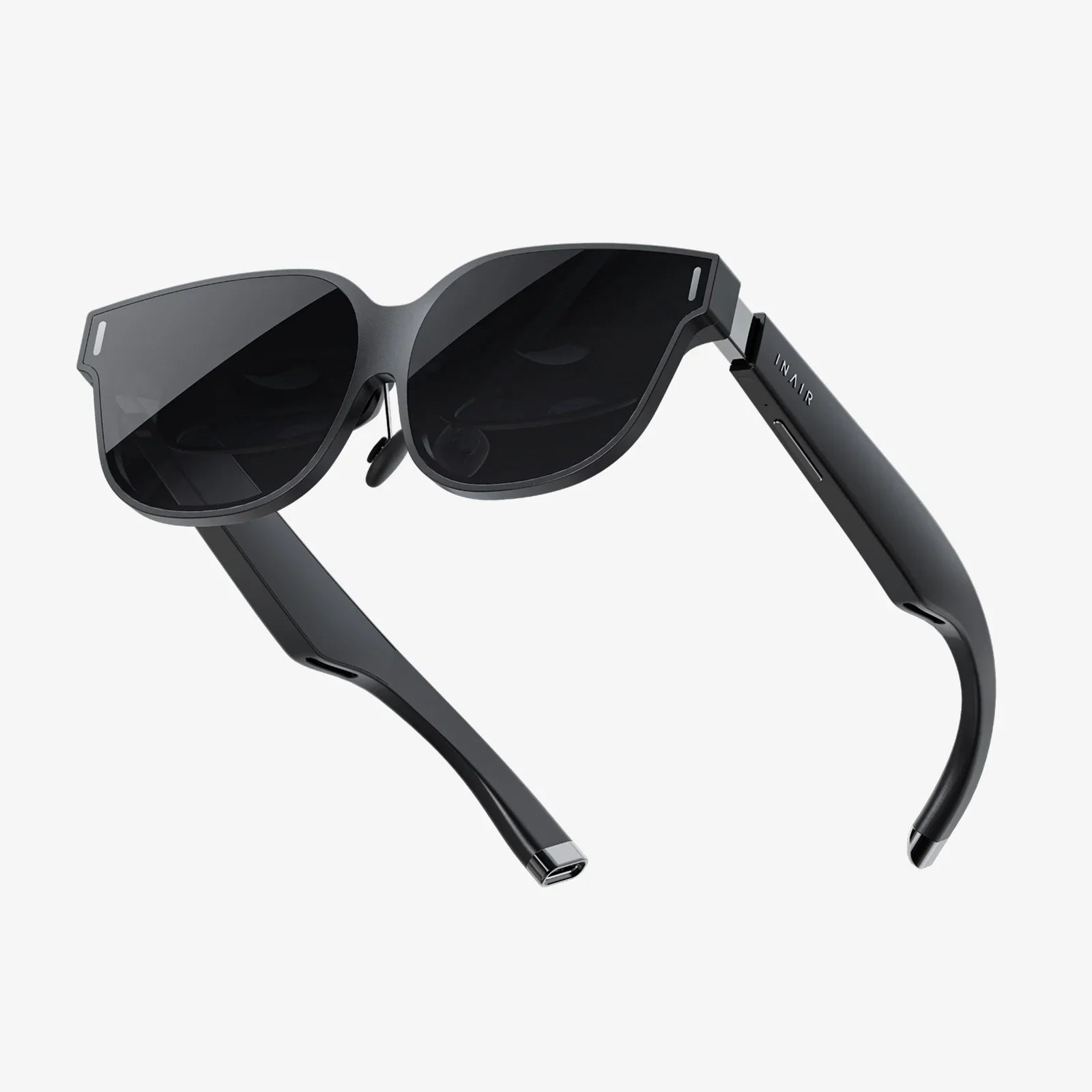
This is currently the most common and practical solution. It involves wearing the AR glasses as an outer frame, with a custom prescription lens insert clipped or magnetically attached behind the main AR optics.
How it works: An optometrist or ophthalmologist provides a standard prescription, which is then sent to a lab that manufactures a small, custom lens insert. This insert is specifically designed to fit snugly into the AR glasses frame, sitting close to the wearer's face.
Pros:
Cons:
A more advanced, though less common, method is to grind the prescription directly into the AR lens itself. This isn't just adding an insert; it's creating a single lens element that performs both functions.
How it works: The waveguide and projection layers are manufactured onto a lens blank that is then custom-ground to a user's specific prescription on the opposite side. This requires sophisticated manufacturing and precise alignment to ensure the AR projections are not distorted by the corrective curvature.
Pros:
Cons:
The most futuristic and promising solution lies in adaptive optics, often called "liquid lenses." This technology could effectively eliminate the need for a static prescription altogether.
How it works: Tiny actuators or electrical signals change the shape of a flexible membrane containing a clear liquid, altering the lens's focal power on demand. This technology could automatically adjust to correct the user's vision and also manage the focus of the AR content, making it sharp regardless of whether the user is looking at something near or far.
The Potential:
The Reality: While prototypes and limited applications exist, liquid lens technology for consumer AR is still in its infancy. Challenges include power consumption, miniaturization, switching speed, and long-term reliability.
The integration of prescription capabilities opens doors far beyond just seeing the AR display clearly. It paves the way for AR glasses to become powerful health monitoring devices.
If you're considering jumping into the world of prescription AR, there are several key factors to keep in mind.
The path to perfect prescription AR glasses is a testament to human ingenuity, a collaboration between the digital world of bits and pixels and the physical world of light and lenses. From clip-in inserts to the dream of adaptive liquid lenses, the solutions are evolving at a breakneck pace. This isn't merely a convenience; it's about fundamental accessibility, ensuring the next great computing platform is open to all. The question is no longer if it can be done, but how seamlessly and beautifully it will be integrated into our lives. The future is clear, and it’s waiting for you to try it on.