


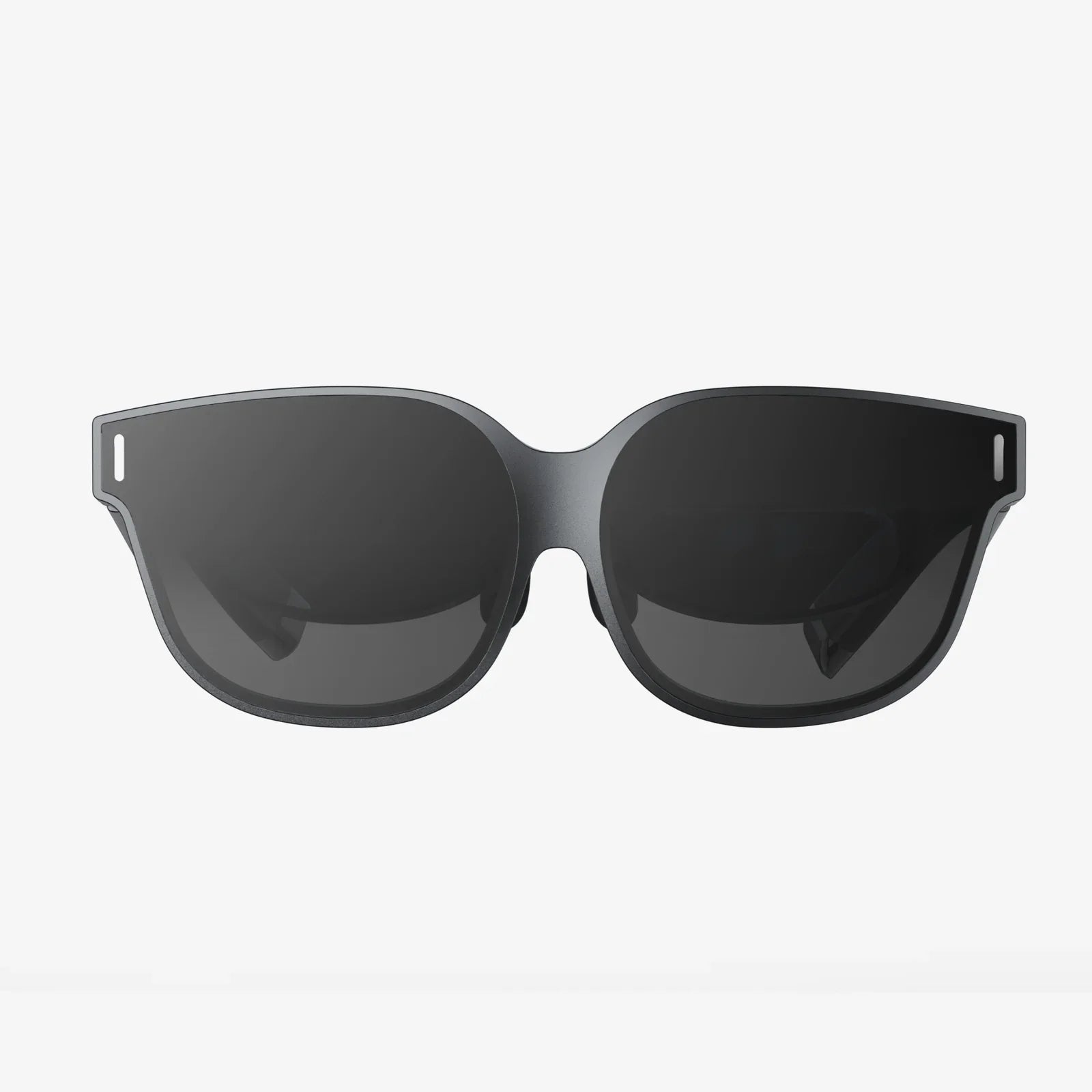
Imagine walking through a foreign city, glancing at a street sign, and instantly understanding its meaning. Or sitting in a complex business meeting where your presentation notes are subtly displayed right before your eyes. This is no longer the stuff of science fiction. The question on many people's minds is a simple one with profound implications: can smart glasses read text? The answer is a resounding yes, and this capability is fundamentally reshaping our interaction with the written word, offering unprecedented levels of accessibility, productivity, and connection. This technology represents a significant leap forward in wearable computing, moving information from our pockets and onto our faces, creating a seamless bridge between the digital and physical worlds.
The Technology Behind the Text: How Smart Glasses See and Interpret
At first glance, the ability for a device perched on your nose to decipher text seems like magic. However, it is the culmination of several sophisticated technologies working in concert. The process is a complex dance of capture, processing, and display.
The Eyes: High-Resolution Cameras and Sensors
The journey begins with miniature, high-resolution cameras embedded within the frame of the glasses. These are not mere cameras for taking photos; they are sophisticated sensors continuously scanning the user's field of view. They capture the visual data of the environment, including any text present on documents, screens, signs, or products. Advanced models often include depth-sensing technology, such as time-of-flight sensors, which help the device understand the spatial context of the text—how far away it is, its angle, and its orientation. This is crucial for accurately isolating words on a curved surface like a coffee cup versus a flat page in a book.
The Brain: Onboard Processing and Artificial Intelligence
The raw visual data is then processed, either locally on a powerful miniaturized chip within the glasses themselves or streamed wirelessly to a paired companion device, like a smartphone, for more heavy-duty computation. This is where the true magic happens: Optical Character Recognition (OCR). OCR is a form of artificial intelligence specifically trained to recognize textual characters within images. Early OCR systems were clunky and required perfectly printed text under ideal lighting. Modern AI-driven OCR is incredibly robust. It can handle a vast array of fonts, handwriting (to a certain degree), skewed angles, poor lighting, and even text superimposed on busy backgrounds.
The AI doesn't just recognize individual letters; it understands words, sentences, and context. Natural Language Processing (NLP) algorithms then take over, analyzing the extracted text to determine its meaning. This allows the glasses to not just read the text "20% off," but to understand it represents a discount, or to not just read a sequence of numbers but to recognize it as a phone number and offer to dial it.
The Voice: Audio Feedback and Haptic Responses
Once the text is captured and understood, it needs to be communicated back to the user. The most common method is through bone conduction audio or tiny, discreet speakers built into the arms of the glasses. Bone conduction transmits sound waves through the bones of the skull directly to the inner ear, leaving the ear canal open to hear ambient sounds—a critical feature for safety and situational awareness. The processed text is converted into clear, synthetic speech and relayed to the user in near real-time. Some systems may also employ subtle haptic feedback, like a small vibration, to notify the user of a specific event, such as successfully reading a text block or encountering a potential error.
Beyond Novelty: Profound Applications in Accessibility
While the "wow" factor is significant, the most impactful application of text-reading smart glasses is in the field of accessibility. For millions of people with visual impairments, including blindness and low vision, this technology is nothing short of revolutionary, acting as a constant, intelligent visual assistant.
A New Lens on the World for the Visually Impaired
For individuals who are blind, navigating a world designed for sighted people is filled with challenges. Text-reading glasses can identify and read aloud everything from mail and restaurant menus to product labels on grocery store shelves and information on a medicine bottle. This empowers users with a level of independence that was previously difficult to achieve. They can independently verify they are taking the correct medication, confirm the expiration date on a carton of milk, or read a program at a theater. This technology effectively turns the physical world into an accessible, audible experience.
Real-Time Translation for Global Citizens
Another powerful accessibility and convenience feature is real-time language translation. A user can look at a sign, menu, or document in a foreign language, and the glasses will not only OCR the text but also translate it on the fly into their native language and speak it aloud. This breaks down significant language barriers, making travel, work, and cultural exchange far more accessible for everyone, not just those with visual impairments. It is a powerful tool for promoting global understanding and connection.
Transforming Professional and Everyday Life
The utility of text-reading smart glasses extends far beyond accessibility, offering powerful tools for productivity, efficiency, and hands-free operation in a wide range of professional and personal scenarios.
The Hands-Free Workforce
In many industrial, logistics, and field service roles, workers need access to vast amounts of information but also need their hands free to perform complex tasks. A warehouse picker can have order details and bin locations displayed in their field of view, allowing them to work faster and more accurately without constantly looking down at a handheld scanner or clipboard. A technician repairing complex machinery can have the schematic diagrams and instruction manuals superimposed over the equipment they are working on. A healthcare professional can have patient vitals and records available at a glance without turning away from the bedside. This "augmented reality" workflow minimizes errors, reduces task completion time, and significantly boosts productivity.
Enhanced Learning and Cognitive Assistance
Students and lifelong learners can benefit immensely. Imagine reading a dense academic paper and having difficult terms automatically defined or translated. A user could scan a book title in a library and instantly pull up reviews and summaries. For individuals with dyslexia or other reading challenges, the glasses can highlight text as it is read aloud, improving reading comprehension and fluency. They can serve as a constant, discreet prompt, helping people with memory impairments remember names, instructions, or important information by retrieving and displaying it contextually.
Navigating the Challenges: Privacy, Social Acceptance, and Technical Hurdles
Despite the exciting potential, the path to widespread adoption of text-reading smart glasses is not without its obstacles. Significant concerns regarding privacy, social norms, and technical limitations must be addressed.
The Privacy Paradox
The same always-on camera that empowers a user to read text also raises serious privacy concerns. The potential for surreptitious recording in private spaces, offices, or public areas is a legitimate fear. The concept of a device that can silently scan and interpret everything in its view, including private documents on someone's desk or text messages on a nearby phone, makes many people uncomfortable. Manufacturers and software developers must implement clear and robust privacy controls. This includes physical camera shutters, clear indicator lights when recording is active, strict data anonymization policies, and on-device processing that keeps sensitive data from ever being uploaded to the cloud. Building trust through transparent design is paramount.
The Social Stigma and the "Glasshole" Effect
Early attempts at smart glasses faced a significant social hurdle. Wearers were sometimes perceived as rude, distracted, or even creepy, leading to the derogatory term "Glasshole." The act of wearing technology on one's face and potentially recording interactions creates a social barrier. Future designs are focusing on more fashionable, normal-looking frames to reduce stigma. Furthermore, establishing clear social etiquette—such as making it obvious when you are using the device versus engaging in a conversation—will be crucial for mainstream acceptance. The technology must be designed to enhance human interaction, not replace it.
Technical Limitations: Battery Life, Accuracy, and Field of View
Current technology still faces practical constraints. Continuous video capture and AI processing are incredibly power-intensive, leading to limited battery life, often measured in just a few hours. While OCR accuracy is high, it is not perfect; it can struggle with highly stylized fonts, very poor lighting, or significantly distorted text. Furthermore, the field of view for the displayed information is often small and not fully integrated into the user's natural vision, which can be distracting or require conscious effort to align. Advances in low-power chips, more efficient algorithms, and innovative display technologies like retinal projection are actively working to overcome these hurdles.
The Future is Clear: Where Text-Reading Technology is Headed
The current capabilities are impressive, but they are merely the foundation for a much more integrated and intelligent future. The next generation of this technology will move beyond simple text recognition to true contextual understanding and seamless integration.
We are moving towards systems that won't just read text but will comprehend it in a deeper way. Future glasses might read a recipe and walk you through each step, highlighting ingredients on your countertop through an augmented reality display. They could attend a lecture with you, providing real-time summaries and fact-checking information against online sources. The hardware will become lighter, more powerful, and indistinguishable from traditional eyewear, with all-day battery life and displays that seamlessly overlay digital information onto the real world without obstruction.
The convergence of text-reading ability with other AI models will create a truly ambient computing experience. Your glasses will not only read the text on a wine bottle but also cross-reference it with your personal taste preferences and suggest a perfect food pairing. They will become a fundamental part of how we perceive and interact with information, blurring the line between our digital and physical realities until they are one and the same.
The ability to instantly decipher the written word through a pair of sleek glasses is unlocking a new layer of human potential, transforming challenges into opportunities and information into immediate action. This is just the first page of a much longer story, one where our tools don't just serve us—they understand us and the world we see, creating a more connected, accessible, and informed future for all.
Share:
AR Statement: The Definitive Guide to Modernizing and Automating Your Accounts Receivable
Spatial Computing Market Analysis: Navigating the Next Digital Frontier