


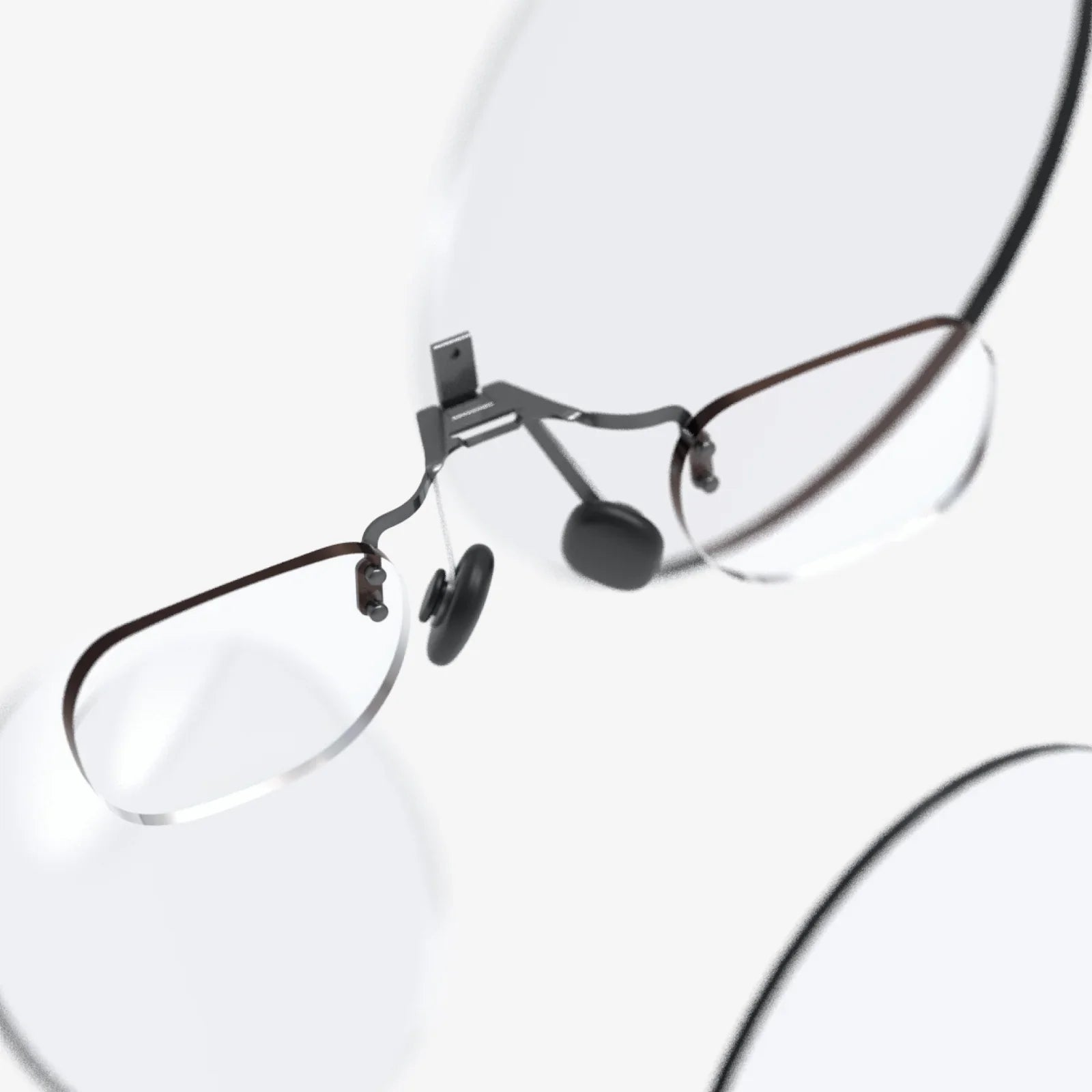
Imagine a world where your glasses do more than just help you see clearly. They translate foreign street signs in real-time, identify the species of a bird perched on a distant branch, read a menu aloud to you, and provide turn-by-turn navigation superimposed directly onto the pavement in front of you—all without you ever needing to look down at a phone. This isn't a scene from a science fiction movie; it's the burgeoning reality of AI-powered prescription glasses, a technological leap that promises to seamlessly blend the digital and physical worlds for the billions of people who rely on vision correction. The question on many minds is no longer if such a future is possible, but a more practical and immediate one: can you get AI glasses with prescription lenses? The answer is a resounding and exciting yes, and it represents a fundamental shift in how we interact with technology and information.
The Convergence of Two Technologies: Vision Correction and Artificial Intelligence
To understand the significance of this development, it's essential to appreciate the two distinct fields that are now merging. For centuries, eyeglasses have had a single, vital purpose: to refract light in a way that corrects refractive errors like myopia (nearsightedness), hyperopia (farsightedness), astigmatism, and presbyopia. They are a passive, analog tool, albeit a brilliantly effective one.
On the other side are smart glasses and AI. Early iterations of smart glasses often focused on displaying basic information or acting as a personal media viewer. The true revolution, however, is powered by Artificial Intelligence. AI transforms these devices from simple displays into intelligent assistants. Machine learning algorithms enable features like real-time object recognition, language translation, and auditory scene analysis. This requires a sophisticated package of hardware—miniaturized processors, cameras, microphones, bone conduction speakers, and sensors—all elegantly integrated into the form factor of eyewear.
The challenge for engineers and designers has been to unite these two worlds without compromise. The goal is to create a device that offers flawless prescription vision correction while simultaneously housing the advanced tech that powers its AI capabilities. This means designing frames that are not only stylish and comfortable but also structurally sound enough to support the electronics and batteries, all while ensuring the user's corrected vision is perfectly aligned with the digital overlays provided by the AI.
How Prescription AI Glasses Work: A Symphony of Miniaturization
The magic of these devices lies in their intricate internal architecture. While designs vary, most prescription AI glasses incorporate several key components working in harmony.
The Optical Heart: Prescription Lenses
This is the non-negotiable foundation. Just like traditional glasses, the lenses are custom-ground to your exact prescription from an optometrist or ophthalmologist. They can be single-vision, bifocal, progressive, or any other type of corrective lens. These lenses provide the clear, sharp view of the real world that the wearer depends on.
The Digital Brain: Projection Systems and Waveguides
This is where the "augmented" part of augmented reality comes to life. Instead of a bulky screen in front of your eye, most advanced systems use a tiny projector, often located in the arm of the glasses. This projector beams information onto a specially engineered lens called a "waveguide." Think of a waveguide as a transparent, flat piece of glass or plastic that can bend and channel light. It takes the image from the micro-projector and directs it into your eye, all while allowing you to see the real world clearly through it. The result is a crisp, digital overlay—text, arrows, icons—that appears to float in your field of view, seamlessly integrated with your surroundings.
The Senses: Cameras and Microphones
To understand the world and provide contextual information, the glasses need to see and hear. discreet cameras capture what you are looking at, feeding this visual data to the onboard AI for processing. Similarly, microphones pick up audio commands from you and ambient sounds from your environment. This allows for features like asking, "What is that building?" or using voice commands to set a reminder.
The Intelligence: Onboard and Cloud-Based AI
The raw data from the cameras and microphones is processed using a combination of onboard chips and cloud-based AI systems. Simpler, immediate tasks might be handled by a processor within the glasses themselves to minimize latency. More complex computations, like translating dense paragraphs of text or identifying a rare flower, may be sent wirelessly to powerful cloud servers which then send the answer back to the glasses almost instantaneously. This hybrid approach ensures a responsive and powerful user experience.
A World of Possibilities: Key Features and Applications
The potential applications for prescription AI glasses are vast and extend far beyond novelty. They are poised to become powerful tools for productivity, accessibility, and exploration.
- Real-Time Translation and Transcription: Look at a restaurant menu in a foreign language, and the translated text appears over it. Have a conversation with someone who speaks a different language, and see subtitles of what they're saying, or hear a translated version through the speakers. In meetings, get live transcription of what's being said.
- Visual Assistance and Accessibility: For individuals with low vision, the glasses can magnify text on a page or describe scenes aloud. They can identify colors, read product labels, detect obstacles, and recognize faces, providing a new level of independence.
- Contextual Information and Navigation: Look at a landmark to get its history pop up. Receive walking directions with arrows painted onto the street. At a conference, see the name and title of someone you just met displayed next to their face.
- Enhanced Productivity: Receive discreet notifications for calls, messages, and calendar events without taking out your phone. Follow a recipe with instructions hovering over your mixing bowl. Access digital manuals while repairing complex equipment.
- Fitness and Health: Track workout metrics like pace and heart rate in your line of sight during a run. Receive form feedback for exercises. Monitor health data through integrated sensors.
Navigating the Considerations: Privacy, Style, and Practicality
As with any transformative technology, the adoption of prescription AI glasses comes with important considerations that consumers must weigh.
Privacy and the Social Contract
The inclusion of cameras and microphones on one's face naturally raises valid privacy concerns. The etiquette of recording in public and private spaces is still being defined. Reputable manufacturers address this with clear physical indicators—like a light that shows when recording is active—and robust privacy controls that give users full ownership and command over their data. Transparency about data collection and use is paramount for widespread acceptance.
Style and Social Acceptance
The success of any wearable technology hinges on its aesthetics. The days of clunky, geeky prototypes are rapidly fading. Modern designs prioritize a sleek, familiar look that is indistinguishable from high-end traditional eyewear. The technology is becoming invisible, allowing users to wear them with confidence in any social or professional setting.
Battery Life and Performance
Powering a miniature computer on your face is a significant engineering challenge. Battery life can vary dramatically based on usage; intensive tasks like continuous video recording will drain power much faster than occasional notifications. Most designs house the battery in the arms, aiming for a full day of typical use, but this remains an area of rapid innovation.
The Acquisition Process: How Do You Actually Get Them?
So, how does one actually acquire a pair? The process is becoming more streamlined. It typically involves selecting a frame style from a manufacturer's collection and then providing your optical prescription, which can often be uploaded directly from your eye care professional. The company then assembles the device, integrating your custom-cut prescription lenses with the smart technology. Some are even exploring partnerships with optometrists to make the process as familiar as buying traditional glasses.
The Future is in Focus: Where Do We Go From Here?
The current generation of prescription AI glasses is impressive, but it is merely the first chapter. The trajectory points toward even more profound integration. We can anticipate improvements in battery technology, perhaps incorporating solar charging or kinetic energy. Display technology will become brighter, higher resolution, and offer a wider field of view. AI models will become faster and more capable, moving from reactive assistance to proactive, predictive help. The line between what is real and what is digitally augmented will continue to blur, creating experiences we can only begin to imagine.
The barrier that once existed between those who need vision correction and the cutting-edge of wearable technology has been dismantled. The fusion of precise optical science with powerful artificial intelligence has created a new category of device that empowers users in their daily lives. It answers a fundamental human desire: to enhance our natural capabilities and access information without friction. The future of seeing, understanding, and interacting with our world is not just about looking clearly at what is right in front of us, but about having the knowledge of the entire world layered intelligently on top of it. This isn't just a new gadget; it's a new way of seeing.
Share:
AR in Events: Augmented Reality is Revolutionizing Live Experiences
AR in Events: Augmented Reality is Revolutionizing Live Experiences