


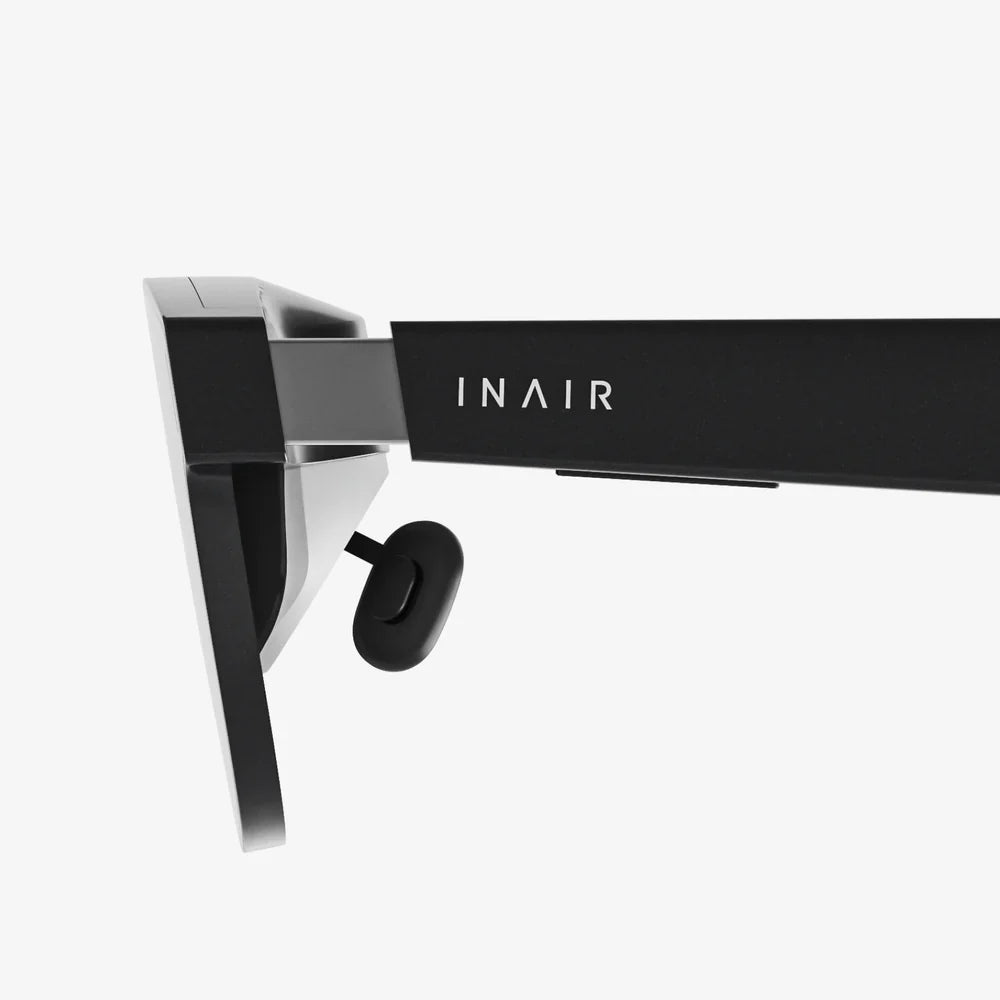
The shimmering promise of augmented reality—a digital layer seamlessly woven into the fabric of our physical world—has captivated imaginations for decades. From science fiction fantasies to the sleek, albeit expensive, hardware now emerging on the market, the dream is tantalizingly close. But for the curious, the budget-conscious, and the fiercely independent maker, a provocative question arises, whispering from the depths of workshops and online forums: can you make your own augmented reality glasses? The answer is a complex, fascinating, and utterly challenging yes. This is not a path for the faint of heart, but for those armed with soldering irons, code, and unwavering perseverance, building your own portal to a blended reality is perhaps the ultimate maker project. It’s a journey to the very frontier of personal technology, and it starts with a single, daunting step.
Deconstructing the Dream: The Core Components of AR Glasses
Before a single component is sourced, it's crucial to understand the monumental task at hand. Commercial AR glasses are marvels of miniaturization, optics, and software integration, packing immense computational power into a lightweight, wearable form factor. A DIY project requires a pragmatic approach, often sacrificing sleekness for functionality and repairability. The core architecture can be broken down into several critical systems.
The Optical Engine: Your Window to the Digital World
This is the heart of the device. The optical system is responsible for projecting digital images onto your retina in a way that makes them appear part of the real world. For a DIY builder, there are two primary paths, each with significant trade-offs.
- Video See-Through (VST): This method uses miniature cameras mounted on the glasses to capture the real world. This video feed is then combined with digital graphics on a small internal screen (like a micro-OLED or LCD) and presented to the user. The advantage is that it can use more readily available components. The massive disadvantage is latency—any delay between the movement of your head and the update of the video feed can cause severe motion sickness. It also divorces you from a direct optical view of reality.
- Optical See-Through (OST): This is the holy grail and the method used by most commercial devices. It allows you to look directly at the real world through specialized optics (like waveguides or beam splitters) while a projector superimposes light onto your field of view. Sourcing and aligning these optical components is extraordinarily difficult for an individual. Small, off-the-shelf prism kits or transparent OLED screens can be experimented with, but achieving a wide field of view and clear imagery is the single greatest hurdle.
The Processing Brain: More Than Just a Computer
AR is computationally intensive. It requires tracking the user's head position and orientation in space (a process called Simultaneous Localization and Mapping or SLAM), rendering complex 3D graphics in real-time, and understanding the environment. For a self-built pair of glasses, you have two choices for where to place this brain.
- On-Board Processing: This involves embedding a single-board computer, like a Raspberry Pi, or a specialized microcontroller onto the glasses themselves. The challenge is power consumption, heat dissipation, and weight. While feasible for simpler AR applications, it struggles with complex SLAM and graphics.
- Tethered Processing: A more practical approach for a prototype is to tether the glasses via a cable to a more powerful external computer, like a laptop or even a gaming desktop. This handles the heavy lifting, streaming the rendered visuals to the display in the glasses. It severely limits mobility but makes the project vastly more achievable.
Sensing the World: The Need for Perception
For the digital layer to interact with the real world, the glasses must perceive it. This requires a suite of sensors, typically including:
- Inertial Measurement Unit (IMU): A combination of accelerometers and gyroscopes that tracks the rotation and movement of your head. These are cheap and readily available.
- Cameras: At least one, but ideally two or more, for computer vision tasks. These are used for SLAM, gesture recognition, and object detection. Small Raspberry Pi camera modules are a common choice.
- Depth Sensor: Optional but highly valuable for understanding the geometry of the environment. Sensors like the time-of-flight (ToF) sensors used in some smartphones can be integrated.
The Power Plant: Keeping the Lights On
All these components demand electricity. A high-capacity lithium-polymer battery pack is essential. Managing power distribution, charging circuits, and battery life is a critical engineering task that directly impacts how long you can use your creation.
The Builder's Toolkit: What You'll Need to Begin
Embarking on this project assumes a high level of proficiency in several key areas. You will be part electrical engineer, part software developer, part optical physicist, and part industrial designer.
- Hardware Prototyping Skills: Proficiency with soldering, reading circuit diagrams, wiring, and 3D modeling (using software like Fusion 360 or Blender) is non-negotiable. A 3D printer is virtually essential for creating mounts, enclosures, and frames.
- Software Development Chops: You will need strong programming skills, likely in C++, Python, or C#. Experience with game engines like Unity or Unreal Engine is incredibly valuable, as they contain powerful AR development toolkits and XR plugins that can handle much of the low-level graphics and tracking complexity.
- Optical Knowledge: While you don't need a PhD, a basic understanding of concepts like focal length, field of view, and convergence is necessary to configure your display system correctly.
- Patience and a Large Dose of Reality: This project is defined by iteration. Your first ten prototypes will be failures. Components will burn out. Code will crash. The final product will likely be bulky, tethered, and have a narrow field of view. Embracing this iterative process is key to success.
Navigating the Software Labyrinth
While building the hardware is a monumental task, the software is what breathes life into it. Fortunately, the open-source community and commercial software providers have created tools that make this slightly less daunting.
- Open-Source Libraries: Projects like OpenCV are indispensable for computer vision tasks, handling everything from camera calibration to object detection. OpenXR is an open standard that provides a common API for developing VR and AR applications, helping to avoid platform lock-in.
- Game Engines: Unity’s XR Interaction Toolkit and Unreal Engine’s native AR support provide a framework for building AR experiences. They can interface with your custom hardware through plugins or by writing custom shaders and integration layers, handling the rendering and much of the 3D logic.
- SLAM Algorithms: Implementing robust SLAM from scratch is a years-long research project. Some open-source SLAM libraries exist, but integrating them into a real-time, performant system is a major challenge. Many DIYers start with simpler marker-based tracking (using a printed QR code-like marker to anchor digital content) before attempting full SLAM.
The Inevitable Trade-Offs: What Your DIY Glasses Won't Be
It is vital to temper expectations. The device you build in your workshop will not compete with multi-billion-dollar commercial products. The trade-offs are significant and inherent to the approach.
- Form Factor: Your device will be bulky, heavy, and probably tethered. The miniaturization seen in commercial products is achieved through custom silicon and microscopic components that are impossible to source individually.
- Field of View (FOV): This is the biggest differentiator. High-end commercial AR glasses aim for a FOV of 50 degrees or more. A DIY project will be lucky to achieve 20-30 degrees, meaning the digital content will appear in a small window in your vision.
- Visual Quality: Issues like latency, low resolution, dim brightness, and optical distortions (chromatic aberration, blurry edges) will be constant battles.
- User Experience: The experience will be a far cry from a polished consumer product. It will be a developer kit, requiring technical know-how to operate and debug.
A Community of Pioneers: You Are Not Alone
While the path is lonely, you are not without guides. A dedicated niche community of hackers and researchers shares this passion. Online platforms like Hackaday, GitHub, and specific subreddits are treasure troves of project logs, code snippets, and moral support. Studying the successes and failures of those who have attempted this before you is the single best way to accelerate your own progress and avoid common pitfalls. Their open-source contributions form the foundational bedrock upon which any new DIY AR project must be built.
The journey to answer 'can you make your own augmented reality glasses' is less about the destination and more about the profound exploration itself. It's a project that will test your limits, expand your skills, and give you a deep, intimate appreciation for the technology so often taken for granted. The pair of glasses you eventually hold in your hands, with their wires and rough edges, will be more than a tool; they will be a testament to curiosity, ingenuity, and the raw desire to not just consume the future, but to actively build it with your own two hands. The digital world awaits your signature—will you pick up the soldering iron?
Share:
AR Media Technology is Reshaping Our Perception of Reality and Digital Interaction
Wearable AR Technology: The Invisible Revolution Reshaping Our Daily Lives