


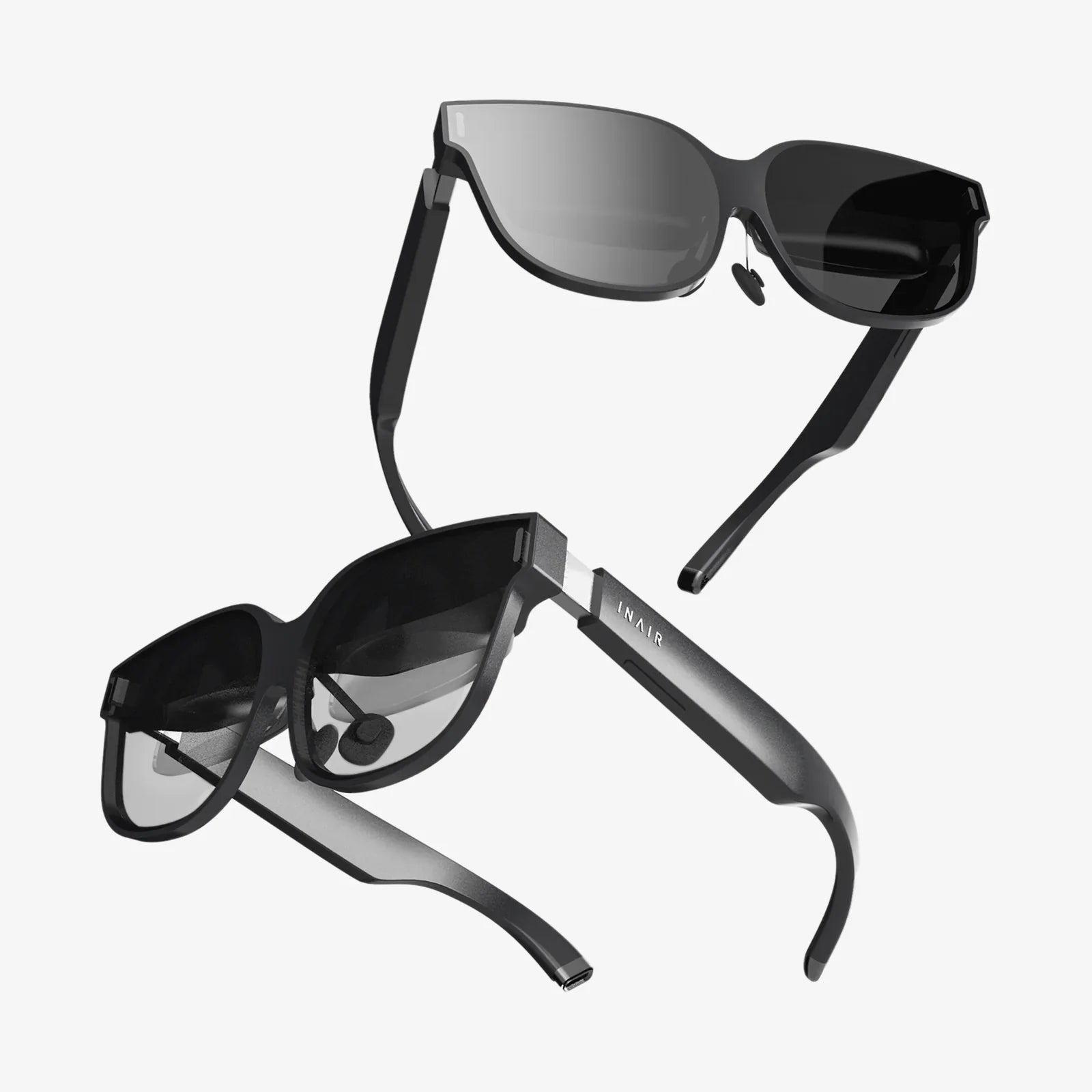
The buzz of the Las Vegas Convention Center has faded, the flashbulbs have dimmed, but the spectacles themselves remain, not as a memory, but as a permanent lens through which we are now destined to see our world. CES 2025 wasn’t just another tech show; it was the historical pivot point, the moment the long-promised dream of seamless, powerful, and socially acceptable augmented reality eyewear finally materialized from science fiction into tangible, breathtaking reality. The devices unveiled there promise to do nothing less than redefine human-computer interaction, merging our physical and digital realities into a cohesive, intelligent, and infinitely adaptable spatial experience. This is the story of that revolution, not as a distant prophecy, but as an imminent future being built today.
The Evolution: From Bulky Prototypes to Polished Consumer Tech
For over a decade, CES has been the stage for AR glass concepts, often exciting but almost universally burdened by significant compromises. They were tethered to powerful external computers, featured field-of-views so narrow the digital content felt like peering through a mailbox slot, and their industrial design was conspicuously… robotic. They were, in essence, proof-of-concept devices for developers and enterprises, not for your morning commute or evening social gathering.
CES 2025 marked the definitive end of that era. The overarching theme was refinement and integration. The devices on display were not just about raw technological power but about the holistic user experience. The focus shifted from pure specification sheets to answering critical questions: How do they feel on your face after eight hours? How do they look to the person you're speaking with? How intuitively can you navigate a complex 3D interface with your hands and voice? The answer, across multiple exhibitors, was: astonishingly natural.
Breakthroughs in Form Factor and Social Acceptability
The single most noticeable leap was in design. The goal of creating AR glasses that are indistinguishable from high-end traditional eyewear was largely achieved. We saw a plethora of styles: classic aviators, modern rectangular frames, and even bold, fashion-forward designs, all housing the requisite technology without appearing bulky or awkward.
This was accomplished through revolutionary feats of miniaturization. The processing units, which once required a separate pack worn on a belt or in a pocket, have been shrunk and distributed elegantly within the temples of the glasses. Advanced composite materials and new battery technologies allowed for this redistribution of weight, making devices that are often lighter than a pair of premium sunglasses. The social stigma of wearing technology on your face has been effectively engineered away, paving the way for all-day wearability and true mainstream adoption.
The Core Technologies Powering the Revolution
This dramatic evolution did not happen in a vacuum. It is the culmination of parallel breakthroughs across several core technological domains, each solving a critical piece of the AR puzzle.
Next-Generation Waveguides and Display Systems
The waveguide—the transparent lens that projects light into your eye—is the heart of any AR system. Past iterations struggled with efficiency (a dim image), a limited field of view (FoV), and the notorious "rainbow effect" or artifacts that degraded image quality. CES 2025 was dominated by displays boasting FoVs exceeding 70 degrees, a critical threshold where digital objects feel life-sized and naturally integrated into your environment.
These new waveguides, leveraging holographic and metasurface technologies, achieve unprecedented levels of brightness and clarity while remaining incredibly thin and efficient. This means vibrant, full-color images that are visible even in direct sunlight, all while consuming minimal power. The "screen door effect" is a relic of the past; the pixels have become so dense and well-blended that text appears razor-sharp and virtual objects possess real visual solidity.
The Rise of Photonic Processors
Perhaps the most profound underlying advancement was the commercial debut of specialized photonic or optical processing units (OPUs). Traditional silicon chips struggle with the immense computational load of simultaneous world sensing, 3D rendering, and AI inference, generating heat and draining batteries quickly.
Photonic chips use light instead of electricity to perform calculations. Demonstrations at the show revealed that these OPUs are capable of handling the complex neural network processing required for real-time object recognition and scene understanding with orders of magnitude greater efficiency. This translates to cool, quiet operation and the ability to run sophisticated AR experiences for hours on a single charge, all self-contained within the glasses themselves. The era of the tether is over.
Spatial AI and Contextual Understanding
Hardware is nothing without intelligence. The AR glasses of 2025 are not merely display devices; they are spatial computers equipped with a sophisticated sensor suite—high-resolution RGB cameras, depth sensors, LiDAR, and inertial measurement units—all continuously scanning the environment.
This raw sensor data is processed by on-device AI models that understand the world in real-time. They don't just see a table; they understand it is a surface capable of holding virtual objects. They can persistently anchor a virtual monitor to that table, so it remains exactly in place even if you leave the room and return. They can recognize a product on a shelf and instantly overlay reviews, price comparisons, or nutritional information. This contextual, persistent awareness is the magic that makes the digital feel physical.
Transforming Industries and Human Experience
The demonstrations at CES 2025 moved beyond flashy games and simple animations, focusing instead on profound utility that will reshape major facets of our lives.
The Future of Work and Remote Collaboration
The concept of the virtual office was completely redefined. Demonstrations showed multiple remote colleagues represented as photorealistic avatars or even full-volume holograms, sitting around your physical desk as if they were physically present. You can collaboratively manipulate 3D models of a new product design, annotate the shared physical space with digital notes that persist for your team, and share your first-person perspective with a remote expert who can guide your hands through a complex repair procedure. This erases the barriers of geography, creating a palpable sense of presence and collaboration that video calls can never match.
Navigation and Situational Awareness
Turn-by-turn navigation evolved from a 2D map on a phone screen to intuitive 3D pathways and arrows painted directly onto the pavement in front of you. At the show, this was demonstrated not just for walking but for complex environments like large airports or subway stations, where digital signs could be translated and directions to your specific gate were overlaid seamlessly. For drivers, critical information like speed, navigation, and hazard warnings can be projected onto the windshield, allowing them to keep their eyes on the road.
Accessibility and Enhanced Perception
One of the most impactful applications showcased was in accessibility. Real-time captioning for conversations was displayed near the speaker's face, a game-changer for the hard-of-hearing community. Object recognition could audibly identify products for the visually impaired, and visual enhancements could highlight curbs, steps, or potential obstacles with a high-contrast overlay, making navigation safer and more independent.
Addressing the Inevitable Challenges
With such transformative power comes significant responsibility. The exhibits at CES 2025 were accompanied by serious discussions about the societal implications of always-on, personal environmental computers.
Privacy and the Ethics of Sensing
The ability to continuously record and analyze the environment raises monumental privacy concerns. How do we prevent unauthorized recording? How is the captured data stored and processed? The industry response at the show was a strong push for on-device processing by default. The demonstrated glasses were designed to process camera and microphone data locally, only sending abstracted information to the cloud (e.g., "the user asked about this product") rather than raw video feeds. Physical hardware switches to disable cameras and microphones were a common and welcome feature, giving users tangible control over their privacy.
Digital Wellness and Attention
The potential for information overload and digital distraction is immense. Tech firms addressed this by showcasing intuitive focus modes and context-aware notifications. The glasses demonstrated an ability to understand when you are in a deep conversation and suppress non-critical alerts, or to automatically present relevant information only when you consciously look for it. The goal is to enhance your reality, not overwhelm it.
The Road Ahead: From CES to Your Living Room
The technology displayed at CES 2025 is not a decade away; it's the foundation for products slated for the upcoming holiday season and early 2026. The development kits are now in the hands of creators, and the ecosystem of spatial applications is beginning to bloom. The question is no longer if this future will arrive, but how quickly we will adapt to it.
The convergence of miniature hardware, intelligent software, and a mature understanding of user experience has finally delivered on the original promise of augmented reality. We are standing at the precipice of a new computing paradigm, one where information is not confined to a slab of glass in our hands but is woven into the very fabric of our perception. The devices showcased in Las Vegas are the key that will unlock this world, transforming every blank wall into a potential screen, every space into a potential workspace, and every interaction into an opportunity to be more informed, connected, and capable. The future is not something we will watch on a display; it is something we will see through our own eyes.
Share:
Top 10 Virtual Reality Glasses: The Ultimate Buyer's Guide for an Immersive Future
3D Audio Video The Immersive Future of Sound and Sight