


- by wangfred
Challenges Using VR AR Technologies: Navigating the Hurdles on the Path to Immersion
- by wangfred
Imagine a world where digital information overlays your physical reality, where you can travel to distant planets or walk with dinosaurs from your living room—this is the incredible promise of Virtual and Augmented Reality. Yet, for every breathtaking demo and visionary promise, there exists a parallel reality of tangled cables, motion-induced nausea, and eye-straining interfaces. The journey from niche novelty to ubiquitous utility is paved with significant, multifaceted challenges using VR AR technologies that developers, companies, and society are only beginning to grapple with. The true test of these immersive technologies isn't just in crafting compelling experiences, but in overcoming the very real obstacles that currently limit their potential and accessibility.
Perhaps the most immediate set of challenges using VR AR technologies revolves around the physical hardware required to deliver these experiences. For VR to be truly immersive, it demands high-resolution displays, incredibly precise and low-latency tracking, and powerful processing. Current-generation headsets, while advanced, still struggle with the screen-door effect—a visible gap between pixels that reminds users they are looking at a screen—and a field of view that often feels like looking through binoculars, breaking the sense of presence. The computational power needed to render complex, photorealistic environments at a steady 90 frames per second or higher is immense, often requiring expensive, high-end computing systems that are out of reach for the average consumer, creating a significant barrier to entry.
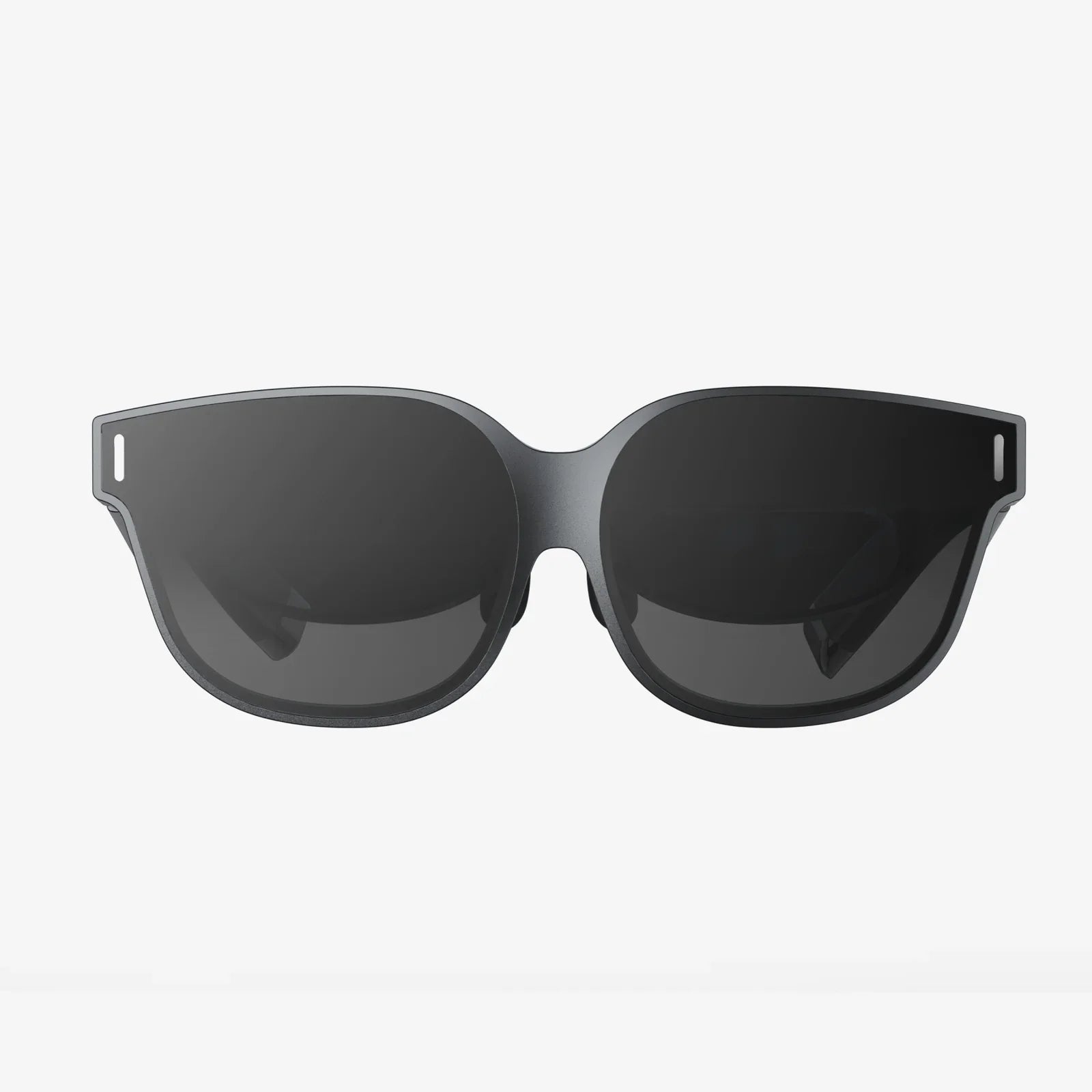
For AR, the hardware challenges are even more pronounced. The ideal augmented reality glasses would be indistinguishable from regular eyewear: lightweight, stylish, with all-day battery life, and capable of seamlessly blending digital content with the real world. Today's technology is far from this ideal. Most powerful AR devices are either tethered, bulky, or suffer from severely limited battery life. The optical systems needed for convincing AR, such as waveguides, are complex and expensive to manufacture at scale. Furthermore, achieving accurate spatial mapping and persistent object placement—where a digital object stays precisely where you left it in the real world—requires a suite of cameras, sensors, and processors that are difficult to miniaturize without compromising on performance or cost.
Beyond the hardware itself, the human body presents a profound set of challenges using VR AR technologies. The most notorious among these is cybersickness, a form of motion sickness characterized by disorientation, eye strain, headache, and nausea. This phenomenon occurs due to a sensory conflict: the user's visual system perceives motion within the virtual world, but their vestibular system (located in the inner ear) reports that the body is stationary. This neurological mismatch can quickly lead to discomfort and has been a major hurdle for longer VR sessions and broader user adoption. While techniques like fixed-frame stabilizers and improved latency have helped, a universal solution remains elusive.
Prolonged use also raises concerns about visual fatigue and potential long-term effects on eyesight. VR headsets force the user's eyes to focus on a fixed plane (the screen) while the stereoscopic 3D imagery cues them to converge at different distances, creating a vergence-accommodation conflict that can strain eye muscles. Psychologically, immersion can be a double-edged sword. Highly realistic virtual experiences can trigger strong emotional and physiological responses, from fear and anxiety to a loss of spatial awareness that leads users to trip over real-world objects. The potential for simulator adaptation syndrome, where users experience lingering effects like altered coordination after removing the headset, also warrants careful consideration, especially for tasks like driving immediately after a VR session.
A platform is only as valuable as the content it supports, and here lies another layer of challenges using VR AR technologies. Creating immersive content is notoriously difficult, time-consuming, and expensive. Traditional film and game development pipelines are inadequate for 360-degree environments where the user controls the camera. Every asset must be fully modeled and optimized from every conceivable angle, exponentially increasing the workload for artists and designers. Performance optimization is critical, as any drop in frame rate can immediately induce cybersickness, forcing developers to make difficult trade-offs between visual fidelity and smooth performance.
Furthermore, the industry is still in search of its definitive "killer app"—the application that demonstrates an undeniable, mass-market value proposition beyond gaming and niche enterprise training. While compelling games and experiences exist, the question of whether VR and AR can become indispensable tools for productivity, social connection, or daily information retrieval remains unanswered. Developing for these platforms is also fragmented across different devices, each with its own SDKs, hardware capabilities, and control schemes, making it difficult for developers to create universally compatible content without significant porting effort.
As these technologies mature, they introduce a host of social and ethical challenges using VR AR technologies that society is ill-prepared to address. Privacy concerns are paramount, especially for AR. Always-on AR glasses equipped with cameras and microphones continuously scan and interpret the user's environment. This raises critical questions: Who has access to this data? How is it stored and used? Is it ethical to record people in public without their consent? The potential for pervasive surveillance, both by corporations and governments, is a frightening prospect that requires robust legal and ethical frameworks.
User safety in both physical and virtual spaces is another major concern. A user immersed in a VR headset is effectively blind and deaf to their physical surroundings, creating risks of injury. In virtual and augmented spaces, users can be subjected to new forms of harassment and abuse—imagine having your digital avatar assaulted or your personal space invaded in a way that feels viscerally real. This "virtual assault" can have genuine psychological impacts. Moreover, the ability to create hyper-realistic deepfakes and synthetic environments poses a threat to truth and reality itself, empowering bad actors to manipulate, deceive, and spread misinformation on an unprecedented scale.
The promise of a "metaverse" or an AR-enhanced future is an inclusive one, but current economic realities present stark challenges using VR AR technologies. High-quality VR setups, inclusive of a powerful computer and headset, represent a substantial financial investment. Even standalone headsets carry a cost that places them firmly in the discretionary spending category for most. This economic barrier threatens to create a new digital divide, where immersive experiences and their associated benefits—in education, professional training, and social connection—are available only to those with the means to afford them.
Accessibility for users with disabilities is another critical yet often overlooked hurdle. How does a user in a wheelchair navigate a VR experience designed for full locomotion? How can visually impaired users interact with a primarily visual medium? Designing inclusive XR experiences requires thoughtful consideration from the ground up, incorporating features like alternative navigation modes, audio descriptions, and customizable interfaces. Without a concerted effort towards inclusivity, these transformative technologies risk excluding large segments of the population.
Despite this formidable list of challenges using VR AR technologies, the trajectory of innovation offers hope. Research into varifocal and light field displays aims to solve the vergence-accommodation conflict. Inside-out tracking and standalone headsets are eliminating external sensors and powerful cables. Advances in cloud computing and 5G networks could eventually offload intensive processing to remote servers, reducing the hardware burden on the user end. In the AR space, developments in photonic chips and nano-optics are slowly paving the way for smaller, more efficient glasses.
Addressing the human and societal challenges will require a broader effort. It will necessitate collaboration not just among engineers, but with neuroscientists, psychologists, ethicists, policymakers, and designers. Establishing industry-wide standards for privacy, safety, and accessibility will be crucial for building trust. The development of compelling enterprise applications in fields like remote assistance, complex design visualization, and medical training is already demonstrating tangible ROI, providing a stable foundation for growth while the consumer market evolves.
The dream of seamless immersion is not dead; it is merely being refined through the arduous process of solving real-world problems. Each challenge represents an opportunity for breakthrough innovation. The companies and creators who successfully tackle these issues—who can deliver comfort, clarity, and compelling value while safeguarding user well-being—will not only conquer the market but will truly open the gateway to a new dimension of human experience, forever changing how we work, learn, play, and connect.
Unlocking the full potential of this digital frontier demands more than just better graphics and faster processors—it requires a fundamental rethinking of the relationship between technology and the human experience, pushing the boundaries of what's possible while steadfastly protecting what makes us human. The race is on to build an immersive future that is not only technologically dazzling but also comfortable, ethical, and accessible to all.