


- by wangfred
Cheap AR: Demystifying Affordable Augmented Reality and Its Revolutionary Potential
- by wangfred
Imagine a world where digital information doesn’t just live on a screen but is seamlessly woven into the fabric of your everyday life—a world where learning, working, shopping, and playing are enhanced by a persistent digital layer. For years, this vision of Augmented Reality (AR) felt like a distant, expensive future, reserved for high-end developers and tech conglomerates. But a quiet revolution is underway, shattering the perception that powerful AR requires a premium price tag. The era of accessible, cheap AR is not coming; it is already here, and it is poised to change everything.
The term "cheap" often carries a negative connotation, implying poor quality, fragility, or a lack of features. In the context of AR, it is crucial to reframe this thinking. Cheap AR does not mean inferior AR; it signifies democratized AR. It represents the rapid technological evolution and market competition that have successfully driven down the cost of entry without a corresponding drop in core functionality or potential.
This affordability manifests in two primary ways:
Several converging technological and market forces have acted as the catalyst for the cheap AR movement, creating a perfect storm of accessibility.
The single most significant driver of cheap AR has been the smartphone. Modern smartphones are technological marvels, packing high-resolution displays, powerful processors, precise motion sensors (gyroscopes, accelerometers), and advanced camera systems—all the essential components for compelling AR. By leveraging this ubiquitous hardware, AR technology effectively hitched a ride into the mainstream market, bypassing the need for consumers to make a separate, costly purchase. This device-agnostic approach means a student with a mid-range phone can access the same AR educational content as someone with a flagship model.
Software is the true brain of AR. Breakthroughs in computer vision algorithms, powered by machine learning, have dramatically improved the ability of devices to understand and interact with the real world. Features like simultaneous localization and mapping (SLAM), plane detection, and object recognition have become more efficient and accurate. These smarter algorithms can run effectively on less powerful, more affordable hardware, reducing the computational—and therefore financial—overhead required for a smooth AR experience.
Cloud-based AR represents a paradigm shift that further lowers the hardware bar. Instead of relying solely on the device's processor to handle complex rendering and data processing, heavy computational tasks are offloaded to powerful remote servers. The results are then streamed back to the device. This approach allows even simple, inexpensive glasses or older smartphones to display rich, complex AR scenes and access vast databases of 3D models and information, as the local device acts more as a display terminal.
As the potential of AR became apparent, numerous companies entered the hardware and software markets. This intense competition drives innovation while simultaneously pushing prices down. Components like micro-displays, sensors, and cameras are being produced at massive scale for various industries, benefiting from economies of scale that make them cheaper and more accessible for AR device manufacturers.
The true value of cheap AR is revealed not in flashy tech demos but in its practical, widespread applications that solve real-world problems across diverse sectors.
AR is breaking down the financial barriers to immersive learning. Imagine:
Cheap AR makes these scenarios scalable for public schools and vocational training centers with limited budgets.
The "try before you buy" experience is being redefined. Customers can now use their smartphones to:
This reduces purchase anxiety and product return rates, saving money for both consumers and retailers. The best part? For the consumer, this experience is free, requiring only their existing phone.
In fields like manufacturing, logistics, and maintenance, cheap AR wearables are boosting productivity and safety. Warehouse workers can use lightweight AR glasses to see optimal picking routes and inventory information hands-free. Field technicians can have schematics and expert guidance overlaid on malfunctioning equipment, allowing for faster, first-time fixes. The affordability of these solutions means they can be deployed to entire workforces, not just a select few.
Artists and creators are using cheap AR tools to turn the world into their canvas. Museums are creating AR-enhanced exhibits that bring static paintings and artifacts to life. Street artists are creating digital murals that can only be viewed through an AR app on a phone. Authors are embedding AR triggers in books that unlock animated sequences or bonus content. This democratization of creative tools is fostering a new, immersive genre of public and digital art.
The rise of cheap AR is not without its hurdles. Widespread adoption brings several important considerations to the forefront.
AR devices, by their very nature, are equipped with cameras and sensors that continuously scan the user's environment. This raises profound questions about data collection, storage, and usage. Who has access to the video feed of your home when you're using an AR furniture app? How is spatial data about your location being used? Establishing clear, transparent, and robust privacy frameworks is essential to building and maintaining public trust in these technologies.
Running complex AR experiences is computationally intensive and can quickly drain smartphone batteries. On dedicated low-cost devices, processing power may be limited, potentially leading to less stable tracking or simpler graphics. While cloud AR offers a solution, it introduces dependency on strong, persistent network connectivity. Balancing performance with power consumption remains a key engineering challenge for affordable hardware.
While smartphone-based AR is widespread, the experience can vary drastically based on the device's age and capabilities. A fragmented user experience could create a digital divide where only those with newer technology can access the best AR has to offer. Furthermore, designing intuitive user interfaces (UIs) and user experiences (UX) for AR is still an emerging discipline. Clunky or confusing interfaces can hinder adoption, no matter how cheap the technology is.
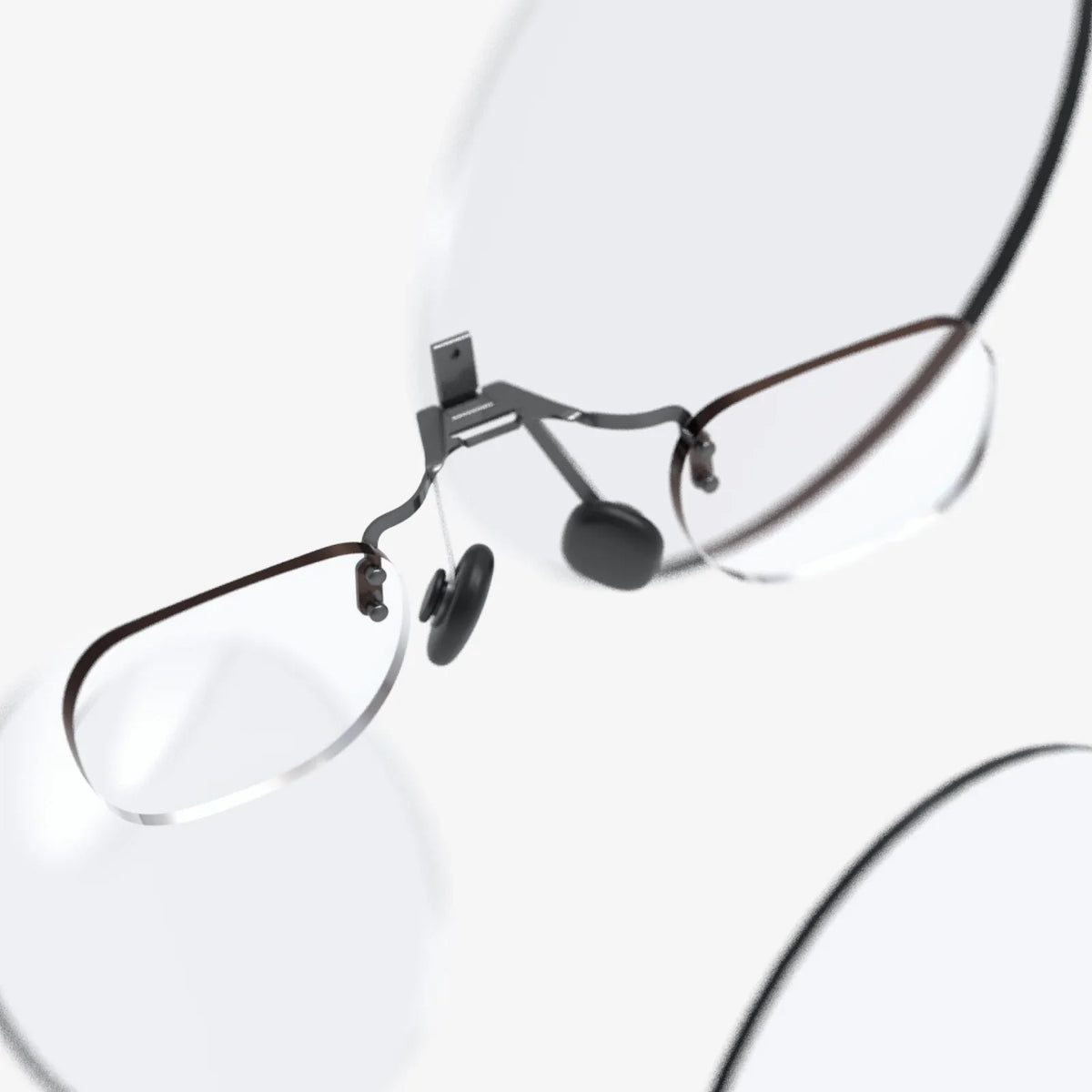
The trajectory of cheap AR points toward an even more integrated and invisible future. We are moving towards lightweight, everyday glasses that look no different from standard eyewear but project high-quality, contextually relevant information onto the world. These devices will become increasingly affordable as the technology matures. Furthermore, the expansion of the 5G network will supercharge cloud AR, enabling incredibly complex and photorealistic AR experiences on simple devices with ultra-low latency. The line between the digital and the physical will continue to blur, driven by technologies that are accessible to all.
This isn't just about seeing a dinosaur in your backyard through your phone screen. It's about fundamentally enhancing human capability—making us smarter workers, more confident shoppers, more engaged students, and more connected citizens. The power to overlay knowledge, creativity, and connection onto our reality is slipping out of the realm of science fiction and expensive prototypes and into our hands. The question is no longer if you will use AR, but how you will use it to see your world differently, and the most exciting part is that the tool you need might already be in your pocket, waiting to unlock a new dimension.