


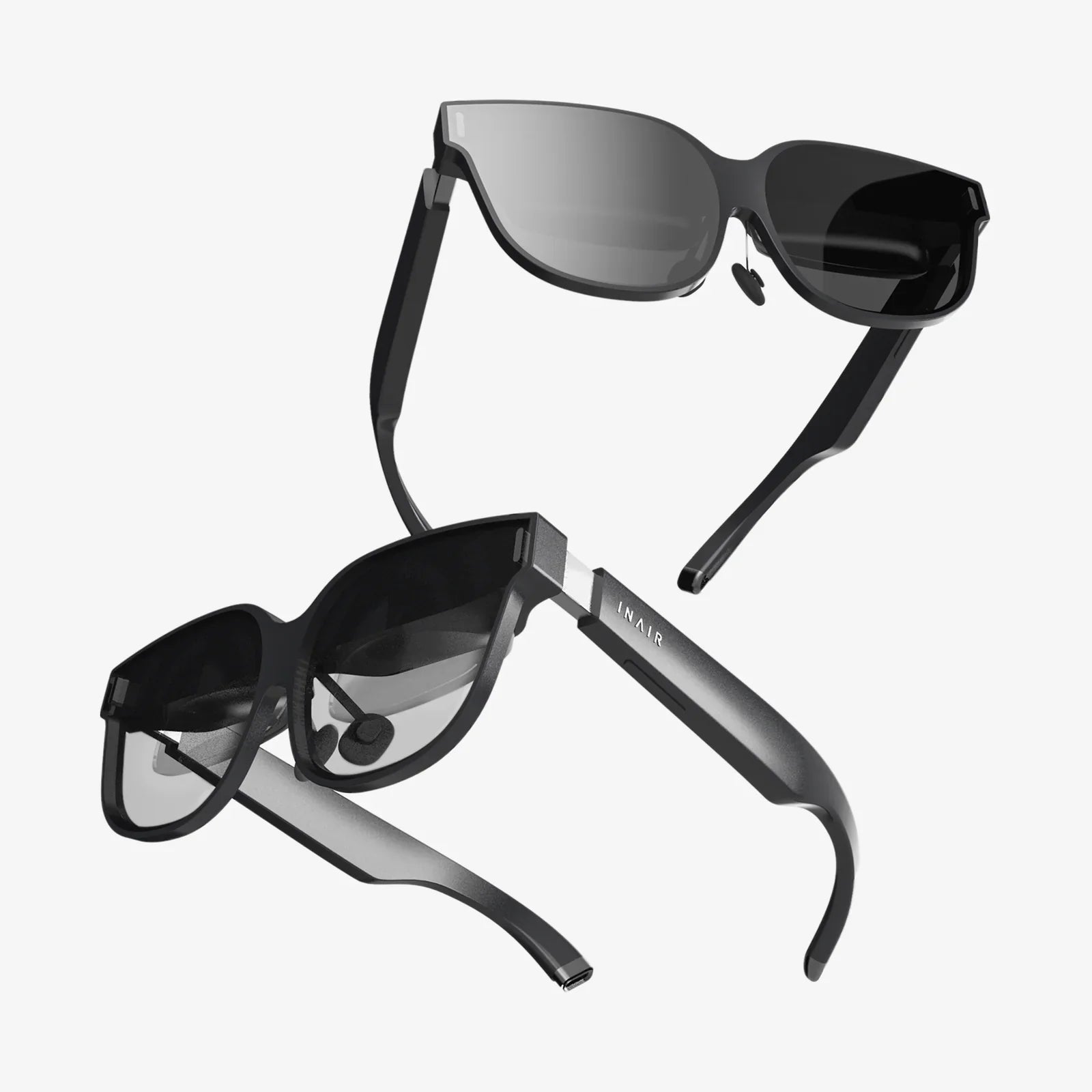
Imagine a world where digital information doesn't live on a screen in your hand, but is seamlessly woven into the fabric of your reality, accessible with a mere glance and available for a price that doesn't require a second mortgage. This is the promise that cheap augmented reality smart glasses are now bringing from the realm of science fiction to the shelves of mainstream consumers, poised to fundamentally alter how we work, learn, play, and connect.
The Dawning of an Affordable AR Revolution
For years, augmented reality has been a technology of tantalizing potential and prohibitive cost. Early iterations of AR eyewear were marvels of engineering, but their astronomical prices firmly placed them in the domain of specialized enterprise and deep-pocketed developers. They were tools for factories, design firms, and surgical suites, not for the everyday user. This high barrier to entry created a chasm between the technology's promise and its practicality for the masses. However, a confluence of technological advancements, manufacturing efficiencies, and shifting market strategies is rapidly bridging that gap. The emergence of genuinely cheap augmented reality smart glasses signifies a pivotal moment, democratizing a technology that has the power to be as transformative as the smartphone.
Deconstructing the Tech: What Makes "Cheap" AR Possible?
The journey to affordability is a story of innovation not just in what these devices can do, but in how they are built. Several key factors have driven down costs without completely sacrificing functionality.
The Rise of Complementary Smartphone AR
One of the most significant catalysts for affordable dedicated hardware was the software revolution that preceded it. The widespread adoption of AR-powered mobile applications, from social media filters to furniture placement tools, familiarized billions with the concept of augmented reality. More importantly, it demonstrated that powerful AR experiences could be powered by the sophisticated sensors and processors already nestled in our pockets. This smartphone-based approach offloads the heaviest computational tasks, allowing the glasses themselves to be simpler, lighter, and far less expensive. They act as a sophisticated display and sensor hub, while the phone serves as the brain, a symbiotic relationship that keeps the entire system accessible.
Innovations in Display and Waveguide Technology
The core magic of any AR glasses lies in its ability to project digital images onto transparent lenses so they appear to exist in the real world. Historically, the systems to achieve this—like complex arrays of prisms and mirrors—were bulky and exorbitantly expensive. The advent and maturation of waveguide technology have been a game-changer. These are incredibly thin, flat pieces of glass or plastic etched with microscopic patterns that pipe light from a micro-projector at the temple into the user's eye. Mass production of these optical waveguides has become more efficient, drastically reducing the cost of the most critical component. Furthermore, the use of more affordable display technologies, such as certain Liquid Crystal on Silicon (LCoS) or advanced OLED microdisplays, has provided a cost-effective balance between brightness, resolution, and power consumption.
The Component Ecosystem Matures
The explosive growth of the Internet of Things (IoT), wearables like smartwatches, and drones has created a massive, competitive market for the tiny components that smart glasses also rely on. Miniaturized motion sensors (gyroscopes, accelerometers), compact cameras, efficient microphones, and low-power Bluetooth chips are now produced at an immense scale for countless products. This economies-of-scale effect means that manufacturers of budget AR glasses can source high-quality, reliable components at a fraction of what they would have cost a decade ago, passing those savings on to the consumer.
Defining the "Cheap" AR Experience: Capabilities and Limitations
It is crucial to understand that "cheap" in this context is not synonymous with the fully immersive, holographic experiences depicted in movies—at least, not yet. The current generation of affordable AR glasses operates on a spectrum of functionality, often described as "assisted reality" or "monocular AR."
- Monocular vs. Binocular Displays: Many budget-friendly models feature a display in only one lens, typically presenting information like notifications, directions, or simple data readouts. This is less immersive but sufficient for many productivity tasks and is significantly cheaper to produce than a full binocular, stereoscopic 3D system.
- Limited Field of View (FOV): A common trade-off is a narrower field of view. Instead of digital objects filling your entire vision, they might appear in a small rectangular window in the corner of your eye, akin to a floating smartwatch screen. This is a direct result of using simpler optical systems but remains highly useful for contextual information.
- Basic vs. Spatial Interaction: Top-tier AR systems use advanced depth-sensing cameras and LiDAR to understand and interact with the geometry of the real world. Affordable glasses often forgo this, relying on touchpads on the frames, voice commands, or connection to a smartphone for interaction. They are better at displaying information onto the world than integrating with it spatially.
Understanding these distinctions manages expectations. These devices are not primarily for playing immersive 3D games in your living room; they are for enhancing daily life with hands-free information access.
A World Transformed: Use Cases for Affordable AR
The accessibility of this technology unlocks a myriad of applications across every facet of society.
Revolutionizing the Workplace and Hands-On Industries
This is where affordable AR is making its most immediate impact. For field technicians, a pair of glasses can display schematics, instruction manuals, or a live video feed from a remote expert, all while keeping their hands free to work on machinery. In warehouses, workers can see picking lists and navigation directions directly in their line of sight, dramatically improving efficiency and accuracy. For logistics and shipping, digital labels and information can be overlaid on packages, simplifying sorting and inventory management. The low cost means companies can deploy them to entire teams without a massive capital investment.
Redefining Learning and Remote Assistance
Imagine a medical student observing a complex surgical procedure through the eyes of the lead surgeon, with anatomical labels and vital signs overlaid in real-time. A mechanic-in-training can receive step-by-step guidance visually superimposed on the engine they are repairing. Grandparents can get visual prompts floating next to their new television, guiding them through the setup process via a remote call with their tech-savvy grandchild. Affordable AR dissolves geographical and knowledge barriers, creating a powerful new medium for instruction and support.
Enhancing Daily Life and Navigation
On a consumer level, the applications are endless. Walking through a foreign city, directional arrows can be painted onto the street in front of you, with pop-up historical facts appearing next to landmarks. At the grocery store, your shopping list could prioritize itself based on the aisle you're in, and you could receive allergy warnings or recipe suggestions by looking at a product. During a workout, your performance metrics—heart rate, pace, reps—can hover in the corner of your vision, eliminating the need to constantly look down at a watch or phone.
The Flip Side of the Lens: Challenges and Societal Considerations
The path to an AR-augmented world is not without its significant hurdles and ethical questions.
The Privacy Paradox
Devices with always-on cameras and microphones worn on the face represent a profound shift in privacy dynamics. The potential for surreptitious recording is a major concern for those not wearing the technology. Robust and transparent privacy controls, clear indicators when recording is active, and strong legal frameworks will be essential to ensure this technology is adopted responsibly and without creating a society of constant surveillance.
The Digital Divide and Social Etiquette
As with any new technology, there is a risk that AR could exacerbate existing inequalities. Furthermore, new social norms will need to be negotiated. Is it rude to wear AR glasses during a conversation? How do we know if someone is looking at us or at a notification behind us? These may seem like trivial concerns, but they are critical to the harmonious integration of technology into the social fabric.
Safety and Digital Addiction
Distraction is a inherent risk. Overlaying too much information onto a user's field of view, especially while navigating busy streets or driving, could have dangerous consequences. The design of these interfaces must prioritize critical real-world information and minimize cognitive overload. There is also a valid concern about the potential for these always-available digital layers to further fuel technology addiction, making it harder for people to disconnect and be present in the moment.
Gazing into the Future: Where Do We Go From Here?
The current wave of cheap augmented reality smart glasses is merely the first step. We are at the very beginning of the adoption curve. As component costs continue to fall and optical engineering advances, we can expect the capabilities of budget devices to rapidly approach those of today's high-end models. Wider fields of view, more intuitive gesture controls, better battery life, and improved style will become standard. The real transformation will occur when the hardware becomes so unobtrusive and affordable that it fades into the background, allowing the software and experiences to take center stage. Developers will create applications we haven't even dreamed of yet, built upon a platform that is accessible to nearly everyone.
The true power of this revolution lies not in the novelty of the hardware, but in its accessibility. By breaking down the financial barriers, cheap augmented reality smart glasses are set to unleash a wave of creativity and utility that will touch every industry and every life, fundamentally reshaping our relationship with technology and with the world around us. The future is not just arriving; it's being overlaid right before our eyes, and for the first time, everyone is invited to see it.
Share:
Difference Between Augmented Reality AR and Virtual Reality VR - A Comprehensive Guide
5 Tips for Conducting a Virtual Meeting: The Ultimate Guide to Digital Collaboration