


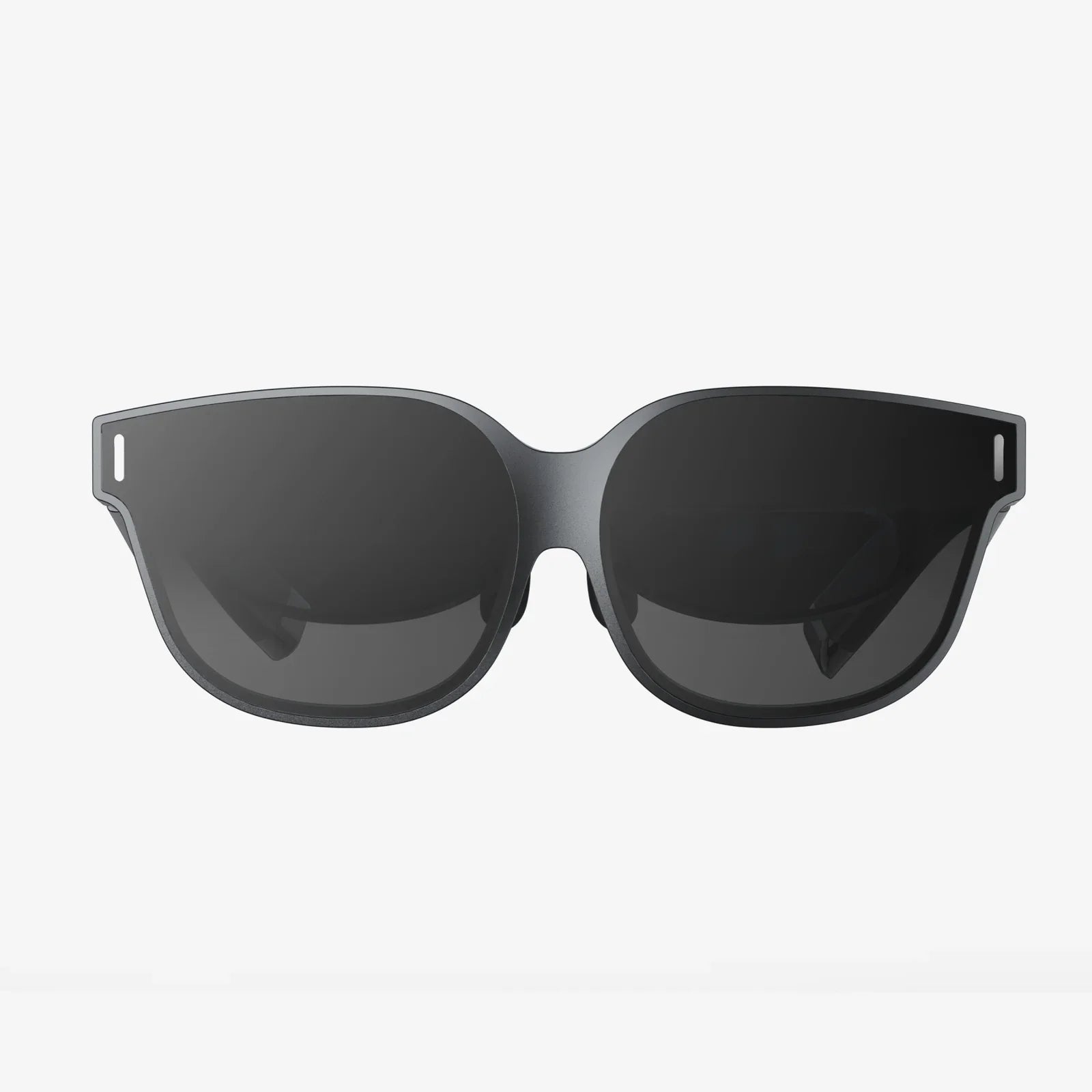
Imagine slipping on a pair of sleek, unassuming glasses and instantly overlaying your world with interactive digital constructs, from a virtual workstation spanning your entire living room to life-sized game characters dodging behind your real furniture. This is the promise of 6DoF augmented reality, a technological leap once reserved for high-end enterprise budgets, now tantalizingly within reach for the eager consumer. The hunt for the cheapest 6DoF AR glasses isn't just about finding a bargain; it's about unlocking the next dimension of computing, creativity, and connection without the prohibitive price tag. The barrier to entry is crumbling, and the era of ubiquitous spatial computing is dawning. Are you ready to see your reality transformed?
Demystifying 6DoF: The Magic Behind True AR Freedom
Before embarking on the quest for affordability, it's crucial to understand what sets true 6DoF AR glasses apart from their simpler, cheaper cousins. The term "6DoF" stands for Six Degrees of Freedom. This refers to the device's ability to track its position and orientation in three-dimensional space.
- 3DoF (Three Degrees of Freedom): This tracks rotational movement only—pitch, yaw, and roll. Think of it like turning your head while sitting in a fixed chair. You can look around a virtual environment, but you cannot lean forward, walk closer, or crouch down to see from a different perspective. This is common in basic VR headsets and early AR devices.
- 6DoF (Six Degrees of Freedom): This tracks both rotation and positional movement. It adds the ability to track movement along the X, Y, and Z axes. This means you can walk around a virtual object, lean in to examine it closely, and have digital content remain locked in place in the real world. This is the foundation for convincing, immersive AR.
Achieving accurate 6DoF tracking is a complex dance of hardware and software. It typically involves a combination of cameras, infrared sensors, gyroscopes, accelerometers, and sophisticated algorithms (often powered by Simultaneous Localization and Mapping - SLAM) that map your environment and understand your place within it in real-time. This technological complexity is why 6DoF has historically been expensive.
Why the Price is Dropping: The March Towards Consumer AR
The arrival of more affordable 6DoF AR glasses is not an accident; it's the result of several converging technological and market forces.
Component Commoditization: The core sensors required for inside-out tracking (where the glasses themselves do the tracking without external beacons) have become smaller, more power-efficient, and significantly cheaper to mass-produce. Cameras and inertial measurement units (IMUs) that were once cutting-edge are now commonplace.
Advanced and Accessible Software: The algorithms for SLAM and spatial understanding have matured enormously. Open-source projects and commercial SDKs have democratized this technology, allowing smaller manufacturers to implement robust tracking without building everything from the ground up.
Increased Competition: As the spatial computing market heats up, numerous companies are vying for a foothold. This competition drives innovation and, crucially, pushes prices down as they target a broader audience beyond deep-pocketed developers and enterprises.
The "Good Enough" Consumer Model: Manufacturers are learning to strip away enterprise-grade features that consumers don't need (e.g., industrial-grade durability, specific professional software certifications) to hit a lower, more attractive price point while preserving the core 6DoF immersive experience.
Key Features to Evaluate Beyond the Price Tag
When searching for the most budget-friendly option, it's vital to know where compromises might be made. Here’s what to scrutinize to ensure you get a capable device, not just a cheap one.
Display Technology: The Window to Your Digital World
The display is arguably the most important part of the AR experience. Two main types dominate the affordable spectrum:
- BirdBath Optics: A common and cost-effective design. It uses a combiner (a partially reflective lens) to bounce light from a micro-OLED display into your eye, overlaying it onto your view of the real world. Pros: Good color saturation and contrast. Cons: Can sometimes suffer from a narrower field of view (FOV) and less transparency than other solutions.
- Waveguide Optics: Often found in higher-end devices but trickling down. Light is piped through a thin, transparent glass lens using internal reflections. Pros: Sleeker, more glasses-like form factor, excellent transparency, and can support eye tracking. Cons: Traditionally more expensive to manufacture, which can impact the final cost, and can sometimes have challenges with brightness and clarity.
Key metrics to consider are Field of View (FOV) (how much digital space you can see), resolution, and brightness (nits). A dim display will be washed out in well-lit environments.
Processing Power: Onboard vs. Tethered
How do these glasses run their complex software? There are two primary models:
- Standalone: The glasses contain their own processor, battery, and operating system—a complete computer on your face. This offers ultimate freedom and mobility. However, to hit a low price, the onboard chipset might be less powerful, potentially limiting the complexity of applications and graphical fidelity.
- Tethered: These glasses act primarily as a display and sensor hub, offloading all the heavy computation to an external device like a smartphone, gaming console, or PC via a USB-C cable. This allows the glasses themselves to be lighter, cheaper, and cooler-running, as they don't need a powerful internal computer. The experience is entirely dependent on the host device's capabilities.
The cheapest options are often tethered, leveraging the powerful computer you already own in your pocket.
Field of View (FOV) and Resolution
FOV is measured diagonally and is critical for immersion. A very small FOV can feel like looking through a postage stamp or a scuba mask. Budget models might have a FOV in the 30-50 degree range, which is functional but not fully enveloping. Resolution is equally important; a low-resolution display will show pixelated text and jagged edges, breaking immersion. Look for a per-eye resolution that is as high as possible within your budget.
Comfort and Form Factor
The best AR glasses are the ones you forget you're wearing. Affordability can sometimes come at the cost of premium materials. Look for:
- Weight Distribution: Is the weight balanced across the front and sides, or does it press heavily on your nose?
- Adjustability: Can you adjust the nose pads and arms for a secure fit?
- IPD (Interpupillary Distance): Does it have a fixed optical path or offer software/hardware adjustment to match your eye spacing? A mismatch can cause eye strain.
Content and Ecosystem: What Can You Actually Do With Them?
A device is only as good as its software. Before purchasing, investigate:
- App Stores: What applications are available? Is there a healthy mix of games, productivity tools, and experimental experiences?
- Developer Support: Is there an SDK available for developers? A strong developer community is a good sign of a growing content library.
- Media Consumption: Can they function as a giant virtual screen for watching movies or browsing the web in a virtual environment? This is often a killer app for early AR devices.
The Trade-Offs: Where Budget Models Typically Compromise
Understanding the common compromises in affordable 6DoF glasses will help you set realistic expectations.
- Limited Field of View: This is the most frequent trade-off. A cheaper optical system often means a more constrained view of the digital world.
- Lower Refresh Rates: Might be capped at 60Hz or 72Hz instead of 90Hz or 120Hz, which can impact the smoothness of motion and increase the potential for motion sickness for some users.
- Less Robust Tracking: While still 6DoF, the tracking on a budget device might be less accurate or lose tracking more easily in low-light conditions or with sparse textures (like a blank white wall).
- Build Materials: More plastic, less metal. They might feel less premium but can still be perfectly functional.
- Battery Life (for standalone models): A smaller, cheaper battery will drain faster, especially under heavy computational load.
- Fewer Advanced Features: You will likely not find eye-tracking, hand-tracking, or variable focal planes on the most affordable models. These remain premium features.
Revolutionizing Industries and Hobbies on a Budget
The accessibility of 6DoF AR unlocks possibilities across numerous fields.
- Education: Students can interact with 3D models of the human heart, historical artifacts, or molecular structures, transforming abstract concepts into tangible learning experiences.
- Remote Assistance & Collaboration: A expert can see what a field technician sees and draw annotations directly into their real-world view, guiding them through a complex repair step-by-step.
- Design and Prototyping: Architects can visualize a new building's scale on an empty plot of land. Interior designers can place virtual furniture in a client's living room to test layouts and styles.
- Gaming and Entertainment: This is the most obvious and exciting use case. Games can transform your entire home into a dungeon, a puzzle room, or a virtual arena where digital and physical objects interact.
Navigating Your Purchase: A Practical Checklist
- Define Your Primary Use Case: Is it for media consumption, gaming, light productivity, or development? This will guide your priorities.
- Set a Realistic Budget: Know your absolute maximum and look for options below it to account for potential accessories or taxes.
- Research Extensively: Read reviews from multiple sources, watch hands-on video demonstrations on video sharing platforms, and pay attention to long-term user feedback in online forums.
- Check Compatibility: If the glasses are tethered, ensure your host device (PC, phone, console) meets the exact system requirements.
- Investigate the Return Policy: AR is a personal experience. Comfort and visual clarity are subjective. Ensure you can return the device if it doesn't meet your expectations.
The dream of powerful, immersive augmented reality that doesn't require a small fortune is finally becoming a reality. The market for the cheapest 6DoF AR glasses is vibrant and evolving rapidly, offering a genuine gateway into spatial computing. By focusing on the core technology, understanding the inherent trade-offs, and carefully aligning your expectations with your budget, you can find a device that unlocks a new layer of reality. This isn't just about saving money; it's about being an early pioneer in the next computing revolution, experiencing the magic of digital persistence right in your own home, and getting a thrilling glimpse into a future where our digital and physical lives are seamlessly intertwined. The next dimension of interaction is waiting for you—and it might be more affordable than you ever thought possible.
Share:
What Is The Future Technology In 10 Years: A Glimpse Into The Next Decade
AR Glasses News Today September 2025: The Month Reality Got an Upgrade