


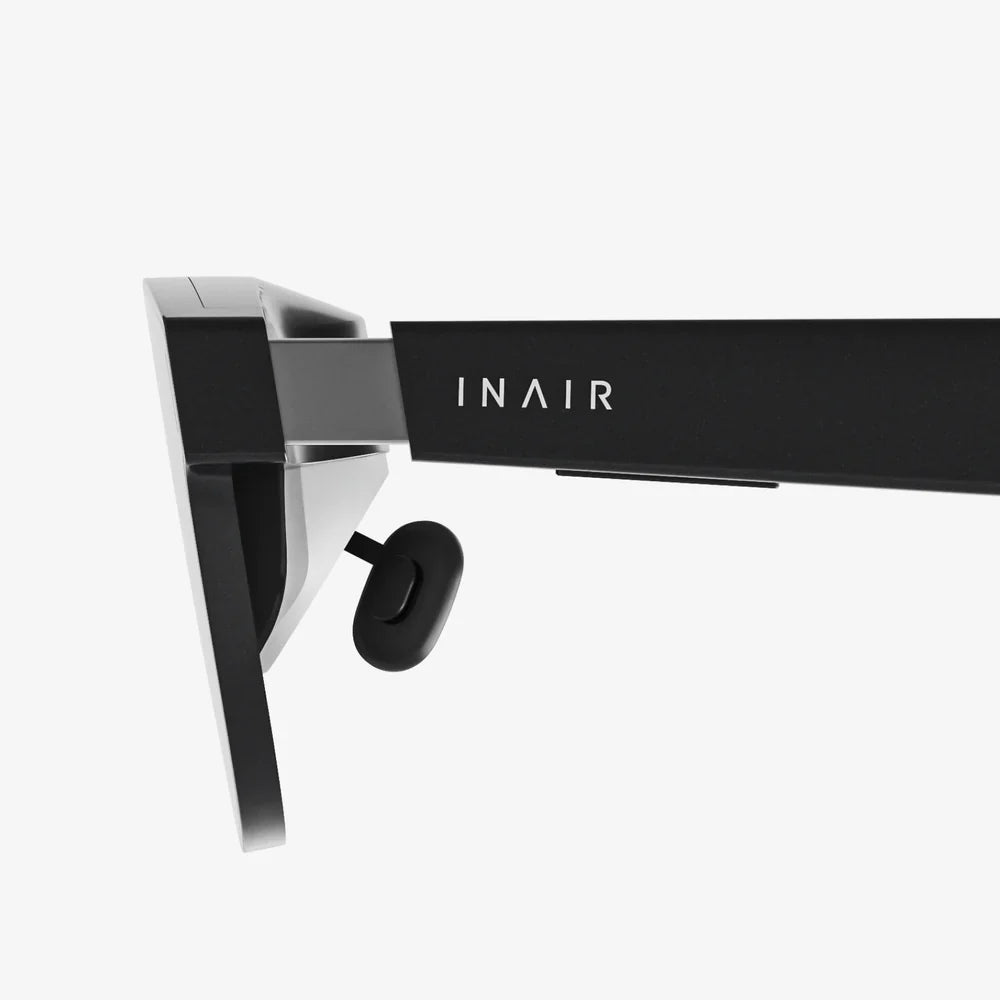
If you thought the digital revolution was something you watched on a screen, September 2025 is here to shatter that illusion. This month hasn't just seen incremental updates to augmented reality glasses; it has delivered a seismic shift that is blurring the lines between our physical and digital lives in ways once confined to science fiction. From the boardroom to the living room, a new wave of technology is making the once-clunky AR headset an indispensable, sleek, and surprisingly powerful window into a connected future.
A Surge in Enterprise Adoption and Productivity
The most significant news this September comes from the world of enterprise, where AR glasses are moving from pilot programs to core infrastructure. Major logistics and manufacturing firms are announcing widespread deployments, citing staggering improvements in efficiency and accuracy. Warehouse operatives are now commonly seen guided by digital waypoints overlaid on their physical environment, directing them to picking locations with pinpoint accuracy. Their hands remain free, with item verification, quantity checks, and inventory updates happening through a combination of eye-tracking, voice commands, and simple hand gestures recognized by the glasses' onboard sensors.
For field technicians, particularly in sectors like aerospace, energy, and complex machinery, these devices have become a lifeline. Instead of lugging heavy manuals or constantly referring to a tablet, intricate repair instructions and holographic schematics are projected directly onto the equipment they are servicing. A seasoned expert from a central office can see what the technician sees, annotate their field of view in real-time with digital arrows and notes, and guide them through complex procedures, effectively teleporting their knowledge across the globe. This has drastically reduced downtime, minimized errors, and is solving the critical shortage of specialized skilled labor.
The Display Technology Leap: LBS and MicroLED Breakthroughs
The perennial challenge of AR glasses—balancing brightness, resolution, field of view, and power consumption in a small form factor—has seen remarkable progress this month. Two competing display technologies are making headlines, each with its own advantages.
Laser Beam Scanning (LBS) systems have become dramatically more refined. These systems use miniature mirrors to scan lasers directly onto the retina, creating incredibly sharp and bright images that appear to float in the user's environment. September's news highlights advancements in LBS that have all but eliminated previous issues like the "rainbow effect" and limited color gamut. The result is full-color, high-contrast imagery that remains visible even in direct sunlight, a critical hurdle for outdoor enterprise use.
On the other hand, MicroLED technology is emerging as a formidable competitor. News from manufacturing partners indicates a massive increase in production yields for ultra-high-density MicroLED arrays. These self-emissive pixels are incredibly power-efficient and offer unparalleled brightness levels. The key breakthrough reported this month is the successful integration of these microscopic displays with advanced waveguides—the transparent lenses that project the image. These new waveguides are thinner, clearer, and offer a significantly wider field of view, moving from the postage-stamp-sized virtual screens of yesterday to immersive, cinema-like experiences.
The Silent Engine: AI Gets a Pair of Eyes
The hardware is only half the story. The most profound software news revolves around the maturation of on-device and cloud-based artificial intelligence. AR glasses are no longer just display devices; they are seeing, understanding, and interpreting the world in real-time. This is powered by a new generation of neural processing units (NPUs) designed for continuous low-power operation.
These AI assistants have evolved far beyond simple voice commands. They are now contextual and proactive. For example, if you glance at a complex restaurant menu, your glasses can instantly highlight popular dishes or indicate options that align with your dietary preferences. In a meeting, they can discreetly display the name and role of a person you've just been introduced to, pulling from a professional network profile. For language learners, real-time subtitles overlaid on conversations with foreign speakers are now fluid and nearly instantaneous, breaking down communication barriers seamlessly.
This shift represents a move from Augmented Reality to Augmented Intelligence. The glasses are not overlaying random information; they are overlaying insight, filtering the overwhelming data of the physical world to show you only what is most useful and relevant at that exact moment.
Design and Form Factor: The Invisibility Cloak
Gone are the days of bulky, socially awkward headsets that marked the early adopters. The dominant design trend emerging this September is one of normalization. Leading designs now closely resemble high-end fashion eyewear, with slightly thicker but still stylish frames that house all the necessary compute, battery, and projection technology. Battery life, a historical pain point, is being addressed not with larger cells but with extreme efficiency. Many new models boast all-day battery life for core enterprise functions, with sleek magnetic snap-on battery packs available for extended use.
Consumer-focused models are pushing the boundaries of minimalism even further, often opting for a hybrid approach. These models function as normal prescription sunglasses or blue-light-filtering glasses until the user activates the AR overlay, at which point the digital layer engages. This "invisible tech" approach is seen as critical for mainstream adoption, making the technology feel less intrusive and more like a natural extension of the user.
Navigating the New Frontier: Privacy and the "Ethical OS"
With great power comes great responsibility, and the news this month isn't all about technological triumph. Legislators and privacy advocates are raising urgent questions about the societal implications of always-on, always-seeing wearable computers. The concept of "consensual reality" is being debated in tech ethics circles. If someone is recording video or taking pictures through their glasses in a public space, how should that be indicated to those around them? How is the vast amount of visual and audio data being processed and stored?
In response, a new trend is emerging in September's software updates: the Ethical Operating System (EOS) layer. This is a suite of user-controlled privacy features. A prominent LED light that is hardwired to activate whenever a camera or recording function is engaged is becoming a standard hardware feature. Software features include "privacy zones" (e.g., automatically blurring faces in the background of a recording) and clear, audible cues when a user is initiating a recording in a semi-private setting. Developers are realizing that building trust is not a regulatory hurdle but a prerequisite for the technology's long-term survival.
The Road Ahead: What This Means for Tomorrow
The developments of September 2025 are not isolated events; they are the converging pillars of a new computing platform. The advancements in display tech make the digital layer convincing and usable. The AI integration makes it genuinely smart and helpful. The refined design makes it wearable and socially acceptable. And the focus on privacy aims to make it responsible.
This sets the stage for the next major battleground: the spatial operating system and the ecosystem of applications that run on it. The race is on to define the fundamental gestures, interfaces, and protocols that will govern how we interact with this blended world. The companies and developers who can create intuitive, delightful, and meaningful experiences that enhance rather than distract from real life will be the ones who define the next decade.
Forget checking your phone for notifications; the future is about having contextually relevant information presented seamlessly within your line of sight, empowering you to work, learn, and connect with the world around you in profoundly new ways. The news this month proves that future is no longer on the horizon—it's right in front of our eyes.
Share:
Cheapest 6DoF AR Glasses - A Buyer's Guide to Affordable Immersion
Three Screen Portable Computer: The Ultimate Guide to Multitasking Mobility