


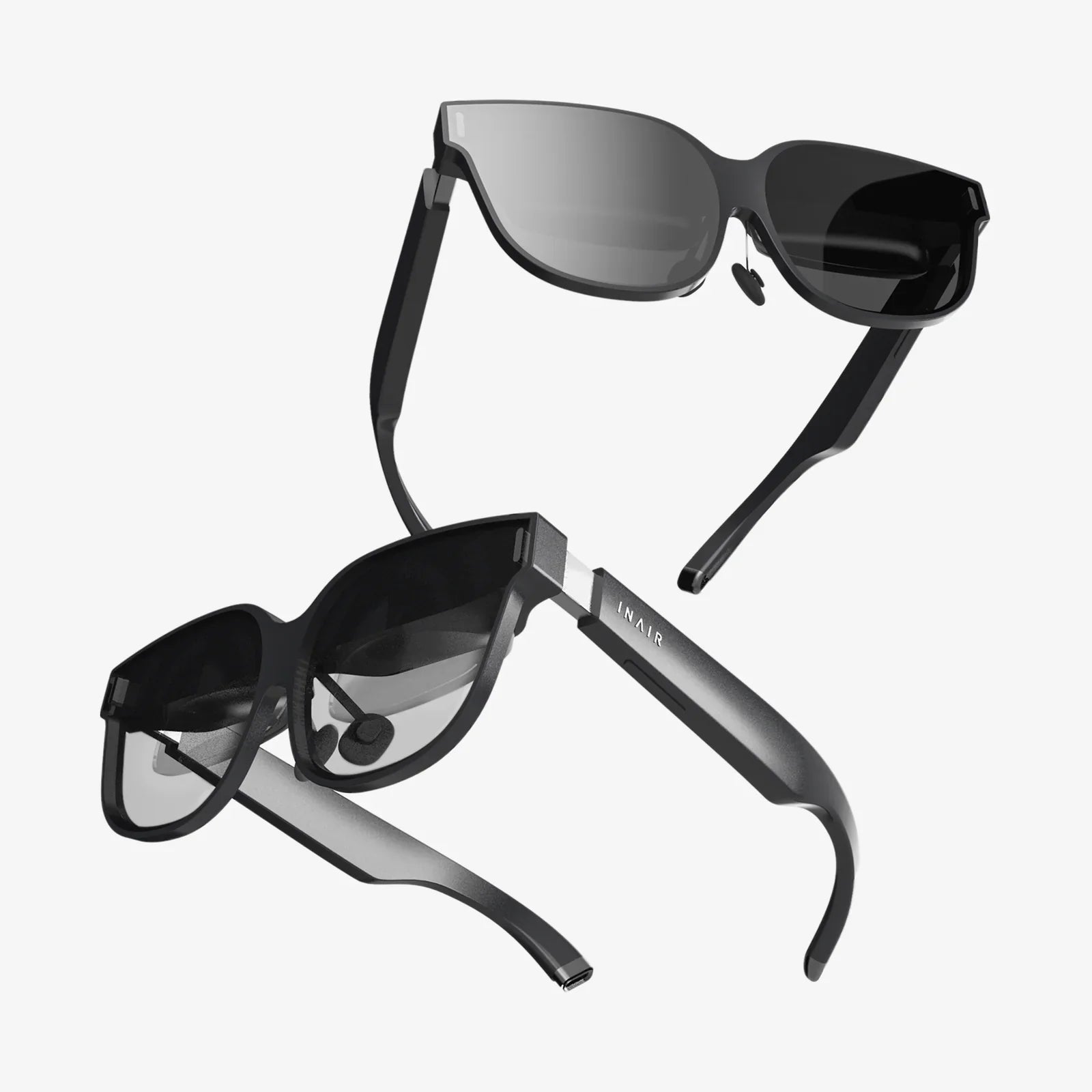
The sleek, unassuming frames perched on a user’s nose betray no hint of the vast digital cosmos they unlock, projecting high-definition interfaces, immersive navigation, and interactive holograms directly onto the retina. This is the promise of augmented reality, and a new wave of innovators is rapidly turning it into an affordable, functional, and startlingly sophisticated reality. While global tech giants have long promised this future, a dynamic and fiercely competitive ecosystem is delivering it today, not from Silicon Valley, but from labs and factories across China. This isn't just about building hardware; it's about constructing an entirely new layer of human-computer interaction, and they are doing it at a pace and scale that has captured the world's attention.
The Engine of Innovation: A Perfect Storm of Capability
The remarkable ascent of this sector is not accidental. It is the result of a powerful convergence of factors that have created a uniquely fertile ground for rapid development and commercialization.
Manufacturing Prowess and Supply Chain Dominance
At its core, AR glasses are a hardware challenge. They require miniaturized displays, powerful processors, precise optics, and complex sensor arrays—all packaged into a lightweight, comfortable, and aesthetically pleasing form factor. China's undisputed dominance in consumer electronics manufacturing provides an unparalleled advantage. The entire supply chain, from micro-OLED display producers and optical waveguide fabricators to battery specialists and precision mold makers, is densely concentrated. This allows for incredibly rapid prototyping, iteration, and scaling. A design change can be tested and implemented in a matter of weeks, not months, drastically shortening development cycles and allowing companies to iterate based on real-world user feedback at a speed competitors elsewhere simply cannot match.
Booming Domestic AI and Software Ecosystem
Hardware is nothing without intelligence. The glasses are merely a window; the magic happens in the software. China's massive investment and progress in artificial intelligence provide the essential brainpower. Computer vision algorithms, crucial for understanding and mapping the user's environment, have become exceptionally advanced. Natural language processing enables seamless voice control, allowing users to interact with their digital overlays without cumbersome controllers. This robust domestic AI talent pool means development teams can work in tight integration, optimizing the software directly for the specific hardware, leading to a smoother and more responsive user experience.
A Unique and Demanding Market
The domestic Chinese market is a brutal but incredibly effective testing ground. Consumers are tech-savvy, early adopters are numerous, and applications that might seem niche elsewhere can achieve massive scale. This has encouraged developers to explore a incredibly wide range of use cases beyond gaming and entertainment. From industrial maintenance and remote assistance to immersive language learning and interactive tourism, the drive to find practical, everyday utility is intense. This market pressure forces companies to prioritize functionality, battery life, and usability over mere technological spectacle, leading to more mature and practical products sooner.
Beyond the Hype: Core Technologies Powering the Experience
To understand the progress, one must look at the key technological battles being won inside these devices.
The Optical Heart: Waveguides and Microdisplays
The central challenge of AR is overlaying digital images onto the real world without blocking the user's view. This is achieved through complex optical systems. Birdbath optics, which use a combination of mirrors and beam splitters, were an early and effective solution, offering bright colors and high contrast, often at a lower cost. However, the industry is rapidly moving towards more advanced waveguide technology. These transparent glass or plastic substrates use diffraction gratings to pipe light from micro-displays on the temple to the user's eye. The result is a much sleeker form factor that looks more like traditional glasses. advancements in manufacturing these waveguides at high yield and consistent quality are a key differentiator, with several companies now mastering this complex process.
On the display side, the shift is towards micro-OLED screens. These self-emissive panels offer exceptional pixel density, true blacks, and fast response times, crucial for rendering sharp text and vibrant virtual objects that can hold their own in a bright, sunlit environment. The production of these tiny, high-performance displays has seen significant investment and improvement.
Spatial Understanding and Interaction
For the digital content to feel anchored in the real world, the device must understand its surroundings. This is handled by a suite of sensors, typically including RGB cameras, depth sensors (like time-of-flight sensors), and inertial measurement units (IMUs). The real magic, however, is in the simultaneous localization and mapping (SLAM) algorithms that process this sensor data in real-time to create a 3D map of the environment. This allows virtual objects to sit convincingly on a real table or occlude correctly behind a physical couch. The precision and speed of this spatial mapping have improved dramatically, reducing latency and the disorienting "jitter" that plagued earlier AR experiences.
Interaction paradigms have also evolved. While some devices use handheld controllers, the emphasis is increasingly on natural, hands-free input. This includes precise hand-tracking, allowing users to pinch, select, and manipulate virtual objects with their fingers, and robust voice commands for system control. This move towards more intuitive interaction is critical for making the technology feel like a natural extension of the user, rather than a cumbersome tool.
The Application Revolution: From Factories to Living Rooms
The true measure of any technology is its utility, and Chinese AR glasses are exploding out of the lab into a diverse array of practical applications.
Enterprise and Industrial Metamorphosis
This is where the technology is currently having its most profound impact. Enterprises are adopting AR glasses to solve real business problems, drive efficiency, and reduce errors. Technicians performing complex repairs on machinery can have schematic diagrams, instruction manuals, and live video feeds from remote experts superimposed directly onto their field of view, freeing their hands and vastly accelerating troubleshooting. Warehouse logistics have been transformed, with pickers receiving order information and optimal navigation paths visually guided to their destinations, significantly boosting fulfillment speed and accuracy. In architecture and construction, 3D building models can be overlaid onto physical sites for verification and planning, catching potential conflicts before they become costly mistakes.
Consumer Experiences Reimagined
While the enterprise leads, the consumer space is heating up. The applications here are more varied. Imagine touring a historical site and seeing digital recreations of ancient structures come to life before your eyes, or learning to cook with a recipe interface that hovers over your mixing bowl, guiding you step-by-step. The potential for immersive gaming and social interaction is vast, allowing friends to share a virtual space and interact with digital objects as if they were physically present. Furthermore, there is significant exploration in using AR for information overlay—translating street signs in real-time, getting details about a landmark, or seeing restaurant reviews pop up as you walk down a street.
Navigating the Challenges: The Road Ahead
Despite the breathtaking progress, significant hurdles remain on the path to mainstream, global adoption.
The Form Factor Conundrum
The ultimate goal is a pair of glasses that are indistinguishable from fashionable eyewear—light, comfortable, and with all-day battery life. While designs have slimmed down considerably, the trade-offs between performance, battery size, and weight are still a central engineering challenge. Achieving a "normal" glasses form factor while packing in sufficient compute power for advanced AR experiences remains the holy grail.
The Content Ecosystem Imperative
Hardware is useless without compelling software and content. Building a robust ecosystem of developers creating unique AR-native applications is critical. This requires powerful and easy-to-use software development kits (SDKs), clear monetization pathways, and a large enough installed user base to justify investment. This is a classic chicken-and-egg problem that the industry is actively working to solve through developer incentives and partnerships.
Global Expansion and Cultural Fit
While domestic success is proven, expanding globally presents its own set of challenges. It requires navigating different regulatory environments, building international sales and support channels, and, perhaps most importantly, adapting content and user experiences to resonate with diverse cultural norms and usage patterns. Success in one market does not guarantee success in another, and understanding local needs will be paramount.
Privacy and the Ethical Dimension
As with any always-on, camera-equipped wearable, AR glasses raise profound questions about privacy and data security. The ability to constantly record and analyze one's environment necessitates extremely clear and transparent policies on data collection, usage, and storage. Building trust with consumers and enterprises on these issues is not optional; it is a prerequisite for widespread adoption. The industry must proactively address these concerns with robust ethical frameworks and transparent practices.
The race to own your visual field is on, and the participants emerging from the East are not just competitors; they are pace-setters, challenging established norms and pushing the entire industry towards a more accessible and integrated future. They have moved beyond prototyping and are delivering real-world value today, forcing a global conversation about what comes after the smartphone. The next time you see someone seemingly gesturing at thin air or looking at a world invisible to you, look closer. You might be catching a glimpse of a new reality being built, one pair of glasses at a time, and it's a vision that is increasingly being shaped by ambitious innovators who are already living in that future.
Share:
Where to Buy AR Glasses: Your Ultimate Guide to Navigating the Market
AR Glasses for Movies: The Ultimate Guide to Your Personal IMAX Theater