


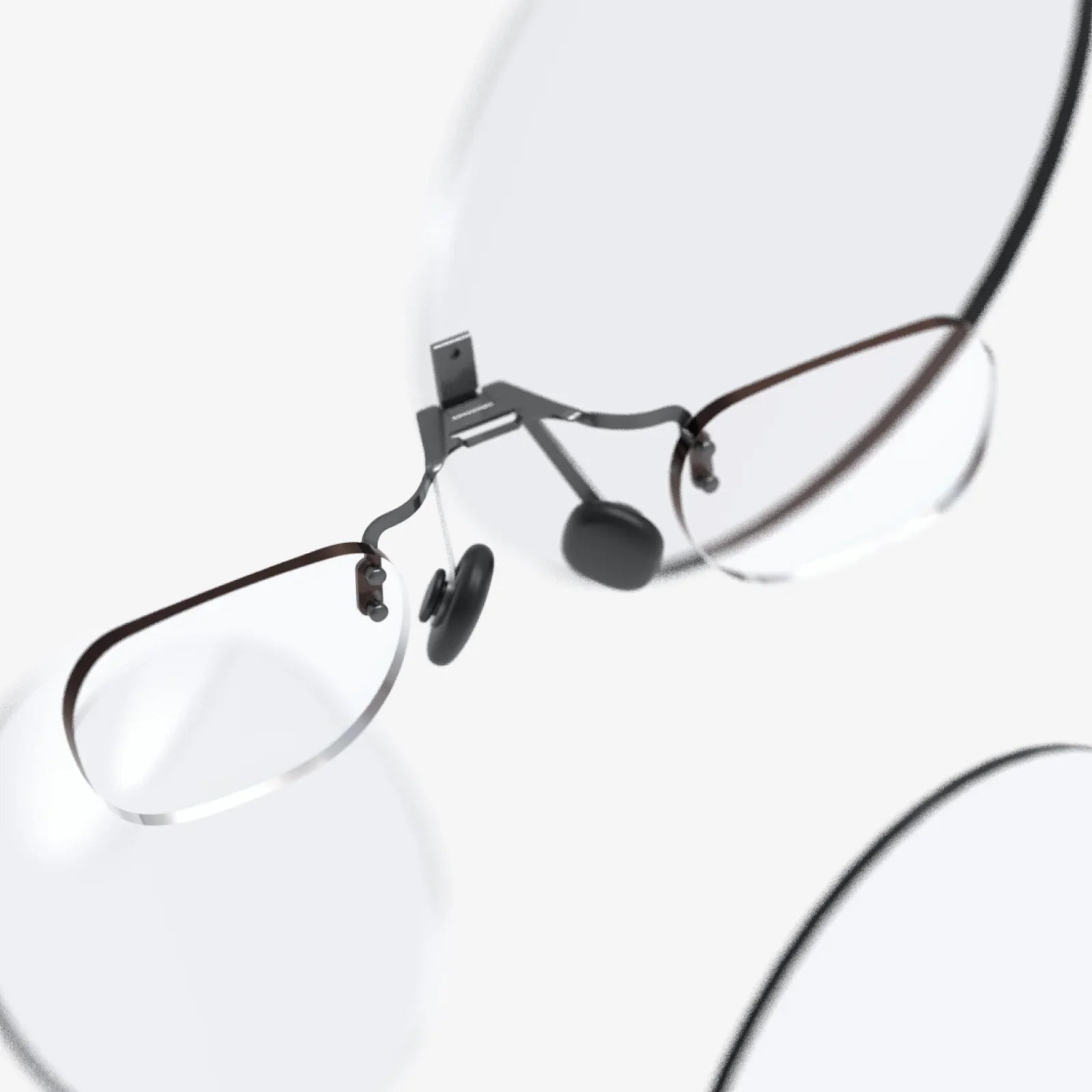
Imagine a world where information flows seamlessly into your field of vision, where language barriers dissolve with a glance, and your digital assistant is not just in your ear but integrated into your very perception of reality. This is the promise of AI glasses, a technological leap poised to transform how we interact with both the digital and physical worlds. But with this incredible potential comes a critical challenge: the daunting task of sifting through the hype to find the pair that truly augments your life, rather than complicating it. The right choice can feel like gaining a superpower; the wrong one, an expensive and distracting burden. This guide is your essential roadmap to cutting through the noise and making an informed decision that aligns with your future.
Beyond the Hype: Defining Your "Why"
Before diving into specifications and features, the most crucial step is introspection. The market will soon be flooded with devices boasting various capabilities, but the best pair for you is the one that solves your specific problems or enhances your chosen activities. Are you a professional seeking hands-free access to schematics, translations, or data overlays during complex tasks? Perhaps you're a content creator looking for a first-person perspective without the obtrusiveness of a traditional camera. Or maybe you're an avid traveler who wants real-time navigation and translation superimposed on the streets of a foreign city. For some, the primary draw might be immersive entertainment—a private theater screen projected in front of your eyes. By solidifying your primary use case, you immediately narrow the field and create a framework for evaluating every other feature.
The Window to Your Digital World: Understanding Display Technology
The display is the soul of the AI glasses experience. It's the conduit through which digital information merges with your reality. Not all displays are created equal, and the technology behind them is a primary differentiator.
Optical Architectures: Waveguides vs. Birdbaths
Most advanced AI glasses utilize some form of waveguide technology. Think of a waveguide as a piece of transparent glass or plastic that uses microscopic structures to "bend" light from a projector on the temple of the frames into your eye. This allows for a sleek form factor that resembles traditional glasses. There are different types, such as diffractive and reflective waveguides, each with trade-offs in brightness, field of view, and manufacturing cost. Another common method is the "birdbath" optic, which uses a beam splitter and a concave mirror to reflect the image into your eye. This often allows for richer colors and a wider field of view but can result in a slightly bulkier design. The choice of optic directly impacts the clarity, size, and brightness of the virtual elements you see.
Key Display Metrics: FOV, Resolution, and Brightness
When evaluating displays, three metrics are paramount:
- Field of View (FOV): This is the angular extent of the virtual world you can see, measured diagonally in degrees. A small FOV can feel like looking through a postage stamp floating in your vision, while a larger FOV offers a more immersive and natural experience. However, a wider FOV typically requires more power and bulkier optics.
- Resolution: Just like with any screen, higher resolution means sharper text and images, reducing the "screen door effect" where you can see the pixels. For reading text and viewing detailed graphics, this is critical.
- Brightness (Nits): If you plan to use your glasses outdoors, high brightness is non-negotiable. The display must be powerful enough to compete with direct sunlight; otherwise, the virtual overlay will wash out and become unusable.
The Brain Behind the Lenses: Processing Power and On-Device AI
The magical overlay you see is powered by sophisticated hardware. This can take two forms: a self-contained system or a tethered experience.
Standalone vs. Tethered Systems
Standalone glasses have all the necessary compute power, battery, and connectivity built directly into the frame. This offers maximum freedom and mobility, as you are not physically tied to another device. The trade-off is that this engineering marvel often comes at the expense of weight, heat, and battery life. Tethered glasses, on the other hand, act as a display and sensor platform that connects wirelessly (or sometimes via cable) to a more powerful processing unit, like a smartphone or a dedicated pocketable computer. This offloads the intensive computation, allowing the glasses themselves to be lighter, cooler, and more energy-efficient. Your choice here depends on whether you prioritize untethered freedom or a sleeker, more comfortable form factor.
The Role of the NPU
Beyond the central processor, the Neural Processing Unit (NPU) is the unsung hero. This specialized chip is designed specifically to run AI and machine learning models efficiently. A powerful NPU is what enables real-time features like instant translation, object recognition, and gesture tracking directly on the device. This is vital for both responsiveness and privacy, as it allows sensitive data (like a live video feed of your environment) to be processed locally without needing to be sent to the cloud.
Seeing and Perceiving: The Camera and Sensor Suite
For AI glasses to understand and interact with the world, they need eyes and ears. This is handled by a array of sensors.
Computer Vision Capabilities
The cameras are not for taking traditional photos; they are for machine perception. Their quality dictates how well the glasses can perform tasks like scanning QR codes, identifying objects, translating text in the real world, and mapping your surroundings for augmented reality experiences. Key specifications include resolution, frame rate, and low-light performance.
Environmental Awareness
Beyond cameras, other sensors play a critical role. Inertial Measurement Units (IMUs), including accelerometers and gyroscopes, track the precise movement and orientation of your head. This is essential for stabilizing the digital overlay so it appears locked in place in the real world. Depth sensors, such as time-of-flight sensors, help the glasses understand the three-dimensional structure of your environment, preventing virtual objects from clipping through real-world tables and walls. Microphones are crucial for voice commands and capturing audio, often employing beamforming technology to isolate your voice from background noise.
Staying Powered: The Eternal Battle of Battery Life
Battery technology remains the single greatest constraint on wearable devices. Manufacturers will advertise a battery life figure, but it is essential to understand the context. Battery life can vary dramatically depending on which features are active. Continuous video recording or using intensive AR applications will drain the battery much faster than simply displaying static notifications. Look for devices that offer a realistic estimate for your intended use case. Also, consider the charging solution. Is it a proprietary magnetic cable? A wireless charging case that provides multiple full charges on the go? Your daily routine will determine how important portability and ease of charging are for you.
Hearing the Future: Audio Solutions
Audio is half of the immersive experience. Most AI glasses employ bone conduction or directional speakers. Bone conduction transducers send vibrations through your skull to your inner ear, leaving your ear canal open to hear ambient sounds—a major safety benefit for outdoor use. Directional speakers, often called speakers, beam sound directly into your ears with minimal sound leakage, offering higher audio fidelity for music and calls. Some devices may even include built-in microphones for active noise cancellation (ANC) during calls. The choice depends on whether you prioritize situational awareness or private, high-quality audio.
The Unseen Essentials: Design, Fit, and Privacy
The most technologically advanced glasses will fail if they are uncomfortable to wear or raise serious privacy concerns.
Form Factor and Comfort
You will be wearing these on your face for potentially hours at a time. Weight distribution is critical; too much weight on the nose pads or ears will cause fatigue. Adjustable nose pads and flexible, customizable temple arms are signs of a well-thought-out design. Consider if the style aligns with your personal aesthetic and whether you can wear them confidently in social and professional settings. Interchangeable lenses for prescription or sunglasses are a huge plus for many users.
The Privacy Imperative
Devices with always-on cameras and microphones understandably raise privacy alarms. Responsible manufacturers address this with clear hardware-based solutions. A physical camera shutter or a prominent LED indicator that lights up when the camera is active is non-negotiable. These are features that cannot be overridden by software, providing a tangible guarantee to you and those around you that you are not recording. Scrutinize the company's data policy: where is your data processed (on-device is best), and what is collected? Your choice here is a statement about the kind of future you want to build.
Making the Final Decision: A Checklist for Your Purchase
Arm yourself with this checklist before you commit:
- Primary Use Case: Does it excel at the one thing I need most?
- Display: Is the FOV sufficient? Is it bright enough for outdoor use?
- Compute: Standalone or tethered? Does it have a strong NPU for on-device AI?
- Battery Life: Does it last for my typical usage scenario? How is it charged?
- Audio: Bone conduction or directional speakers? Which suits my environment?
- Design & Fit: Is it comfortable for long-term wear? Does it fit my style?
- Privacy Features: Does it have a physical camera shutter and a clear data policy?
- Ecosystem: What apps and services are available? Is there a developer community?
The journey to finding your perfect AI glasses is not about chasing the spec sheet with the highest numbers; it's a deeply personal quest to find a harmonious extension of your own capabilities. It's about identifying the technology that feels less like a device and more like an innate ability—a silent partner that empowers you to work, create, explore, and connect in ways you never thought possible. The future is not just about what these glasses can do, but about what they enable you to do. By asking the right questions and prioritizing your real-world needs over abstract hype, you can step confidently into this new augmented era, perfectly equipped to see your world, and your potential, in a whole new light.
Share:
Smart Glass Cost Price: A Comprehensive Breakdown of Investment and Value
Best AR VR Companies Shaping the Future of Immersive Technology