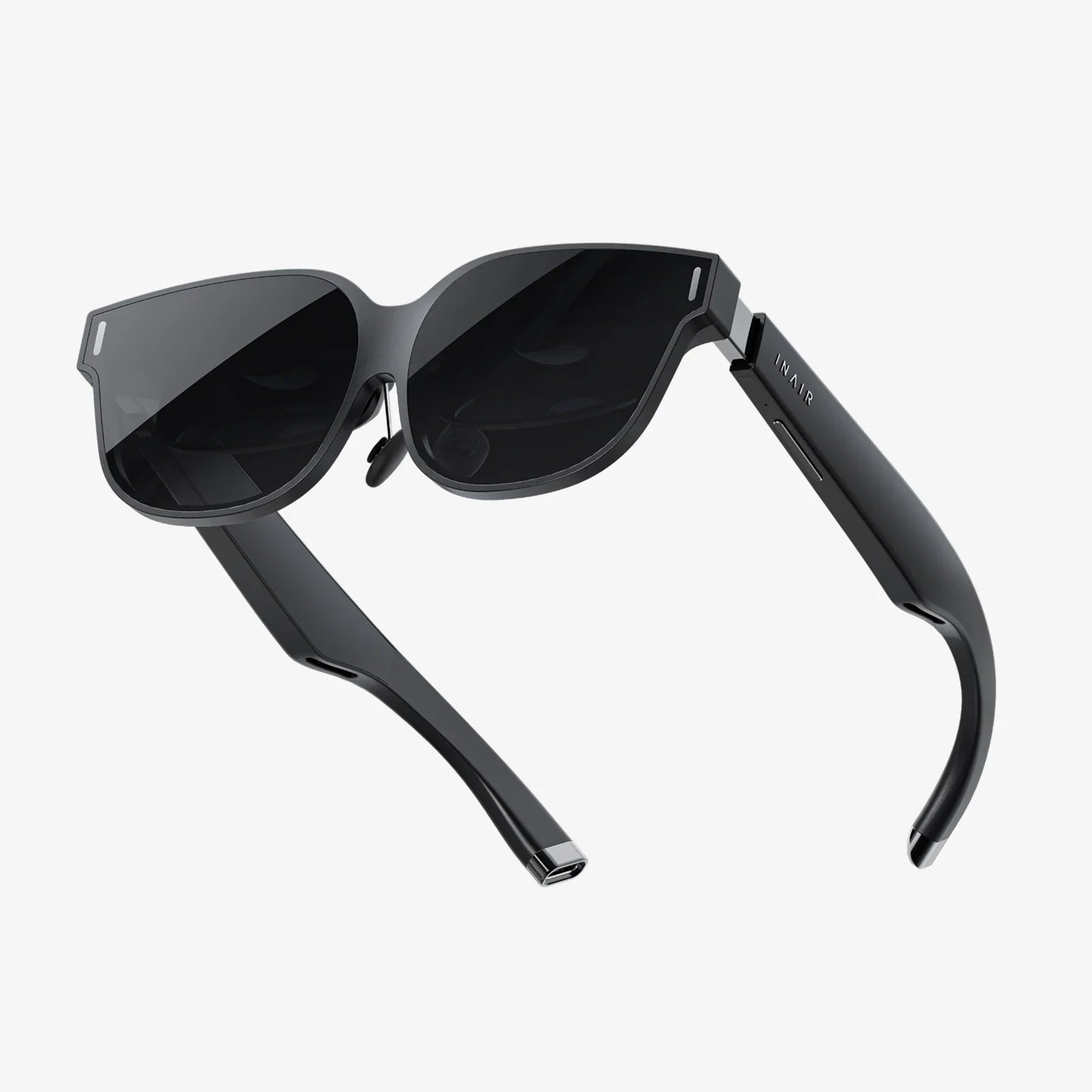
Imagine slipping on a headset and being instantly transported to another world—not a world of shimmering pixels and distracting screen doors, but one of breathtaking, lifelike clarity. This is the promise, the holy grail of virtual reality: the clearest VR headset. It’s the difference between looking through a window and being on the other side of it. For newcomers and veterans alike, the pursuit of this visual perfection is the single most important factor in achieving true presence, the feeling of actually ‘being there.’ But what does ‘clearest’ truly mean? It’s a complex symphony of cutting-edge technology, not just a single spec on a box. This journey will demystify the elements that combine to create an unparalleled, crystal-clear visual experience that will redefine your reality.
The Pillars of Visual Clarity: More Than Just Resolution
When most people think of a clear display, they think of resolution. And while it's undeniably crucial, it's merely the opening act in a much larger performance. True visual fidelity is built upon four fundamental pillars that work in concert.
1. Display Resolution and Pixel Density (PPI)
This is the most straightforward metric. Resolution refers to the number of pixels on the screen, typically stated as something like 1920 x 1832 per eye. The higher these numbers, the more detailed the image can be. However, the more critical metric is often pixels per inch (PPI) or its close cousin, pixels per degree (PPD). PPD measures how many pixels fit into one degree of your field of view. A higher PPD means the pixels are smaller and packed tighter, drastically reducing the ‘screen-door effect’—that visible grid of lines between pixels that can shatter immersion. Modern high-end headsets are pushing PPD to new heights, creating a seamless picture where individual pixels become virtually indistinguishable.
2. Optical Stack and Lens Technology
The most pristine display panel is useless if the optics in front of it distort, blur, or chromatic aberration. The lens system is the gateway between the screen and your eyes. For years, Fresnel lenses were the standard. They are lightweight and cost-effective but come with drawbacks like god rays (lens flare effects around high-contrast objects) and a small ‘sweet spot’—a limited area in the center where the image is perfectly sharp.
The quest for clarity has ushered in a new era of lens technology. Pancake lenses and custom aspherical lenses are game-changers. By folding the light path, pancake lenses allow for a much slimmer headset design while simultaneously providing a dramatically larger sweet spot. This means the image remains sharp and clear even when you look towards the edges of the lens with your eyes, not just your head. This reduction in distortion and glare is a monumental leap towards a perfectly clear view.
3. Panel Type and Image Quality
Not all display panels are created equal. The technology behind the pixels plays a massive role in color reproduction, contrast, and overall image pop.
-
LCD (Liquid Crystal Display): Common and cost-effective. They offer high resolutions but can struggle with true blacks because they use a backlight, leading to a more ‘washed out’ look in dark scenes. Their pixel response time can also contribute to motion blur.
-
OLED (Organic Light-Emitting Diode): Each pixel is its own light source. This allows for perfect blacks (because pixels can turn off completely) and incredibly high contrast ratios. Colors are typically more vibrant and rich. Historically, they had a lower sub-pixel density which could accentuate the screen-door effect, but new technologies have largely overcome this.
-
Micro-OLED: The new gold standard. These are tiny OLED panels built directly onto a silicon wafer, allowing for incredible pixel densities in a very small form factor. They combine the perfect blacks and high contrast of OLED with the incredibly high resolution and PPD previously only possible with LCD, representing the current peak of display technology for VR.
4. Processing Power and Rendering Techniques
Clarity isn't just about the hardware on your face; it's also about the hardware driving it. A headset can have a 8K display, but if the connected computer or built-in processor can't render complex scenes at a high enough resolution and frame rate, the image will be blurry and laggy. This is where supersampling comes in—rendering the image at a higher resolution than the display's native resolution and then downsampling it. This acts as a powerful anti-aliasing, smoothing out jagged edges and creating a cleaner, more stable image. Advanced foveated rendering, which uses eye-tracking to render only the area you're directly looking at in full detail while subtly reducing the detail in your peripheral vision, is another key technology. It allows systems to dedicate immense processing power to where it matters most, enabling higher effective resolutions without requiring a supercomputer.
Beyond the Specs: The Human Factor in Perceived Clarity
Technical specifications tell only half the story. The human brain is the final judge of clarity, and several factors influence its verdict.
The Critical Importance of the ‘Sweet Spot’ and Fit
A headset can have perfect optics, but if it's not positioned correctly on your head, the image will be blurry. Finding the ‘sweet spot’—the perfect alignment between your pupils and the optical center of the lenses—is paramount. Headsets with improved ergonomics, multiple facial interface options, and a rigid, well-balanced strap system make maintaining this sweet spot comfortable for long periods. A wobbly, poorly fitted headset is the enemy of clarity.
IPD Adjustment: Matching Your Eyes
Interpupillary Distance (IPD)—the distance between your pupils—varies from person to person. If a headset's lenses don't align with your specific IPD, the world will seem out of focus and can cause eye strain and headaches. There are two main types of adjustment:
-
Software IPD Adjustment: The lenses are fixed, but the software shifts the rendered image to approximate alignment. It's better than nothing but is a compromise.
-
Mechanical IPD Adjustment: The physical lenses move left or right to physically match your IPD measurement. This provides a optically correct and significantly clearer image and is a hallmark of a quality headset focused on visual fidelity.
Refresh Rate and the Pursuit of Smoothness
Clarity isn't just about static detail; it's also about motion. A low refresh rate (e.g., 72Hz) can lead to noticeable flicker and persistence blur, where moving objects leave a ghostly trail. Higher refresh rates (90Hz, 120Hz, and now even 144Hz) make motion incredibly smooth and lifelike. This reduces simulator sickness for many users and contributes massively to the feeling of being in a real, stable world. The combination of high resolution and high refresh rate is a demanding but incredibly impactful target for the clearest headsets.
The Trade-Offs and The Future
The pursuit of ultimate clarity is a constant battle against physics and practicality.
-
Performance Cost: Higher resolutions and refresh rates demand exponentially more processing power. This can mean being tethered to a powerful computer or having shorter battery life on standalone devices.
-
Weight and Comfort: Bigger, brighter displays and complex lens systems can add weight and bulk. Designers are constantly balancing material science and optics to keep headsets comfortable for extended use.
-
Cost: The latest display and lens technology comes at a premium. The clearest visual experience is often found in flagship products.
Looking ahead, the future is bright. We are moving towards varifocal displays that can adjust focus dynamically based on where you are looking, solving the vergence-accommodation conflict that can cause eye strain. Resolution will continue to climb towards what experts call ‘retinal resolution,’ where the pixel density exceeds the resolving power of the human eye, making digital images indistinguishable from reality. Lightfield technology promises to perfectly mimic how light works in the real world, providing natural depth cues that no current headset can achieve.
The journey to the clearest VR headset is not about finding a single winner. It's about understanding the intricate dance of resolution, optics, processing, and human physiology. It's about recognizing that the ultimate goal is not to see a screen, but to look through a portal. The technology is advancing at a breathtaking pace, inching us ever closer to that moment of pure, unquestionable presence. The line between the virtual and the real is not just blurring—it's being rendered in stunning, crystal-clear detail, waiting for you to take that first, jaw-dropping look.