


- by wangfred
Common Features of Augmented Reality: The Digital Layer Reshaping Our World
- by wangfred
Imagine a world where information doesn’t just live on your screen but is painted onto the very fabric of reality around you. Directions float on the pavement ahead, historical figures reenact battles on the very ground they were fought, and complex engine parts are outlined with glowing instructions for a trainee mechanic. This is no longer the stuff of science fiction; it is the present and future being built through the powerful, unifying common features of augmented reality (AR). This technology, which seamlessly blends the digital and the physical, is not defined by a single device or application but by a core set of characteristics that are reshaping human interaction with the world.
At its absolute core, the most fundamental of all common features of augmented reality is its ability to superimpose digital information—images, text, video, 3D models—onto the user’s view of their physical environment. Unlike Virtual Reality (VR), which creates a completely immersive, synthetic world, AR starts with the real world and adds to it. This digital overlay can range from simple two-dimensional data, like a floating weather forecast next to your morning coffee mug, to incredibly complex, photorealistic three-dimensional objects that appear to obey the laws of physics.
The magic lies in the perceived integration. A successful AR experience doesn’t feel like a separate screen placed in front of your eyes; it feels like the digital content is a natural, albeit enhanced, part of your surroundings. This is achieved through advanced rendering techniques that account for lighting, shadows, and occlusion (where real-world objects can pass in front of and block digital ones). This creates a convincing illusion that the digital object exists within the user’s space, bridging the gap between abstract data and tangible context.
For a digital overlay to be truly persuasive and useful, it cannot be static. This brings us to the second critical feature: real-time interaction. AR systems continuously process data from the user’s environment to align the digital content appropriately. This is a dynamic, ongoing conversation between the technology and the real world.
This interaction is powered by a suite of sensors and technologies, including:
This constant feedback loop allows the AR system to understand context. It knows if it’s looking at a flat wall, a curved surface, or a table, and it can adjust the digital content accordingly. This environmental understanding is what separates true AR from a simple video filter.
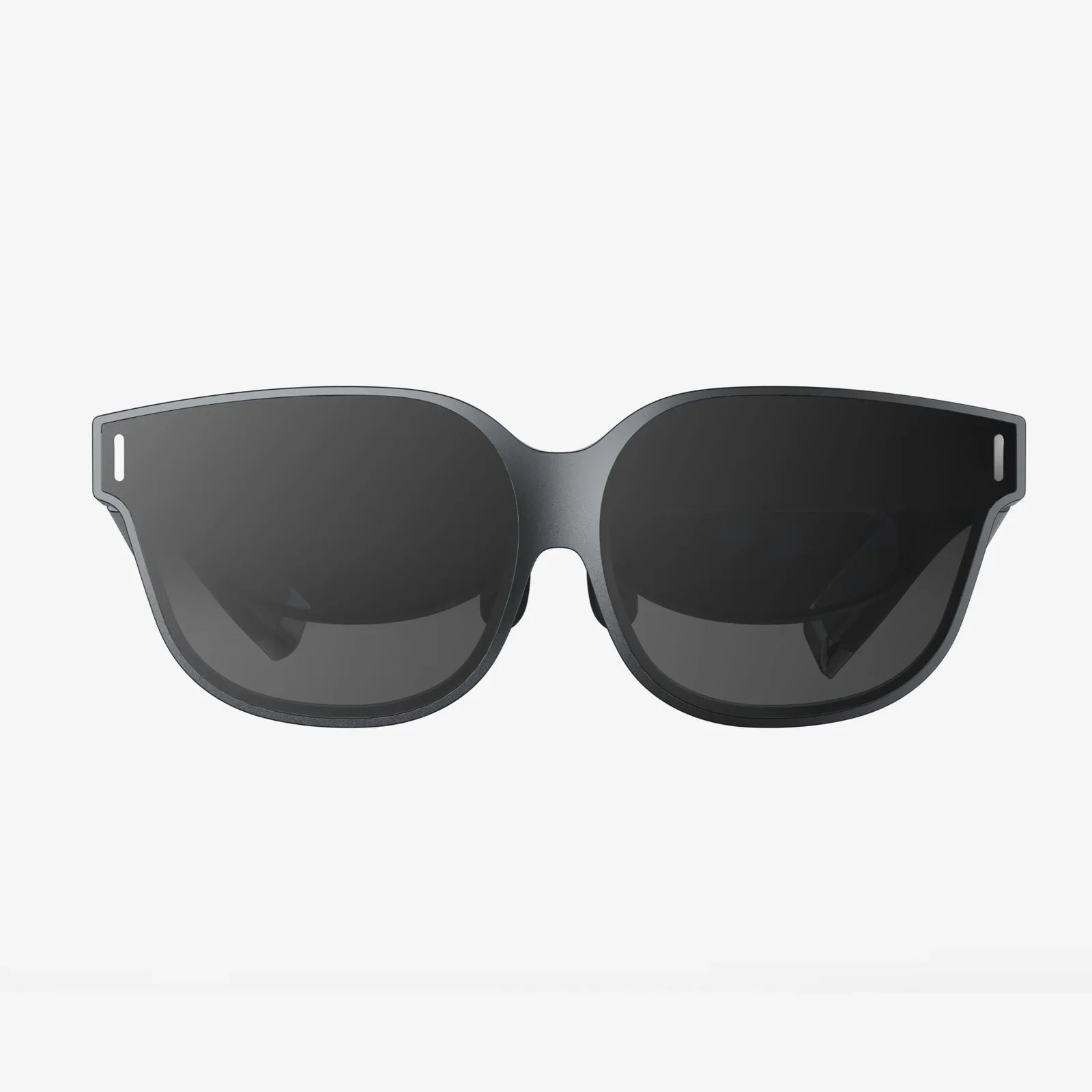
Another defining common feature of augmented reality is its hardware agnosticism. AR is not locked to a single type of device. It manifests across a spectrum of hardware, each offering a different level of immersion and capability, making the technology accessible to billions.
This diversity is a key strength. It allows a student to access an AR anatomy lesson on their phone, a factory worker to receive hands-free assembly instructions through smart glasses, and a pilot to see critical flight data without looking down.
Why overlay digital content at all? The unifying purpose behind all AR is enhancement. It is a tool for amplifying human perception and cognitive ability. The common features of augmented reality are all in service of this goal:
To feel like a natural extension of our reality, AR must be controllable in natural ways. While touchscreens are still prevalent, the most advanced AR systems are moving towards more intuitive interaction models, which are becoming a standard feature set.
These models move us away from the abstract language of mice and keyboards and towards interacting with digital content as we would with physical objects—by pointing, talking, and looking.
While the user sees the visual overlay, the power of AR is often fueled by the cloud. Most compelling AR experiences are not run solely on the device itself. They leverage high-speed connectivity to offload heavy processing tasks, access vast databases of 3D models and information, and enable multi-user experiences.
This means a user pointing their device at a product can instantly pull its specifications, price, and reviews from the web. Multiple users in different locations can see and interact with the same virtual object simultaneously, enabling remote collaboration where participants can manipulate a shared 3D model as if they were in the same room. This connectivity transforms AR from a solitary novelty into a collaborative platform.
The true testament to the power of these common features is their universal applicability. The same core technology is driving innovation in virtually every sector:
This versatility is only possible because the foundational features—overlaying content, real-time interaction, and intuitive control—are not industry-specific; they are human-perception specific.
The world is on the cusp of a fundamental shift, not towards a more digital life, but towards a life where the digital and physical are inextricably and usefully linked. This future is being built not by a single invention, but by the continued refinement and integration of these common features of augmented reality. They are the building blocks for a new layer of human experience, one that promises to make us more knowledgeable, efficient, and connected to the world around us in ways we are only beginning to imagine. The next time you look at the world, remember—it’s a canvas, and it’s just waiting for you to add a layer.
Share:
AI Glasses UK: The Future on Your Face is Here and Now
Most Expensive VR Glasses: A Journey into the Pinnacle of Immersive Technology